 Clearwater Siding
 Siding Built for Island Estates' Waterfront Exposure
Island Estates sits close enough to open water that the air itself works against your home's exterior every single day. Between the salt content carried in off the Gulf and Intracoastal breezes, the near-constant Florida UV load, and the wind-driven rain that comes with any serious storm, exterior siding here ages faster than it does just a few miles inland. Homeowners in this part of Clearwater tend to notice the difference within a few years of a lower-grade siding installation: chalking paint, soft spots at the bottom courses, caulk lines that give out early, and trim that never quite looks freshly painted no matter how often it's touched up.
We install James Hardie fiber cement siding exclusively, and neighborhoods like Island Estates are exactly why. This isn't a marketing preference — it's a decision built around what actually holds up when a house sits in a salt-air, high-UV, hurricane-adjacent environment year after year.
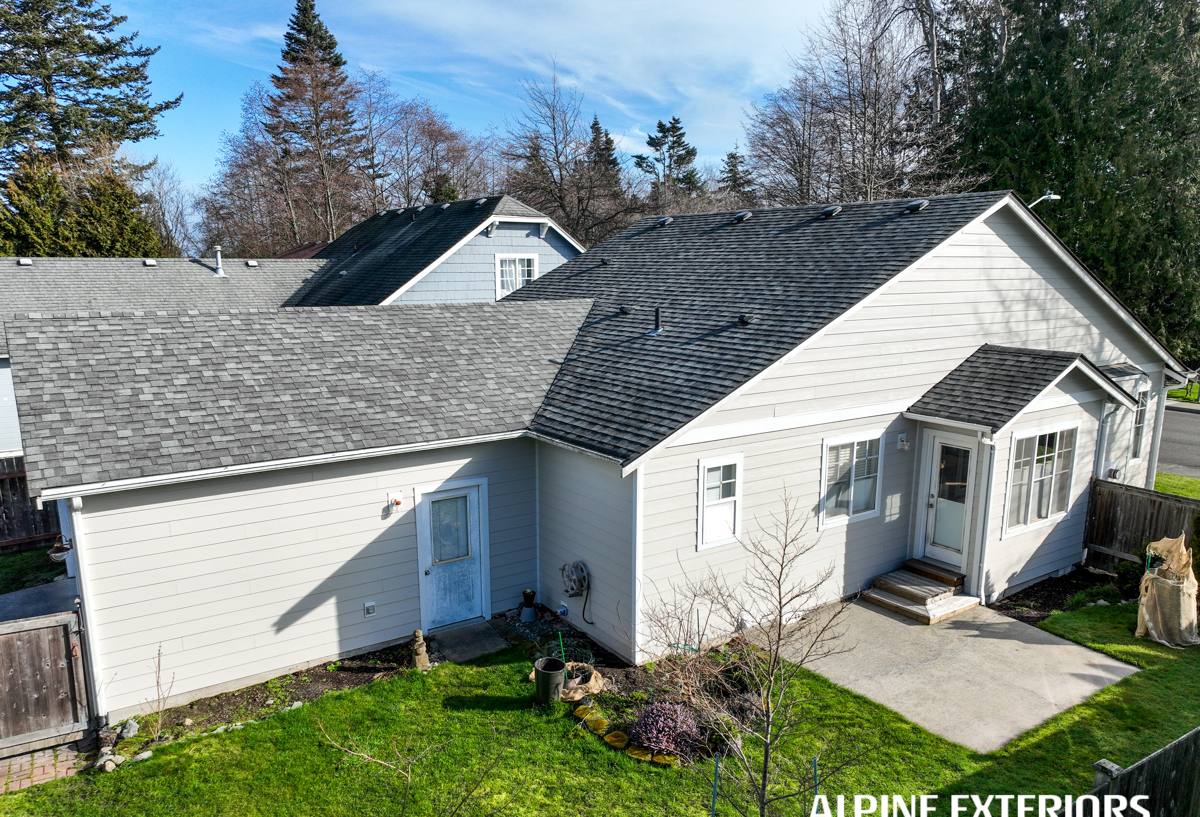
What Island Estates Homes Are Up Against
Salt Air and Coastal Corrosion
Proximity to water means airborne salt settles on every exterior surface, including siding, fasteners, and trim. Salt is hygroscopic — it pulls moisture out of the air and holds it against whatever surface it lands on. On wood-based or wood-composite siding products, that translates to more consistent moisture exposure at the surface, which accelerates swelling, delamination, and coating breakdown compared to homes further from the water.
Year-Round UV Exposure
Pinellas County doesn't get much of a winter break from sun. Siding on south- and west-facing walls in Island Estates takes a near-constant UV load twelve months a year. Field-applied paint and lower-grade factory finishes chalk, fade, and lose adhesion faster under this kind of exposure than most homeowners expect when they first choose a product.
Wind-Driven Rain
During tropical systems and even routine summer storms, rain in this area rarely falls straight down. Wind pushes it sideways and up under laps, around trim, and into any gap in the water-management details behind the siding. A product's ability to shed and dry out water — not just resist it — matters as much as the finish.
Storm Wind Loads
Being close to open water can mean slightly higher sustained and gust wind exposure during named storms. Siding attachment, fastener schedule, and the underlying wall assembly need to be installed to hold up under that load, not just look good on a calm day.
Why We Standardized on James Hardie
We used to get asked to install a wider range of siding products. We stopped offering several of them — not because they're bad products in every setting, but because we didn't think they were the right call for homes in this climate, and we didn't want to sell something we'd have reservations about a few years down the road.
- Non-combustible fiber cement — Hardie siding is made from cement, sand, and cellulose fiber. It doesn't burn, which matters both for wildfire-adjacent exposure and for standard fire-safety considerations on any home.
- ColorPlus factory finish — the color is baked on in a controlled factory environment with multiple coats and a clear coat over that, rather than applied on-site after installation. That finish is engineered specifically to resist UV fade and coastal moisture better than field-applied paint.
- Climate-engineered HZ product lines — Hardie's HZ5 formulation is engineered for hot, humid climates like ours, addressing moisture and humidity behavior specific to Gulf Coast conditions rather than a generic national spec.
- Strong transferable warranty — a real, documented warranty that can transfer to a new owner if you sell, which matters for resale in a desirable area like Island Estates.
- Proven long-term performance — decades of installations in coastal Florida environments give us a real track record to point to, not just manufacturer claims.
Why We Don't Install Vinyl, LP SmartSide, or Other Alternatives Here
Vinyl Siding
Vinyl is affordable and easy to install, and in the right setting it does an honest job. But it's a plastic product, and plastic softens, warps, and becomes brittle under sustained heat and UV exposure — both of which Island Estates has in abundance. In wind events, vinyl panels can also pull loose or crack under impact more easily than fiber cement. We don't think it's the right long-term investment for a coastal Clearwater property.
LP SmartSide and Wood-Based Composites
Engineered wood products have improved a lot over the years, and treated correctly they can perform reasonably well. But they're still wood-based at the core, meaning any breach in the factory coating — a nail pop, a scratch, a poorly sealed cut edge — creates a path for moisture to reach a material that can swell, rot, or delaminate. In a salt-air, high-humidity environment, we've seen that vulnerability show up sooner than homeowners expect, and repairs on wood-composite siding are rarely simple spot fixes.
Primed Wood, Cedar, and Similar Products
Real wood siding can look great, but it demands an ongoing maintenance commitment — recaulking, repainting, and monitoring for moisture intrusion — that most homeowners underestimate going in. On a home this close to the water, that maintenance cycle tends to compress from "every several years" to "constantly," which is a hard thing to keep up with.
None of this means these products are junk. It means we made a professional call about what we're willing to put our name behind in this specific climate, and fiber cement is where that call landed.
Siding Material Comparison for Coastal Clearwater Homes
| Factor | James Hardie Fiber Cement | Vinyl | Wood/Wood-Composite |
|---|---|---|---|
| Salt air resistance | Strong — non-organic, engineered coastal formulation | Moderate — can become brittle over time | Weaker — organic material vulnerable to moisture |
| UV/fade resistance | Strong — factory ColorPlus finish | Moderate — can chalk and fade | Depends heavily on coating upkeep |
| Fire performance | Non-combustible | Combustible | Combustible |
| Wind/impact durability | Strong when properly installed | Moderate — can crack or blow off | Moderate, varies by product |
| Maintenance | Low — periodic caulk/inspection | Low | Higher — ongoing coating maintenance |
| Typical lifespan when installed to spec | Decades | Moderate | Shorter without diligent upkeep |
Why Correct Installation Matters as Much as the Product
Fiber cement siding is only as good as the installation behind it. In a coastal environment, the details that don't show once the job is finished are the ones that determine whether the siding performs for decades or causes problems in five years.
- Proper flashing and water-resistive barrier behind the siding, so any incidental moisture has a way out
- Correct fastener type and spacing rated for the wind exposure in this area
- Manufacturer-specified clearances at grade, roof lines, and other siding-to-surface transitions
- Sealed and primed cut edges, since an unsealed factory cut is the most common point of moisture entry
- Proper caulking at joints and penetrations using products rated for coastal exposure
A crew that's installed Hardie siding on other homes in the Clearwater and Pinellas County area understands these details as a matter of routine, not as a checklist they're reading for the first time. That local experience is part of what you're paying for when you hire a siding contractor here.
Beyond Siding: Roofing, Windows, and Decks
Siding doesn't work in isolation — it's one piece of your home's exterior envelope, and in a storm-exposed area like Island Estates, the roof, windows, and any exterior decking all face the same salt air, UV, and wind conditions. We handle all four so that flashing, trim, and water-management details are coordinated across the whole exterior rather than treated as separate, disconnected projects. If your roof is due for attention at the same time as your siding, or your windows are showing their age, it's worth addressing them together rather than piecemeal.
What to Expect From a Local Siding Project
Assessment and Estimate
We start with an honest look at your home's current siding, trim, and any underlying moisture or structural issues — not just a quick measurement for a quote. If there's rot or damage behind existing siding, that gets addressed as part of the plan, not discovered mid-project.
Product and Color Selection
James Hardie offers multiple siding profiles (lap siding, shingle-style, board and batten) and a range of ColorPlus factory finishes, so there's real flexibility to match the look you want for your home in Island Estates without sacrificing the performance benefits of the factory finish.
Installation
Installation follows manufacturer specifications for our climate zone, with attention to the flashing, fastening, and clearance details that matter most in a coastal setting.
Final Walkthrough
Before we call the job finished, we walk the property with you to confirm the work meets the standard we'd want on our own homes.
A Local Crew Matters in a Coastal Neighborhood
Working regularly in Clearwater and the surrounding Pinellas County coastline means we're familiar with the specific stresses homes in areas like Island Estates face — not as an abstract climate zone, but as the actual conditions we see on job after job. That local familiarity shapes decisions on every project: how tight to run caulk joints, which fastener spacing to use given local wind exposure, and where extra flashing attention pays off years down the road. It's the difference between a generic installation and one that's actually built for where your house sits.
Get a Free, No-Pressure Estimate
If your siding is showing its age, or you're planning ahead of the next storm season, we're happy to take a look and give you an honest assessment — no pressure, no obligation. Use the form below to request a free estimate for your Island Estates home.