 Clearwater Siding
 Why Island Estates Roofs Wear Differently
Island Estates sits surrounded by water on nearly every side, which means the roofs here take on a combination of stresses that inland Clearwater and Pinellas County homes simply don't see in the same intensity. Wind off the open water hits harder and more consistently. Salt spray settles on shingles, flashing, and fasteners year-round, not just during a named storm. And the same sun that makes waterfront living appealing bakes roofing materials from above while humidity works on them from below. A roof here can look fine from the driveway and still be quietly failing where it counts.
We're not talking about one big hurricane wrecking a roof overnight, though that happens too. More often it's the cumulative effect: a tropical storm loosens a run of shingles, salt air corrodes a nail head just enough to let it back out, sun-baked sealant cracks at a pipe boot, and six months later a slow leak shows up on a bedroom ceiling with no obvious storm event to blame. Storm damage repair on an island property needs to account for all of that, not just the most recent weather event.
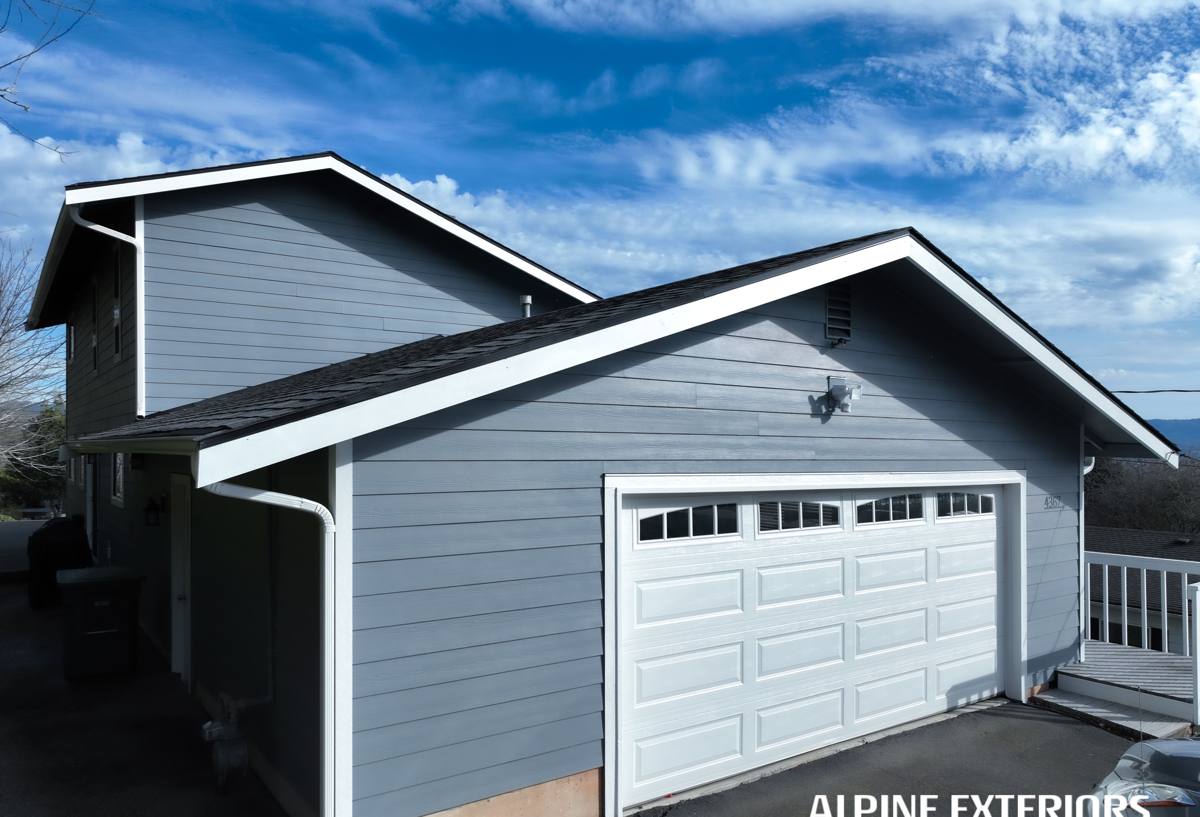
What Actually Counts as Storm Damage
Homeowners often assume "storm damage" means missing shingles after a hurricane. That's part of it, but a lot of what we get called out for after wind and rain events is more subtle, and it's worth knowing the difference before you decide whether a repair is even needed.
Wind Damage
Sustained wind and gusts lift shingle tabs, break the adhesive seal strip, and crease shingles even when nothing blows off. A creased or lifted shingle no longer sheds water the way it's designed to, even if it's still nailed down. Wind can also work flashing loose around chimneys, skylights, and roof-to-wall transitions without any single dramatic failure point.
Wind-Driven Rain Intrusion
This is the one that catches people off guard. Rain that comes in nearly sideways during a strong storm can get pushed up and under shingle edges, through vent flashing, and into gaps that would never leak in ordinary rainfall. The roof surface itself might look untouched, but water has already found its way into the underlayment or decking.
Debris and Impact Damage
Palm fronds, loose gutters from neighboring structures, and wind-borne debris cause bruising or punctures that are easy to miss from the ground. On architectural shingle roofs this often shows up as granule loss in a concentrated area rather than an obvious hole.
The Damage You Can't See From the Ground
Surface damage is only part of the story. What actually determines whether a roof needs a patch, a section replaced, or a full tear-off is what's happening underneath the shingles.
- Underlayment saturation — once wind-driven rain gets past the shingle layer, the underlayment is the last line of defense. Repeated soaking breaks it down faster than age alone would.
- Decking softness — plywood or OSB decking that's absorbed moisture over time will feel spongy underfoot and won't hold fasteners properly, even if the leak hasn't reached the interior yet.
- Fastener corrosion — salt air accelerates rust on exposed nail heads and metal flashing well beyond what you'd see a few miles inland.
- Sealant and boot failure — rubber pipe boots and roof cement dry out and crack faster under constant UV and heat, and wind events are usually what finally exposes the failure.
This is why we don't just look at what blew off. We check what's underneath the surrounding area too, because storm damage rarely stops exactly at the visible edge of the problem.
Our Repair Process
We keep this straightforward on purpose. Storm repair isn't the time for guesswork or upselling — it's the time for a clear diagnosis and a fix that matches the actual damage.
- On-site inspection — we walk the roof (not just look from a ladder) and check attic space where accessible for signs of moisture intrusion, staining, or soft decking.
- Documented findings — photos and notes of every damaged area, useful whether you're filing an insurance claim or just want a clear record of what we found.
- Scope and options — we tell you plainly whether this is a spot repair, a section replacement, or something larger, and why.
- Repair — matching materials as closely as possible, replacing damaged decking where needed (not just re-covering it), and resealing all flashing and penetrations in the repair area.
- Final check — we confirm the repair ties in cleanly with the surrounding roof so water sheds the way it's supposed to, not just at the patch but at every seam around it.
Repair or Replace? What Actually Drives That Decision
Not every storm-damaged roof needs to come off. But on a coastal property, age and prior wear matter more than they would inland, because salt air and UV exposure shorten the usable life of most roofing materials. Here's how we think through it:
| Factor | Leans Toward Repair | Leans Toward Replacement |
|---|---|---|
| Age of roof | Under 10-12 years | Nearing or past manufacturer's expected service life |
| Extent of damage | Isolated area, one slope or section | Multiple slopes, widespread granule loss or lifting |
| Decking condition | Solid, no soft spots found | Soft, delaminated, or water-stained decking present |
| Prior repair history | Well-maintained, few past patches | Multiple past patches or unresolved leak history |
| Material availability | Matching shingles/tile still available | Discontinued product, visible mismatch unavoidable |
None of these factors alone makes the call — it's the combination. A five-year-old roof with one damaged section is almost always a repair. A fifteen-year-old roof with damage on two slopes and soft decking underneath is usually better served by replacing the affected slopes or the whole roof rather than chasing patches on borrowed time.
Materials That Actually Hold Up on an Island Property
What we use for a storm repair matters as much as the workmanship. On a waterfront property in Pinellas County, we lean toward:
- Corrosion-resistant fasteners — standard nails corrode faster in salt air; we use fasteners rated for coastal exposure.
- High-quality synthetic underlayment — more resistant to prolonged moisture exposure than older felt products, which matters when wind-driven rain gets past the shingle layer.
- Sealants rated for UV and thermal cycling — Florida's sun bakes cheaper sealants brittle within a couple of years; we use products built to stay flexible longer.
- Properly lapped and sealed flashing — most leaks trace back to flashing details, not the field of the roof, so we don't treat this as an afterthought.
We won't tell you a certain shingle brand or product line is "bad" — most reputable products perform fine when installed correctly. Where we're selective is in how a product handles long-term coastal exposure, moisture behind the surface, and how forgiving it is if a future repair is ever needed. That's a maintenance and durability conversation, not a brand rivalry.
Working Through an Insurance Claim
If your damage is storm-related, your insurance policy may cover part or all of the repair, depending on your coverage and deductible structure. We're not a public adjuster and we won't promise a claim outcome, but we can:
- Provide clear photo documentation of the damage tied to a specific weather event where evident
- Give you a written scope of the repair work needed, in plain terms
- Meet with your adjuster on-site if that's helpful to clarify what we found
What we won't do is inflate a scope to match a settlement number or tell you damage exists where we didn't find any. A claim built on an honest inspection holds up better than one that doesn't match what's actually on the roof.
Why It Matters to Hire a Crew That Already Works This Area
Island Estates properties have a specific mix of conditions — water exposure on multiple sides, tighter waterfront lot layouts, and roofs that have usually taken more cumulative wind and salt exposure than a comparable inland Clearwater home of the same age. A crew that regularly works this part of Pinellas County recognizes the difference between normal weathering and storm-caused failure faster, and knows which repair details actually hold up out here versus which ones fail again within a season or two.
After a storm, this area also tends to see an influx of out-of-town crews looking for quick repair work. There's nothing wrong with outside help in a genuine capacity crunch, but a repair done by someone unfamiliar with coastal installation details is often the reason a homeowner ends up calling someone else to fix a "fixed" roof a year later.
After-Storm Roof Checklist for Homeowners
Before you call anyone, a quick visual check can help you describe the problem accurately and decide how urgent it is:
- Look for shingles that are missing, lifted, or visibly creased from the ground or a safe vantage point — don't climb onto the roof yourself
- Check gutters and the ground below rooflines for granules, shingle fragments, or flashing pieces
- Note any new ceiling stains, especially near chimneys, skylights, or exterior walls
- Check attic space (if safely accessible) for damp insulation, staining, or daylight coming through the decking
- Photograph anything unusual before cleanup, in case it's needed for a claim
- Avoid tarping or climbing the roof yourself in wet or windy conditions — leave temporary protection to a professional
If you're seeing any of these signs after a recent storm, it's worth having someone look at it before the next round of rain finds the same weak spot again.
If you're dealing with storm damage on an Island Estates roof, we're happy to come take an honest look and walk you through exactly what we find — no pressure, no inflated scope, just a straight answer about what your roof actually needs. Use the form below to request a free estimate.