 Clearwater Siding
 Siding Built for Belleair Bluffs' Coastal Conditions
Belleair Bluffs sits in one of the more exposed pockets of Pinellas County, tucked between the Intracoastal Waterway and the string of barrier islands that separate it from the Gulf of Mexico. That location is part of what makes it such a desirable place to live, but it also means homes here take a steady beating from conditions that inland Florida neighborhoods simply don't deal with in the same way. Salt-laden air moves in off the water daily, the sun is intense and constant for most of the year, and when a tropical system does roll through the wind and wind-driven rain hit this corridor hard.
Clearwater Siding Co works throughout this part of Pinellas County, and Belleair Bluffs is a neighborhood we know well. We're not a national franchise dispatching a crew that's never seen a Gulf Coast summer — we're local, and we build our siding, roofing, window, and deck work around what actually holds up in this climate, not what looks good in a showroom somewhere else.
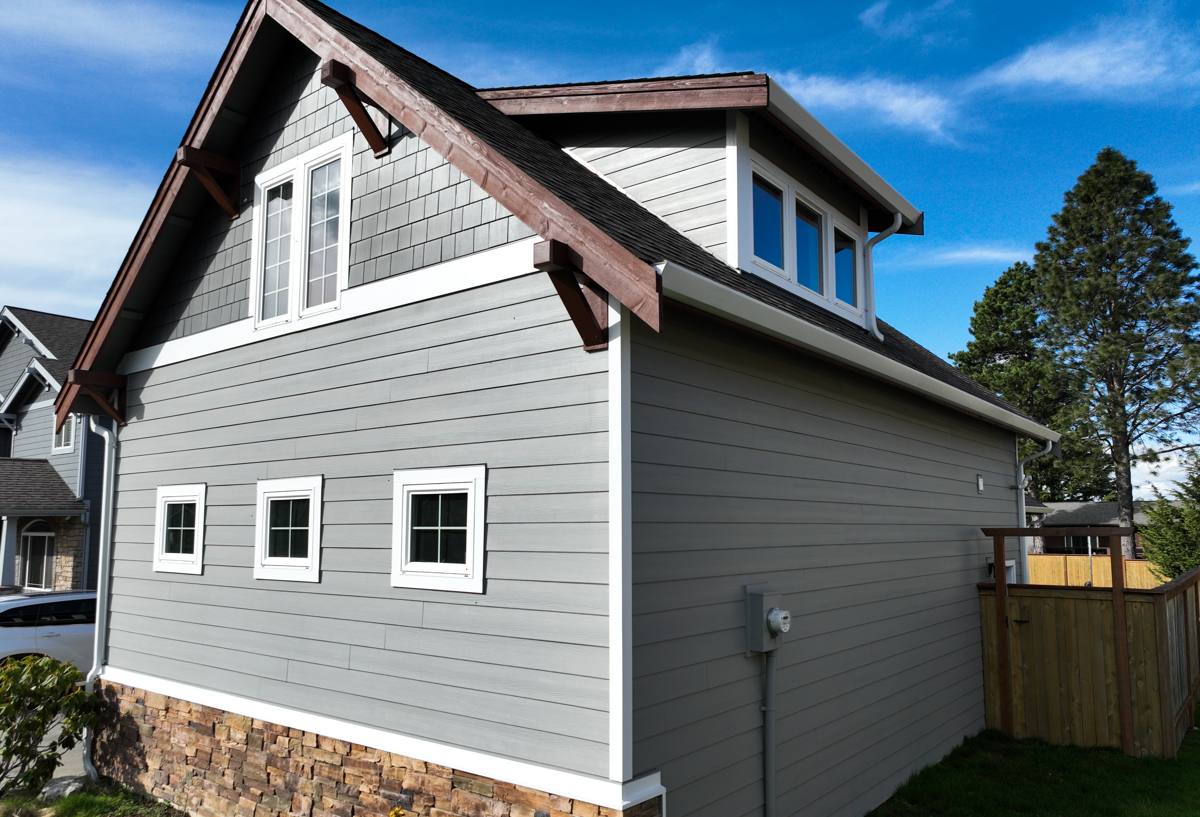
What the Climate Does to Exterior Siding Here
Salt Air and Corrosion
Homes within a few miles of the coast are exposed to airborne salt that settles on exterior surfaces, works into seams and fasteners, and accelerates deterioration of materials that aren't built to resist it. This is a slow, cumulative process — it's not something that shows up in year one, but by year eight or ten on a lower-grade siding product, the difference between a coastal-rated install and a budget one becomes obvious.
UV Exposure
Pinellas County gets strong, direct sun for most of the year. Siding paint jobs and lower-quality factory finishes chalk, fade, and break down under that kind of sustained UV load. Color consistency and finish integrity are two of the first things to go on siding that wasn't engineered for a subtropical climate.
Wind-Driven Rain and Humidity
Florida rain rarely falls straight down — it comes in sideways during storms, driven by wind off the water. That means siding has to shed water at seams, laps, and penetrations rather than just resist rain hitting it head-on. Combine that with year-round humidity, and any siding material with poor moisture tolerance is set up to swell, rot, or grow mold behind the surface.
Hurricane-Force Wind Events
Belleair Bluffs is close enough to the water that tropical storm and hurricane wind loads are a real design consideration, not a hypothetical. Siding attachment, fastening patterns, and the underlying substrate all matter more here than they would on a home fifty miles inland.
Why We Install Only James Hardie Fiber Cement
Clearwater Siding Co made a deliberate decision to install one siding system: James Hardie fiber cement. We don't offer vinyl, LP SmartSide, Cemplank, Allura, primed spruce, or cedar as alternatives, and that's worth explaining rather than just stating.
Vinyl siding is affordable and easy to install, but it softens and can warp under extreme heat, and in a hurricane-wind environment it's more prone to being torn loose or cracked by wind-driven debris than a heavier, fastened-down fiber cement panel. Wood products like cedar and primed spruce look great when new, but they demand an ongoing maintenance schedule — repainting, sealing, and moisture monitoring — that most homeowners underestimate, and Florida humidity shortens the interval between those maintenance cycles. Engineered wood products like LP SmartSide use a treated wood-strand substrate that performs well in many climates, but wood-based substrates are inherently more sensitive to sustained moisture exposure than cement-based ones, which matters in a market where humidity and wind-driven rain are a fact of life rather than an occasional event. Other fiber cement brands, like Cemplank and Allura, are legitimate cement-based products, but we've standardized our crews, our warranty process, and our supply chain around one manufacturer so we can guarantee consistent installation quality and a single, dependable warranty path for our customers.
James Hardie fiber cement is non-combustible, dimensionally stable in heat and humidity, and available in HZ5 formulations engineered specifically for high-humidity, hurricane-prone climates like ours. The ColorPlus factory finish is baked on under controlled conditions, which gives it far better fade and chip resistance than field-applied paint, and it carries a strong transferable warranty when installed to Hardie's specifications. For a coastal Pinellas County home, that combination of fire resistance, moisture stability, and finish durability is what actually holds up over time — not just what looks good on day one.
Comparing Siding Materials for a Coastal Belleair Bluffs Home
| Material | Heat/UV Tolerance | Moisture Behavior | Wind Performance | Maintenance |
|---|---|---|---|---|
| James Hardie Fiber Cement | Excellent, factory-baked finish | Stable, non-organic substrate | Rated for high-wind installs | Low, occasional cleaning |
| Vinyl | Can warp/soften in heat | Doesn't rot, but seams can leak | Prone to cracking/blow-off in high wind | Low, but damage means replacement |
| Cedar/Primed Spruce | Fades, needs refinishing | Absorbs moisture, rot risk | Moderate, fastening-dependent | High, regular repainting/sealing |
| LP SmartSide (Engineered Wood) | Good with proper coating upkeep | Wood-strand core sensitive to sustained moisture | Good when installed to spec | Moderate, coating maintenance |
How Our Siding Process Works in Belleair Bluffs
Inspection and Assessment
We start by walking the exterior with the homeowner, looking at the current siding condition, any moisture intrusion at seams or trim, the state of the underlying sheathing, and how the home is oriented relative to prevailing wind and sun exposure. Coastal-facing walls often show wear patterns that inland walls on the same house don't.
Product Selection
We help homeowners choose the right James Hardie product line and ColorPlus finish for their home's exposure and style — lap siding, panel systems, and trim boards are all part of the Hardie system, and we spec the HZ5 line appropriate for this climate.
Installation to Spec
Fiber cement siding only performs the way it's supposed to when it's installed correctly — proper fastening patterns, correct clearances, flashing details at windows and penetrations, and attention to how water is meant to move off the wall. This is where a lot of siding jobs go wrong industry-wide, and it's a big part of why we run our own trained crews instead of subcontracting out to whoever's available.
Final Walkthrough
We review the completed work with the homeowner, confirm the finish and installation meet spec, and go over warranty documentation and basic upkeep expectations.
Roofing, Windows, and Decks in the Same Neighborhood
Siding is only one piece of a home's exterior envelope, and in a coastal Pinellas County neighborhood like Belleair Bluffs, it rarely makes sense to look at it in isolation. We also handle roofing, window replacement, and deck construction, and homeowners planning a siding project often ask us to look at the roof and window flashing at the same time, since water intrusion at those transition points is one of the more common issues we find on coastal homes. A hurricane-rated roof, properly flashed windows, and correctly installed fiber cement siding work together as a system — a weak point in any one of them can undermine the others.
What to Expect From a Local Crew
- Familiarity with Pinellas County permitting and wind-load requirements for exterior work
- Crews who understand how salt air, humidity, and storm exposure affect installation choices in this specific area
- A single point of contact for siding, roofing, window, and deck questions, rather than juggling separate out-of-town contractors
- Straightforward, no-pressure estimates with clear explanations of material and installation choices
- Availability for follow-up service after installation, since we're not driving in from out of the region
Questions to Ask Before Hiring a Siding Contractor
Whether you hire us or someone else, a few questions can help you evaluate any contractor working on a coastal Pinellas County home:
- Are you licensed and insured to do exterior work in Florida, and can you provide documentation?
- What siding products do you install, and why did you choose them for this climate?
- What's your fastening and flashing approach for high-wind, coastal exposure?
- Who actually performs the installation — your own trained crew, or subcontractors?
- What does the manufacturer's warranty cover, and is it transferable if the home is sold?
Cost Factors for a Siding Project in Belleair Bluffs
Every home is different, but a few factors tend to drive the cost of a siding project in this area more than others: the total square footage and complexity of the exterior walls, the condition of the sheathing underneath the existing siding (which sometimes isn't visible until removal begins), the trim and detail work involved around windows and rooflines, and the specific James Hardie product line and finish selected. We walk through all of this during the estimate so there are no surprises once work begins.
If you're weighing a siding project — or want a second opinion on roofing, windows, or a deck — we're happy to walk your property and give you a straightforward, no-pressure estimate. There's no cost to have us take a look, and you'll get an honest read on what your home actually needs.