 Clearwater Siding
 Building Decks for One of Clearwater's Toughest Microclimates
Island Estates sits close to open water, and that proximity changes what a deck has to survive. Homes here deal with a steady drift of salt air, intense year-round UV exposure, wind-driven rain that finds its way into every gap and seam, and the occasional hurricane-force wind event that puts real uplift and racking stress on anything built outdoors. A deck built to a generic spec sheet might look fine for a season or two, but in this environment the difference between a deck that lasts fifteen-plus years and one that starts failing in three or four almost always comes down to material selection, fastener choice, and how the structure was flashed and fastened at the start.
We build decks throughout the Clearwater area, and Island Estates is one of the neighborhoods where we see the clearest evidence of what salt air and sun do to a structure over time — corroded fasteners, delaminating composite boards, ledger boards that were never properly flashed and quietly rotted behind the siding. This page walks through what a correctly built deck looks like for this specific location, not a generic one.
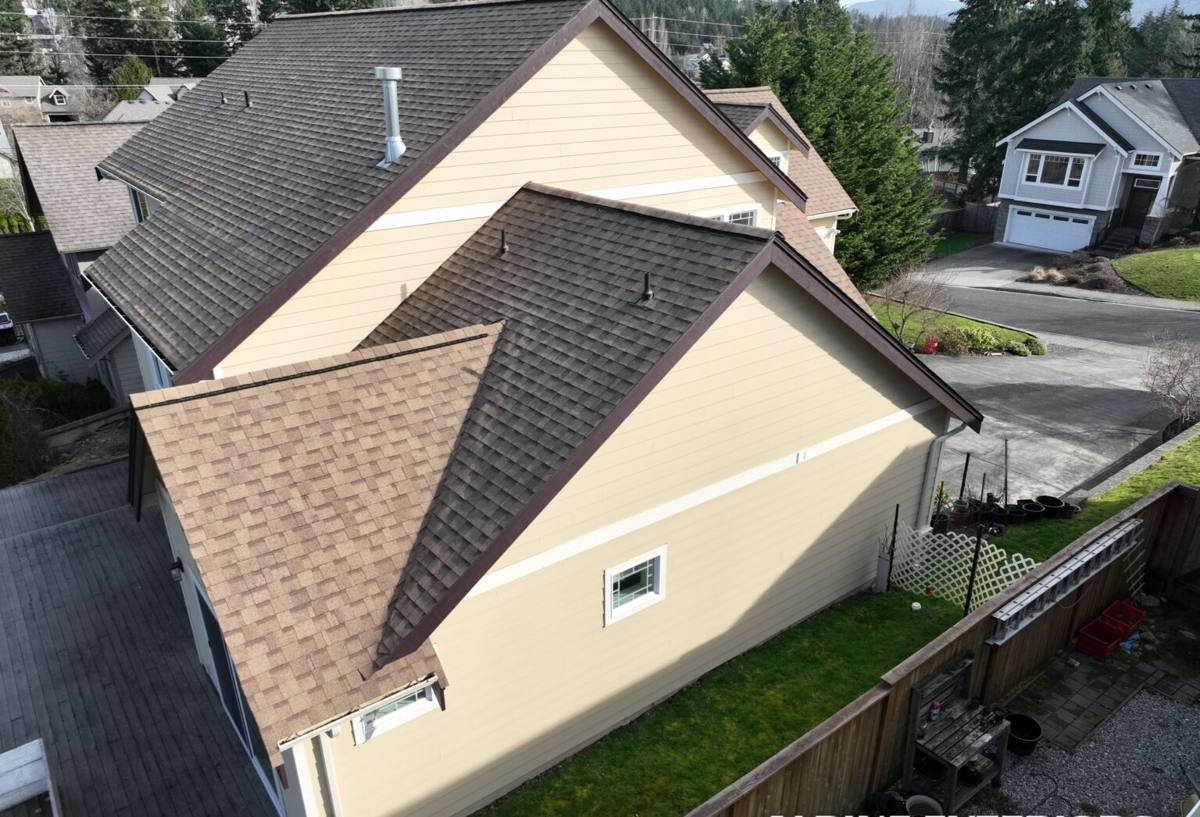
What Makes Island Estates Conditions Different
Salt Air and Corrosion
Even homes that aren't directly waterfront in Island Estates get regular salt-laden air moving through. Salt accelerates corrosion in any fastener, bracket, or connector that isn't rated for coastal exposure. Standard galvanized hardware that would be fine inland can start rusting and staining decking within a couple of years this close to the water.
UV and Heat
Florida sun is intense nearly all year, and a deck has no shade of its own. UV breaks down the surface fibers of wood decking, fades and chalks lower-grade composite, and dries out sealants and finishes faster than manufacturers' warranty language usually assumes. Deck boards on a west- or south-facing exposure take the worst of it.
Wind-Driven Rain and Wind Load
Wind-driven rain doesn't just fall on a deck — it gets pushed sideways and upward into ledger connections, stair stringers, and any gap where flashing was skipped. And Pinellas County's wind design requirements exist because this area does see hurricane-force gusts; a deck's post-to-beam and beam-to-joist connections, along with proper hold-down hardware, matter more here than in a calmer inland climate.
What a Correctly Built Deck Involves
Footings and Framing
Everything starts below grade. Footings need to be sized and set to local frost-free depth and soil-bearing requirements, which in this area is less about frost and more about proper concrete depth and diameter for the loads involved, especially on elevated decks. Posts, beams, and joists should be rated lumber or approved alternatives, sized to actual span tables rather than "what looks about right."
Ledger Attachment and Flashing
The ledger board — where the deck attaches to the house — is the single most common failure point we see on older or poorly built decks. It has to be through-bolted (not just lag-screwed in many cases), flashed with proper metal or self-adhering membrane flashing that sheds water away from the house wall, and fastened with corrosion-resistant hardware. Skipping or shortcutting this step is invisible on installation day and can lead to hidden wood rot behind the siding years later.
Connections and Hardware
Joist hangers, post bases, hurricane ties, and structural screws all need to be rated for the exposure category they're in — and in a salt-air environment, that generally means stainless steel or a coating specifically rated for coastal or ACQ-treated lumber contact, not standard electro-galvanized hardware.
Choosing the Right Decking Material
There's no single "best" decking material — there's a best material for the exposure, budget, and maintenance appetite of the specific home. Here's how the common options actually compare in an Island Estates-type coastal environment:
| Material | How It Handles This Climate | Maintenance | Typical Lifespan Here |
|---|---|---|---|
| Pressure-treated wood | Affordable, but UV and humidity cause graying, splintering, and checking without regular upkeep | Sealing/staining every 1-2 years | 10-15 years with upkeep |
| Capped composite | Protective cap resists UV fading and moisture absorption much better than uncapped composite | Occasional cleaning, no sealing | 20-25+ years |
| Uncapped composite (older generation) | Prone to surface fading, mold growth, and moisture wicking at cut edges | Periodic cleaning, edge sealing recommended | 10-15 years |
| PVC decking | Fully synthetic, excellent moisture and salt resistance, doesn't absorb water at all | Minimal — occasional washing | 25-30+ years |
We generally steer homeowners in this area away from uncapped, budget composite products — not because the material is inherently bad everywhere, but because our professional standard for a home this close to salt air favors materials with a real moisture and UV barrier. The upfront cost difference is usually smaller than people expect once you factor in how often a lower-grade product needs attention.
Railings and Fasteners
- Stainless steel or coated structural screws rated for coastal/ACQ contact — not standard deck screws
- Aluminum, cable, or PVC-composite railing systems resist salt corrosion far better than untreated steel
- Hidden fastener systems reduce the number of exposed metal points where corrosion can start
- Post caps and connectors should match the coastal-rated hardware used in the structure, not mismatched off-the-shelf parts
Permitting and Local Code Considerations
Deck construction in Pinellas County, including Clearwater, typically requires a building permit, engineered plans or approved prescriptive framing for anything beyond a small ground-level platform, and inspections at the footing and framing stages before decking goes down. Depending on the property's flood zone designation and elevation, there can be additional requirements around how close a structure can sit to grade or how it ties into the home's existing foundation. We handle the permitting process as part of the job rather than leaving it to the homeowner to sort out — it's not a step worth skipping, since an unpermitted deck can create real problems at resale or insurance renewal.
Waterfront and Canal-Adjacent Considerations
Island Estates is a waterfront community, and homes near canals or open water have a few additional factors worth planning around:
Elevation and Drainage
Decks near the water often need to account for higher humidity at ground level and, in some cases, base flood elevation requirements that affect how the substructure is designed. Proper drainage away from the house and away from any seawall or grade transition helps prevent standing water from accelerating wood decay or hardware corrosion.
Proximity to Seawalls and Docks
Where a deck sits near a seawall or connects toward a dock area, the transition point needs careful structural planning so the deck framing isn't relying on unstable fill or an aging seawall cap for support. We evaluate this on-site rather than assuming a standard footing plan will work.
Our Process From Estimate to Finished Deck
- On-site assessment — we look at sun exposure, wind exposure, drainage, soil, and how close the deck is to salt water or salt air drift
- Material and design discussion — honest trade-offs on decking material, railing type, and hardware based on your budget and how much maintenance you want to do
- Permitting — we prepare and submit what the county requires and schedule inspections
- Footings and framing — built to span and load requirements, not shortcuts, with coastal-rated hardware throughout
- Ledger flashing and waterproofing — done correctly the first time, since it's the hardest part to fix later
- Decking, railing, and finish work — installed to manufacturer specs so warranties stay valid
- Final walkthrough — we go over care and maintenance specific to the materials you chose
Protecting Your Deck After It's Built: A Homeowner's Checklist
- Rinse salt residue off decking and railings periodically, especially after storms or high-wind days
- Check fastener heads and connectors once or twice a year for early rust staining
- Keep gutters and downspouts near the deck clear so water isn't dumping onto framing or footings
- Inspect the ledger flashing area where the deck meets the house for any sign of staining or soft wood
- Reseal wood decking on the schedule the product actually needs in this climate, not a generic once-every-few-years guess
- Trim back landscaping that traps moisture against framing or footings
- After any major storm, do a quick visual check of railings and stair connections before heavy use
Why Hiring a Crew That Already Works in Island Estates Matters
A lot of deck problems in coastal Pinellas County neighborhoods trace back to a crew that built to an inland spec — standard hardware, a generic material choice, a ledger detail that would be fine in a drier, calmer climate but wasn't built for salt air and wind-driven rain. Working in Island Estates and similar Clearwater waterfront neighborhoods regularly means we already know which hardware grades hold up, which decking products actually perform here versus just being marketed well, and what the county inspectors are going to want to see at each stage. That local familiarity shows up in fewer surprises during the build and a deck that's still solid a decade or more down the road.
If you're planning a new deck or replacing one that's showing its age, we're happy to come take a look and put together a straightforward, no-pressure estimate — just fill out the form below and we'll follow up to schedule a time.