 Clearwater Siding
 Why Clearwater Beach Homes Need a Different Approach to Siding
Clearwater Beach sits about as close to the Gulf of Mexico as a home can get, and that proximity shapes everything about how an exterior holds up over time. Homes here don't just deal with ordinary Florida weather — they deal with a barrier island version of it. Salt-laden air moves inland with almost every sea breeze, humidity stays high for most of the year, and the same sun that draws visitors to the beach spends its days breaking down paint, caulk, and lesser siding materials. Add in the wind loads that come with being on the exposed edge of Pinellas County during hurricane season, and you have a climate that is genuinely tougher on a building envelope than most inland neighborhoods just a few miles away.
We work throughout the Clearwater area, and Clearwater Beach specifically gets treated as its own case. A siding job that performs fine in a shaded inland subdivision can fail years early on the island if it's specified, installed, or maintained the same way. That's the reasoning behind almost every recommendation on this page.
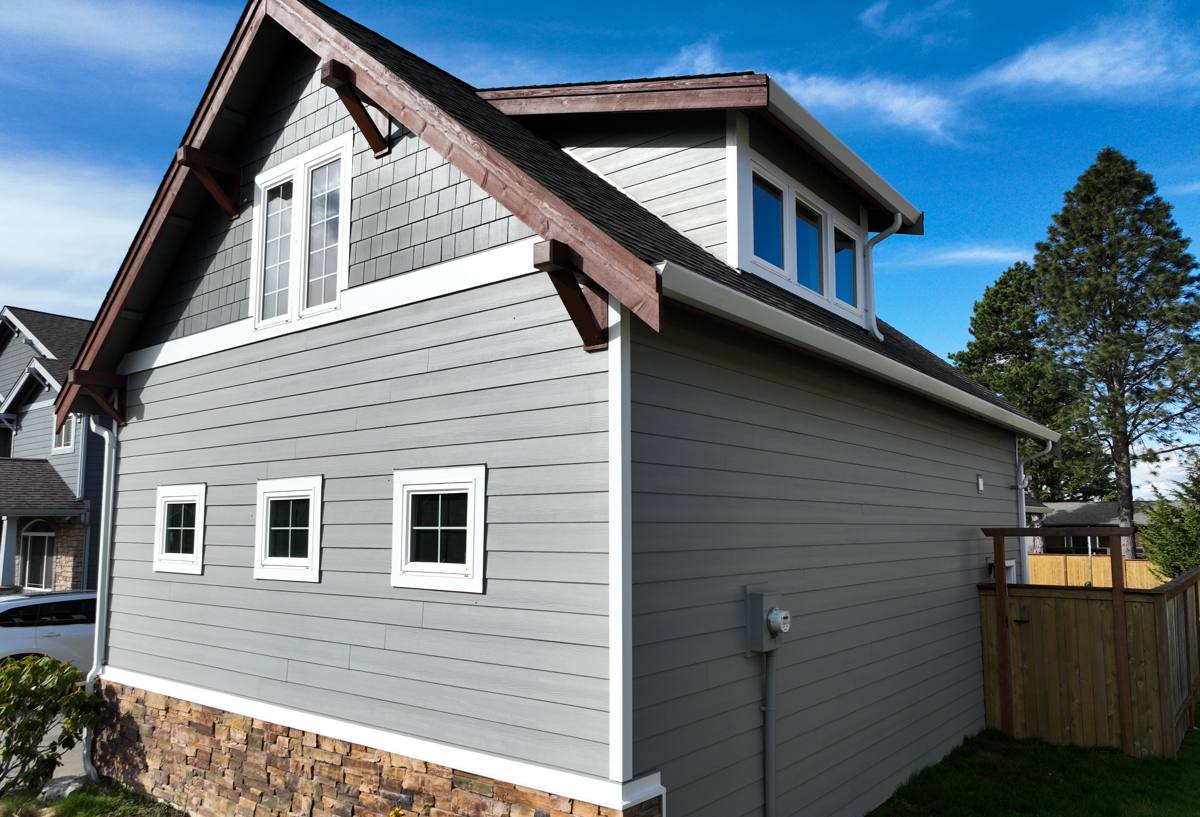
What the Coastal Climate Actually Does to a Home's Exterior
Salt Air and Corrosion
Airborne salt doesn't just affect metal — it accelerates the breakdown of caulking, fasteners, and paint film on siding, and it can work its way into seams and joints that aren't properly sealed. Homes closer to the water tend to show chalking, fading, and joint failure sooner than homes even a mile or two inland. This is one of the biggest reasons material choice matters so much this close to the Gulf.
UV Exposure
Florida sun is intense year-round, not just in summer. Constant UV breaks down pigments and resins in lower-grade siding and paint finishes, which is why so many homes on the beach show fading, chalking, or color mismatch on the sun-facing elevations within just a few years of a repaint.
Wind-Driven Rain and Hurricane Winds
Clearwater Beach sits in a wind zone that regularly deals with tropical storm and hurricane-force gusts. Wind doesn't just apply pressure to siding — during named storms it drives rain sideways, forcing water into any gap, seam, or fastener hole that isn't sealed correctly. A siding system's fastening pattern, flashing details, and moisture management matter as much as the material itself when a storm rolls through.
Humidity and Moisture Cycling
High humidity means siding rarely gets a long, dry stretch to fully release moisture it may have absorbed. Materials that swell, wick, or hold water are at a real disadvantage in this kind of cycling environment — it's a slow, steady stress rather than a single dramatic event, but it adds up over the life of the exterior.
Why We Install Only James Hardie Fiber Cement Siding
We made a deliberate decision years ago to install one siding system: James Hardie fiber cement. We don't offer vinyl, LP SmartSide, primed wood, cedar, or other fiber cement brands, and that's worth explaining rather than just stating.
Vinyl siding is affordable and easy to install, but it's a petroleum-based product that softens in extreme heat and can become brittle over time, and it doesn't have the mass or rigidity to shrug off wind-driven debris the way fiber cement does. In a barrier island wind zone, that matters. Wood-based products, including primed spruce, cedar, and engineered wood siding like LP SmartSide, perform well in many parts of the country, but they rely on an intact factory coating and careful field sealing to keep moisture out — any breach in that coating, which is common at cut edges, fastener heads, or storm damage, opens the door to swelling and rot in a humid coastal environment. Other fiber cement brands share some of Hardie's core advantages, but we standardized on Hardie specifically for its climate-engineered product lines, factory-applied ColorPlus finish, and the depth of its installed track record along coastlines like ours.
None of this means those other products are junk — many are reasonable choices in the right climate and budget. It means that for a home a few blocks from the Gulf, we don't think they're the right long-term bet, and we'd rather tell a homeowner that upfront than sell something we don't believe in.
What Makes James Hardie Fiber Cement Different
- Non-combustible — fiber cement doesn't contribute fuel to a fire the way wood-based sidings can
- Engineered specifically for high-humidity, high-UV climates through Hardie's HZ10 product line, built for regions like ours
- ColorPlus factory-baked finish resists fading and chalking better than field-applied paint
- Rigid, dense material that holds up to wind-driven debris and doesn't soften in heat
- Doesn't swell, rot, or attract wood-boring insects the way wood-based sidings can
- Backed by a strong transferable manufacturer warranty when installed to spec
How This Plays Out in the Installation Details
Material choice is only half the equation — installation quality is what actually determines whether a siding job performs for 20-plus years or starts failing in five. On Clearwater Beach specifically, we pay close attention to a few details that matter more here than they might inland:
Fastening and Flashing
Correct fastener spacing and placement matter more in a high-wind zone. We follow Hardie's published fastening schedules rather than cutting corners, and we pay particular attention to flashing at windows, doors, and any horizontal trim where wind-driven rain tends to find its way in.
Joint and Seam Sealing
Every seam is a potential entry point for both moisture and salt air. Proper caulking and joint treatment at the time of installation is one of the simplest things a crew can get right or wrong, and it has an outsized effect on how the siding ages.
Ventilation Behind the Siding
A house needs to be able to dry out. Where wall assemblies allow for it, proper drainage and ventilation planes behind the siding help manage the humidity this area deals with year-round, rather than trapping moisture against the sheathing.
Beyond Siding: The Full Exterior Envelope
Siding doesn't work in isolation — it's one piece of a home's exterior envelope, and on a barrier island the roof, windows, and any exterior decking are all fighting the same battle against sun, salt, and wind. We handle all four because they need to work together: a new siding job paired with an aging roof or failing window seals just shifts the water intrusion problem somewhere else.
| Exterior Component | Primary Coastal Stress | What We Look For |
|---|---|---|
| Siding | UV fade, salt exposure, wind-driven rain | Material integrity, seam sealing, fastening |
| Roofing | Wind uplift, UV breakdown, storm debris | Underlayment condition, flashing, wind rating |
| Windows | Wind-driven rain intrusion, seal failure | Frame seals, impact rating, flashing at openings |
| Decks | Moisture cycling, UV, salt corrosion of fasteners | Fastener material, board spacing, ledger flashing |
Cost Factors for Clearwater Beach Homeowners
Every home is different, but a few factors consistently move the price of a siding project up or down on the beach specifically:
| Factor | Why It Matters Here |
|---|---|
| Home size and elevation complexity | More linear footage and cut angles mean more labor and material |
| Existing substrate condition | Salt-air and moisture damage behind old siding may need repair before new siding goes on |
| Trim and detail work | Coastal-style homes often have more architectural trim, which adds labor |
| Access and staging | Narrow beach lots and limited parking can affect crew logistics and timeline |
| Color and finish selection | ColorPlus factory finishes vary slightly in cost versus field-painted options |
What to Expect From a Local Crew
Working this close to the water means understanding things that don't show up in a general contractor's playbook — how salt air changes maintenance timelines, how HOA and building requirements can vary block to block near the beach, and how storm season affects scheduling. A crew that works Pinellas County regularly also has a feel for how homes here are actually built, which matters when you're tying new siding into existing framing, trim, and window details.
We treat every Clearwater Beach project as a coastal project first, not a standard siding job with a slightly higher price tag. That shapes material selection, fastening details, and moisture management from the first walkthrough.
A Homeowner's Pre-Project Checklist
- Ask what siding material is being proposed and why it's suited to a coastal environment
- Confirm the fastening schedule and flashing details, not just the brand name on the product
- Check whether the crew is factory-trained or certified on the specific siding system
- Ask how the project accounts for wind-driven rain at windows, doors, and trim
- Get a clear scope of work in writing, including how existing damage will be handled if it's found once old siding comes off
- Confirm warranty terms — both material and labor — and whether they're transferable
Getting Started
If you're weighing a siding, roofing, window, or deck project for a home on Clearwater Beach, we're happy to take a look and give you a straightforward assessment of what your exterior is actually dealing with and what it would take to address it right. There's no pressure and no obligation — just a local crew's honest read on your home. Reach out below for a free estimate.