 Clearwater Siding
 Siding Built for Oldsmar's Corner of Pinellas County
Oldsmar sits at the north end of Pinellas County along Old Tampa Bay, close enough to open water that salt-laden air reaches homes even several miles inland, and far enough from the coast that many owners assume they're in the clear. Neither assumption holds up over time. Between the bay breeze, the tree canopy that shades many of Oldsmar's older neighborhoods, and the same brutal Gulf Coast sun and storm pattern that hits the rest of the Tampa Bay area, exterior materials here take a steady beating from more than one direction at once. We're a Clearwater-based crew that works this stretch of Pinellas County regularly, and Oldsmar's mix of home ages and lot conditions is familiar territory.
This page covers what local homes actually deal with, how we approach siding, roofing, windows, and decks for this area, and why we install exclusively James Hardie fiber cement siding rather than the wider range of products still common on older homes here.
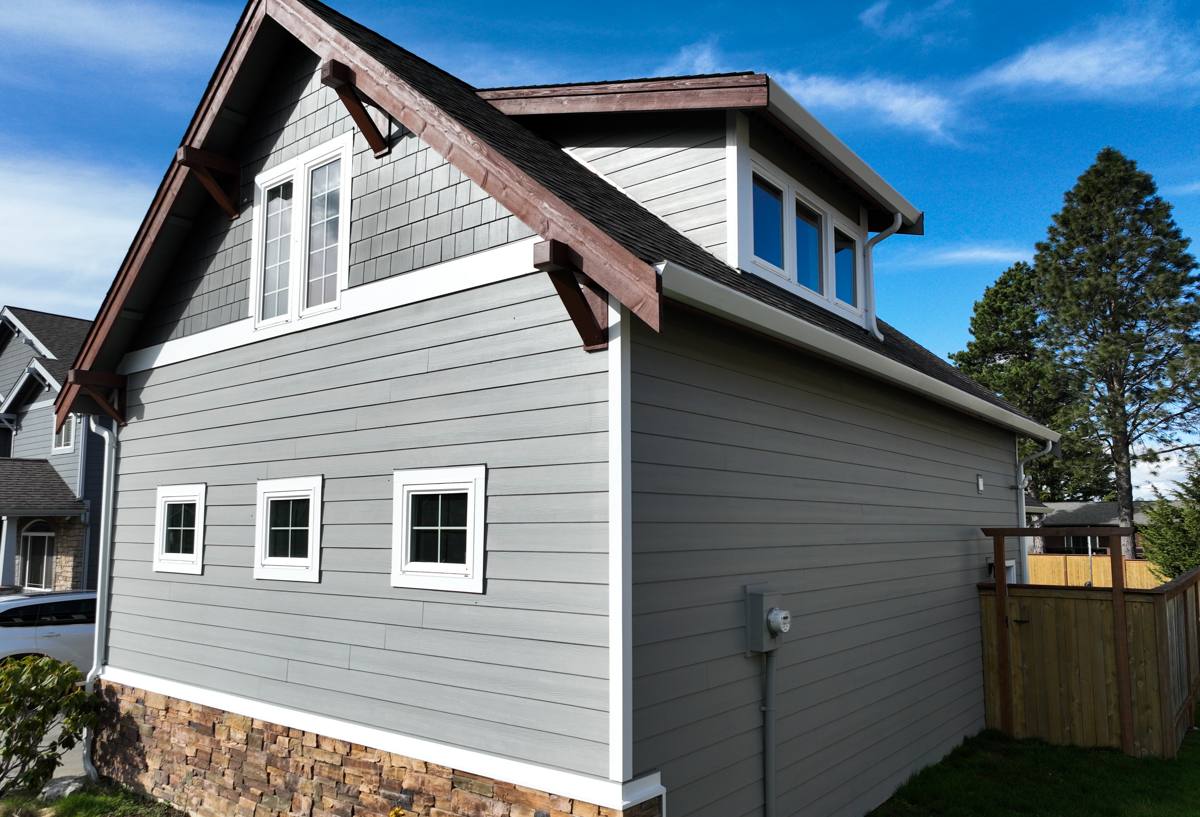
What the Climate Does to Siding in This Area
Salt Air and Bay Moisture
Old Tampa Bay isn't the open Gulf, but it's brackish water, and prevailing winds carry that salt content onto homes well inland. Salt air accelerates corrosion on fasteners, trim, and any siding product with metal components or joints that trap moisture. Homes closer to the water see it first, but the effect doesn't stop at some clean boundary a mile from shore.
Heat and UV Load
Pinellas County sees some of the most consistent, intense sun exposure in the continental U.S. for most of the year. South- and west-facing walls take the brunt of it, and siding finishes that aren't engineered for that UV load fade, chalk, or become brittle years before a homeowner expects to think about replacement.
Humidity and Tree Cover
Oldsmar has more mature tree canopy than a lot of newer Pinellas County development, which is a genuine amenity but also means more shaded, slower-drying wall sections. Combined with Florida's year-round humidity, that's exactly the environment where moisture-sensitive siding materials underperform — trapped dampness behind or within the material doesn't get the drying window it needs.
Wind-Driven Rain and Storm Exposure
Like the rest of the Tampa Bay region, Oldsmar is subject to hurricane-force wind events and the wind-driven rain that comes with tropical systems. Rain forced sideways under pressure finds every weak seam, gap, or fastener point in an exterior — siding, roofing, and window assemblies all get tested at once during a real storm, not just individually.
Why We Only Install James Hardie Fiber Cement
Plenty of siding products get sold in this market — vinyl, LP SmartSide, primed wood, other fiber cement brands. We don't install any of them, and it's worth explaining why rather than just stating it.
Vinyl
Vinyl is inexpensive and easy to install, but it softens and can warp under sustained high heat, and prolonged UV exposure fades color over time in ways that can't be spot-repaired — a faded panel usually means replacing a section that no longer matches. In a climate that runs hot for most of the year, that's a real limitation, not a hypothetical one.
LP SmartSide and Other Engineered Wood
Engineered wood siding relies on factory-applied sealants and strict edge and seam treatment to keep moisture out. In a high-humidity, high-rainfall market like Pinellas County, any installation shortcut — an unsealed cut edge, a missed caulk line — becomes an entry point for swelling and rot. It's a workable product elsewhere; we don't think it's the right bet for this climate.
Cemplank, Allura, and Other Fiber Cement Brands
These are legitimate fiber cement products, and fiber cement as a category is the right call for Florida. Our standardization on James Hardie specifically comes down to the ColorPlus factory finish process, the HZ5 formulation engineered for humid climates, and a warranty structure we're comfortable standing behind on every job, not a claim that competing fiber cement is defective.
Primed Spruce or Cedar
Natural wood siding can look excellent, but it demands a repainting and caulking cycle that most homeowners underestimate, and in Pinellas County's humidity that maintenance window shrinks. We'd rather put a homeowner in a product that doesn't require that ongoing commitment to look right.
What James Hardie Offers Instead
- Fiber cement construction that doesn't burn, warp, or feed pests
- ColorPlus factory-baked finish engineered to resist UV fading longer than field-applied paint
- HZ5 product formulation specifically built for high-humidity, high-moisture climates like ours
- A manufacturer warranty that's transferable to a future buyer if the home sells
- A proven track record on Florida homes when installation follows Hardie's specifications
That last point matters as much as the material choice. Fiber cement is only as good as its installation — correct fastening, proper clearances, and correctly sealed joints are what actually keep water out over 20-plus years.
Siding Product Comparison
| Material | Heat/UV Behavior | Moisture Risk in Humid Climate | Maintenance Cycle |
|---|---|---|---|
| Vinyl | Can warp or fade in sustained heat | Low direct rot risk, but seams can trap moisture | Low, but color fades permanently |
| LP SmartSide / engineered wood | Moderate; finish-dependent | High if seams/edges aren't sealed correctly | Periodic recaulking and inspection |
| Primed spruce/cedar | Moderate; finish-dependent | High; wood swells and can rot if maintenance lapses | Repainting every few years |
| Other fiber cement brands | Generally strong | Generally strong | Low, brand-dependent finish quality |
| James Hardie fiber cement | Engineered ColorPlus finish resists fading | HZ5 formulation built for humid climates | Low; no repainting cycle required |
How We Approach a Job in Oldsmar
Inspection First
We start by walking the exterior and identifying where moisture, sun, and wind have actually done damage — not just replacing siding because it's aged, but confirming what's underneath. Old Tampa Bay-adjacent homes sometimes have moisture intrusion around window and door flashing that predates the siding issue entirely, and that needs to be addressed before new siding goes on top of it.
Roofing, Windows, and Decks as Part of the Same Envelope
Siding doesn't work in isolation. A roof that's shedding water improperly onto a wall section, or window flashing that's failed, will undermine even a correctly installed Hardie install. We handle roofing, windows, and decks as well, so we can look at a home's exterior as one connected system rather than patching one component and leaving another to fail.
Installed to Hardie's Specification
Correct fastener spacing, proper clearance from grade and roof lines, and sealed joints aren't optional extras — they're what the manufacturer's warranty depends on. We install to that standard on every job, not just when it's convenient.
Signs It's Time to Look at Your Siding
- Visible warping, buckling, or soft spots when pressed
- Paint or finish that's chalking, peeling, or fading unevenly
- Gaps or separation at seams and corners
- Soft or discolored trim, especially near ground level or roof lines
- A noticeable rise in cooling costs, which can point to compromised wall insulation
- Visible pest activity or soft wood at any exterior wall section
What a Replacement Project Involves
Timeline
A typical single-family home re-siding project runs from several days to a couple of weeks depending on square footage, trim detail, and whether repairs to sheathing or flashing are needed underneath. Weather during Florida's wet season can add delays, which we build into scheduling rather than rushing around it.
Cost Factors
| Factor | Why It Matters |
|---|---|
| Home square footage and wall complexity | More corners, gables, and trim detail increase labor time |
| Condition of underlying sheathing | Hidden moisture damage found during tear-off adds repair scope |
| Siding profile and color selection | ColorPlus factory finishes vary by product line |
| Access and site conditions | Mature landscaping, tight lot lines, or elevation changes affect labor |
We give homeowners a firm, itemized number after an on-site inspection rather than a phone estimate — there's too much variation in what's actually going on behind existing siding to price it any other way.
Why a Local Crew Matters
A contractor based in Clearwater and working Pinellas County day in and day out has a practical read on what this specific coastline does to homes — which wall orientations fail first, how bay-adjacent salt exposure behaves compared to further inland, and what Florida's permitting and wind-load requirements actually call for. That's different from a national outfit rotating crews through the state for a season. We're also here after the job is done, which matters for warranty service and any follow-up questions once a Florida summer or storm season has had its say.
If you're weighing a siding, roofing, window, or deck project in Oldsmar, we're happy to walk the property and give you a straight, no-pressure estimate — no obligation, just an honest look at what your home actually needs.