 Clearwater Siding
 Siding on a Barrier Island: What Indian Rocks Beach Homes Are Up Against
Indian Rocks Beach sits on a narrow strip of the Pinellas County coastline, which means every exterior surface on a home here is doing double duty. It's not just holding up to Florida weather in general — it's holding up to Florida weather with a saltwater head start. Homes a block or two off the Gulf take on a different kind of punishment than homes ten miles inland in Clearwater proper, and the siding on those homes needs to be chosen and installed with that difference in mind.
Four things drive almost every siding failure we see on the barrier island: wind load during tropical systems, constant UV exposure, wind-driven rain finding its way behind poorly sealed surfaces, and salt air working on anything that isn't built to resist it. None of these are exotic problems. They're the same four forces coastal Pinellas County has always had. The difference is how much margin for error a given siding product has when it's up against all four at once, year after year.
Wind: The Non-Negotiable Factor
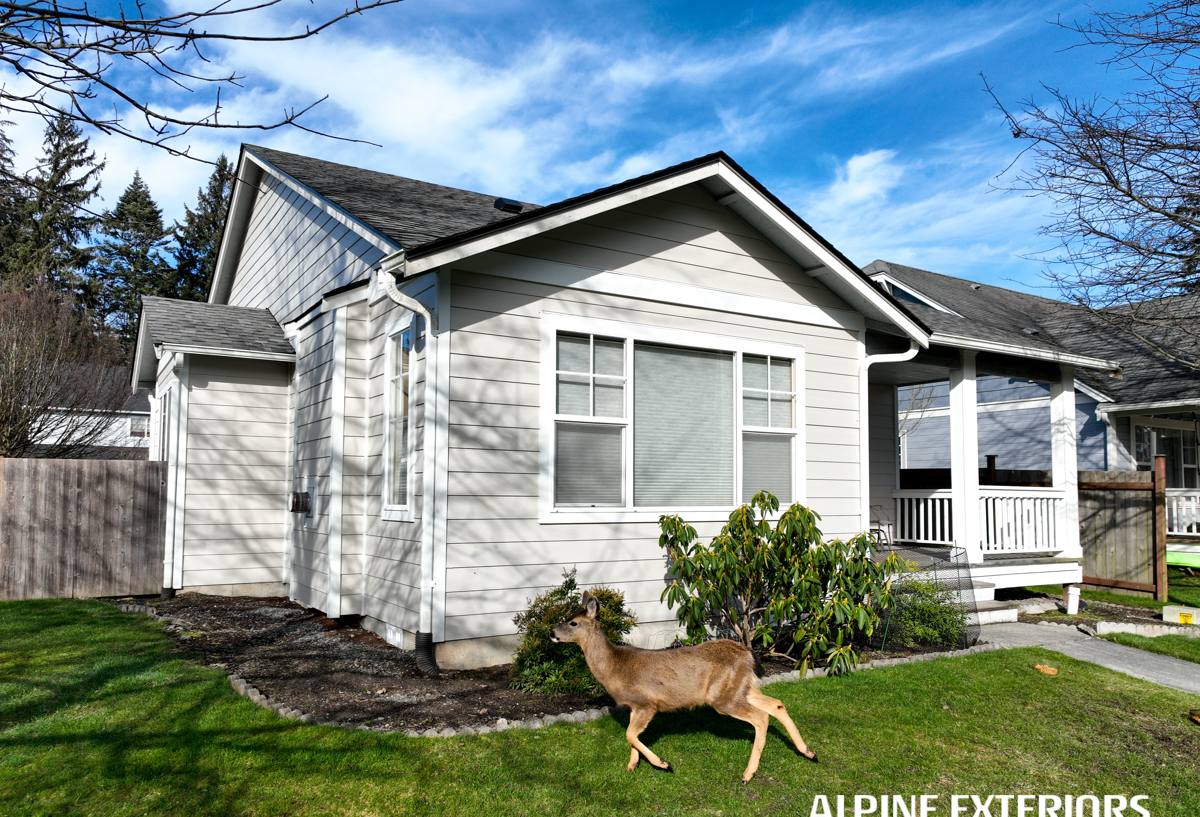
Indian Rocks Beach homes need siding that's rated for high wind exposure and, just as important, installed to hold that rating. A product can carry a strong wind rating on paper and still fail on a house if the fastening pattern, the starter strip, or the trim details weren't done to spec. We've seen plenty of siding jobs where the material itself wasn't the problem — the installation was.
During a named storm, siding doesn't usually fail because a single panel gives way in a straight line of wind. It fails at the edges: corners, window and door trim, the transitions where two different materials meet. Those are the places where flashing, fastening, and caulking details matter more than the base material's spec sheet. A local crew that has actually installed siding on other barrier island and near-coastal homes knows where those weak points tend to show up and builds accordingly.
What Correct Wind-Resistant Installation Looks Like
- Fastener spacing and type matched to the manufacturer's high-wind installation instructions, not the standard-zone default
- Proper starter strip and J-channel work at all corners and openings
- Correctly lapped and sealed flashing at windows, doors, and roof-to-wall transitions
- Attention to the house wrap and weather barrier underneath the siding, not just the visible surface
- Trim and fascia details that don't leave exposed edges for wind to catch
UV and Heat: The Slow Damage You Don't Notice Until It's Done
Pinellas County gets sun exposure most of the country doesn't see even in peak summer, and Indian Rocks Beach gets it with less tree cover and more reflected light off the water than a lot of inland neighborhoods. Constant UV breaks down pigments, softens some plastics and composites over time, and accelerates the wear on any coating that wasn't formulated for it. This shows up as fading, chalking, and in some products, warping as the material expands and contracts through daily heat cycles.
This is one of the reasons factory-applied, baked-on finishes tend to outperform field-applied paint on Gulf Coast homes. A finish that's cured under controlled conditions at the factory holds its color and its bond to the substrate far longer than paint applied on site, especially on a material that's sitting in full coastal sun most of the year.
Wind-Driven Rain and Moisture: Where Siding Actually Fails
Most siding problems we get called out for aren't cosmetic — they're moisture problems that started small and stayed hidden. Wind-driven rain during a Gulf storm doesn't fall straight down; it gets pushed sideways and upward under eaves, around window trim, and into any gap or seam that wasn't properly sealed. Once water gets behind siding, what happens next depends entirely on what the siding is made of.
Wood-based products swell, rot, and can delaminate. Some engineered wood products are more moisture-resistant than solid wood but are still vulnerable at cut edges and seams if those aren't sealed and maintained. Vinyl doesn't absorb water itself, but it also doesn't stop water from getting behind it, and it can trap moisture against the wall assembly. Fiber cement is dimensionally stable and doesn't rot, but even fiber cement depends on correct installation — proper clearances, sealed joints, and flashing — to keep water out of the wall system in the first place.
Salt Air: The Slow, Constant Corrosion
Being close to the Gulf means airborne salt is a daily reality, not an occasional event. Salt accelerates corrosion on metal fasteners and trim, degrades some coatings faster than inland UV alone would, and can leave a visible haze or residue on surfaces that aren't rinsed regularly. Homes closer to the water need corrosion-resistant fasteners and hardware, and they benefit from an occasional rinse-down as routine maintenance — something we'll walk you through if you're not already doing it.
Why We Install Only James Hardie Fiber Cement
Clearwater Siding Co made a decision a while back to install James Hardie fiber cement siding exclusively, and not vinyl, not LP SmartSide or other engineered wood products, not Cemplank or Allura fiber cement alternatives, not primed spruce or cedar. That's a real trade-off — those products all have a place in the market, and some of them are less expensive up front. But for barrier island and near-coastal Pinellas County homes specifically, here's what pushed us to standardize on Hardie:
- Non-combustible material — fiber cement doesn't burn, which matters for insurance and for peace of mind, though it's a separate issue from wind and water performance
- Dimensional stability — it doesn't swell, rot, or warp the way wood-based products can when moisture gets behind them
- Factory-cured ColorPlus finish — baked on at the factory rather than field-painted, so it holds color and adhesion far longer under constant Gulf Coast sun
- Climate-engineered HZ product lines — Hardie's HZ10 formulation is specifically engineered for high-humidity, coastal climates like ours, rather than a one-size-fits-all national product
- Transferable warranty backing — a real asset when a coastal home changes hands, since buyers and their inspectors pay attention to exterior material and warranty status
We're not going to tell you other products are junk — that's not honest, and it's not our call to make about materials we don't install. What we will tell you is that after years of doing this work specifically along the Pinellas coastline, fiber cement installed to spec has given us and our customers the fewest callbacks and the longest track record of holding up to what this climate does.
How Common Siding Options Compare for Coastal Pinellas Homes
| Factor | Vinyl | Engineered Wood (e.g. LP SmartSide) | James Hardie Fiber Cement |
|---|---|---|---|
| Wind resistance (with correct install) | Moderate — can crack or blow off in gusts | Good, but edge/seam sealing is critical | Strong, engineered for high-wind zones |
| Moisture behavior | Doesn't absorb, but traps moisture behind it | Vulnerable at cut edges and unsealed seams | Dimensionally stable, doesn't rot |
| UV / color retention | Can fade and become brittle | Depends on field-applied coating quality | Factory-baked ColorPlus finish resists fading |
| Salt air resistance | Generally tolerant, hardware can corrode | Coating and edge sealing need upkeep | Good, with corrosion-resistant fasteners |
| Fire performance | Combustible | Combustible (wood-based) | Non-combustible |
Beyond Siding: Roofing, Windows, and Decks Working Together
Siding doesn't work in isolation. On an Indian Rocks Beach home, the roof, windows, siding, and any exterior decking all form one connected system for keeping wind and water out. A roof-to-wall transition that isn't flashed correctly can undermine even perfectly installed siding. Windows that aren't properly flashed into the siding plane create the exact seam wind-driven rain looks for. Decks facing the Gulf take their own beating from sun and salt and need materials and fasteners chosen with that in mind.
Because we handle siding, roofing, windows, and decks, we look at these as one exterior envelope rather than four separate trades that don't talk to each other. That matters most at the connection points — the places where two systems meet and most real-world failures actually start.
Why a Local Crew Matters Here Specifically
A crew that mostly works inland jobs doesn't get regular hands-on experience with what salt air, barrier island wind exposure, and Gulf-facing sun actually do to an exterior over time. Working Pinellas County's coastal neighborhoods regularly means we see the failure patterns specific to this environment repeatedly, and we adjust fastening, flashing, and material choices accordingly rather than defaulting to a generic inland approach. That local pattern recognition is honestly a bigger factor in how a siding job performs five or ten years out than most homeowners realize.
A Practical Checklist Before You Hire Anyone for Siding Work Near the Gulf
- Ask whether they've installed on homes in your specific neighborhood or similarly exposed coastal areas, not just "Florida" broadly
- Confirm they follow manufacturer high-wind installation specs, not standard-zone defaults
- Ask what fastener and flashing materials they use for salt-air exposure
- Get specifics on how they handle window, door, and corner transitions — not just field panel installation
- Check that any warranty offered is transferable if you sell the home
What This Means for Your Home
If you're dealing with siding that's showing wear, planning ahead of an upcoming storm season, or just weighing options for a home you're renovating in Indian Rocks Beach, the starting point is the same: understand what your specific home is exposed to — proximity to the water, sun orientation, current condition of the wall assembly underneath — before picking a product. A generic national siding recommendation isn't built for a barrier island home, and it shouldn't be treated like one.
If you'd like a straightforward, no-pressure look at your home's siding, roofing, windows, or deck, we're happy to come take a look and give you an honest assessment along with a free estimate — no obligation, no pressure.