 Clearwater Siding
 Waterfront Living Changes What Your Siding Has to Do
Island Estates sits differently than most Clearwater neighborhoods. Homes here are surrounded by open water on multiple sides, which means the exterior of a house is exposed to conditions that inland Pinellas County properties simply don't deal with to the same degree. Salt-laden air moves across these homes constantly, sun reflects off the water and hits siding from angles a shaded inland lot never sees, and wind has a clear, unobstructed run at the building envelope. When we talk to homeowners here about siding, the conversation starts with the environment, not the product catalog — because the environment is what determines whether a siding job holds up or fails early.
Standard siding practices that work fine in a subdivision ten miles from the coast often aren't enough on a waterfront lot. That's true of the material itself, and it's just as true of how that material gets installed — fastening, flashing, and finish decisions that are optional elsewhere become non-negotiable here.
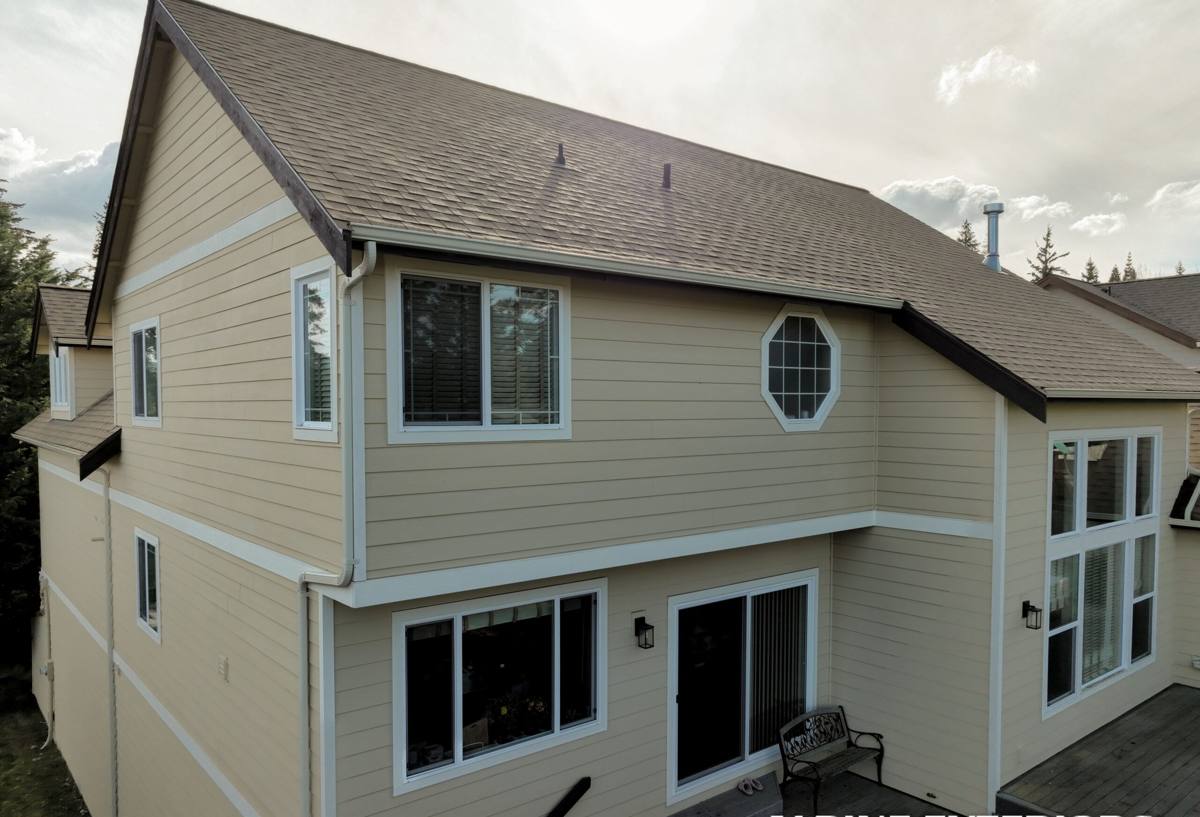
What Sun, Salt Air, and Wind Actually Do to Exterior Siding
UV exposure
Florida sun is intense year-round, and on a waterfront lot it's amplified by reflection off open water. Painted surfaces chalk, fade unevenly, and break down faster than the manufacturer's finish life would suggest. Siding facing west and south water views takes the worst of it.
Salt air
Airborne salt settles on every exterior surface. It accelerates corrosion of fasteners and trim hardware, and over time it degrades paint films and caulking faster than in non-coastal areas. Materials and fasteners that aren't rated for a marine-adjacent environment show wear years ahead of schedule.
Wind-driven rain
Rain in a coastal wind event doesn't fall straight down — it's pushed sideways, sometimes horizontally, into every seam, joint, and penetration in the siding system. A siding job that isn't detailed for wind-driven rain will eventually let water behind the cladding, and that's where real damage starts: sheathing rot, mold, and structural repairs that dwarf the cost of doing the siding right the first time.
Storm wind loads
Pinellas County is a wind-borne debris region under the Florida Building Code, and open-water exposure on an island lot generally means higher design wind pressures on the building envelope than a similar home set back from the water. Siding, fasteners, and attachment spacing all have to be matched to that reality — not to a generic national average.
Why We Install Only James Hardie Fiber Cement Siding
We made a deliberate decision as a company to install James Hardie fiber cement exclusively — not vinyl, not LP SmartSide, not other cement board brands. On a job like Island Estates, that decision isn't a marketing position, it's a practical one. Fiber cement is non-combustible and dimensionally stable, meaning it doesn't expand, contract, or warp with heat and humidity swings the way vinyl and some engineered wood products do. It also doesn't rely on a wood-based core that can be vulnerable to sustained moisture exposure the way engineered wood siding products are.
James Hardie's ColorPlus factory-applied finish is baked on and warranted separately from the substrate, which matters enormously in a high-UV, high-salt environment where field-applied paint would need far more frequent attention. And Hardie engineers its products for specific climate zones — including the HZ5 zone that covers Florida — with formulations designed around exactly the humidity, heat, and moisture exposure a Clearwater waterfront home experiences. That climate-specific engineering, combined with a transferable warranty structure, is the core reason we stopped installing alternatives and standardized on this one manufacturer.
James Hardie Product Lines That Fit Island Estates Homes
Not every Hardie product is the right fit for every part of a home. Part of doing this job correctly is matching the right product line to the right application.
| Product | Typical Use | Why It Fits This Climate |
|---|---|---|
| HardiePlank lap siding | Primary wall cladding | Most common field siding; holds a crisp painted look through UV and salt exposure with minimal upkeep |
| HardiePanel vertical siding | Accent walls, gables, modern facades | Clean lines for contemporary coastal design; fewer horizontal seams for water to track into |
| HardieTrim boards | Corners, window and door trim, fascia | Resists the rot and swelling that wood trim develops fast in salt air and humidity |
| HardieSoffit panels | Eaves and overhangs | Non-combustible, moisture-resistant venting under roof overhangs exposed to wind-driven rain |
What Correct Installation Involves in a Coastal Wind Zone
Fastening schedule
Fastener type, spacing, and embedment have to match the wind pressures the wall assembly will actually see on an open-water lot — not a generic minimum. Corrosion-resistant fasteners are required here; anything less becomes a weak point within a few years of salt exposure.
Clearances and flashing
Hardie's own installation instructions specify minimum clearance from grade, roofing, and hardscape, along with flashing details at every window, door, and penetration. Skipping or shortcutting these details is the single most common cause of moisture problems behind fiber cement siding — the product itself isn't the failure point, the installation is.
Joint and seam treatment
Butt joints, panel seams, and trim intersections need to be treated to shed wind-driven rain rather than trap it. That means correct overlap, sealant selection rated for coastal UV and salt exposure, and attention to how water is meant to move down and off the wall, not just how the siding looks once it's painted.
Factory finish vs. field painting
Wherever possible, we specify ColorPlus factory-finished product rather than field-painted Hardie. The factory finish is engineered and warranted for this exact exposure; field paint depends entirely on surface prep and application conditions on the day it goes on, which is a harder standard to guarantee consistently.
Our Process, From Estimate to Final Walkthrough
- On-site assessment of the existing siding, wall assembly, and any moisture or rot already present behind the current cladding.
- Wind zone and code review specific to the property, so the fastening and attachment spec is matched to the actual exposure, not a generic minimum.
- Product and color selection, including ColorPlus options suited to the home's exposure and any community aesthetic expectations.
- Removal of old siding and inspection of sheathing, with repair of any compromised wood before new siding goes on — this step gets skipped by corner-cutting crews and it's where long-term failures start.
- Installation of weather-resistive barrier, flashing, and Hardie siding to manufacturer and code-required specifications.
- Final walkthrough covering fastening, caulking, trim details, and cleanup before we consider the job complete.
Cost Factors for an Island Estates Siding Project
Every home is different, so we don't publish blanket prices — but the factors that move a bid up or down are consistent. Understanding them helps you compare estimates apples-to-apples.
| Factor | Why It Affects Cost |
|---|---|
| Extent of existing damage | Rotted sheathing or framing found during tear-off requires repair before new siding can go on |
| Home size and wall complexity | More corners, gables, and window/door openings mean more trim, flashing, and labor time |
| Product line and finish | Vertical panel accents, trim upgrades, and ColorPlus finish tiers price differently than standard lap siding |
| Access and site conditions | Canal-front lots, fencing, seawalls, and tight side yards can affect staging and equipment access |
| Permitting and inspection scope | Wind-zone-compliant installations require specific permitting and inspection steps built into the timeline |
Maintenance Checklist to Protect Your Investment in a Salt-Air Environment
James Hardie siding is low-maintenance compared to wood or vinyl, but "low-maintenance" isn't "no-maintenance" — especially this close to the water. A simple seasonal routine goes a long way.
- Rinse siding periodically with a garden hose to remove salt residue before it accumulates, especially on walls facing open water
- Inspect caulking at trim joints, windows, and doors annually and re-caulk as it dries out or cracks
- Check that gutters and downspouts are directing water away from siding rather than letting it sheet down the wall
- Trim back landscaping so plants aren't holding moisture against the siding or blocking airflow
- Look at fastener heads and trim corners after storm season for early signs of corrosion or lifted material
- Have any hairline gaps or damage addressed promptly — small openings are how wind-driven rain finds its way behind the cladding
Why Hiring a Crew That Already Works Island Estates Matters
A siding crew that mostly works inland subdivisions doesn't automatically know how to detail a wall assembly for an open-water lot, or how permitting and wind-load documentation work for a property in this exposure category. Crews familiar with this neighborhood already understand the practical realities — working around canal-front lots and tight side-yard access, sequencing work around Florida's storm season, and building a fastening and flashing spec that's actually appropriate for the wind pressures a waterfront home experiences rather than a generic inland assumption.
That familiarity shows up in fewer surprises during the job and a finished product that's actually engineered for where the house sits, not just for Florida in general. It's also why we don't treat every Hardie installation the same way — a home three blocks from open water gets a different level of detailing than one set well back from the coast, and that distinction only gets made correctly by a crew that's paying attention to it.
Get a Straight Answer About Your Home
If you're weighing a siding replacement on your Island Estates home, we're happy to take a look and give you a straightforward, no-pressure assessment of what your home actually needs — no inflated urgency, no guesswork about products we don't install. Use the form below to request a free estimate.