 Clearwater Siding
 Why We Made Siding a One-Product Decision
Most siding contractors will install whatever a homeowner picks off a sample board — vinyl, LP SmartSide, fiber cement, sometimes cedar or primed spruce if the house calls for it. We used to do the same. Over years of tear-offs, warranty claims, and callbacks in Clearwater and the rest of Pinellas County, a pattern became impossible to ignore: the siding that failed early, buckled, delaminated, or needed repainting every few years was almost never James Hardie fiber cement. So we stopped offering the alternatives. Today, James Hardie is the only siding system we install, and this page explains the reasoning in plain terms — not marketing language, just what we've seen and what the product is actually built from.
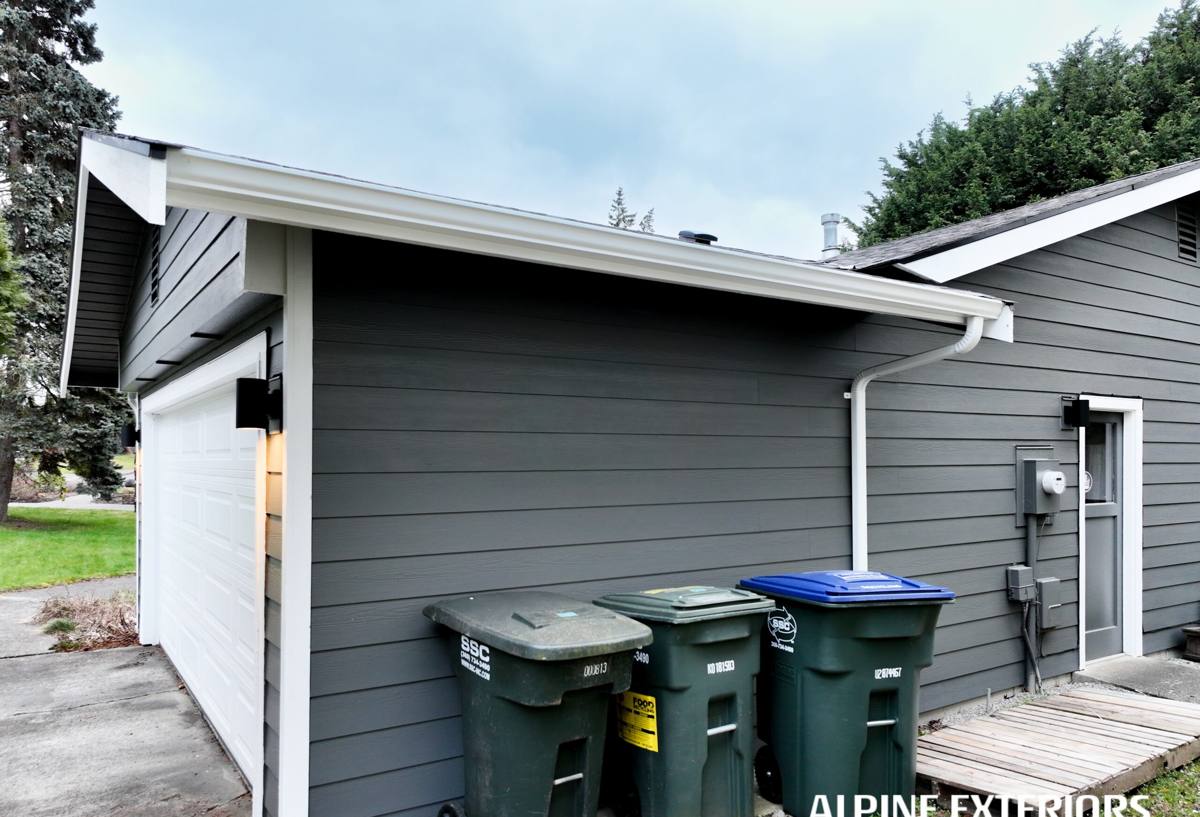
What Fiber Cement Actually Is
James Hardie siding is made from Portland cement, sand, and cellulose fiber, cured under pressure and heat. That composition matters more than most homeowners realize when they're comparing products by price alone.
Non-Combustible By Composition
Because it contains no wood pulp bound with resin the way engineered wood products do, and no vinyl chloride like PVC siding, fiber cement doesn't contribute fuel to a fire the way those materials can. That's not a marketing claim — it's a direct result of what the board is made of. For a coastal home with neighbors close by, that's a real, practical difference.
Dimensionally Stable in Heat and Humidity
Cement-based board doesn't expand and contract with humidity swings the way wood-based products do, and it doesn't soften or sag under sustained heat the way vinyl can. In a climate that swings from humid, 95-degree summer afternoons to sudden downpours, that stability is what keeps seams tight and paint lines straight for decades instead of years.
What Clearwater and Pinellas County Actually Do to Siding
This isn't an abstract concern here. Homes along the Pinellas County coastline and inland Clearwater neighborhoods face a specific combination of stresses that most siding products were never designed around:
- Hurricane-force wind: Sustained gusts and storm-driven debris put real load and impact stress on wall systems every hurricane season.
- Intense, near-constant UV exposure: Florida sun degrades pigments and surface coatings faster than almost anywhere else in the country.
- Wind-driven rain: Storms here don't just drop rain — they push it sideways into seams, laps, and fastener points.
- Salt air: Even homes several miles inland from the Gulf see salt-laden air that accelerates corrosion and finish breakdown on lesser materials.
Any siding product can be marketed as "hurricane rated" or "UV resistant." Very few are actually engineered, at the material level, for this specific combination of conditions. That's the gap we kept running into with other products.
Inside the James Hardie Product Lines
James Hardie isn't a single product — it's a system of products, and understanding the lines helps explain why we can match it to almost any home style in the area.
HardiePlank Lap Siding
The most common choice for Clearwater homes, available in multiple textures and exposures, replicating traditional wood lap siding without the maintenance burden.
HardiePanel Vertical Siding
Used for modern facades, accent walls, and gable ends where a clean vertical line fits the architecture.
HardieShingle
A staggered or straight-edge shingle profile for homes going for a coastal cottage or historic look, without the upkeep of real wood shingles.
Artisan Siding
A premium lap profile with deeper, more authentic wood-grain detailing for homeowners who want the highest-end look Hardie offers.
Climate-Engineered HZ Formulations
James Hardie manufactures its boards in regionally engineered formulations, with a version specifically formulated for hot, humid, high-moisture climates like Florida's. That's a distinction most competing products don't offer at all — a single national formulation is expected to perform the same in Arizona as it does on the Gulf Coast, which doesn't hold up in practice.
ColorPlus Factory Finish vs. Field Painting
One of the biggest practical differences between James Hardie and every alternative we used to install is the finish itself. ColorPlus Technology is a multi-coat, baked-on finish applied in a controlled factory environment before the boards ever reach the jobsite. Field-painted siding — whether it's primed wood, LP SmartSide, or fiber cement painted on site — depends on weather conditions, painter skill, and coating thickness the day it's applied.
| Factor | ColorPlus Factory Finish | Field-Applied Paint |
|---|---|---|
| Application environment | Controlled factory, consistent cure | Job-site weather dependent |
| Coating consistency | Uniform multi-coat process | Varies by crew and conditions |
| UV fade resistance | Formulated for long-term color retention | Standard exterior paint fade rates |
| Repaint interval | Typically well beyond a decade | Often needed every 5-8 years in Florida sun |
| Touch-up matching | Factory-matched touch-up available | Can vary batch to batch |
That difference alone accounts for a meaningful chunk of the long-term maintenance gap between Hardie and the products we no longer install.
The Warranty Difference
James Hardie backs its fiber cement siding with a long-term, non-prorated limited warranty that's transferable to a future homeowner — a detail that matters if you ever sell the house. The ColorPlus finish carries its own separate finish warranty, since the coating and the substrate are different components with different failure modes. Compare that to some competing products where the warranty is prorated after the first several years, meaning your payout shrinks the longer you've owned the siding, or where a finish failure isn't covered at all because the paint was applied by a third party after installation. We'd rather install a product backed by a warranty structure that still means something a decade or two in.
What Correct Installation Actually Involves
Even the best siding product fails early if it's installed wrong, and fiber cement is less forgiving of shortcuts than vinyl. Manufacturer specifications exist for a reason, and we follow them exactly rather than treating them as suggestions:
- Proper clearance between the bottom of the siding and grade, decks, or roof lines to prevent wicking moisture
- Correct fastener type, spacing, and penetration depth — over-driven or under-driven nails cause long-term problems
- A compliant water-resistive barrier and flashing detail behind every board, not just at obvious openings
- Properly sized gaps at butt joints and trim, caulked with a product rated for the application
- Blind-nailing or face-nailing per the specific product's requirements, matched to local wind zone requirements
- Field-cut edges primed or sealed before installation, especially where boards meet windows and corners
Skipping any one of these doesn't show up immediately — it shows up in five or ten years as a moisture problem, a warranty denial, or premature finish failure. That's as much a reason for our product standardization as the material itself: we'd rather train our crews deeply on one system's specifications than spread that expertise thin across four or five different products.
What Homeowners Should Weigh on Cost
James Hardie carries a higher installed cost than vinyl and is generally comparable to or somewhat above engineered wood siding, depending on the product line and trim package chosen. We won't quote invented numbers here since every home's square footage, trim detail, and tear-off scope changes the estimate — but the cost factors below are the ones that actually move the number.
| Cost Factor | What It Affects |
|---|---|
| Product line (Plank vs. Panel vs. Shingle vs. Artisan) | Material cost per square, labor complexity |
| Tear-off and substrate condition | Whether sheathing repair is needed before install |
| Trim and corner detail package | Labor time and finish material |
| Home height and roofline complexity | Staging, safety equipment, labor hours |
| Color selection | Standard ColorPlus palette vs. custom order |
The upfront number matters, but the more useful comparison is total cost over the life of the siding — factoring in repainting, repair, and replacement cycles for whatever alternative you're weighing it against.
Why This Is the Product We Stand Behind
We didn't standardize on James Hardie because it was the easiest sell. It's a more demanding product to install correctly, and it costs more upfront than vinyl. We made this call because we're the ones who get the callback when siding fails early, and we'd rather build our business on a product engineered for exactly the conditions Clearwater and Pinellas County homes face — hurricane wind, relentless UV, wind-driven rain, and salt air — than split our attention across five products with different failure points and hope each installation goes right.
If you're weighing a siding replacement and want a straight answer about what it would take and cost for your specific home, we're glad to walk the property and put together a free, no-pressure estimate using the form below.