 Clearwater Siding
 What Primed Spruce Siding Actually Is
Primed spruce (and finger-jointed pine, which gets sold under similar labels) is a wood lap siding product that's been factory-primed on one or more sides before it reaches the job site. It's been a staple at lumber yards for decades because it's inexpensive, it's easy for crews to cut and nail with ordinary tools, and it takes paint the way homeowners expect real wood to. Under the right conditions — a dry climate, deep roof overhangs, an owner committed to a repainting schedule — it can look good for a long time.
Clearwater isn't that climate. Between Gulf humidity, salt air off the coast, wind-driven rain, and intense year-round UV, primed spruce is working against its own weak points almost every day of the year. We get asked about it often enough — usually from homeowners comparing a lower up-front number against a fiber cement quote — that it's worth laying out exactly why we don't put it on Pinellas County homes.
Where Primed Spruce Genuinely Gets It Right
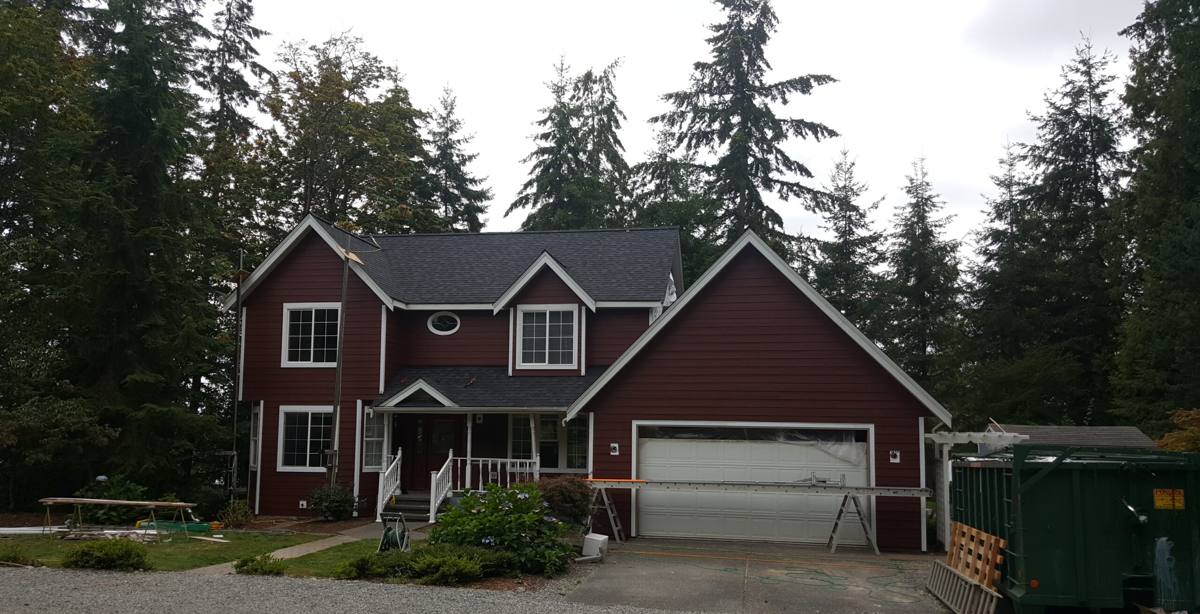
To be fair to the product: primed spruce is real wood, and it looks like real wood, with grain texture and a warmth that some fiber cement profiles still don't fully replicate. It's lightweight, straightforward to install and repair in small sections, and it's usually the cheapest siding option per square foot at the lumber yard. If a homeowner is restoring a historic property where matching original wood profiles matters more than long-term maintenance, it has a legitimate place. We're not going to pretend otherwise.
The problem isn't the material in a vacuum — it's the material in this specific climate, installed on a full exterior, expected to perform for 20-30 years with minimal upkeep. That's where it starts to fall apart, sometimes literally.
The Moisture Problem
Primer Is Not a Coating System
Factory primer on spruce siding is a base layer, not a finished, weatherproof surface. It's designed to be topcoated promptly and then repainted on a regular cycle. The moment that primer sits exposed too long before topcoating, or a topcoat starts to chalk and thin years down the road, the wood underneath is exposed to whatever moisture gets to it. Wood is hygroscopic — it absorbs and releases water constantly — and every wet-dry cycle stresses the fibers a little more.
Wind-Driven Rain and End-Grain Exposure
In a normal rain, water runs down a wall and sheds off. In the wind-driven rain that comes with Gulf storms, water gets pushed sideways and upward, finding every cut end, nail hole, and butt joint in a lap siding installation. End grain is the most absorbent part of any wood board, and every board on a house has two of them. Once water gets into an end cut through a hairline gap in the paint, it doesn't evaporate quickly in Florida's humidity — it sits there, and that's exactly the environment rot needs.
What Follows
- Swelling and cupping of boards as moisture content rises and falls unevenly across the board
- Soft, spongy spots at the bottom edges of lap boards and around trim, especially near sprinkler zones or splashback areas
- Paint film cracking and peeling at joints and fastener heads, which then lets in more water
- Mold and mildew staining on the painted surface itself, feeding on humidity even before the wood is compromised
The Maintenance Burden Nobody Mentions Up Front
Primed spruce siding isn't a one-and-done exterior. It's a surface that needs a real repainting schedule to keep performing, and in a coastal Florida climate that schedule is tighter than most homeowners expect when they're comparing sticker prices.
| Task | Typical Interval Here | Why It's Needed |
|---|---|---|
| Full repaint / recoat | Every 3-5 years | UV breaks down paint binders; salt air accelerates chalking and fade |
| Caulk inspection at joints and trim | Annually | Caulk shrinks and cracks in heat cycling, opening water paths |
| Spot repair of soft/rotted boards | As needed, expect some every few years | Once rot starts, patch-and-paint doesn't stop it, only slows it |
| Pest inspection | Annually | Softened wood attracts termites and carpenter ants |
That maintenance isn't optional upkeep the way it would be with, say, cleaning gutters. Skip a repaint cycle on primed wood in this climate and you're not just accepting a duller-looking house — you're letting the paint film's protective function lapse while the moisture exposure keeps happening underneath.
UV, Salt Air, and the Coastal Multiplier
Pinellas County sits right on the water, and that has real consequences for exterior wood. Year-round UV intensity fades and embrittles paint film faster than it would inland, and salt-laden air accelerates the breakdown of most coatings and adhesives. On a wood substrate, that means the paint's protective job gets harder at the same time the substrate underneath is more vulnerable to whatever gets through. It's not one factor working against primed spruce siding here — it's UV, humidity, salt, and wind-driven rain all compounding at once, which is a tougher combination than the product was really built to shed indefinitely.
Insects and Wood Siding in a Warm, Humid County
Florida's climate supports termite and wood-boring insect activity essentially year-round, not just in a seasonal window. Any softened or moisture-compromised wood siding is an easier target, and once pests get into siding it's rarely an isolated repair — it usually means opening up wall sections to check how far the damage runs. This is a risk that simply doesn't exist with a non-wood, non-organic siding material, which is one of the bigger reasons we steer homeowners away from wood-based siding options generally, not just this one.
Installation Sensitivity
Primed spruce siding is less forgiving to install correctly than it looks. Every cut end needs to be field-primed or sealed before it goes up, because factory primer only covers the faces, not the fresh cuts made on site. Fastener placement, joint flashing, and gap allowances for expansion all matter more with wood than with more dimensionally stable materials, because wood moves seasonally with humidity in ways that stress paint film and joints if it's not detailed correctly. A rushed or corner-cut installation shows up as problems years earlier than it would on a more forgiving product — and once we're not the ones installing it, we have no way to guarantee those details were handled.
Why We Standardized on James Hardie Instead
We install James Hardie fiber cement siding exclusively, and the reasons map directly onto the problems above. Hardie's HZ5 product line is engineered for climates like ours — hot, humid, storm-exposed — and fiber cement doesn't rot, isn't a food source for termites or carpenter ants, and doesn't absorb water the way wood does. It's non-combustible, which matters for insurance and safety, and it holds its dimensional stability through Florida's heat and humidity swings far better than a wood substrate.
The bigger difference for a homeowner's day-to-day experience is the finish. Hardie's ColorPlus factory-applied finish is baked on and warranted separately from the substrate, engineered specifically to resist the fading and wear that UV and salt air cause — which means it's not asking for a repaint every few years the way primed spruce does. Add in a strong transferable warranty on both the substrate and the finish, and the total cost of ownership over 20-30 years generally favors Hardie even though the upfront material cost is higher than primed wood. We'd rather install one thing well and stand behind it than install a cheaper product and watch a homeowner fight a losing maintenance battle against this climate.
Questions Worth Asking Before You Choose a Siding Material
- What's the real maintenance schedule for this material in a coastal Florida climate, not a national average?
- What does the warranty actually cover — substrate, finish, labor — and for how long, and is it transferable if you sell the home?
- How does the material perform against wind-driven rain and salt air specifically, not just "weather resistance" in general?
- Is the material something insects can damage, and does that risk change how often you need inspections?
- What happens to the look and protection level if a repaint or recoat gets delayed by a year or two?
If you're weighing siding options for a home in Clearwater or anywhere else in Pinellas County, we're happy to walk through what we see holding up here versus what tends to struggle, with no pressure to book anything. A free estimate gives you real numbers for your specific house, not a generic quote — the form below gets you started.