 Clearwater Siding
 Siding in Belleair: A Different Set of Demands
Belleair sits close enough to the Gulf that its homes take on a different kind of weathering than houses further inland in Pinellas County. Salt-laden air moves through the neighborhood year-round, humidity stays high for most of the calendar, and afternoon UV exposure is intense and constant. Add in the wind-driven rain that comes with tropical storms and the occasional hurricane threat, and you have a combination that is genuinely hard on exterior building materials. Siding here doesn't just need to look good — it needs to hold a paint finish, resist moisture intrusion at every seam, and stay structurally sound through repeated wind loading.
We work throughout Clearwater and the surrounding Pinellas County communities, and Belleair is one of the areas where we see the clearest evidence of what coastal exposure does to the wrong siding material over time. That experience is a big part of why we made the decision, as a company, to install James Hardie fiber cement siding exclusively.
Signs Belleair Homeowners Should Watch For
Siding failure in a coastal climate rarely happens all at once. It shows up gradually, and by the time it's obvious from the street, there's often already moisture damage happening behind the surface. Common warning signs we look for during inspections in this area include:
- Paint that is chalking, peeling, or fading unevenly, especially on south- and west-facing walls
- Soft spots, bubbling, or visible warping in panels or boards
- Cracking at butt joints, corners, or around window and door trim
- Persistent mildew or dark staining that returns quickly after cleaning
- Gaps opening up between siding courses or at trim transitions
- Any musty smell or discoloration on interior walls that share an exterior wall with visible siding issues
Any one of these on its own might not mean a full replacement is needed. But in combination, or on a home that's had siding up for 15-20 years, they're usually a sign the material has reached the end of what it can reasonably handle in this environment.
Why We Only Install James Hardie
Homeowners doing research on siding options will run into a long list of choices — vinyl, LP SmartSide (engineered wood), Cemplank and Allura (other fiber cement brands), and even primed spruce or cedar in some older Florida neighborhoods. We don't install any of those, and we think homeowners deserve a straight answer about why.
Wood-based and engineered wood products
Engineered wood siding like LP SmartSide performs reasonably well in drier, more moderate climates. In a coastal Florida environment with sustained humidity and salt exposure, wood-based products are more vulnerable to moisture absorption at cut edges and seams, and that vulnerability compounds over years of Gulf humidity. Primed spruce or cedar carries the same underlying risk — it's a natural wood product asked to perform in conditions it wasn't originally engineered for.
Vinyl siding
Vinyl is inexpensive and easy to install, which is exactly why it's so common. But it's a thin plastic product that softens and can warp under sustained high heat, and it's rated for wind resistance well below what fiber cement achieves. In a market where hurricane-force wind is a real, recurring possibility, we don't think vinyl gives a homeowner the margin of safety we're comfortable standing behind.
Other fiber cement brands
Cemplank and Allura are legitimate fiber cement products and share some of the same underlying material science as James Hardie. Our decision to standardize on Hardie specifically comes down to their climate-engineered HZ product lines (built specifically for high-humidity, high-moisture regions like ours), the factory-applied ColorPlus finish, and a warranty structure we've found to be the strongest and most consistently honored in the industry. It's a matter of picking one system, learning it inside and out, and installing it correctly every time — rather than stocking multiple brands and diluting that expertise.
James Hardie Product Lines That Fit This Climate
James Hardie makes region-specific formulations, and the HZ5 line is engineered for exactly the kind of humid, storm-exposed climate Belleair sits in. It's manufactured to resist moisture-related damage and hold up under the freeze-thaw-irrelevant but humidity-heavy conditions we actually deal with here, as opposed to the HZ10 formulation built for colder northern climates.
| Product Line | Best Use | Key Feature |
|---|---|---|
| HardiePlank Lap Siding | Most common siding profile, traditional lap look | Available in smooth or cedar-textured finish |
| HardiePanel Vertical Siding | Modern or accent applications, gable ends | Clean vertical lines, often paired with board-and-batten trim |
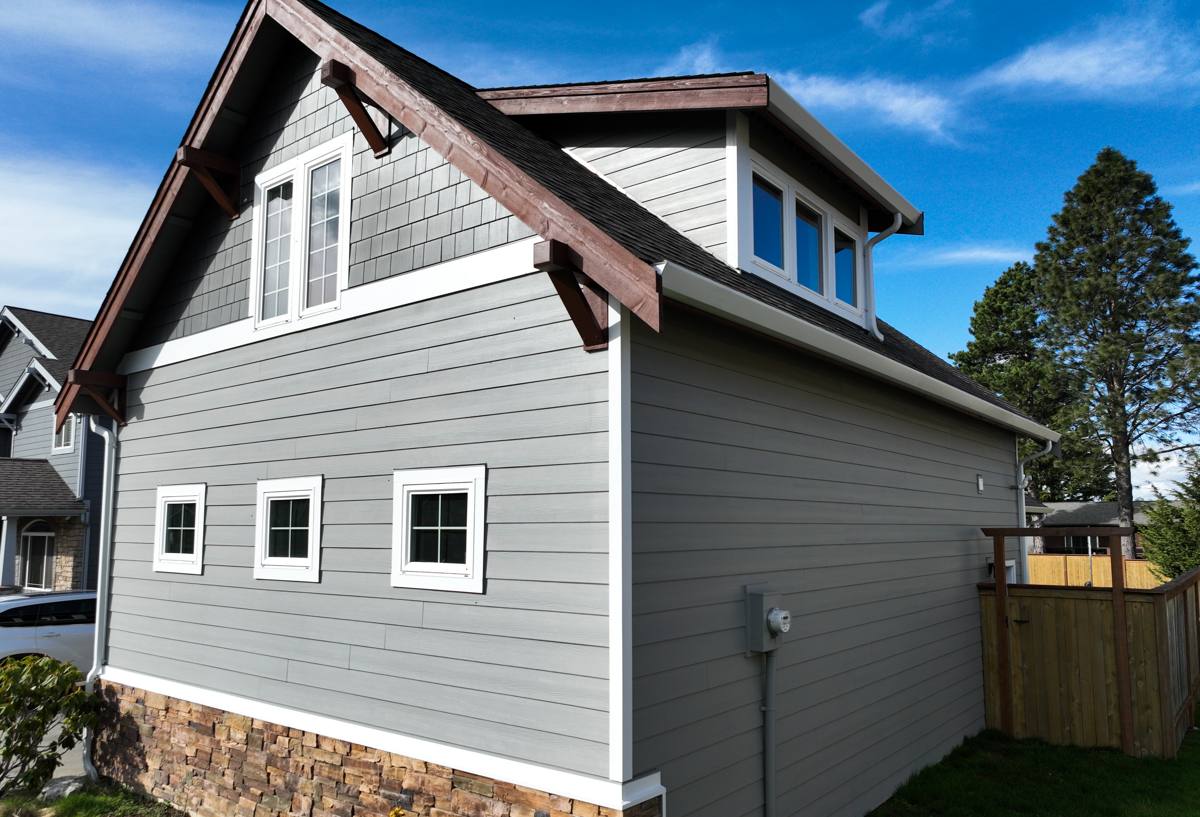
| HardieShingle Siding | Coastal cottage and historic-style homes | Staggered or straight-edge shingle profiles |
| HardieTrim Boards | Window, door, and corner trim | Matches siding finish, resists rot at high-exposure edges |
Every board comes with the ColorPlus factory finish baked on before it ever reaches the jobsite — a baked-on, multi-coat finish that holds color far longer than field-applied paint and resists the fading that intense Florida UV causes on lesser finishes.
ColorPlus vs. Primed-and-Painted
Homeowners sometimes ask whether it's worth paying for ColorPlus finish versus buying primed boards and having them painted after installation. In this climate specifically, factory finish matters more than in milder regions. Field-applied paint is more exposed to inconsistent application, and it starts fading against the sun and salt air sooner than a factory-baked finish rated for coastal UV exposure.
What Correct Installation Actually Involves
Fiber cement siding is only as good as its installation. James Hardie's own warranty coverage depends on installation following their published specifications, and in a wind- and moisture-exposed area like Belleair, cutting corners here shows up as problems within a few years rather than decades.
- Proper starter strip and clearance from grade to prevent wicking moisture from the ground up
- Correct fastener type, spacing, and penetration depth — under- or over-driven fasteners are a leading cause of early failure
- Rain screen or weather-resistant barrier installed correctly behind the siding, not just draped on
- Properly flashed and sealed window, door, and penetration points
- Correct expansion gaps at butt joints and trim transitions
- Caulking only where Hardie specifications call for it — not as a substitute for correct flashing
We install to those specifications on every project because it's the only way the material performs the way it's designed to, and the only way the manufacturer's warranty stays intact if something does go wrong down the line.
Cost Factors for a Belleair Siding Project
Every home is different, and we don't publish blanket per-square-foot pricing because it depends heavily on the specifics of the house. What we can walk through are the factors that most affect the scope and cost of a siding replacement in this area:
| Factor | Why It Matters |
|---|---|
| Home size and wall complexity | More corners, gables, and dormers mean more cutting, trim work, and labor time |
| Extent of existing damage | Rotted sheathing or water damage found during tear-off requires repair before new siding goes on |
| Siding profile chosen | Lap, panel, and shingle styles carry different material and labor costs |
| Trim and accent work | Custom trim details around windows, doors, and corners add time |
| Access and site conditions | Tight lot lines, landscaping, or multi-story sections affect staging and labor |
| Paint/finish selection | Standard ColorPlus colors vs. custom color-matching can shift pricing |
We give every homeowner a detailed, itemized estimate after an in-person inspection, so there are no surprises once work starts.
More Than Siding: The Full Exterior Envelope
Siding doesn't work in isolation. On a lot of the Belleair homes we've looked at, siding issues show up alongside roofing, window, or trim problems that all trace back to the same source — usually years of sun and moisture exposure working on the entire exterior envelope at once. Because we also handle roofing, windows, and decks, we can look at a home as a whole system rather than treating siding as a separate, disconnected project.
That matters practically: a roof leak that's been quietly wetting the top of a wall for a couple of years will keep damaging new siding if it isn't addressed first. A window that's no longer sealing properly will undercut even a perfect siding installation around it. Coordinating those trades under one crew means fewer scheduling headaches and fewer gaps where one contractor assumes another handled something they didn't.
Roofing
Given the wind and rain exposure in this part of Pinellas County, we check roof condition as part of any siding consultation — a compromised roofline is often the real source of moisture problems that get blamed on siding.
Windows
Impact-rated and properly flashed windows work together with fiber cement siding to close off the building envelope against wind-driven rain, which is one of the more common ways water finds its way into a home during a tropical system.
Decks
Outdoor living spaces in Belleair take the same UV and humidity beating as siding does, and we build and repair decks with the same climate-first approach.
Why a Local Crew Matters
A siding job installed to spec in Tampa or Sarasota isn't automatically installed to spec correctly for a home sitting a few blocks from the Gulf in Belleair. Wind load requirements, moisture behavior, and even the practical realities of scheduling around Florida's rainy season change based on where exactly a home sits. A crew that works this specific stretch of Pinellas County regularly understands the difference between a standard installation and one that needs extra attention to flashing, fastening, and drainage because of proximity to the water.
Local also means accountability. We're not driving in from out of state for a one-off job — we're doing work in a community we're going to keep serving, which is part of why we hold every installation to the same standard whether it's a small trim repair or a full siding replacement.
Ready to Talk About Your Home
If your siding is showing wear, or you're just trying to get ahead of a problem before it turns into a bigger repair, we're happy to take a look. We offer free, no-pressure estimates for Belleair homeowners — no obligation, just an honest assessment of what your siding actually needs and what it would take to do it right with James Hardie. Use the form below to get started.