 Clearwater Siding
 Why Color Choice Is a Bigger Decision on the Gulf Coast
Picking a siding color feels like a design question, but in Clearwater it's also a durability question. Between the intense year-round UV load, salt-laden air rolling in off the Gulf, wind-driven rain during summer storms, and the sheer number of sun hours Pinellas County logs compared to most of the country, a paint finish here works harder than it does almost anywhere else in the state. That's before you factor in the occasional hurricane-force wind event that drives moisture into every seam and joint on a house.
Most siding color problems aren't really about taste. They're about a finish that couldn't keep up with the environment — fading unevenly, chalking, or peeling at seams within a few years. Understanding how James Hardie's ColorPlus Technology finish is actually built, and how to pick a color that will still look right in year ten, is the real work of choosing a color for a home in this climate.
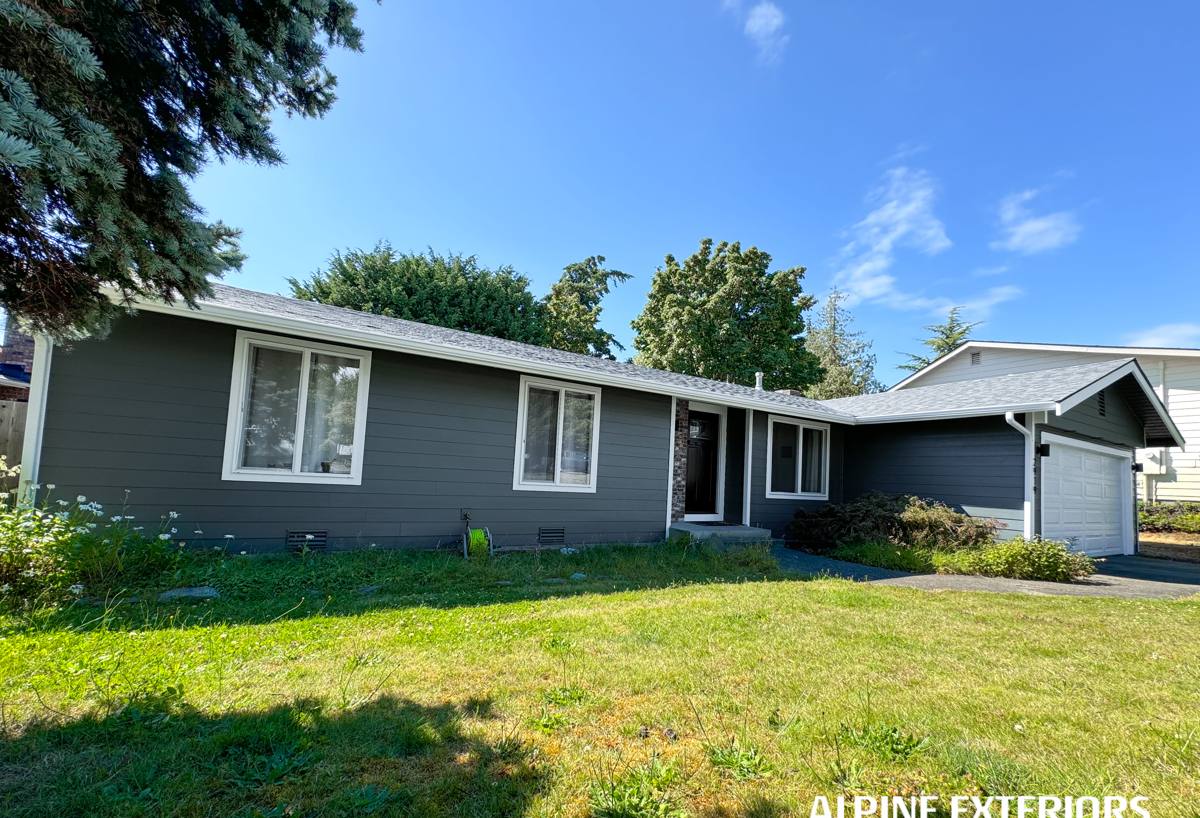
What ColorPlus Actually Is
ColorPlus is not a can of paint. It's a factory-applied, baked-on finish that James Hardie cures onto the fiber cement board before it ever reaches a job site. The panels go through multiple coats and a controlled curing process in a factory environment — consistent temperature, consistent film thickness, no wind or humidity variables — which is something a field paint crew standing on a ladder in Clearwater in July simply cannot replicate.
Why That Process Matters Here
Field-applied paint on siding depends on the day it goes on: humidity, surface temperature, dry time, and applicator skill all affect how well it bonds and how long it lasts. Florida's heat and humidity make that an even tighter window than in a dry climate. ColorPlus removes that variable entirely — the color is already fully cured and bonded to the board before installation, so the finish isn't gambling on weather conditions on installation day.
How the Finish Holds Up to Sun and Salt
Two things wear out ordinary painted siding on the Gulf Coast: ultraviolet breakdown and salt air. UV degrades the resins in a paint film over time, which is what causes chalking and fading. Salt air accelerates that breakdown and also promotes mildew growth in the humid microclimate it creates against a wall.
ColorPlus finishes are formulated with UV-cured resins specifically to resist that fading and chalking, and James Hardie backs the color itself with a finish warranty separate from the substrate warranty — meaning the company is making a specific claim about color retention, not just about the board not rotting. That's a meaningfully different promise than what you get from a standard exterior house paint, which typically carries no manufacturer color-fade guarantee at all once it's applied by a third party.
Matching the Right HZ Product Line
Color is only half the equation — the board underneath matters just as much in a coastal wind and rain environment. James Hardie engineers its HZ5 product line specifically for high-humidity, high-moisture climate zones, which includes all of Pinellas County. That's a different formulation than the boards Hardie sells in dry inland climates, engineered to resist moisture-related expansion and to perform better against wind-driven rain intrusion at laps and joints.
When we quote a ColorPlus job, the product line is not a style choice — it's a climate spec. Installing the wrong HZ rating, or installing correctly-rated board with poor flashing and joint detailing, is a bigger threat to long-term appearance than almost any color decision a homeowner makes.
Working Through the ColorPlus Palette
James Hardie's ColorPlus lineup spans a range of families rather than a single trend-driven set, which is useful because Clearwater has everything from 1950s block ranch homes to newer coastal builds and historic bungalow streets near downtown. Broad families worth knowing:
- Whites and light neutrals (like Arctic White) — reflect heat well, read clean against Florida's bright light, and are the most forgiving under intense sun because there's less pigment to fade.
- Warm neutrals and taupes (like Monterey Taupe) — pair well with brick, stone, and the warmer roof tones common in older Pinellas County neighborhoods.
- Deep grays and charcoals (like Iron Gray or Aged Pewter) — popular on newer coastal-style builds, but worth testing carefully since dark colors absorb more heat and can show dust and salt film more visibly between washings.
- Coastal blues and greens (like Boothbay Blue) — a natural fit for Gulf-adjacent streets, and a color family Hardie engineers with the same UV resistance as its neutrals.
None of these families is objectively "better" for the climate — the finish technology is the same across the palette. The real differences are how each color family performs visually under intense sun, how it reads next to your roof and hardscape, and how forgiving it is between cleanings.
Dark Colors Deserve a Second Look
Dark ColorPlus finishes are engineered to resist fading like any other color in the line, but they will run hotter to the touch and can show water spotting, pollen, and salt residue more visibly than a mid-tone or light color. That's not a defect — it's physics. If you love a dark charcoal or navy, it's still a sound choice with ColorPlus; just budget for a rinse-down a few times a year rather than assuming "dark hides dirt," which is often true with dirt but not with the mineral film salt air leaves behind.
HOA Rules and Neighborhood Character in Pinellas County
Many Clearwater neighborhoods, and a good number of communities throughout Pinellas County, have HOA-approved color palettes or architectural review boards, particularly in planned coastal developments and historic districts. Before falling in love with a color, it's worth pulling your HOA's approved exterior palette or covenant documents, since some restrict siding to a pre-approved list.
The practical upside of ColorPlus here: because the color is a precise, repeatable factory formulation rather than a hand-mixed paint batch, it's straightforward to document the exact color name and code for an HOA submission, and any future repairs or additions can be matched to that same factory formula rather than trying to color-match an old field-painted wall.
Testing a Color Before You Commit
Florida light is different from northern light — it's brighter, whiter, and more direct for more of the year, which changes how a color reads on a wall compared to how it looks on a screen or a small sample chip. A few practical steps before finalizing a color:
- Look at large-format samples outdoors, not just a paint chip indoors under artificial light.
- View the sample at different times of day — morning, midday, and late afternoon light will shift how a color reads.
- Hold the sample against your actual roof color, driveway, and any brick or stone accents rather than judging it in isolation.
- Check the color against your neighbors' homes for context, especially on streets with tighter architectural character.
- Confirm the exact ColorPlus name and code with your contractor so it matches what's actually available for trim, soffit, and any future repair panels.
Trim, Accent, and Multi-Color Schemes
Hardie's ColorPlus system extends beyond lap siding to trim boards, fascia, and some accent products, which makes coordinated multi-tone schemes possible without mixing a factory finish and a field-painted trim color and hoping they age at the same rate. A common approach on Gulf Coast homes is a light-to-mid body color with a deeper trim or shutter accent, which keeps the home from absorbing excess heat while still giving it definition.
One detail worth planning for at the design stage rather than after installation: if you want a distinct accent band, gable feature, or shutter color, decide whether that will be a ColorPlus factory color on Hardie trim or a separately painted element (like shutters or a door), since those two surfaces will weather differently over time.
Factory Finish vs. Field-Applied Paint
| Factor | ColorPlus Factory Finish | Field-Applied Paint |
|---|---|---|
| Application environment | Controlled factory conditions | Job-site weather, humidity, wind |
| Coats and cure | Multiple coats, baked-on cure | Depends on crew, dry time, temperature |
| Color warranty | Manufacturer-backed finish warranty | Typically none from the siding maker |
| Repaint interval | Not required for many years under normal conditions | Often needed every 5–8 years in this climate |
| Touch-up matching | Factory touch-up kits matched to exact formula | Depends on retained paint records |
| UV/salt resistance | Engineered UV-cured resins | Varies widely by paint product and applicator |
Maintenance: What Salt Air Actually Requires
ColorPlus reduces maintenance, but it doesn't eliminate it. Homes closer to the water in and around Clearwater accumulate a fine salt film that's different from ordinary dust and benefits from an occasional gentle rinse with a garden hose or low-pressure wash — high-pressure washing can force water behind laps and joints, which is a problem regardless of siding brand. Keep an eye on caulking at trim joints and penetrations, since UV and wind-driven rain break down sealants faster here than in milder climates, and a failed sealant joint will cause moisture problems long before the ColorPlus finish itself shows any wear.
A Practical Checklist for Choosing Your Color
- Confirm your HOA or neighborhood's approved exterior color list, if one applies.
- View large outdoor samples in morning, midday, and late-day light.
- Compare the sample against your roof, driveway, and any brick or stone on the home.
- Decide on light, mid-tone, or dark based on your tolerance for visible salt film and heat absorption, not just style preference.
- Plan trim and accent colors as part of the same decision, not an afterthought.
- Confirm the ColorPlus name and code in writing so future repairs match exactly.
- Verify your contractor is installing the HZ5 product line appropriate for Pinellas County's climate zone.
Getting the Installation Right Protects the Color Investment
A factory-cured finish is only as good as the installation underneath it. Improper fastening, poor flashing at windows and rooflines, or tight joints without the manufacturer's specified gaps can let moisture behind the boards regardless of how good the surface finish is. That's a large part of why we install exclusively to James Hardie's published specifications rather than treating fiber cement as an interchangeable material — the ColorPlus warranty and the performance you're paying for both depend on it going on correctly the first time.
If you're weighing colors for a siding project in Clearwater or elsewhere in Pinellas County, we're happy to bring out large-format ColorPlus samples, walk your property in real daylight, and talk through what will hold up best against your home's sun exposure and surroundings. Reach out for a free, no-pressure estimate using the form below.