 Clearwater Siding
 Del Oro's Exterior Challenge: A Climate That Never Lets Up
Del Oro sits within the broader Clearwater, Pinellas County exterior environment, which means homes here deal with a combination of stressors that most of the country never has to think about. It isn't one dramatic event that wears down a house exterior — it's the daily grind. Intense, near year-round UV breaks down pigments and surface coatings faster than in northern climates. Salt-laden air drifting in off the Gulf accelerates corrosion on fasteners, trim, and anything not rated for coastal exposure. Add wind-driven rain that gets forced sideways and up under laps and trim during storms, and then stack hurricane-force wind events on top of that, and you have an exterior that's tested from every direction, all year.
Most siding products sold nationally were never engineered with this specific combination in mind. They were designed for average conditions and then marketed everywhere, including places like Del Oro where "average" doesn't apply. That mismatch is the reason so many exteriors in this area fail early — not because homeowners neglected them, but because the material wasn't built for the environment it was put into.
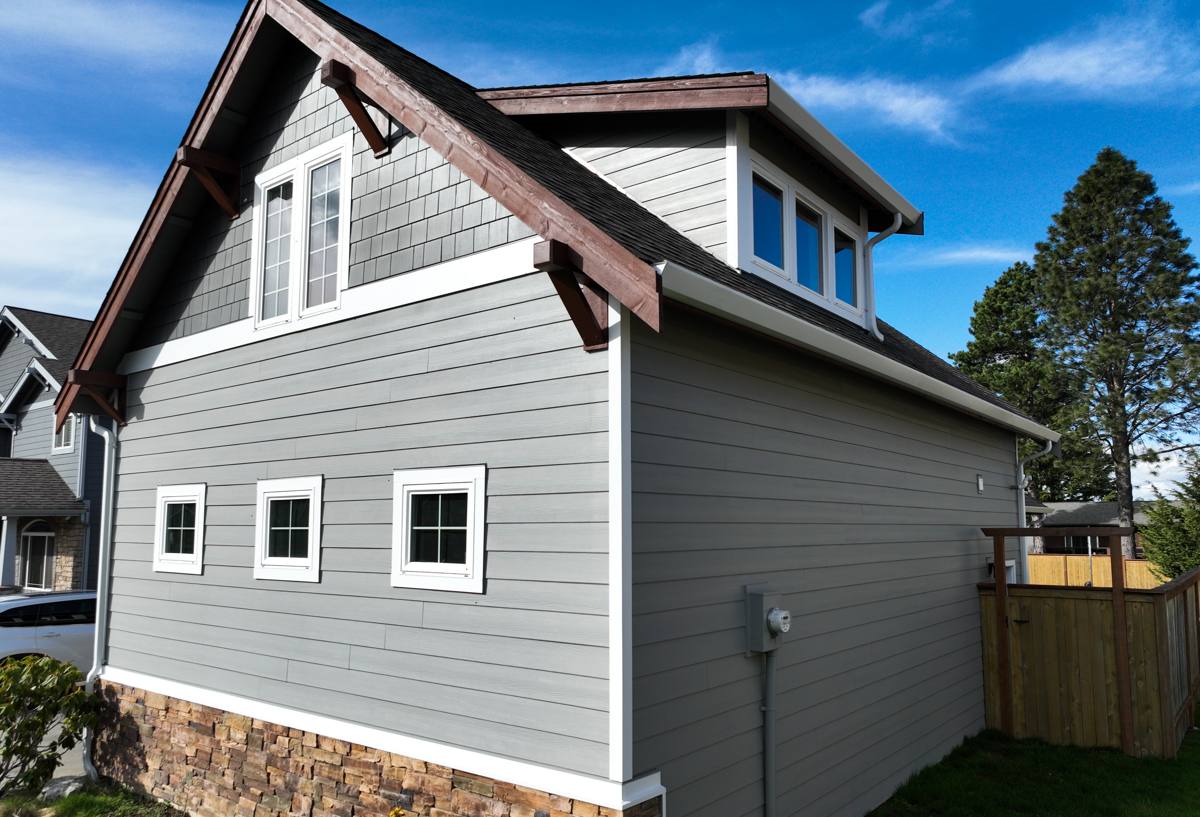
Why We Install Only James Hardie Fiber Cement
We made a deliberate decision as a company: we install James Hardie fiber cement siding exclusively. We don't offer vinyl, LP SmartSide, Cemplank, Allura, primed spruce, or cedar as options, even though all of them are common in this market. That's not a marketing gimmick — it's a standard we hold because of what we've seen happen to homes in Pinellas County over time, and because we'd rather stand behind fewer products we trust completely than offer a menu of materials with trade-offs we can't defend.
James Hardie fiber cement is non-combustible, dimensionally stable, and manufactured with regional climate performance in mind. Hardie produces HZ5 products specifically engineered for hot, humid, storm-prone regions like ours, and the factory-applied ColorPlus finish is baked on under controlled conditions rather than field-painted, which matters enormously in a climate where UV degrades color fast. When we tell a Del Oro homeowner what to expect from their siding in year five, year ten, and year twenty, we can do that with confidence because we know exactly what's on the wall.
What Fiber Cement Does That Wood and Vinyl Don't
Fiber cement is a composite of cement, sand, and cellulose fibers, engineered to be dense and rigid. That density is what gives it its performance advantages in this climate:
- It doesn't warp, cup, or swell when it absorbs ambient humidity the way wood-based products can.
- It holds paint and factory finish far longer under intense UV than vinyl's molded-in color, which fades and chalks.
- It resists wind-driven rain intrusion better when installed with correct flashing and clearances, because it isn't prone to the joint gapping that plagues lighter materials in high wind.
- It's non-combustible, which is a meaningful consideration for insurance underwriting in Florida.
How This Plays Out for Homes in Del Oro Specifically
Homes in this part of Clearwater tend to be a mix of ages and construction styles, but the exposure is consistent: proximity to salt air, direct sun for most of the day, and full exposure during tropical storm season. On siding jobs in this area, we pay particular attention to a few things that generic installation crews often skip:
Fastener selection matters more here than almost anywhere else. Standard fasteners corrode faster in salt air, which eventually causes staining, loosening, and localized failure points at the exact seams where water intrusion starts. We use fasteners rated for coastal exposure, following Hardie's fastening schedule for wind zone requirements rather than a generic spacing pattern.
Flashing and water management get more attention too. Wind-driven rain doesn't behave like normal rainfall — it gets pushed upward and sideways, which means housewrap laps, window and door flashing, and butt joint treatment all have to be done correctly the first time. A siding job that looks fine on a calm, dry day can still leak during the next named storm if these details were rushed.
Beyond Siding: Roofing, Windows, and Decks Working Together
Siding doesn't perform in isolation — it's one part of a home's exterior envelope, and in a climate like ours, the envelope has to work as a system. We handle roofing, windows, and decks alongside siding for exactly this reason.
Roofing
A roof that's failing or has compromised flashing sends water down behind siding regardless of how well the siding itself was installed. When we're on a property for siding work, we're also looking at the roof-wall intersections, since that's a common failure point in wind-driven rain events.
Windows
Old or improperly flashed windows are one of the most common sources of hidden water intrusion in this region. Replacing siding around windows that aren't properly integrated just relocates the leak path rather than solving it, so window flashing detail is part of any siding scope we take on.
Decks
Outdoor living structures in this climate take a beating from UV and moisture cycling just like siding does. When decks attach to the house, the ledger board connection and flashing at that junction are treated with the same care as any other penetration in the exterior envelope.
Material Comparison: What We See in This Climate
Homeowners in Del Oro often ask why we won't install the other products still common in this market. Here's an honest look at the trade-offs, framed around what matters in a coastal Florida climate specifically.
| Material | UV / Color Stability | Moisture Behavior | Wind / Storm Performance | Long-Term Maintenance |
|---|---|---|---|---|
| James Hardie fiber cement | Factory ColorPlus finish resists fading well | Dimensionally stable, doesn't absorb and swell | HZ5 lines engineered for high-wind regions | Low; periodic caulk/paint check at seams |
| Vinyl siding | Molded-in color fades and chalks under intense UV | Can warp or buckle in extreme heat | Panels can loosen or blow off in high wind if not rated/installed correctly | Low but limited lifespan in intense sun |
| LP SmartSide (engineered wood) | Field or factory finish, still UV-sensitive over time | Wood-based substrate is moisture-sensitive at cut edges and joints | Performs adequately when sealed correctly, sensitive to installation quality | Moderate; edge sealing and caulk maintenance ongoing |
| Primed spruce / cedar | Paint requires more frequent recoating in this UV load | Natural wood absorbs moisture, prone to swelling/rot at exposure | Historically reliable but demands vigilant maintenance in salt air | Highest; regular repainting and moisture inspection |
None of these products are inherently bad — they're reasonable choices in other climates or budgets. Our position is specific to what we've observed installing and inspecting exteriors in Pinellas County: the maintenance burden and moisture sensitivity of the alternatives cost homeowners more over time than the up-front savings are worth, and that's not a trade-off we're willing to build a business around.
What a Correct Installation Involves
Fiber cement's biggest weakness isn't the material — it's installation quality. Hardie siding installed to spec performs for decades; Hardie siding installed loosely, with wrong fastener spacing, or without proper clearances can develop problems that have nothing to do with the product itself. A correct installation in this region includes:
- Proper starter strip and clearance from grade, roofing, and decking surfaces to keep the bottom edge out of standing water.
- Housewrap or weather-resistive barrier installed with correct lap direction and taped seams before siding goes on.
- Butt joints and seams flashed or treated per Hardie's published details, not just caulked and left.
- Fasteners driven to the correct depth and spacing, using corrosion-resistant fasteners suited to coastal exposure.
- Window, door, and penetration flashing integrated with the water-resistive barrier in the correct shingle-lap order.
- Field-cut edges sealed per manufacturer instructions to protect the factory finish at cut points.
This is also where a local crew earns its keep. A crew that installs siding in a dozen different climates a year doesn't necessarily carry the specific habits that matter here — fastener choice, flashing sequence for wind-driven rain, and code awareness for Pinellas County wind zones. A crew that works this area consistently builds those habits into every job as standard practice, not an upsell.
Choosing Colors and Profiles That Hold Up Here
James Hardie's ColorPlus line offers a range of factory-finished colors engineered to resist fading under intense sun exposure, which is a real advantage over field-painted siding in this climate. Beyond color, profile choice also affects how a home performs and looks:
- HardiePlank lap siding — the most common choice, available in several exposure widths and textures (smooth or cedar-like woodgrain).
- HardieShingle — for homes wanting a shingle-style look without the moisture sensitivity of real wood shingles.
- HardiePanel — vertical panel siding, often used as an accent or on modern-style homes.
- HardieTrim — matching trim boards that hold paint and dimension better than standard trim lumber in humid conditions.
Darker colors absorb more heat and UV energy, so we talk homeowners through how color choice interacts with sun exposure on their specific elevations, particularly west- and south-facing walls that take the most direct afternoon sun.
Planning a Project: What Affects Cost
Every home and scope is different, so we won't quote a number without seeing the property, but there are consistent factors that move a project's cost up or down. Being upfront about these helps homeowners plan realistically before we ever get to an estimate.
| Factor | How It Affects the Project |
|---|---|
| Existing siding removal | Tear-off of old material (especially wood or damaged vinyl) adds labor versus a clean substrate |
| Substrate condition | Rotten sheathing or water-damaged framing found underneath must be repaired before new siding goes on |
| Home size and complexity | More corners, dormers, and roof-wall intersections mean more flashing detail and labor time |
| Profile and finish selection | Specialty profiles, trim packages, and certain ColorPlus finishes carry different material costs |
| Window and door integration | Re-flashing openings correctly during a siding job adds time but prevents future leaks |
| Bundled scope | Combining siding with roofing, window, or deck work in one mobilization can reduce overall overhead versus separate projects |
Signs Your Del Oro Home's Exterior Needs Attention
Because damage from UV, salt air, and storm exposure builds gradually, many homeowners don't notice a problem until it's significant. Some early warning signs worth a professional look:
- Visible fading, chalking, or color inconsistency on siding, especially on sun-exposed walls.
- Soft spots, bubbling, or discoloration near the bottom courses of siding or around window and door trim.
- Rust streaking near fastener heads or seams.
- Gaps or separation at butt joints and corners after a storm.
- Musty odors or visible staining on interior walls that back up to exterior siding.
Catching these early, before they turn into structural repairs, is one of the most effective ways to control long-term exterior costs.
Why a Local Crew Matters
Del Oro homeowners deal with a specific set of conditions, and the crew doing the work should know that environment firsthand rather than treating it as a generic install. A crew based in and around Clearwater understands Pinellas County wind and building code requirements, has seen how different materials actually hold up after real storm seasons, and is available for follow-up if something needs attention down the line. That local accountability is part of why we standardized on one product line we trust rather than offering whatever's cheapest to source that week.
If you're weighing a siding, roofing, window, or deck project for your Del Oro home, we're happy to walk the property with you, point out anything the current exterior is already showing signs of, and put together a straightforward, no-pressure estimate using the form below.