 Clearwater Siding
 Composite Decking Built for the Sunset Point Climate
Sunset Point sits in one of the more exposed corners of Clearwater. Homes here deal with the same combination that wears down decks all over Pinellas County — long stretches of intense UV, wind-driven rain that finds its way under and around boards, humidity that never really lets up, and salt-laden air that speeds up corrosion on anything metal. Add in the real possibility of hurricane-force wind loading a deck structure a few times a year, and it becomes clear why a deck built to a generic national spec often underperforms here. A deck in Sunset Point isn't just a place to put a grill. It's an exterior structure that has to survive a Gulf Coast climate for fifteen, twenty, thirty years without warping, fading unevenly, or loosening at the connections.
Composite decking has become the default choice for homeowners in this area for good reason — it doesn't rot, it doesn't need annual sanding and sealing, and modern capped boards resist the color fade and moisture absorption that make wood decking a recurring maintenance project in a climate like ours. But composite is not maintenance-free or foolproof. The board itself is only part of the system. How it's fastened, ventilated, and supported underneath determines whether it lasts.
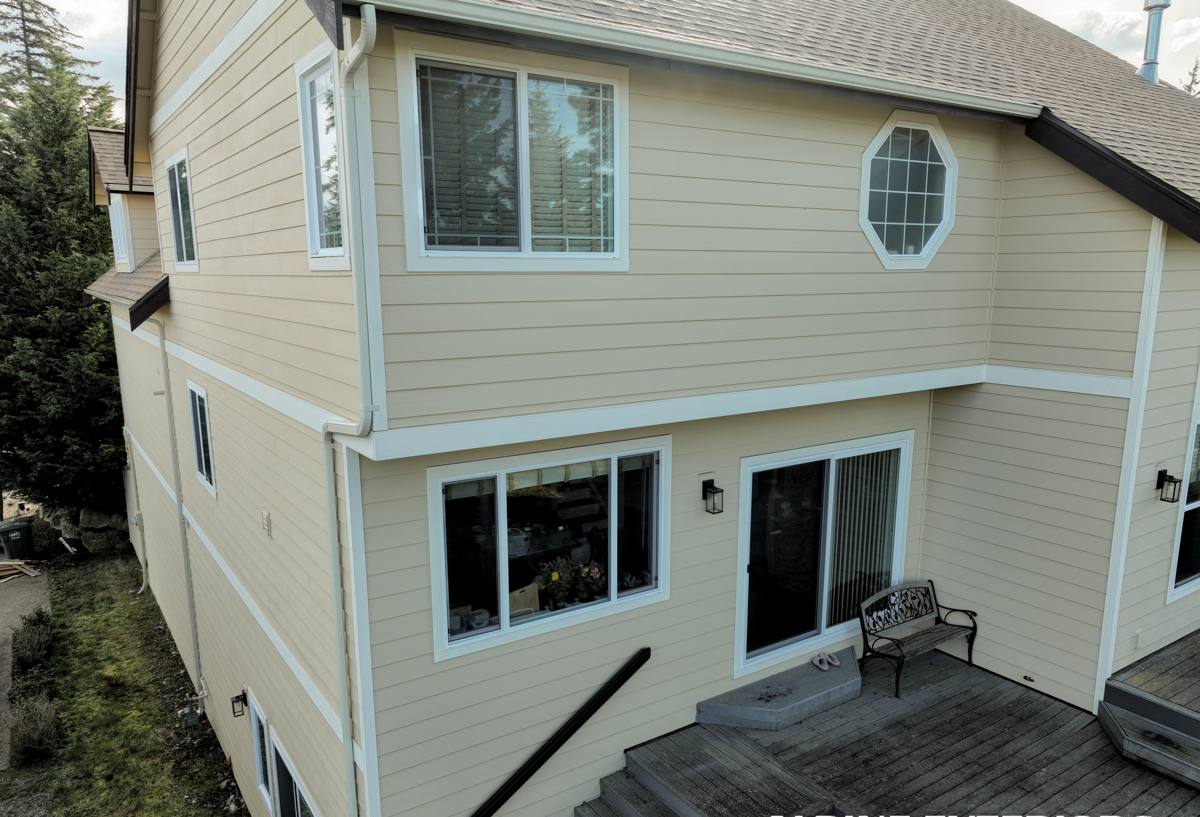
What a Correct Composite Deck Installation Actually Involves
A lot of deck problems we get called out to fix in this area didn't start with the decking boards — they started with shortcuts in the framing and substructure that don't show up until a few years of Florida weather have worked on them. A correct installation means getting several things right at once, not just laying boards in a straight line.
Substructure and Fasteners
The frame underneath composite decking carries all the load and takes the brunt of moisture exposure, since it's shaded and slower to dry than the boards on top. In coastal Pinellas County, that framing should be pressure-treated lumber rated for ground contact where it's close to grade, or better, and every fastener — joist hangers, screws, hurricane ties, post bases — should be stainless steel or coated hardware rated for coastal/salt-air exposure. Standard galvanized hardware corrodes faster near the water than most homeowners expect, and a corroded joist hanger is a structural problem hiding under a deck that still looks fine from above.
Airflow Underneath the Deck
Composite boards don't rot, but the framing under them still can if air can't move underneath the deck. Proper joist spacing, deck height off grade, and skirting design (if skirting is used) all need to allow ventilation so moisture doesn't sit trapped against wood framing after our afternoon storms roll through.
Board Spacing and Expansion
Composite material expands and contracts with heat more than most homeowners assume, and Clearwater's board-in-the-sun surface temperatures push that movement to the extreme end of what manufacturers design for. Gapping between boards, and around any fixed objects like posts or house framing, has to follow the manufacturer's spec for our climate zone — not a generic rule of thumb. Get this wrong and boards buckle or the fastening system fails within a few seasons.
Fastening System
Hidden fastener clip systems give a cleaner look and reduce the face-screw penetration points where water can eventually work in, but they have to be installed at the correct spacing and torque. Over-driven or under-driven clips are one of the most common causes of boards that rattle, lift, or creep out of alignment over time.
Composite vs. Other Decking Materials for This Area
Homeowners in Sunset Point usually narrow it down to composite, pressure-treated wood, or occasionally a tropical hardwood. Here's how they actually compare once you factor in our climate rather than a national average.
| Material | UV / Fade Resistance | Moisture & Rot Behavior | Ongoing Maintenance | Typical Lifespan Here |
|---|---|---|---|---|
| Capped Composite | Strong with a cap layer; some fade is normal in the first year, then stabilizes | Doesn't absorb water or rot; core is moisture-resistant | Periodic washing; no sanding, staining, or sealing | 25–30+ years |
| Pressure-Treated Wood | Fades and grays quickly under intense sun | Absorbs water, prone to cupping/splitting and rot at fasteners | Annual or biannual sealing/staining recommended | 10–15 years with upkeep |
| Tropical Hardwood | Grays without regular oiling | Naturally rot-resistant but still moves with humidity swings | Regular oiling to maintain appearance | 20–25 years with upkeep |
We install composite decking as our standard recommendation for Sunset Point because it removes the ongoing sealing and staining cycle that this climate makes hard to keep up with, and because a properly capped board handles UV and moisture far better than uncapped composite or wood over the long run. That's a maintenance and durability trade-off we're comfortable standing behind — not a claim that other materials can't work, just an honest read on what holds up best against sun, salt, and storms without constant upkeep.
Our Process for a Sunset Point Deck Project
- On-site evaluation. We look at grade, drainage, sun exposure, proximity to water, and existing structure (if replacing an old deck) before recommending anything.
- Structural plan. Framing layout, footing depth, and hardware are specified to handle Florida wind loads and coastal corrosion exposure, not a one-size-fits-all national code minimum.
- Permit handling. Deck permits and inspections in Pinellas County follow the county and city process; we handle the paperwork and coordinate inspections as part of the job.
- Framing and hardware installation. Ledger flashing (where applicable), joist hangers, and post connections go in with corrosion-rated fasteners.
- Composite board installation. Boards are laid with manufacturer-specified gapping and fastening, accounting for our summer surface temperatures.
- Final walkthrough. We check for level, secure fastening, and proper drainage before calling the job done.
Cost Factors for Composite Decking in This Area
Every deck is different, but the price mainly moves based on a handful of factors we walk through with homeowners during the estimate.
| Factor | Why It Matters Here |
|---|---|
| Deck size and shape | More linear footage of framing and board cuts; complex shapes add labor and waste |
| Height off grade | Taller decks need more substructure, railing, and often stairs |
| Board tier | Entry-level capped composite vs. premium lines with deeper wood-grain finishes and longer warranties |
| Hardware and fastener grade | Coastal-rated stainless hardware costs more than standard galvanized but resists salt-air corrosion far longer |
| Site access and old deck removal | Demo and haul-off of an existing deck adds labor before the new build starts |
As a broad range across the market, installed composite decking typically runs somewhere in the neighborhood of $30–$60 per square foot depending on the factors above — final numbers depend entirely on your specific layout and material choice, which is what a real on-site estimate is for.
Mistakes We See on Decks in This Climate
Before hiring anyone, it helps to know what actually goes wrong on composite decks near the coast. Use this as a checklist when comparing bids:
- Standard galvanized fasteners used instead of stainless or coastal-rated hardware, leading to early corrosion
- Boards installed tight with no expansion gap, causing buckling once summer heat hits
- Insufficient airflow under the deck, trapping moisture against the framing
- Ledger board attached to the house without proper flashing, allowing water intrusion into the structure
- Footings poured too shallow or undersized for actual wind and load requirements
- Mixed board batches or lot numbers installed together, creating visible color inconsistency
Any of these can look fine on installation day and still cause real problems within a year or two — which is exactly why the crew doing the work, and their attention to the parts you won't see once it's finished, matters more than the brand name on the boards.
Maintaining Composite Decking in Clearwater's Climate
Composite decking is low-maintenance, not no-maintenance. In a salt-air, high-UV environment like Sunset Point, a few habits go a long way:
- Rinse the deck periodically to clear salt residue, pollen, and organic debris before it builds up
- Clean spills promptly, especially oils or sunscreen, which can leave marks on some board finishes
- Keep gutters and downspouts near the deck clear so runoff doesn't pool against the structure
- Check railing posts and stair connections annually for looseness, especially after a rough storm season
- Inspect underneath the deck occasionally for debris buildup that can trap moisture against framing
Why a Crew That Already Works Sunset Point Matters
Building codes, wind-load requirements, and permitting steps in Pinellas County aren't identical to what a contractor might be used to elsewhere, and coastal Clearwater conditions punish shortcuts faster than they would inland. A crew that regularly works in and around Sunset Point already understands the drainage patterns, typical lot grading, and permitting process for this part of the county, and has seen firsthand which hardware and installation details actually hold up here versus which ones fail early. That local repetition is what separates a deck that still looks and performs well after a decade of Gulf Coast sun and storms from one that needs early repairs.
If you're weighing a new composite deck or replacing an aging wood deck in Sunset Point, we're happy to walk the site with you and put together a straightforward, no-pressure estimate — just fill out the form below to get started.