 Clearwater Siding
 Dunedin Roofs Take a Different Kind of Beating
Dunedin sits right on the Gulf side of Pinellas County, and that location shapes what happens to a roof here over time. Homes get more direct exposure to wind off the water, more salt-laden air working into fasteners and flashing, and the same intense year-round UV load that wears down every roof in this part of Florida. When a named storm or even a fast-moving summer thunderstorm rolls through, roofs that were already weakened by sun and salt are the ones that fail first.
Storm damage roof repair here isn't just about patching whatever blew off during the last event. It's about understanding that a Dunedin roof has usually been absorbing smaller hits — UV degradation, wind-driven rain intrusion, corroding fasteners — for years before a storm finally exposes the weak point. A repair that only addresses the visible damage and ignores what led up to it tends to fail again at the next storm, not the one after that.
What Wind-Driven Rain Does That Wind Alone Doesn't
A lot of homeowners think of storm damage as "the wind ripped something off." In reality, wind-driven rain causes more slow, expensive damage than wind alone. When rain is pushed sideways at 40-60+ mph, it finds its way under shingle tabs, through hairline gaps in flashing, and into any spot where sealant has aged past its useful life. That water doesn't always show up as a ceiling stain right away — it can sit in the decking and underlayment for weeks, showing up as a soft spot or a musty smell long after the storm has passed.
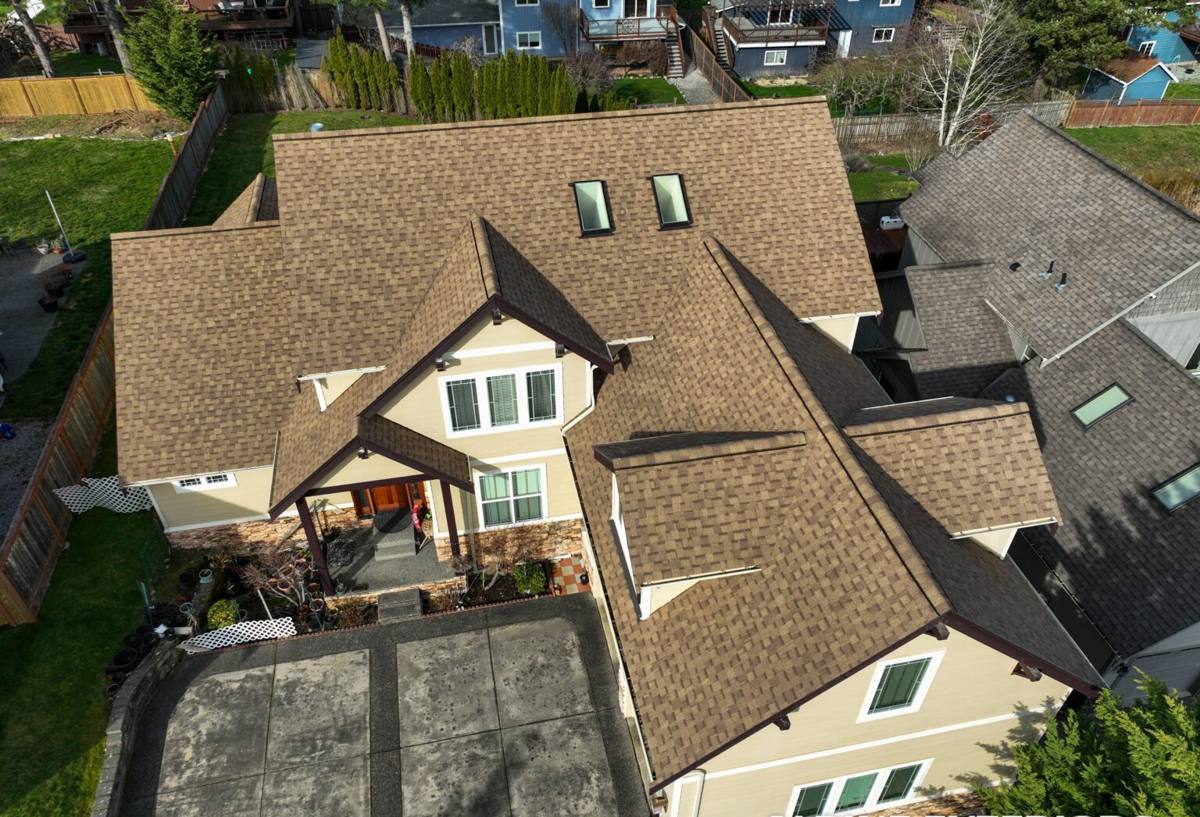
What Counts as Storm Damage (Even When It's Not Obvious)
Insurance adjusters and roofing crews don't always agree on what counts as storm-related damage, which is part of why an independent, honest inspection matters. Here's what we actually look for on a Dunedin roof after wind or heavy rain.
Wind-Lifted or Creased Shingles
Shingles don't have to be missing to be damaged. Wind can lift a shingle enough to break the seal strip underneath without tearing it off entirely. It lays back down and looks fine from the ground, but the adhesive bond is broken and it will lift again in the next gust — often letting water in before it fails visibly.
Flashing and Valley Damage
Flashing around chimneys, skylights, sidewalls, and roof valleys is where most leaks actually start, storm or no storm. Wind can loosen fasteners or bend flashing just enough to open a gap. Because these areas are low on the roof and often shaded, they're also where salt air and moisture linger longest, which accelerates corrosion on metal flashing over time.
Hidden Underlayment and Decking Damage
This is the damage that costs homeowners the most when it's missed. If wind-driven rain gets under the shingle layer, it can saturate the underlayment and, in older homes, the wood decking underneath. A repair that only replaces the surface shingles without checking what's underneath is a repair that's likely to need doing again.
What a Correct Storm Repair Actually Involves
A proper storm damage repair is a sequence, not a single step. Skipping steps is how a roof ends up with recurring leaks after being "fixed."
1. Full-Roof Inspection, Not Just the Damaged Section
We check the entire roof, not just the area a homeowner points to. Storms rarely damage only one spot — if wind lifted shingles on one slope, it's worth checking every slope, plus all penetrations, valleys, and edge metal, before calling the job scoped.
2. Matching Materials and Installation Method
Repairs need to match the existing roof's material, color, and installation pattern as closely as possible, and the new materials need to be rated for the wind exposure a Gulf-adjacent property actually sees. Using mismatched shingles or under-spec fasteners on a coastal roof is a common shortcut that shows up as a problem in the next storm, not this one.
3. Proper Flashing and Sealant Work
Any repair that disturbs flashing has to reinstall it correctly, not just re-seal over the old metal. Sealant is a backup layer, not the primary defense — it breaks down under UV exposure faster than most homeowners expect, especially in Florida's sun.
4. Code and Wind-Rating Compliance
Pinellas County follows Florida's high-velocity wind provisions for roofing work, which affect things like fastening patterns, underlayment type, and permitting for repairs above a certain size. A repair that skips permitting to save time can create problems at resale or with insurance later.
Repair or Replace: How We Make the Call
Not every storm-damaged roof needs to come off. But a repair on a roof that's already near the end of its useful life is usually money spent twice. Here's how we weigh it.
| Factor | Points Toward Repair | Points Toward Full Replacement |
|---|---|---|
| Roof age | Under 12-15 years, asphalt roofs | Approaching or past manufacturer's expected service life |
| Extent of damage | Isolated to one slope or feature | Spread across multiple slopes or repeated storm hits |
| Decking condition | Dry, solid decking under the damage | Soft, delaminated, or previously water-stained decking |
| Prior repair history | First significant repair | Multiple past patches in different areas |
| Material availability | Matching shingles or panels still available | Discontinued product, visible mismatch unavoidable |
| Insurance scope | Adjuster scopes a repair | Adjuster scopes full slope or full roof |
When the honest answer is "repair," we repair. We don't push a full tear-off on a roof that doesn't need one — that's not a call we make lightly, and it's not good for our reputation with the homeowners we hope to work with again.
Our Process for Dunedin Storm Calls
- Initial contact and triage. If there's active water intrusion, we prioritize a temporary dry-in (tarp or emergency patch) to stop damage from spreading while we schedule the full assessment.
- On-site inspection. We walk the full roof, check the attic or interior ceiling where accessible, and document what we find with photos.
- Written scope and estimate. You get a clear explanation of what's damaged, what caused it, and what it will take to fix — repair or replacement, with reasoning either way.
- Insurance coordination if needed. If you're filing a claim, we can walk the adjuster through our findings and provide documentation that supports an accurate scope.
- Repair work. Matched materials, correct flashing detail, and fastening to current wind-code standards for the area.
- Final walkthrough. We show you what was done and where, before we consider the job finished.
Materials We Use and Why
For coastal Pinellas County homes, we favor roofing materials and components with a track record for wind and moisture performance over ones that are simply the cheapest to install. That's a standard we hold ourselves to, not a claim about any specific competing product being unsafe.
Fasteners and Flashing
Salt air accelerates corrosion on standard fasteners faster than it does further inland. We use corrosion-resistant fasteners and flashing appropriate for Gulf-coast exposure, because the fastener that holds for ten years inland may not hold as long a few miles from the water.
Underlayment
Given how much wind-driven rain matters here, we don't treat underlayment as an afterthought. A synthetic or self-adhering underlayment with a real track record for wind-driven rain resistance is worth the modest upcharge over minimum-code felt, especially on lower-slope sections and valleys where water lingers longest.
Sealants
Florida UV exposure breaks down cheap sealants faster than most homeowners expect. We use sealants rated for sustained UV and temperature-cycling exposure, and we treat them as a secondary defense behind proper flashing geometry, not the main line of defense.
Insurance and Documentation
Storm damage claims move faster and get scoped more accurately when there's clear documentation from the start. A few general things worth knowing:
- Take photos of visible exterior damage as soon as it's safe to do so, before any temporary repairs.
- Keep receipts for any emergency tarping or temporary work — most policies cover reasonable steps taken to prevent further damage.
- An independent roofing inspection report, separate from the adjuster's, gives you a second set of eyes on the scope.
- Ask any contractor for a written, itemized estimate before agreeing to insurance-funded work — verbal scopes lead to disputes later.
We're not a public adjuster and don't represent that we are, but we can document roof-specific findings clearly enough to support your claim conversation.
Why a Crew That Already Works in Dunedin Matters
After a significant storm, roofing demand spikes across the whole Tampa Bay region, and out-of-area crews often show up offering fast, cheap repairs. A local crew that already works Clearwater and Dunedin regularly has a few practical advantages: familiarity with the wind-rating and permitting requirements Pinellas County actually enforces, an existing relationship with local material suppliers so matching shingles and flashing profiles are easier to source, and — importantly — a reason to still be answering the phone a year from now if a repair needs a warranty follow-up. Storm-chasing crews that leave the area once the immediate rush is over don't have that accountability.
Local Knowledge That Shows Up in the Details
Knowing that a particular block sits closer to the water, or that certain older homes in the area were built with plank decking instead of plywood, changes how a repair is approached. That kind of context comes from working in the same communities year after year, not from a single storm-response visit.
Signs You Need a Storm Inspection Now
- Granules collecting in gutters or at downspout outlets after a storm
- A ceiling stain or musty smell appearing days or weeks after heavy rain
- Visibly lifted, curled, or missing shingles on any slope
- Bent, loose, or missing flashing around chimneys, skylights, or roof-to-wall junctions
- Debris impact marks, dented vents, or damaged ridge caps
- A roof that's due for replacement age-wise and just took its first real storm hit
If you're seeing any of these on your Dunedin home, it's worth getting a professional look before the next storm rolls through. We'd be glad to come out, walk the roof, and give you a straightforward, no-pressure estimate — just fill out the form below to get started.