 Clearwater Siding
 Fiber Cement Siding Built for Skycrest's Gulf Coast Conditions
Skycrest is one of Clearwater's established residential neighborhoods, with a mix of home vintages sitting well within reach of Pinellas County's salt air and subtropical weather. Whatever decade a Skycrest home was built, its siding takes the same beating year after year: intense UV exposure nearly every day of the year, wind-driven rain that gets pushed sideways into wall assemblies, salt-laden air drifting in off the Gulf, and the real possibility of hurricane-force wind loads during storm season. Siding here isn't just cosmetic — it's the first line of defense for the structure behind it.
We install James Hardie fiber cement siding exclusively, and this page walks through why that matters specifically for a Skycrest home, what correct installation actually involves in this climate, and how our process works from first look to final walk-through.
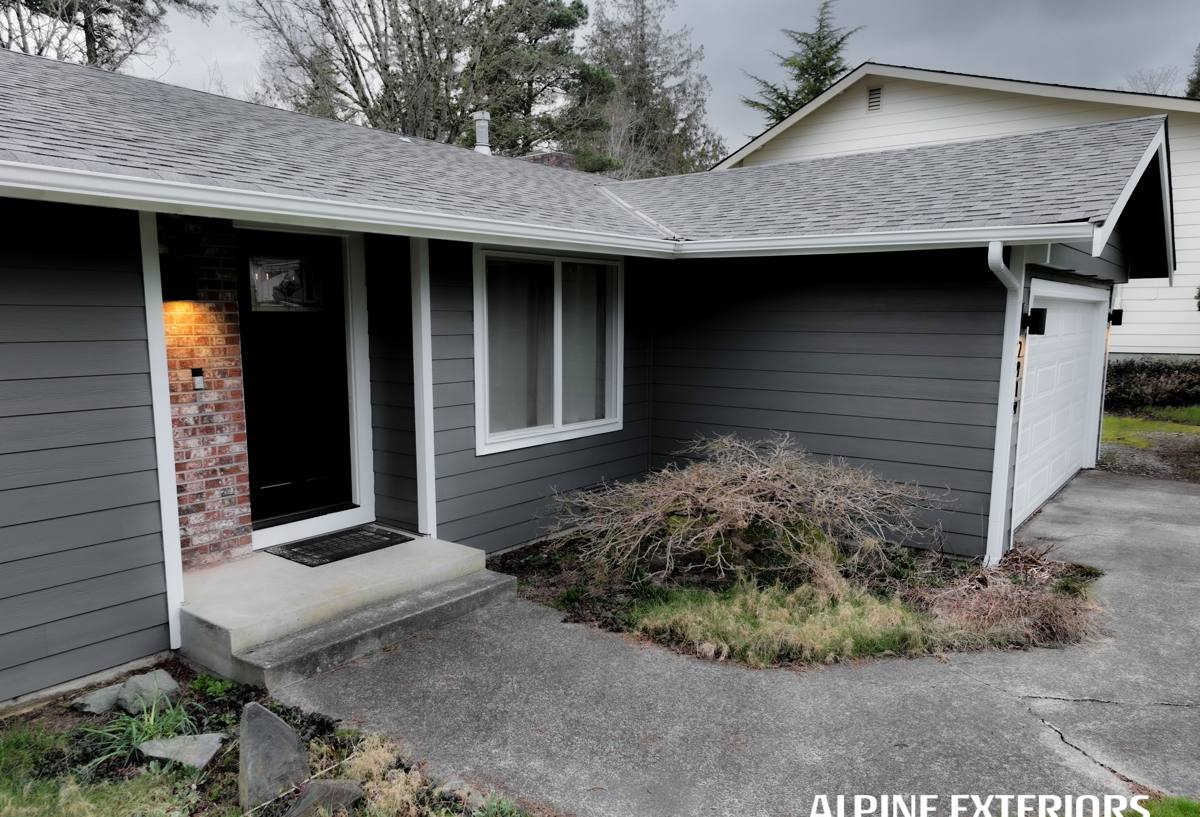
What Clearwater's Climate Actually Does to Exterior Siding
Homeowners often assume siding fails from one big event — a storm, a leak. In reality, most siding failure in this part of Florida is slow and cumulative, driven by a combination of stressors that compound each other.
UV Exposure
Clearwater sees strong, direct sun for most of the year. UV breaks down pigments and surface coatings over time, which is why paint-grade and lower-quality siding products chalk, fade, and lose their finish well before a homeowner expects to repaint. A factory-applied finish that's engineered to resist UV degradation matters more here than in most of the country.
Wind-Driven Rain and Moisture
Afternoon storms in this region don't fall straight down — wind pushes rain sideways into wall systems, seams, and trim joints. Any siding product that absorbs and holds moisture, or that relies on paint film alone to stay watertight, is working against the climate rather than with it. Moisture that gets behind siding and can't dry out is what leads to rot, mold, and costly hidden damage.
Salt Air
Even well inland from the immediate coastline, Pinellas County air carries salt content that accelerates corrosion of fasteners and degrades certain materials faster than in drier, non-coastal markets. Fastener choice and material compatibility aren't optional details here — they're part of the job.
Hurricane-Force Wind
Siding has to stay attached under real wind load, not just look good on a calm day. Fastening pattern, nail penetration, and product wind-load rating all affect whether siding stays on the wall during a named storm or ends up in the yard next door.
Why Fiber Cement Is the Right Material for This Neighborhood
Skycrest's housing stock includes a range of ages and original exterior materials, and many homeowners here are replacing siding that was never designed for Gulf Coast conditions to begin with — wood that's rotted at the bottom courses, or vinyl that's warped, faded, or cracked from UV and heat.
Fiber cement solves the core problems specific to this climate:
- Non-combustible — a real advantage in a state where storm-related electrical fires and grill/exterior fires are a genuine risk
- Dimensionally stable — it doesn't expand, contract, warp, or buckle with Florida's heat-humidity swings the way vinyl can
- Resistant to moisture-driven rot — unlike wood or wood-composite products, it won't absorb water and decay from the inside out
- Factory-applied finish — ColorPlus finish is baked on and warranted, rather than relying on field-applied paint that fails faster under intense UV
- Engineered for climate zones — James Hardie's HZ product lines are formulated differently for humid, high-moisture regions like ours versus drier climates
This is also why we don't install vinyl, LP SmartSide, primed wood, or other fiber cement alternatives like Cemplank or Allura. Each of those products has legitimate use cases somewhere, but for Skycrest's specific combination of sun, storms, humidity, and salt air, we've standardized on James Hardie because it's the product we're confident holds up to spec, backed by a warranty structure we trust to actually mean something years down the road.
What a Correct Fiber Cement Installation Involves
Fiber cement is only as good as its installation. A poorly installed job — wrong fasteners, missing clearances, bad flashing — will fail regardless of how good the material is. In this climate, installation details matter even more than in milder ones.
Moisture Management Behind the Siding
Correct installation starts with a weather-resistive barrier and properly integrated flashing at every window, door, and penetration. Water that gets past the siding surface needs a planned path to drain and dry — this is non-negotiable in a wind-driven-rain climate.
Fastening for Wind Load
Fasteners need to be corrosion-resistant (to handle salt air) and driven per manufacturer specification — correct type, spacing, and penetration into framing. This is what keeps the siding attached under hurricane-force gusts rather than just under normal wind.
Clearances
Fiber cement siding needs proper clearance from grade, roofing, decks, and other abutting surfaces so water can't wick up into the material or sit against it. Skipping these clearances is one of the most common causes of premature failure we see on homes that had siding installed by a crew unfamiliar with the product.
Joint and Seam Treatment
Butt joints, seams, and trim intersections need to be treated correctly — caulked or flashed per spec, not just butted together and painted over. In a climate where wind pushes rain into every gap, this detail is the difference between a tight building envelope and a slow leak.
Common Installation Mistakes We Correct or Avoid
- Insufficient or incorrect fastener spacing that leaves siding vulnerable in high wind
- Missing or improperly lapped weather-resistive barrier behind the siding
- Face-nailing where blind-nailing is specified, or vice versa, without accounting for the product's engineering
- Siding installed with no clearance from roofing, decking, or grade
- Cut edges left unsealed, exposing raw material to moisture
- Trim and flashing details treated as an afterthought instead of planned before install
Our Process for a Skycrest Siding Job
We keep the process straightforward and give homeowners a clear sense of what's happening at each stage:
- On-site assessment — we look at the existing siding, wall assembly, and any moisture or rot damage, and walk the whole exterior with the homeowner
- Scope and product selection — we discuss the right Hardie product line, profile, and ColorPlus finish for the home, and put together a clear, honest estimate
- Removal and prep — old siding comes off, substrate is inspected and repaired as needed, and any hidden moisture damage is addressed before anything new goes up
- Weather barrier and flashing — the moisture management layer goes in first, with flashing detailed at every window, door, and penetration
- Installation to manufacturer spec — siding is fastened, spaced, and clearanced per James Hardie's published installation requirements, not shortcuts
- Trim, caulking, and finish details — joints, corners, and trim are finished so the building envelope is actually sealed, not just painted to look sealed
- Final walk-through — we go over the finished work with the homeowner before calling the job done
Comparing Siding Materials for Gulf Coast Conditions
| Factor | Fiber Cement (James Hardie) | Vinyl | Wood / Primed Spruce |
|---|---|---|---|
| UV / fade resistance | Strong — factory-baked ColorPlus finish | Moderate — fades and chalks over time | Weak — repaint cycle required regularly |
| Moisture / rot resistance | Strong — engineered fiber cement core | Doesn't rot, but can warp/crack from heat | Weak — prone to rot without diligent upkeep |
| Wind performance | Strong when installed to spec | Can crack or blow off in high wind | Depends heavily on fastening and condition |
| Fire resistance | Non-combustible | Combustible | Combustible |
| Maintenance burden | Low — occasional wash, no repainting for the finish's warranted life | Low, but limited to no repair options once damaged | High — regular painting and rot inspection |
What Drives Cost and Scope on a Skycrest Home
Every job is different, but a few factors consistently affect scope and price on siding replacements in this neighborhood:
- Condition of the substrate underneath the existing siding — hidden rot or water damage adds repair time
- Home size, number of stories, and complexity of trim, corners, and roofline
- Whether existing siding needs full tear-off versus a simpler removal
- Product line and profile selected (lap siding, panel systems, shingle-style, and trim packages vary in cost)
- Amount of window, door, and penetration flashing work required to bring moisture management up to spec
We walk through all of this on-site before quoting, so there are no surprise change orders once the job starts.
Why a Crew That Already Works Skycrest Matters
Siding installation isn't generic — it's climate-specific and code-specific. A crew that regularly works Clearwater and Pinellas County homes already understands local wind-load expectations, how to sequence a job around Florida's rain patterns, and what moisture problems tend to show up in homes of this area's age and construction. That local familiarity translates into fewer surprises, a tighter installation, and a faster job that doesn't stall out waiting on weather guesses or unfamiliar code requirements.
It also means a real, easy-to-reach point of contact if a warranty question or a post-storm concern ever comes up — not a call center for a company that installed your siding once and moved on to the next state.
Questions to Ask Before You Hire
Whoever you choose for a fiber cement installation in Skycrest, these are worth asking directly:
- Are you a certified or factory-trained installer for the specific product line you're proposing?
- What fastener type and spacing will you use, and how does that account for local wind loads?
- How will you handle flashing at windows, doors, and any penetrations?
- What clearance will the siding have from grade, roofing, and decking?
- What does the manufacturer's warranty actually cover, and what would void it?
If your Skycrest home needs new siding, we're happy to come take a look and give you a straightforward, no-pressure estimate — no obligation, just an honest read on what your home needs and what it would take to do it right. Use the form below to get started.