 Clearwater Siding
 Board & Batten Is Everywhere in Palm Harbor Right Now — Here's What Makes It Last
Drive through Palm Harbor and you'll notice how many homes have picked up the vertical board and batten look in the last few years — on full facades, gable ends, porch accents, and additions. It's a strong style match for the mix of coastal cottage, Craftsman, and modern farmhouse homes common in this part of Pinellas County. But board and batten is also one of the least forgiving siding profiles to get wrong. The narrow battens, the vertical seams, and the flat panel faces all create more opportunities for water to find a way in than a standard horizontal lap profile does. In a climate like ours, that difference matters more than it would somewhere dry and calm.
This page is about doing board and batten specifically for Palm Harbor conditions — not board and batten in general. We'll walk through what the local climate actually demands from this profile, what a correct installation involves, how we run the job from estimate to finish, and why we only use James Hardie fiber cement to build it.
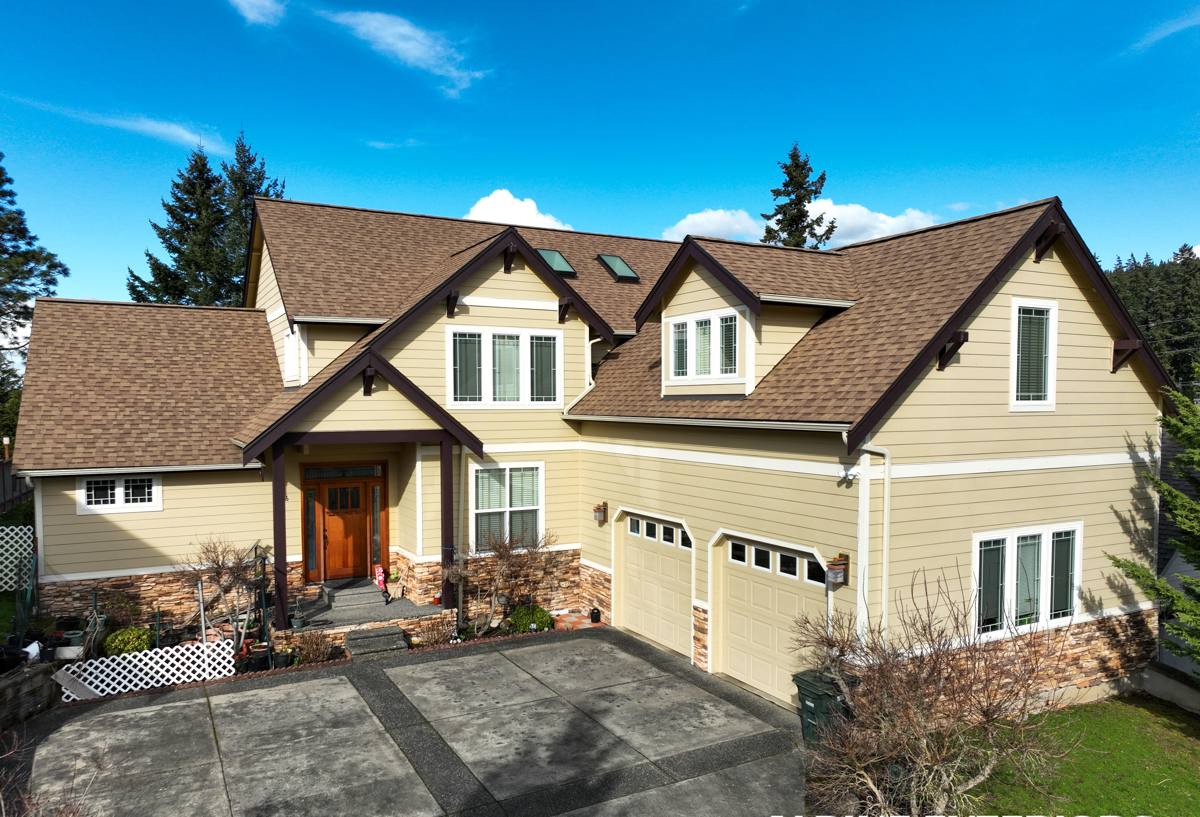
What Palm Harbor's Climate Actually Does to Vertical Siding
Palm Harbor sits close enough to the Gulf that homes here deal with a specific combination of stressors, and vertical siding profiles feel all four of them more than horizontal lap does:
- Hurricane-force wind: Wind doesn't just push on a wall — it also pulls, creating negative pressure that tries to lift and flex panel edges and battens. Fastening pattern and panel attachment matter more on a vertical profile with long unbroken seams.
- Intense, year-round UV: Florida sun is relentless on every face of a house, not just the south side. Vertical boards show fading and color mismatch more visibly than horizontal lines because the eye reads a wall of parallel vertical seams differently than a wall of stacked horizontal shadow lines.
- Wind-driven rain: Storms here rarely fall straight down. Wind pushes rain sideways and even upward under eaves, and every vertical seam and batten joint is a place water can be driven inward if flashing and gapping aren't handled correctly.
- Salt air: Even set back from the immediate coastline, Palm Harpor homes get salt-laden air carried inland. Salt accelerates corrosion of fasteners and metal flashing and speeds up the breakdown of lower-grade coatings and caulk.
None of this means board and batten is a bad choice for Palm Harbor. It means the profile has to be built with these stressors specifically in mind — which is a materials decision as much as an installation decision.
What a Correct Board & Batten Job Actually Involves
Behind the Boards: The Part Nobody Sees
The visible battens and panels get all the attention, but the water-resistive barrier and flashing details underneath are what actually keep a Palm Harbor home dry. A correct installation includes a continuous weather-resistive barrier, properly lapped and taped seams, correctly flashed window and door openings, and kick-out flashing everywhere a roofline meets a wall. Skipping or rushing any of this is invisible on installation day and expensive five years later.
Fastening and Spacing
Board and batten needs a fastening pattern engineered for the actual wind loads a Pinellas County home has to meet under the Florida Building Code — not a generic pattern pulled from a national installation guide written for a milder climate. Batten spacing and board width also need to account for expansion and contraction; get it wrong and you'll see boards cupping, battens popping loose, or hairline gaps opening up within a couple of seasons.
Ground Clearance and Drainage
Vertical boards that run too close to grade, a patio, or a roof deck trap moisture at the bottom edge — the single most common failure point we see on board and batten walls in this area, regardless of what it's made of. Correct clearance and a drainage plane behind the siding are non-negotiable, especially on additions and lanai walls where the original grading wasn't built with siding clearance in mind.
Why We Build Board & Batten in James Hardie Fiber Cement Only
We install James Hardie exclusively, and board and batten is actually one of the clearest cases for why. This profile is unforgiving of the wrong material choice:
- Non-combustible core: Fiber cement doesn't feed a fire the way wood-based products can — a real consideration in a wind-driven house fire scenario.
- Won't rot, and doesn't feed pests: Cellulose-based panel products can absorb moisture at cut edges and fastener points over time; termites and wood-boring insects are a real presence in Pinellas County. Fiber cement removes that risk entirely.
- Engineered for this exact climate: Hardie's HZ5 product line is specifically formulated for high-humidity, hot, storm-exposed climates like Florida's — it's not a one-size-fits-all national product.
- ColorPlus factory finish: A baked-on, UV-stabilized finish applied under controlled factory conditions holds color far more evenly across every exposure of the house than field-applied paint does — important on a profile where every board's fade is visible side-by-side with its neighbors.
- Dimensionally stable: Fiber cement moves far less with humidity and temperature swings than wood-based panel products, which means tighter, more stable batten joints over the long run.
We don't install board and batten in vinyl, LP SmartSide, primed wood, or cedar. Each of those has legitimate uses elsewhere, but for a vertical profile exposed to Palm Harbor's wind, sun, rain, and salt, we've made fiber cement our standard and we stand behind that decision on every job.
Comparing Board & Batten Materials for a Coastal Pinellas County Home
| Factor | James Hardie Fiber Cement | Engineered Wood Panel | Vinyl Board & Batten |
|---|---|---|---|
| Wind/impact resistance | Strong, engineered for high-wind climates | Moderate, sensitive to edge damage | Can crack or blow off in high gusts |
| Moisture behavior | Does not absorb or rot | Absorbs moisture at cut edges/fasteners if not sealed properly | Doesn't absorb, but traps moisture behind it |
| UV/color stability | Factory ColorPlus finish, even fade resistance | Field-applied paint fades and needs recoating | Can fade or chalk unevenly, especially dark colors |
| Fire performance | Non-combustible | Combustible | Combustible, can melt/deform near heat |
| Salt air durability | Excellent with correct fasteners/flashing | Moderate, coating breakdown accelerated by salt | Good, but seams and fasteners still need attention |
| Typical repaint/recoat cycle | Long — factory finish, not a field paint job | Every 5-8 years in this climate | Rarely painted, limited color options |
This isn't about declaring any one product worthless — it's about which one is built to survive this specific climate on this specific profile with the least ongoing maintenance burden for the homeowner.
How the Job Runs, Start to Finish
- On-site assessment: We look at existing wall condition, grading and drainage around the home, window and door flashing, and any areas where the current siding is already showing moisture damage.
- Measurement and material plan: Board width, batten spacing, and panel layout are planned around the home's actual dimensions and openings — not forced into a generic module.
- Tear-off and inspection: Once old siding comes off, we inspect sheathing for hidden rot or damage before anything new goes up. Problems get addressed here, not covered over.
- Weather barrier and flashing: A continuous water-resistive barrier goes on first, with flashing detailed at every penetration, window, door, and roof-to-wall transition.
- Board and batten installation: Panels and battens go up with a fastening pattern and clearances specified for Pinellas County wind and moisture conditions.
- Final detailing and walkthrough: Caulking, trim, and touch-up are finished, then we walk the property with the homeowner before calling the job done.
What to Ask Before You Hire a Board & Batten Crew in Palm Harbor
- Have they installed board and batten specifically — not just lap siding — on homes in this area?
- Do they carry current Florida contractor licensing and insurance, and will they provide proof without being asked twice?
- Do they detail flashing and drainage in writing, or just describe "siding replacement" as a single line item?
- Are they installing to the manufacturer's climate-specific fastening and clearance specs, or a generic national install guide?
- Do they know how to handle grade clearance issues around patios, additions, and lanai walls common in this area?
- What's covered under warranty, and is it a manufacturer warranty, a labor warranty, or both?
Maintenance in a Salt Air, High-UV Climate
Board and batten built correctly in James Hardie fiber cement is low-maintenance, but "low" isn't "none." A rinse-down a couple of times a year removes salt residue and airborne grit before it can dull the finish. Caulked joints around trim, windows, and doors are worth a visual check each year, especially after a rough storm season, since caulk is the one component that ages faster than the siding itself. Keeping mulch beds, irrigation heads, and landscaping from holding constant moisture against the bottom edge of the wall goes a long way toward protecting the clearance built in at installation.
Why Local Palm Harbor Experience Actually Matters Here
Board and batten done wrong doesn't usually fail on day one — it fails two or three storm seasons in, at the seams and clearances that were never quite right. A crew that already works in Palm Harbor and the surrounding Clearwater area knows the wind exposure this area actually sees, has already dealt with the drainage and grading quirks common to homes here, and understands the permitting and inspection process in Pinellas County without having to learn it on your job. That local track record is worth as much as the material spec sheet.
If you're considering board and batten for a Palm Harbor home, we're glad to walk the property with you, look at what your walls are actually dealing with, and give you a straight answer on what a correct job looks like. Use the form below to request a free, no-pressure estimate.