 Clearwater Siding
 Why Oldsmar Decks Wear Out Faster Than the Warranty Sticker Suggests
Oldsmar sits on the north shore of Tampa Bay in Pinellas County, and that location cuts both ways. The bay views and mature tree canopy that make the area desirable also mean decks here take a beating that inland decks never see. Salt-laden air drifting off the bay corrodes fasteners and hardware from the inside out, often years before the surface boards show any real damage. Intense, near-daily UV exposure dries out wood fibers and breaks down the surface layer of lower-grade composite decking. Wind-driven rain during summer storms and hurricane season forces moisture into joints, ledger connections, and end-grain cuts that were never properly sealed. None of this is dramatic on its own, but stacked together over a Florida summer after Florida summer, it's why a deck that looked fine at 8 years old can be structurally questionable by year 12.
A deck replacement done right for this specific climate isn't just about swapping old boards for new ones. It's about correcting the details — flashing, fastener grade, ventilation, structural connections — that let the original deck fail early in the first place.
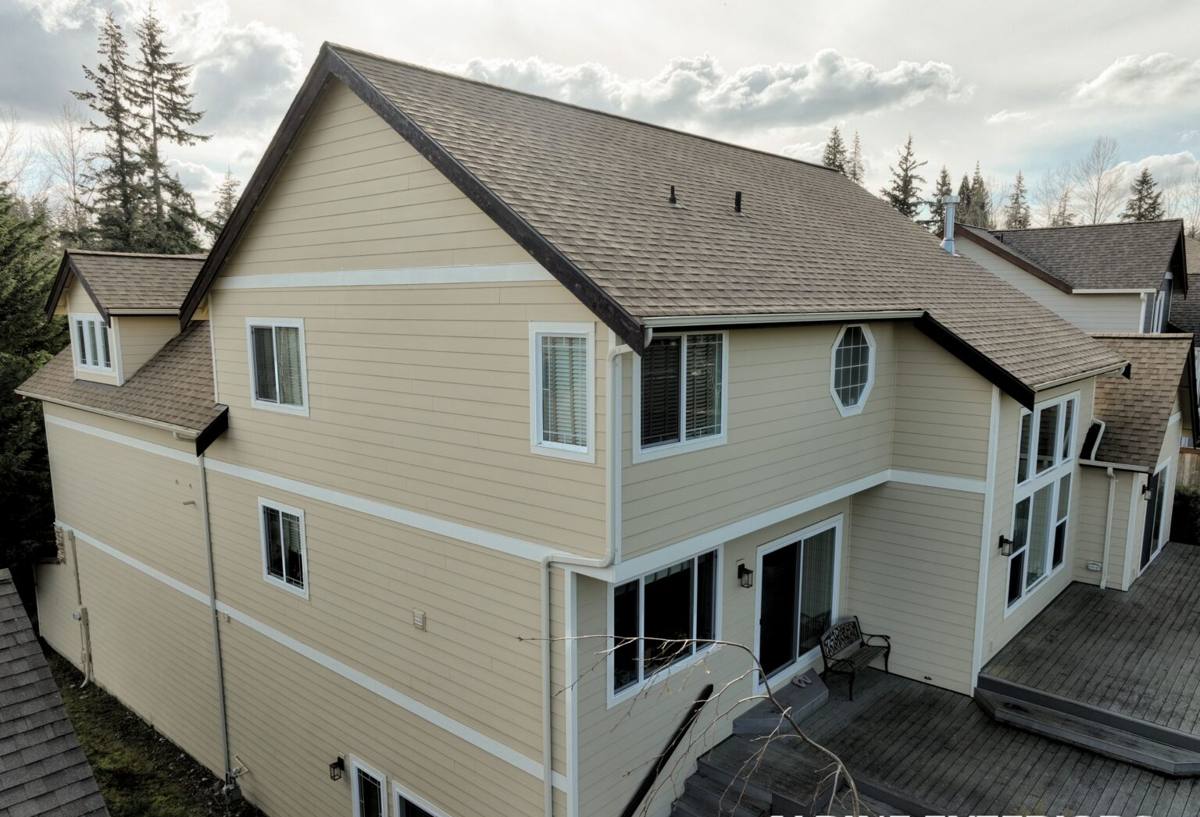
Signs an Oldsmar Deck Needs Replacement, Not Just Repair
Homeowners often ask us to "just fix the bad boards." Sometimes that's genuinely all that's needed. Other times, the visible damage is a symptom of a structural problem underneath, and patching it just delays a more expensive failure. Here's how we tell the difference during an inspection:
- Soft or spongy decking in multiple, unrelated areas — not just one board, but a pattern — usually points to moisture getting into the framing below, not just the surface.
- Rust streaking or loose fasteners at the ledger board (where the deck attaches to the house) is one of the more serious signs we look for, since ledger failure is the leading cause of deck collapse.
- Wobble in the railing system, especially posts that flex when pushed, often means the post-to-frame connection has degraded — a real safety issue, not a cosmetic one.
- Visible gaps opening up at joints where boards meet, which signals the wood has shrunk, warped, or the frame beneath has shifted.
- Graying, splintering, or surface checking across most of the deck surface, which on older wood decking usually means the protective sealant is long gone and moisture cycling has taken over.
- A deck older than 15-20 years that has never had the substructure inspected — even if it "looks okay," the fasteners and ledger connection are worth a hard look before another storm season.
If the framing and footings are sound and it's really just surface-level wear, repair or resurfacing can make sense. If the substructure is compromised, replacement is the honest recommendation — and we'll tell you which one it is before any work starts.
What a Correct Deck Replacement Actually Involves
A deck is a system, not a stack of boards. Skipping or shortcutting any one part of that system is usually where premature failure starts. A proper replacement addresses each layer:
Footings and Posts
Footings need to be sized and set to actual soil conditions and local code depth requirements, not guessed at. In areas with sandy or previously disturbed soil — common in newer Pinellas County subdivisions — undersized footings are a frequent cause of a deck that starts to sag or shift within a few years.
Ledger Attachment
This is where the deck ties into the house, and it's the single most safety-critical connection on the structure. It requires proper flashing to keep water from getting behind the siding or sheathing, and lag bolts or through-bolts rated for the load — not the shorter, cheaper fasteners sometimes used to save time.
Framing and Joists
Joist spacing has to match the decking material being installed — composite and PVC boards generally need tighter joist spacing than solid wood to avoid flexing over time. We also treat and seal cut ends, which is one of the most commonly skipped steps and a major reason wood framing rots from the inside first.
Decking Surface
The visible boards, installed with proper gapping for drainage and expansion, since Florida's heat and humidity cause more dimensional movement than in drier climates.
Railings and Guards
Structurally connected to the frame, not just the decking surface, and built to current code height and baluster spacing requirements.
Choosing a Decking Material for Tampa Bay Conditions
There's no single "best" decking material — it depends on your budget, how much upkeep you're willing to do, and how close your lot is to open water. Here's how the common options actually perform in this climate:
| Material | UV & Salt Air Resistance | Maintenance | Typical Lifespan Here |
|---|---|---|---|
| Pressure-treated wood | Fair — needs sealing to resist sun and moisture | Annual cleaning and re-sealing recommended | 10-15 years with upkeep |
| Capped composite | Good — cap layer resists fading and moisture better than wood | Periodic washing, no sealing needed | 20-25+ years |
| PVC/cellular decking | Very good — no wood fiber to absorb moisture or salt | Low — occasional washing | 25+ years |
| Tropical hardwood | Good if maintained, but installation-sensitive | Regular oiling to prevent graying and checking | 20+ years with diligent care |
We're generally cautious about uncapped or budget-grade composite boards near the bay — the exposed core in older-generation composite products can absorb moisture at cut edges and fastener points, which shows up as swelling or discoloration years down the road. That's a maintenance and warranty trade-off worth understanding before you buy, not a reason to avoid composite decking altogether — capped and PVC products have largely addressed that issue.
Building to Florida and Pinellas County Code
Deck replacement in Oldsmar isn't a handshake job — it requires a permit, and for good reason. Florida's building code exists specifically because of the wind loads and moisture exposure our structures deal with. A permitted deck replacement typically covers:
- Structural plans showing footing size, joist spans, and ledger attachment method
- Guard/railing height of at least 36 inches for most residential decks
- Baluster spacing that prevents a 4-inch sphere from passing through, for child safety
- Proper flashing at the ledger board to prevent water intrusion into the home
- Fastener and connector hardware rated for coastal/corrosive environments
- A final inspection before the deck is considered complete and code-compliant
Skipping the permit might save a little time up front, but it creates real problems later — unpermitted work can complicate a home sale, cause issues with insurance claims after storm damage, and in some cases require the deck to be torn out and redone. We pull the permit and handle the inspection as part of the job, not as an add-on.
Our Deck Replacement Process
- On-site assessment — we inspect the existing structure, framing, and ledger connection to determine what's actually salvageable versus what needs to go.
- Honest scope and estimate — you get a clear breakdown of what's being replaced, the material options, and the reasoning behind our recommendation, in plain language.
- Permitting — we prepare and submit the permit application so the project meets current Pinellas County code requirements.
- Demolition and disposal — the old deck is removed and hauled away, with the site protected during teardown.
- Structural rebuild — footings, framing, and ledger attachment are installed to code before a single deck board goes down.
- Decking, railings, and finish work — installed with proper spacing and fastening for the material chosen.
- Final walkthrough and inspection — we review the completed deck with you and coordinate the county inspection to close out the permit.
What Drives the Cost of a Deck Replacement
| Factor | Why It Matters |
|---|---|
| Deck size and shape | Multi-level decks or non-rectangular layouts require more framing and labor per square foot |
| Material choice | Pressure-treated wood costs less upfront; composite and PVC cost more but reduce long-term maintenance |
| Substructure condition | If footings or the ledger attachment need to be rebuilt, not just the surface, cost rises accordingly |
| Railing style | Standard baluster railing costs less than cable, glass, or custom designs |
| Height and access | Elevated decks or decks over difficult terrain require more structural support and labor |
| Permit and inspection scope | Larger or elevated decks may require more detailed engineering documentation |
Most straightforward deck replacements land in a broad mid-four-figure to low-five-figure range depending on size and material, with larger or more complex projects running higher. We'll give you a firm, itemized number after seeing the site — not a phone estimate.
What to Ask Before Hiring a Deck Contractor in Oldsmar
- Are you licensed and insured to do structural deck work in Florida, and can you provide proof?
- Will you be pulling the permit, or is that left to me?
- What fastener and hardware grade do you use, given the salt air exposure this close to the bay?
- How will the ledger board be flashed and attached to my home?
- What's the warranty on materials versus the warranty on your labor and installation?
- Can I get the scope of work and materials in writing before the job starts?
Any contractor who hesitates on the permit or hardware questions is worth a second look before you sign anything.
Why Local Deck Experience in Oldsmar Matters
A crew that mainly works inland doesn't always account for how close-to-the-water conditions change the job — the fastener grade, the flashing detail, the extra attention a ledger board needs when it's facing prevailing wind and salt spray off Tampa Bay. Working regularly in Oldsmar and the surrounding Clearwater area means we're not guessing at how a given material or connection detail holds up here — we're building to what this specific stretch of Pinellas County actually throws at a structure year-round, from summer humidity to hurricane season wind.
If your deck is showing its age, or you just want an honest opinion on whether it's a repair or a replacement, we're happy to take a look. Reach out below for a free, no-pressure estimate — no obligation, just a straight assessment of where your deck stands.