 Clearwater Siding
 Siding in Harbor Oaks Has to Work Harder Than Siding Almost Anywhere Else
Harbor Oaks sits close to Clearwater Harbor, under a canopy of mature oaks, in one of the city's older and more established residential areas. That combination — proximity to open water, older housing stock, heavy tree cover, and a mix of architectural styles — creates a specific set of demands on exterior siding that a lot of products simply aren't built to handle long-term.
Four things drive almost every siding decision here: hurricane-force wind loads during storm season, near-constant UV exposure for most of the year, wind-driven rain that gets pushed sideways into wall assemblies during Gulf storms, and salt-laden air drifting off the harbor that accelerates corrosion and finish breakdown on anything not engineered to resist it. Any siding product installed in this neighborhood is going to be tested by all four, usually within the first year.
This page covers fiber cement siding specifically for Harbor Oaks homes — what the climate demands, what a correct installation looks like, and why the crew doing the work matters as much as the product itself.
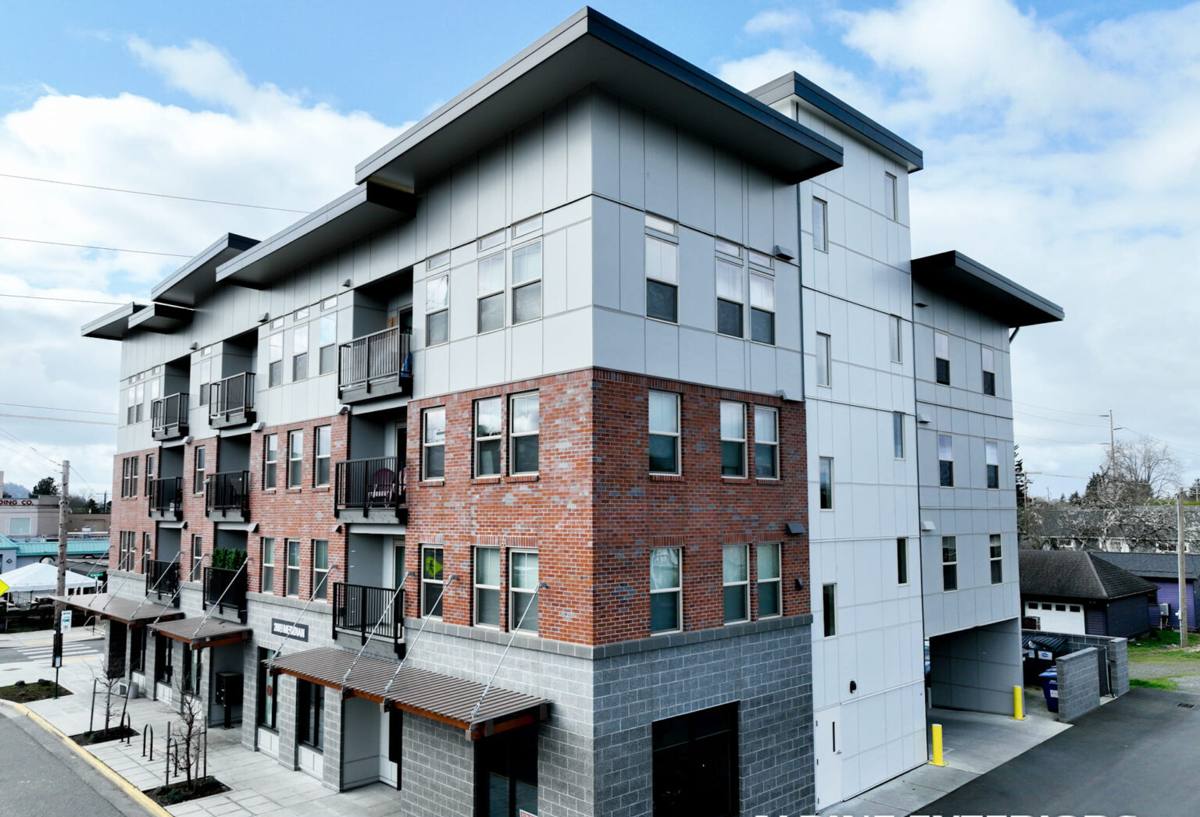
Why Fiber Cement Fits This Neighborhood
Harbor Oaks has a lot of homes with real architectural character — established rooflines, trim detail, and a scale that newer subdivisions don't always have. Siding here needs to hold a crisp, finished look under strong sun without chalking or fading, and it needs to survive wind and moisture events without warping, delaminating, or rotting at the joints.
Fiber cement is cement, sand, and cellulose fiber pressed into board form and cured. It doesn't absorb water the way wood does, it doesn't expand and contract with humidity swings the way vinyl does, and it holds paint and factory finish far longer than either. It also carries real mass and rigidity, which matters when wind is trying to peel siding off a wall — a fiber cement board fastened correctly resists that pull in a way lighter, thinner products don't.
We install James Hardie fiber cement exclusively. It's the product we trust for homes in this climate, and it's the only one we put our name behind.
What Sets James Hardie Apart for This Climate
- Non-combustible core — cement-based, not wood or plastic, which matters for fire-rated wall assemblies and insurance considerations.
- HardieZone HZ5 engineering — Hardie formulates and rates its products by climate zone, and coastal Florida falls under specifications built for high humidity, heat, and moisture cycling.
- ColorPlus factory finish — a baked-on finish applied under controlled conditions, which holds color and resists UV fade far better than field-applied paint.
- Long, transferable warranty backing — coverage that reflects the manufacturer's confidence in the product when it's installed to spec.
What a Correct Fiber Cement Installation Actually Involves
Fiber cement siding is only as good as the installation behind it. Most of the problems we get called out to fix on other contractors' work trace back to a handful of shortcuts — not a bad product. In a wind- and moisture-exposed neighborhood like Harbor Oaks, these details aren't optional extras; they're the difference between siding that lasts decades and siding that fails at the first named storm.
| Detail | Correct Approach | What Goes Wrong Without It |
|---|---|---|
| Weather-resistive barrier | Continuous, properly lapped house wrap or building paper behind every board, sealed at penetrations | Wind-driven rain finds gaps and tracks behind siding into wall sheathing |
| Fastening pattern | Correct nail type, spacing, and placement matched to wind-zone requirements | Boards work loose or blow off in sustained high wind |
| Board clearances | Minimum gap maintained from roofing, decks, and grade per manufacturer spec | Moisture wicks into the bottom edge of boards, causing swelling and paint failure |
| Joint and seam treatment | Factory-primed cut edges sealed, joints flashed or caulked per spec | Cut edges absorb moisture and deteriorate from the inside out |
| Trim and flashing integration | Z-flashing and kick-out flashing installed at every horizontal trim and roof intersection | Water intrudes at windows, doors, and roof lines — the most common failure points |
None of this is unusual or specialized knowledge in the trade — it's simply what the manufacturer's own installation instructions require. The gap between a siding job that lasts and one that doesn't is almost always whether the crew actually followed them.
How We Approach a Harbor Oaks Fiber Cement Job
Every home in this neighborhood is a little different in age, construction, and current condition, so we don't run a one-size-fits-all process. Here's the general sequence:
- On-site inspection. We look at existing siding, sheathing condition, trim, window and door flashing, and any signs of past moisture intrusion before recommending a scope of work.
- Substrate assessment. If there's rot, soft sheathing, or water damage under the existing siding, that gets addressed before anything new goes up — covering a problem with new siding just delays it.
- Product and profile selection. We help match board profile (lap width, shingle-style, or panel) and ColorPlus color to the home's existing architecture and the character of the surrounding streetscape.
- Weather barrier and flashing installation. This is the layer nobody sees once the job is done, and it's the layer that determines whether the siding survives its first tropical storm.
- Fiber cement installation to manufacturer spec. Fastening, clearances, and joint treatment done to Hardie's published requirements — not shortcuts based on "how we've always done it."
- Final inspection and walkthrough. We go over the finished work with the homeowner before calling the job complete.
What Drives the Cost of a Fiber Cement Project
Every home is quoted individually, but the same handful of factors move the price up or down on most jobs in this area:
| Factor | Why It Matters |
|---|---|
| Existing siding removal | Full tear-off of old wood, vinyl, or damaged siding takes more labor than installing over prepared sheathing |
| Sheathing or framing repair | Rot or moisture damage found underneath old siding has to be repaired before new siding goes on |
| Home size and wall complexity | Dormers, bump-outs, and multiple roof intersections add cutting, flashing, and labor time |
| Board profile and trim detail | Shingle-style or accent profiles and custom trim take longer to install than standard lap siding |
| Color and finish choice | Factory ColorPlus finishes are priced differently than primed boards intended for field painting |
| Access and site conditions | Mature tree canopy, tight lot lines, and limited staging space — common in this neighborhood — can add labor time |
Why It Matters That the Crew Already Works This Neighborhood
A crew that's already worked in Harbor Oaks and the surrounding Clearwater neighborhoods knows things a crew coming from out of the area doesn't. That includes the realities of working around mature oak canopy and tight, established lots without damaging landscaping or neighboring property; how to sequence a job around Pinellas County's permitting and inspection process; and what wind-load and fastening requirements apply to homes this close to the water under current Florida Building Code provisions for High-Velocity Hurricane Zone-adjacent coastal areas.
It also means showing up to a job already understanding what "correct" looks like on an older Clearwater home — matching trim reveals, working around existing architectural detail, and not treating a character-filled property like a blank tract-home wall. That familiarity shows up in the finished product, not just the process.
Keeping New Siding Looking Right in This Climate
Fiber cement is low-maintenance compared to wood or vinyl, but "low-maintenance" isn't "no-maintenance" — especially this close to the harbor. A short, realistic maintenance checklist for Harbor Oaks homeowners:
- Rinse siding periodically to remove salt residue and airborne grime, especially on walls facing open water or prevailing wind
- Inspect caulking at trim, window, and door joints annually and reseal as needed
- Trim back tree limbs and shrubs that stay in constant contact with siding — trapped moisture and debris accelerate wear
- Walk the exterior after major storms to check for impact damage, loose trim, or displaced flashing
- Address any paint chipping or moisture staining early — it's usually a flashing or sealant issue, not a siding failure, and it's cheap to fix while it's small
Correctly installed James Hardie siding with a ColorPlus finish generally holds its color and integrity for many years with this level of basic care — far less upkeep than wood, and without the brittleness or fade issues that show up in vinyl under sustained Florida sun.
A Straightforward Next Step
If you're weighing a siding replacement or repair for a Harbor Oaks home, we're glad to walk the property, look at what's actually going on with your current siding, and give you a straightforward, no-pressure estimate for James Hardie fiber cement — no upsell into products we don't stand behind. Use the form below to get started.