 Clearwater Siding
 Downtown Clearwater sits close to the water, which is exactly what makes it a great place to live and exactly what makes its exterior siding work harder than siding almost anywhere inland. The mix of older bungalows, mid-century homes, and newer infill construction packed into this urban core all face the same combination: hurricane-force wind gusts during storm season, wind-driven rain that gets pushed sideways into laps and seams, intense UV exposure nearly every day of the year, and salt air drifting in off the Gulf and Clearwater Harbor that accelerates corrosion and finish breakdown. Siding here doesn't fail on a schedule — it fails where the weather actually attacks it, and repair work in this neighborhood needs to account for that instead of treating every home like it's sitting fifty miles inland.
This page covers what siding repair actually looks like for a Downtown Clearwater home: what causes damage in this specific setting, how to tell a cosmetic issue from a real problem, what correct repair work involves, and why hiring a crew that already works this part of Pinellas County matters more than it would somewhere with milder conditions.
Why Siding Damage Looks Different Downtown
Every coastal Florida neighborhood deals with sun, rain, and wind — but the density and exposure profile of Downtown Clearwater adds a few wrinkles that show up in the repair calls we get from this area specifically.
- Wind funneling between buildings and structures — closer lot spacing and taller neighboring structures can concentrate wind gusts against certain wall faces during storms, putting extra stress on siding, fasteners, and trim in ways a more open suburban lot doesn't experience
- Direct, near-constant sun exposure — south- and west-facing walls with little shade cover take a heavier UV load over the course of a year, which shows up as faster fading and finish breakdown on those elevations specifically
- Salt-laden air off the water — homes within a mile or two of the harbor and Gulf see faster corrosion on exposed fasteners and trim hardware than homes further inland, even when the siding material itself is holding up fine
- A mix of building ages — older homes downtown may have layers of past repairs, non-original siding materials, or trim details that need to be understood before new repair work goes in, not just patched over
None of this means Downtown Clearwater siding fails faster across the board. It means the failure points cluster in predictable places — corners, high-exposure walls, and anywhere water can get behind the cladding — and a repair crew that's worked this specific area learns where to look first.
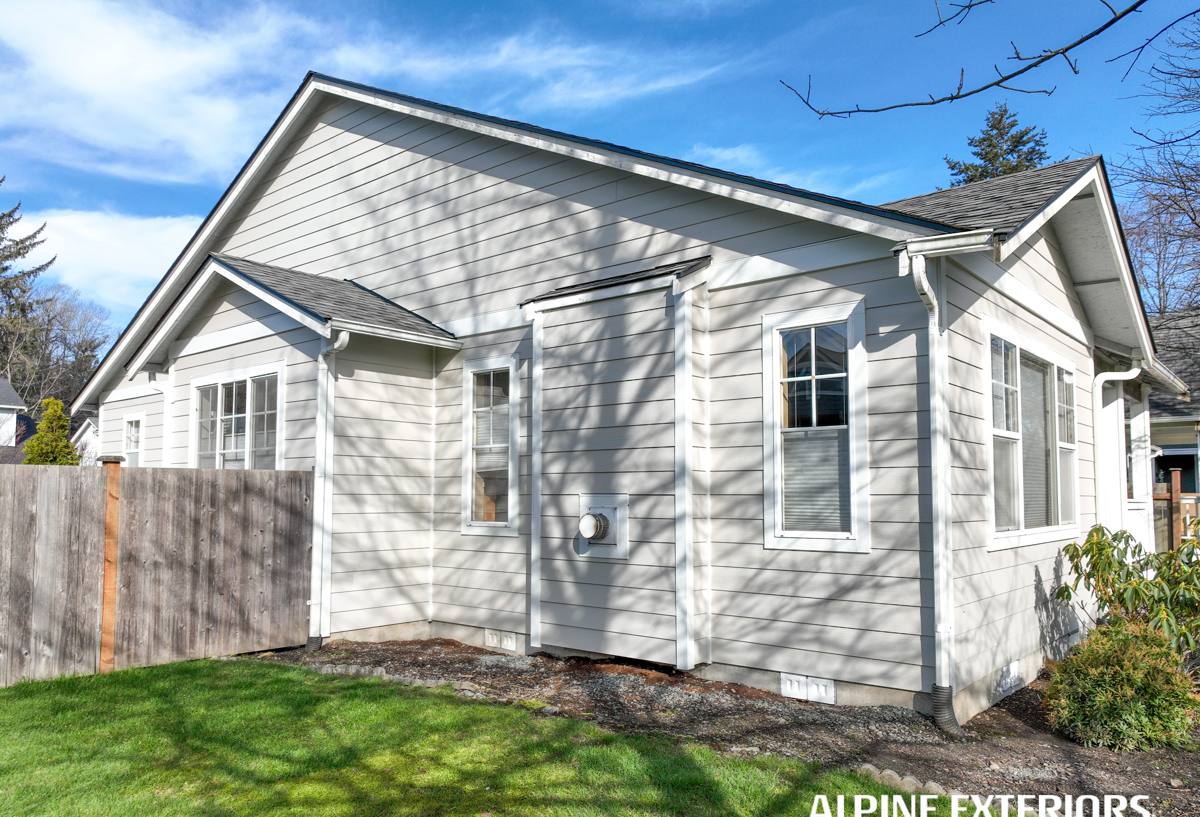
Common Reasons Siding Needs Repair Here
Storm and Wind Damage
Tropical storms and hurricane-force gusts can crack panels, pop fasteners loose, or tear trim and flashing away from the wall. Even when a home doesn't take a direct hit, sustained high wind over a storm season can work fasteners loose gradually, which shows up later as a panel that flexes or rattles in normal wind.
Moisture Intrusion
Wind-driven rain finds any gap in flashing, caulking, or panel overlap and pushes water behind the siding instead of letting it run off the surface. Once water gets behind the cladding, it can damage the wall sheathing underneath long before the siding itself shows an obvious problem from the outside — which is why some repairs are more extensive than they first appear once a panel comes off.
UV and Finish Breakdown
Years of direct Florida sun break down paint films and unstable coatings faster than in most parts of the country. On older homes with field-painted siding, this often shows up as chalking, fading, or peeling well before the siding material itself is actually failing.
Physical Damage
Lawn equipment, falling limbs, ladders, and general wear near grade level cause dents, cracks, and impact damage that's usually isolated to a panel or two rather than a whole-wall problem.
Repair or Replace: How to Tell the Difference
Not every damaged section of siding means a full re-side. The right call depends on how much of the wall is affected, what's causing the damage, and what condition the siding is in everywhere else.
| Situation | Usually Points To |
|---|---|
| One or two cracked or impact-damaged panels, rest of the wall in good shape | Targeted panel repair or replacement |
| Isolated water staining or soft spots near a single flashing point (window, roofline) | Flashing repair plus replacement of the affected panels |
| Widespread fading, chalking, or finish failure across most of the home | May still be a repair situation if the siding material itself is sound — but worth a full assessment |
| Soft, swollen, or delaminating siding in multiple areas, especially near grade | Often points to a broader moisture problem worth full evaluation before patching individual spots |
| Siding material is discontinued, badly mismatched, or original install quality was poor | Sometimes replacement of the affected elevation makes more sense than chasing patches |
The honest answer is that most siding problems we see downtown are legitimately repairable without a full re-side — but the only way to know for sure is to actually pull the damaged section and look at what's underneath, not guess from the outside.
What a Correct Repair Job Actually Involves
Siding repair done right is not just swapping a cracked board for a new one and moving on. A repair that actually holds up in this climate includes:
- Removing enough surrounding material to see the true extent of damage, not just the visibly cracked or stained piece
- Checking the weather-resistant barrier and wall sheathing behind the damaged area for moisture damage before closing anything back up
- Re-flashing any point where the original damage was caused by a flashing failure, not just replacing the siding over the same unresolved problem
- Matching fastener type, spacing, and penetration depth to manufacturer specifications, especially important in a wind-exposed downtown setting
- Selecting replacement material and finish that matches the existing siding as closely as possible in profile, exposure, and color
- Proper caulking and sealant only where specified — not as a substitute for correct flashing and material fit
- A final check that the repaired section sheds water the same way the surrounding original siding does
Skipping the "look behind the damage" step is the single most common shortcut that turns a small repair into a recurring problem. A panel can be replaced perfectly and still fail again within a year or two if the moisture source behind it was never actually addressed.
Matching Existing Siding: The Part Homeowners Underestimate
One of the trickiest parts of a repair — especially on an older Downtown Clearwater home — is matching new material to what's already on the wall. A few realities worth knowing going in:
Color and Finish Fading
Existing siding that's been on the house for years has already faded and weathered under Florida sun. Brand-new material, even in the "same" color, will often look slightly different until it weathers in. On James Hardie homes with a factory ColorPlus finish, we can usually get a very close match; on older, field-painted siding, exact matching is harder and sometimes means repainting a full elevation rather than trying to blend one new patch into faded paint.
Discontinued Profiles
Siding products and profiles change over the years. If a home has an older or discontinued lap width, panel style, or trim profile, an exact match may not be available anymore, and the honest options are either a close approximation or replacing a full wall section so the transition isn't visible.
Mixed Materials
Some older downtown homes have already had non-original repairs done in a different material than what's original to the house. Part of an honest repair estimate is telling a homeowner up front when we're dealing with that kind of situation, rather than pretending a clean match is possible when it isn't.
Why We Only Repair With James Hardie Fiber Cement
When a repair involves replacing damaged siding rather than patching what's there, we use James Hardie fiber cement — the same material and product line we install on full projects, engineered to the HZ5 specification for high-humidity, high-moisture-exposure climates like ours. It's dimensionally stable, doesn't swell or rot the way wood siding does, and the ColorPlus factory finish holds color far better under sustained Florida UV than field-applied paint. On a home that already has Hardie siding, this also means the repaired section is a true product match rather than a different material patched into an existing wall. On a home with a different existing siding type, we'll walk through honestly what a Hardie-matched repair looks like versus matching the existing material, so the decision is an informed one rather than a surprise.
Our Repair Process
Repair work downtown follows a straightforward sequence, but each step matters:
- On-site assessment — we look at the damaged area and enough of the surrounding siding to understand whether the problem is isolated or part of a larger pattern
- Diagnosis behind the surface — where damage suggests possible moisture intrusion, we check the sheathing and barrier behind the affected panels before quoting the scope of work
- Honest scope and estimate — a clear explanation of what needs to be repaired, what caused it, and what it will take to fix it correctly, including if the smarter move is a larger section than the original damage
- Repair execution — removal, any needed flashing correction, installation of matched material, and proper fastening to spec
- Final check — confirming the repaired area sheds water correctly and blends acceptably with the surrounding wall
Signs It's Time to Get Your Siding Looked At
- Cracked, warped, or visibly bowed panels anywhere on the home
- Soft spots when you press gently on the siding, especially near the bottom of walls or below windows
- Staining, streaking, or discoloration that follows a seam, window, or roofline
- Panels that have come loose, shifted, or rattle in wind
- Visible gaps opening up at trim, corners, or panel joints
- Peeling, chalking, or heavy fading concentrated on one or two elevations rather than the whole house
- Any siding damage noticed right after a storm, even if it looks minor
Why Local Experience Matters for This Kind of Work
Siding repair in Downtown Clearwater benefits from a crew that already knows how this specific area behaves — which walls tend to take the worst wind loading between closely spaced buildings, which elevations fade fastest under direct sun, and how salt air factors into fastener and flashing choices near the water. That familiarity shortens the diagnosis step and reduces the chance of a repair that looks fine on day one but fails again after the next storm season, because the underlying cause was never actually addressed the first time.
If you're dealing with damaged, aging, or storm-affected siding on a Downtown Clearwater home, we're happy to take a look, give you an honest read on what's actually going on, and put together a free, no-pressure estimate.