 Clearwater Siding
 Downtown Clearwater's Siding Has a Harder Job Than Most
Homes in Downtown Clearwater sit close enough to the water that the exterior of a house does real work every single day. Salt-laden air drifts inland off the Gulf and Clearwater Harbor, the sun is intense and nearly constant for most of the year, and when a tropical system or a strong summer storm rolls through, wind-driven rain gets forced sideways into every seam, joint, and corner of a home's exterior. Add in Pinellas County's building code requirements, which exist specifically because this area sees hurricane-force wind events, and you have a climate that is genuinely tougher on siding than what most manufacturers design for in a national "average" test.
That combination — heat, UV, humidity, salt, and wind — is exactly why we install one product on Downtown Clearwater homes: James Hardie fiber cement siding. Not because it's trendy, but because it's engineered as a system to handle this specific set of conditions, and because we've seen firsthand what happens to lesser materials after a few Florida summers and a couple of named storms.
What This Climate Actually Does to Exterior Siding
UV and Heat
Downtown Clearwater gets sun exposure most of the year, and UV breaks down pigments and surface coatings over time. Siding that isn't formulated to resist UV will fade unevenly, chalk, or start showing color loss years before a homeowner expects it — especially on south- and west-facing walls.
Wind-Driven Rain
It's rarely rain falling straight down that causes damage — it's rain being driven sideways under pressure during a storm. That water finds its way behind poorly lapped siding, around under-flashed windows, and into any gap where the installation wasn't done to spec. Once moisture gets behind siding and can't dry out, the wall assembly underneath is at risk regardless of what the visible surface looks like.
Salt Air
Proximity to the Gulf and the harbor means airborne salt settles on exterior surfaces continuously. Salt accelerates corrosion of fasteners and trim, and it can degrade coatings and adhesives that weren't formulated with coastal exposure in mind.
Hurricane-Force Wind
Pinellas County's wind-load requirements aren't arbitrary — they reflect real storm history. Siding needs to stay fastened under sustained high wind and wind-borne debris impact, not just look good on a calm day.
Why We Standardized on James Hardie Fiber Cement
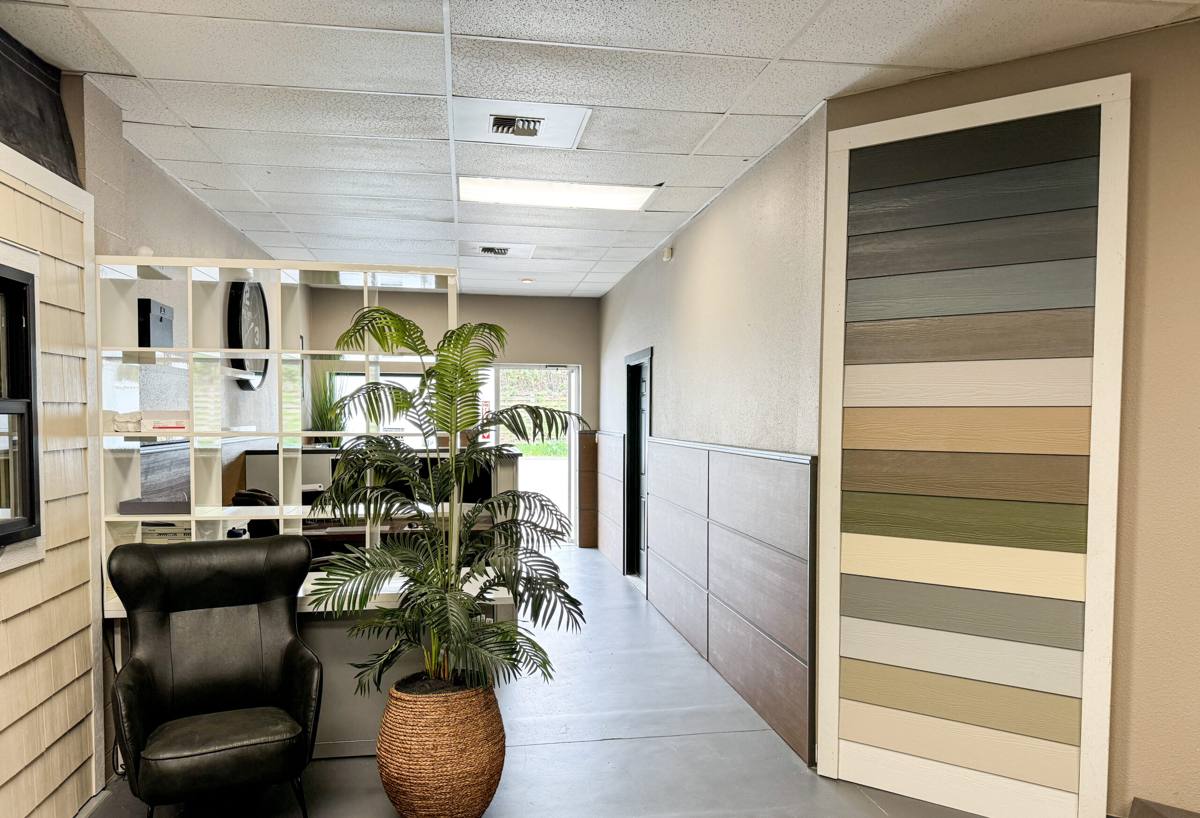
James Hardie fiber cement is non-combustible, dimensionally stable, and manufactured in HZ5 formulations specifically engineered for high-humidity, storm-prone climates like ours. The factory-applied ColorPlus finish is baked on and warrantied against fading, which matters enormously under Florida's UV load — it's a very different proposition than field-applied paint that starts weathering the day it's rolled on. Because the boards are cement-based rather than wood or foam-based, they don't provide the same food source for pests, and they hold up to moisture cycling in a way that engineered wood products and untreated cedar simply can't match long-term.
We do not install vinyl, LP SmartSide, Cemplank, Allura, primed spruce, or cedar. Each of those products has legitimate uses elsewhere, but for the specific combination of UV, humidity, salt air, and wind this area sees, we've made Hardie our standard and we stand behind that choice on every job we take on.
James Hardie Product Lines We Install Locally
| Product Line | Best Suited For | Notable Feature |
|---|---|---|
| HardiePlank Lap Siding | Most home exteriors, classic horizontal look | Available in multiple exposures and textures |
| HardieShingle | Accent gables, coastal-style architectural detail | Staggered or straight-edge shingle profiles |
| HardiePanel Vertical Siding | Modern facades, porch and accent walls | Clean vertical lines, board-and-batten option |
| HardieTrim | Corners, fascia, window and door surrounds | Matches ColorPlus finish system for a uniform look |
What a Correct Installation Actually Involves
Fiber cement siding performs the way it's engineered to only when it's installed to James Hardie's published specifications. In a coastal wind-and-rain environment like Downtown Clearwater, shortcuts that might go unnoticed in a milder climate show up fast here — usually during the next heavy storm.
Weather Barrier and Flashing First
Before a single piece of siding goes up, the wall needs a correctly lapped weather-resistant barrier and properly installed flashing at every window, door, and penetration. This is the layer that actually keeps wind-driven rain out of the wall assembly — the siding itself is the second line of defense, not the first.
Fastening and Clearances
Hardie specifies fastener type, spacing, and placement for a reason — under-fastened siding is a common cause of wind damage in coastal storms. Correct installation also maintains proper clearance from rooflines, decks, and grade so water sheds away from the home instead of wicking up into the board edges.
Joints, Caulking, and Butt Seams
Every joint is a potential water entry point. Butt seams need to be treated per manufacturer spec, and the right sealants need to be used at trim and penetrations — generic caulk that isn't rated for the movement and exposure this climate creates will fail early.
Local Code Compliance
Pinellas County's wind-load and fastening requirements need to be met and documented, not just eyeballed. This matters both for storm performance and for insurance and resale purposes down the road.
Our Process for Downtown Clearwater Homes
- On-site inspection: We assess your current siding, sheathing condition, and any moisture or storm damage before quoting anything.
- Honest scope and estimate: You get a clear breakdown of what's needed — full replacement, partial repair, or trim and accent work — with no pressure to over-buy.
- Prep and weather barrier installation: Old siding is removed, sheathing is inspected and repaired as needed, and a correctly lapped weather-resistant barrier goes on first.
- Hardie installation to spec: Fastening, clearances, and flashing are done to James Hardie's published requirements and local code.
- Final walk-through: We review the finished work with you before calling the job done.
Cost Factors for Fiber Cement Siding in This Area
Every home is different, but a few factors consistently drive cost for Downtown Clearwater properties specifically:
| Factor | Why It Matters Here |
|---|---|
| Existing sheathing condition | Coastal humidity and past leaks can mean hidden repair work behind old siding |
| Home age and construction type | Older Downtown Clearwater homes may have non-standard framing or prior repairs to account for |
| Product line and profile | HardieShingle and vertical panel work typically involves more labor than straight lap siding |
| Trim and architectural detail | Homes with more corners, gables, and window trim require more precise flashing and cutting |
| Access and lot layout | Tight downtown lots and setbacks can affect staging and scaffolding needs |
We provide a specific, written estimate after seeing your home in person — broad ranges without an inspection tend to be misleading either way.
Signs Your Current Siding May Already Be Failing
- Soft or spongy spots when you press on the siding, especially near the bottom edges
- Visible warping, buckling, or gaps between boards or panels
- Paint or finish that's peeling, bubbling, or chalking heavily
- Staining or discoloration that keeps returning after cleaning
- Increased pest activity around exterior walls
- Rising energy bills that suggest the wall assembly isn't sealing properly anymore
- Visible damage after the most recent significant storm
Any one of these on its own isn't necessarily an emergency, but they're worth having a professional look at before the next storm season tests your home's exterior further.
Why It Matters That We Already Work in This Neighborhood
A crew that regularly works Downtown Clearwater homes already understands the local permitting process, the wind-load requirements Pinellas County enforces, and the specific way this coastal microclimate stresses a building envelope. That familiarity shows up in the details — correct flashing choices around older window styles, realistic timelines that account for weather windows, and a finished installation that's built to actually perform through hurricane season, not just look good on installation day.
Caring for Your Siding After Installation
James Hardie siding is low-maintenance, not no-maintenance. A periodic rinse to remove salt residue and pollen buildup, prompt attention to any caulking that shows wear, and a visual check after major storms will keep the system performing the way it's designed to for decades. Because the ColorPlus finish is factory-applied, you're not signing up for a repainting cycle the way you would with field-finished materials.
If your Downtown Clearwater home's siding is showing its age, or you're planning ahead of the next storm season, we're happy to take a look and walk you through honest options. Reach out for a free, no-pressure estimate using the form below.