 Clearwater Siding
 Building Decks for Del Oro's Specific Conditions
Del Oro sits inside one of the more demanding outdoor-living climates in the country. A deck here isn't just a weekend carpentry project — it's an exterior structure that has to survive intense year-round UV exposure, wind-driven rain, salt-laden air moving in off the Gulf, and the occasional hurricane-force wind event. Materials and fastening methods that work fine in a drier, milder climate often fail early here, and homeowners in Del Oro frequently end up replacing decks that were built to a generic standard rather than a Gulf Coast one.
We work in this neighborhood regularly, which means we're not guessing at what holds up. This page covers what actually matters when building a custom deck for a Del Oro property: material selection, structural details, our build process, and what to look for in whoever you hire.
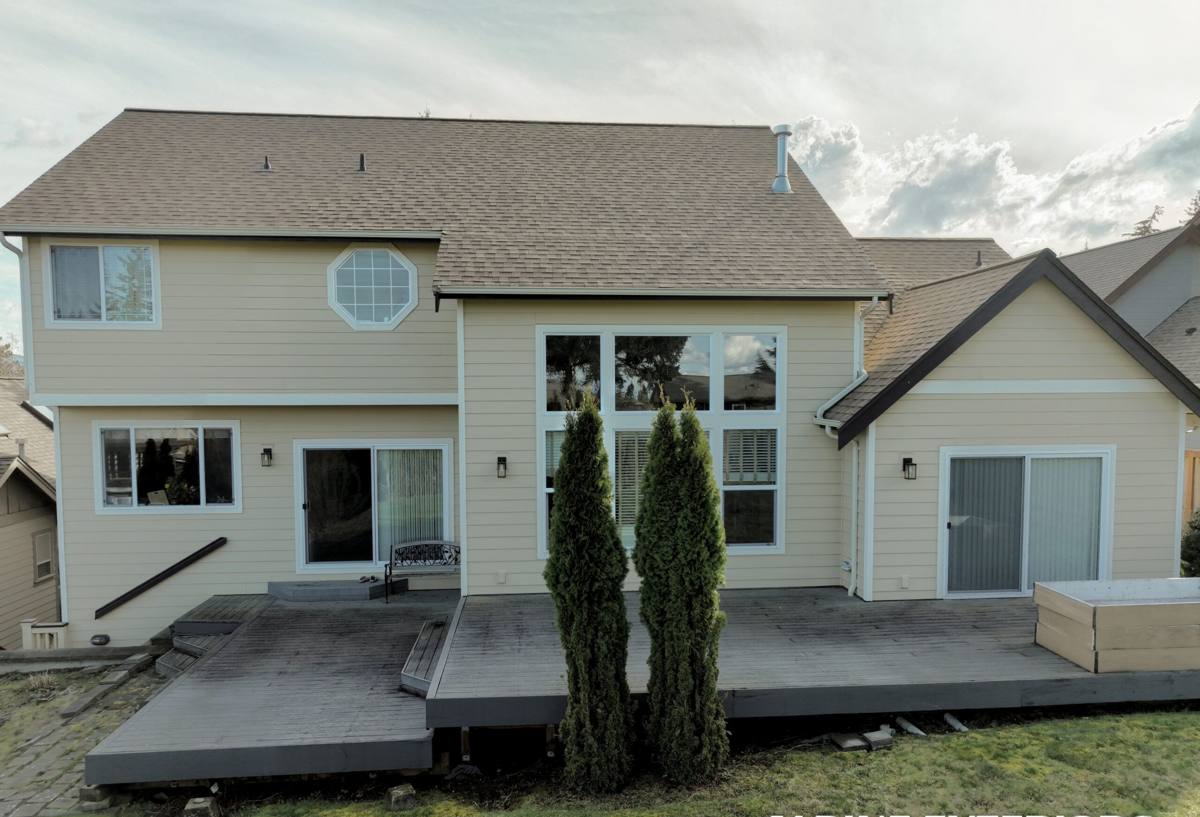
What Clearwater's Climate Does to a Deck Over Time
UV Exposure
Florida's sun is stronger and more consistent than in most of the country. Wood decking that isn't properly sealed and re-coated will gray, check, and splinter faster here than manufacturer literature (often written with a national average climate in mind) suggests. Composite and PVC boards fade too, though the better lines are formulated with UV inhibitors specifically because of markets like this one.
Wind-Driven Rain
Storms here rarely come straight down. Wind pushes rain sideways and up under boards, into fastener holes, and behind ledger connections. A deck that isn't detailed to shed and drain water in those conditions will trap moisture — and trapped moisture is what rots joists, corrodes hardware, and lifts fastener heads over a few seasons.
Salt Air
Del Oro's proximity to the coast means airborne salt is a constant, low-level factor even when there's no direct ocean view from the property. Salt accelerates corrosion in fasteners, connectors, and any exposed metal hardware. Standard hot-dip galvanized screws are not enough for a coastal Florida deck — this needs to be specified correctly from the start, not discovered after hardware starts staining and weeping rust down the boards.
Hurricane-Force Wind
Structural attachment — how the deck ties to the house and how the posts anchor to their footings — matters more here than the decking material on top. Wind uplift and lateral loads during a tropical system put real stress on ledger boards, post bases, and railing systems. This is a code and engineering issue as much as a materials one.
Choosing a Decking Material for Del Oro
There's no single "best" decking material — there's a best material for this specific climate and this specific budget. Here's how the common options actually compare for a Pinellas County coastal property:
| Material | UV/Fade Behavior | Moisture & Salt Air Resistance | Maintenance | Typical Lifespan Here |
|---|---|---|---|---|
| Pressure-Treated Pine | Grays quickly without sealing; needs re-staining | Fair — treatment resists rot but not indefinitely | Annual sealing/staining recommended | 10-15 years with upkeep |
| Composite Decking | Good with quality UV-stabilized lines | Very good — doesn't absorb moisture like wood | Low — periodic cleaning | 20-25+ years |
| PVC/Capped Polymer | Very good, engineered for high-UV climates | Excellent — fully sealed cellular structure | Lowest — mainly rinsing | 25+ years |
| Tropical Hardwood (e.g., ipe) | Fades to gray without oiling; oiling restores color | Excellent natural density and rot resistance | Regular oiling to maintain color and seal | 25+ years structurally |
Pressure-treated pine is the lowest upfront cost, but in this climate it's also the highest-maintenance option — homeowners who skip annual sealing see it deteriorate fastest of the group. Composite and PVC cost more initially but are increasingly the choice for Del Oro homeowners who want a deck they're not re-treating every year. Hardwood is beautiful and genuinely durable, but it's a material that rewards owners willing to keep up with oiling; skip that and it grays and checks like any other exposed wood.
What a Correctly Built Deck Involves Here
The decking surface is the part everyone sees, but the parts that determine whether the deck survives a decade of Gulf Coast weather are underneath it.
Ledger Attachment and Flashing
Where the deck ties into the house is the single most common failure point we see on older decks in this area. It needs proper flashing that directs water away from the house band board, not just lag bolts through unsealed wood. Wind-driven rain finds any gap here.
Footings and Posts
Footing depth and post anchoring need to account for both the soil conditions typical of this area and the uplift forces from high wind events — not just the static weight of people standing on the deck. Post bases should keep the wood post itself elevated off the concrete to avoid standing water contact.
Fasteners and Hardware
Coastal-rated stainless or heavy-coated fasteners and structural connectors are worth the incremental cost. Using standard interior-grade hardware on a coastal deck is one of the more common corners cut, and it shows up as rust streaks and loosening connections well before the decking itself wears out.
Joist Spacing and Ventilation
Tighter joist spacing than the bare code minimum reduces board flex and helps some composite products perform to their warranty terms. Airflow underneath the deck also matters — a low, enclosed deck with poor ventilation holds humidity against the framing longer after a storm.
Railings and Attachment Points
Railings take direct wind load and need to be attached into structural framing, not just decking boards. This is also where local wind zone requirements typically get inspected most closely.
Permitting and Code in Pinellas County
Custom decks in Clearwater and unincorporated Pinellas County generally require a permit, and inspections check structural attachment, footing depth, and railing height and spacing — not just that the deck looks finished. Wind zone requirements here are more stringent than in inland parts of the state, which affects fastening schedules and connector specifications. Skipping the permit process might save time upfront, but it creates real problems at resale, when an unpermitted structure can hold up a closing or require retroactive inspection.
Our Process for a Del Oro Custom Deck
- On-site assessment — we look at sun and rain exposure, drainage around the footprint, and how the deck will tie into the existing structure.
- Material and layout discussion — honest tradeoffs between wood, composite, and PVC based on your budget and how much upkeep you actually want to do.
- Design and permitting — plans drawn to current Pinellas County wind zone requirements, permit submitted and tracked.
- Framing and structural work — footings, ledger flashing, joists, and coastal-rated hardware done first and inspected before decking goes down.
- Decking, railing, and finish work — final surface installed, railings secured into structural framing, edges and fastener patterns finished cleanly.
- Final walkthrough — we go over maintenance expectations specific to whatever material you chose, so there are no surprises a year in.
What to Check Before Hiring Anyone for This Work
- Ask whether they pull permits themselves or expect you to — a legitimate contractor handles this.
- Ask what fastener and connector hardware they use, and whether it's rated for coastal/salt-air exposure.
- Ask how they detail the ledger board attachment and flashing, specifically.
- Ask for their license and confirm current insurance — this is a structural project attached to your home.
- Ask how footing depth and post anchoring are determined for your specific lot.
- Get the material warranty in writing, separate from the labor warranty.
Why Local Experience in Del Oro Matters
A deck built by a crew that's never worked this specific stretch of coastal Florida tends to default to generic-climate assumptions — standard fasteners, standard flashing details, whatever framing spacing the code minimum allows. A crew that already works in Del Oro and the surrounding Clearwater area has already seen which details hold up here and which ones come back as callbacks two summers later. That includes knowing the local permitting process, understanding how salt air and wind-driven rain actually behave on a real job site here (not just in a spec sheet), and building in the margin that this climate demands rather than the bare minimum a code inspection requires.
Get a Free Estimate
If you're planning a new custom deck or replacing one that hasn't held up to a few Florida summers, we're happy to take a look and walk you through options honestly — no pressure, no pushy upsell. Use the form below to request a free estimate, and we'll talk through what makes sense for your home and your budget.