 Clearwater Siding
 Deck Replacement in Belleair Bluffs
Belleair Bluffs sits up on the ridge above the Intracoastal Waterway, which gives homes here some of the better views in Pinellas County — and some of the harder conditions for an exposed wood or composite deck. Elevation means more direct wind exposure off the water. Proximity to the Intracoastal means salt-laden air is a daily fact of life, not an occasional one. Add year-round Florida UV and the wind-driven rain that comes with every summer thunderstorm and hurricane season, and a deck here is working harder than the same structure would twenty miles inland.
We replace decks throughout Belleair Bluffs and the surrounding Clearwater area, and most of the calls we get aren't about a deck that failed overnight. They're about a deck that's been quietly losing ground for years — soft spots nobody wanted to deal with, fasteners that rusted out, a substructure that was undersized or under-fastened from the start. This page covers what actually wears these decks out, what a correct replacement looks like, and how we approach the job.
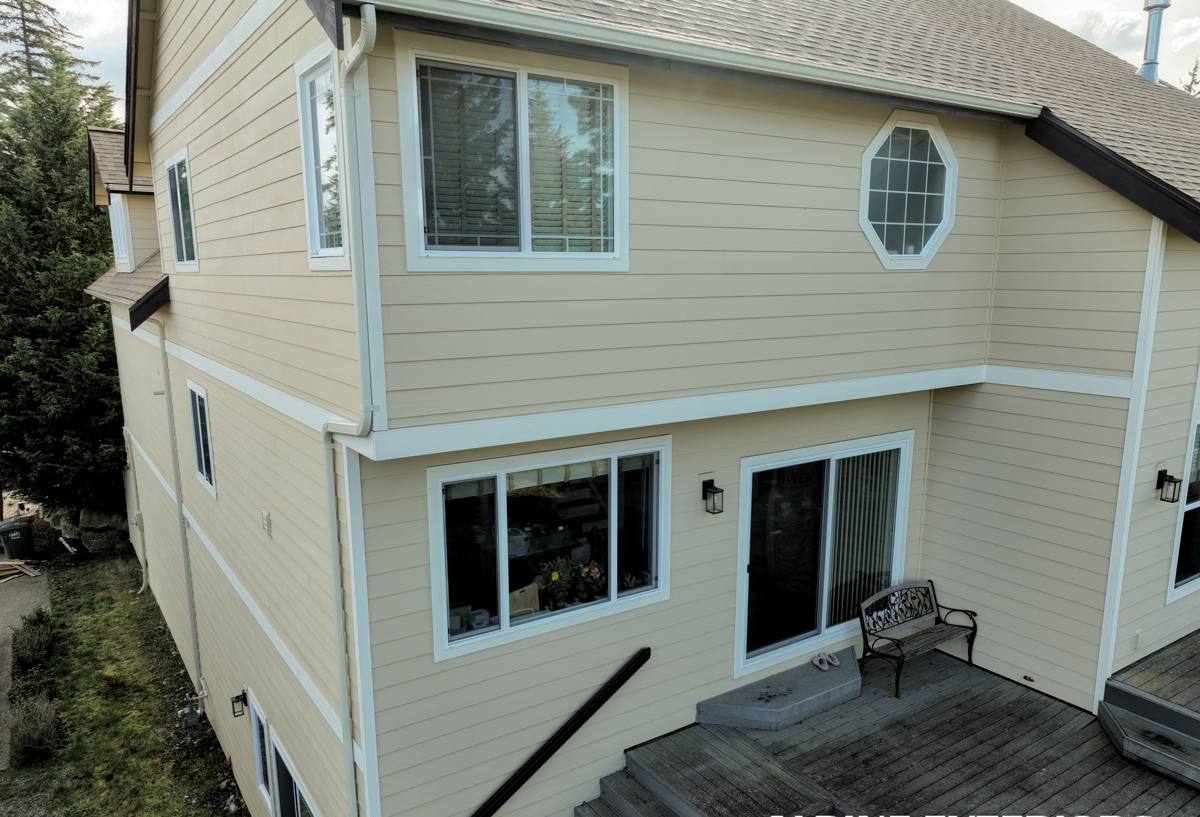
What the Local Climate Does to a Deck
Salt Air and Corrosion
Any home within a few miles of the Intracoastal or the Gulf deals with airborne salt settling on every exposed surface. On a deck, that salt goes to work on fasteners first. Standard coated screws and nails corrode from the inside out — the head can look fine while the shank underneath is failing. Once fasteners let go, boards work loose, railings develop play, and structural connections lose their grip long before the wood itself looks bad.
UV Exposure
Florida sun is intense and consistent almost all year. UV breaks down the surface fibers of wood decking, drying it out and making it prone to cracking, splintering, and graying. It also degrades the pigments and surface layers of lower-grade composite boards, which is why board quality and finish matter more here than in a milder climate.
Wind-Driven Rain and Moisture Cycling
Pinellas County doesn't just get rain — it gets rain pushed sideways by wind, which finds its way into every gap, fastener hole, and end cut that isn't properly sealed. Combine that with high humidity and you get constant moisture cycling: wood swells when wet, shrinks when it dries, and repeats that cycle hundreds of times a year. That's what causes cupping, warping, and the loosening of joints that look tight when a deck is new.
Hurricane-Force Wind
A deck attached to the house has to survive lateral and uplift forces during tropical storms and hurricanes, not just support foot traffic. Ledger board attachment, joist hangers, and railing post connections all need to be sized and fastened for wind events, not just gravity loads. This is the piece that gets skipped most often on older or budget decks, and it's the piece that matters most when a storm actually comes through.
Signs You Need Replacement, Not Repair
Repair makes sense when the problem is isolated — a few bad boards, a loose rail. Replacement is the honest call when the issues are systemic. Here's what tells us which situation we're looking at:
- Soft, spongy, or spring-y decking in more than one area, especially near the house or stair landings
- Visible rust streaking from fastener heads or joist hangers
- A ledger board that's separating from the house, or gaps where flashing should be
- Posts or railings that flex noticeably when leaned on
- Wood that's gray, splintering, and won't take stain or sealer anymore
- Composite boards that are fading unevenly, flaking, or delaminating at the edges
- Structural framing (joists, beams) that's undersized, sistered with makeshift repairs, or shows rot at connection points
- A deck that's more than 15-20 years old and has never had the substructure inspected
If it's just the surface boards that are worn but the framing underneath is sound, resurfacing can be a legitimate option. We'll tell you honestly which situation you're in — we don't sell a full replacement when a repair or resurface will hold up.
Choosing the Right Decking Material for This Environment
There's no single "best" decking material — there's the right material for your budget, your maintenance appetite, and how close you are to salt air. Here's how the common options stack up for a Belleair Bluffs setting:
| Material | Salt Air Performance | Maintenance | Typical Lifespan Here |
|---|---|---|---|
| Pressure-treated pine | Fair — needs consistent sealing to hold up | High — annual cleaning and resealing | 10-15 years with upkeep |
| Tropical hardwoods (ipe, cumaru) | Good — naturally dense and rot-resistant | Moderate — periodic oiling to maintain color | 20-25 years |
| Capped composite | Very good — shell resists moisture and salt | Low — occasional washing | 25-30 years |
| PVC decking | Excellent — no wood fiber to absorb moisture or salt | Low — occasional washing | 25-30+ years |
We steer clients away from uncapped, low-grade composite in this location as a matter of professional standard, not brand-bashing. Uncapped boards absorb moisture at the core, and in a humid, salt-exposed environment that shows up as swelling and premature wear well before a capped or PVC product would show the same age. If budget points you toward wood, we'll be direct about the maintenance schedule it needs to actually last here — sealing that gets skipped is the single biggest reason wood decks in this area fail early.
What a Correct Deck Replacement Actually Involves
A deck is a structure first and a surface second. Getting the surface right on a weak structure just delays the next failure. Here's what we treat as non-negotiable on every replacement:
Ledger and House Attachment
The ledger board — where the deck ties into the house — is the single most safety-critical connection on the whole structure. It needs proper flashing to keep water from getting behind it, and lag bolts or through-bolts sized and spaced for the loads involved, not just nailed on and caulked.
Footings and Posts
Footings need to reach proper depth and bear on solid ground, sized for the post loads above them. In this area, we also pay attention to drainage around footings so standing water isn't sitting against posts or concrete over time.
Framing and Fasteners
Joists, beams, and hangers get sized to the actual span and load, not just matched to whatever was there before. Every fastener — screws, bolts, joist hanger nails — should be stainless steel or a coating rated for coastal exposure. This is the detail that separates a deck that holds up near the Intracoastal from one that's back to needing repairs in three years.
Railings and Code Compliance
Railing height, baluster spacing, and guard strength all fall under Florida Building Code, and Pinellas County inspections check them. We build to code as the floor, not the ceiling — especially on elevated decks where a railing failure is a real fall hazard.
Our Deck Replacement Process
- On-site assessment. We inspect the existing deck, ledger, footings, and framing to determine what's actually driving the failure and whether replacement is the right call.
- Honest scope and quote. You get a clear breakdown of what's being replaced, the material options with real trade-offs, and a written price — no vague allowances.
- Permitting. Deck replacement in Pinellas County typically requires a permit; we handle that process so it isn't sitting on your desk.
- Demolition and disposal. Full removal of the old structure down to sound framing or footings, hauled off — not left in a pile in the yard.
- Structural rebuild. Ledger, footings, framing, and fasteners installed to current code and sized for coastal wind and moisture exposure.
- Decking, railings, and finish work. Installed per manufacturer spec, with attention to expansion gaps, fastening patterns, and drainage.
- Final walkthrough and inspection. We review the finished deck with you and coordinate the county inspection sign-off.
What Deck Replacement Runs and What Moves the Price
Every deck is different, so we won't quote a number without seeing the site, but these are the factors that move the price up or down on most Belleair Bluffs jobs:
| Factor | Why It Matters |
|---|---|
| Deck size and shape | Square footage plus complexity — multi-level decks and non-rectangular layouts cost more per square foot than a simple rectangle |
| Height above grade | Elevated decks need more substantial framing, footings, and often stairs — and more labor to build safely |
| Decking material | Pressure-treated is the low end; PVC and premium composite run higher upfront but lower over the deck's life |
| Condition of existing footings | Reusable, code-compliant footings save cost; footings that need to be broken out and repoured add time and material |
| Railings and stairs | Cable rail, glass panels, and multi-run stairs all add cost over standard baluster railing |
| Permit and inspection requirements | Larger or elevated decks may trigger more detailed engineering review before permitting |
Why Local Experience in Belleair Bluffs Matters
A crew that only occasionally works this close to the water tends to under-spec for it — standard fasteners, standard flashing details, standard framing sizes that would be fine forty miles from the coast but come up short here. Working Belleair Bluffs and the rest of the Clearwater area regularly means we know the wind exposure at this elevation, the fastener and hardware grades that actually hold up against salt air, and the drainage details that keep water from sitting where it shouldn't. It also means we know the Pinellas County permitting process for this type of work, so there aren't surprises or delays partway through the job.
We're licensed to work in Pinellas County, and we stand behind the structural work as well as the decking material itself — a deck replacement is only as good as the framing nobody sees once the boards go down.
If your deck is showing any of the signs above, or you just want an honest read on whether it needs replacement or repair, we're happy to come take a look. Estimates are free and there's no pressure — fill out the form below and we'll get in touch.