 Clearwater Siding
 Composite Decking Built for Oldsmar's Climate
Oldsmar sits along Tampa Bay in Pinellas County, and that waterfront location comes with a specific set of demands on any outdoor structure. Homes here deal with intense year-round UV exposure, wind-driven rain during summer storms, salt-laden air drifting in off the bay, and the occasional hurricane-force wind event. A deck that's installed without those factors in mind will show it within a few seasons — fading unevenly, warping at the boards, or working loose at the fasteners. A deck built correctly for this environment can look good and perform for decades.
Composite decking has become the material of choice for a lot of Oldsmar homeowners specifically because it resists the things that wear out wood fastest here: moisture cycling, UV breakdown, and insect damage. But composite isn't maintenance-free or install-proof. The material only performs as well as the substructure underneath it and the details around it — flashing, fastening, spacing, and drainage. That's where a correctly built deck and a mediocre one start to look very different after a few Florida summers.
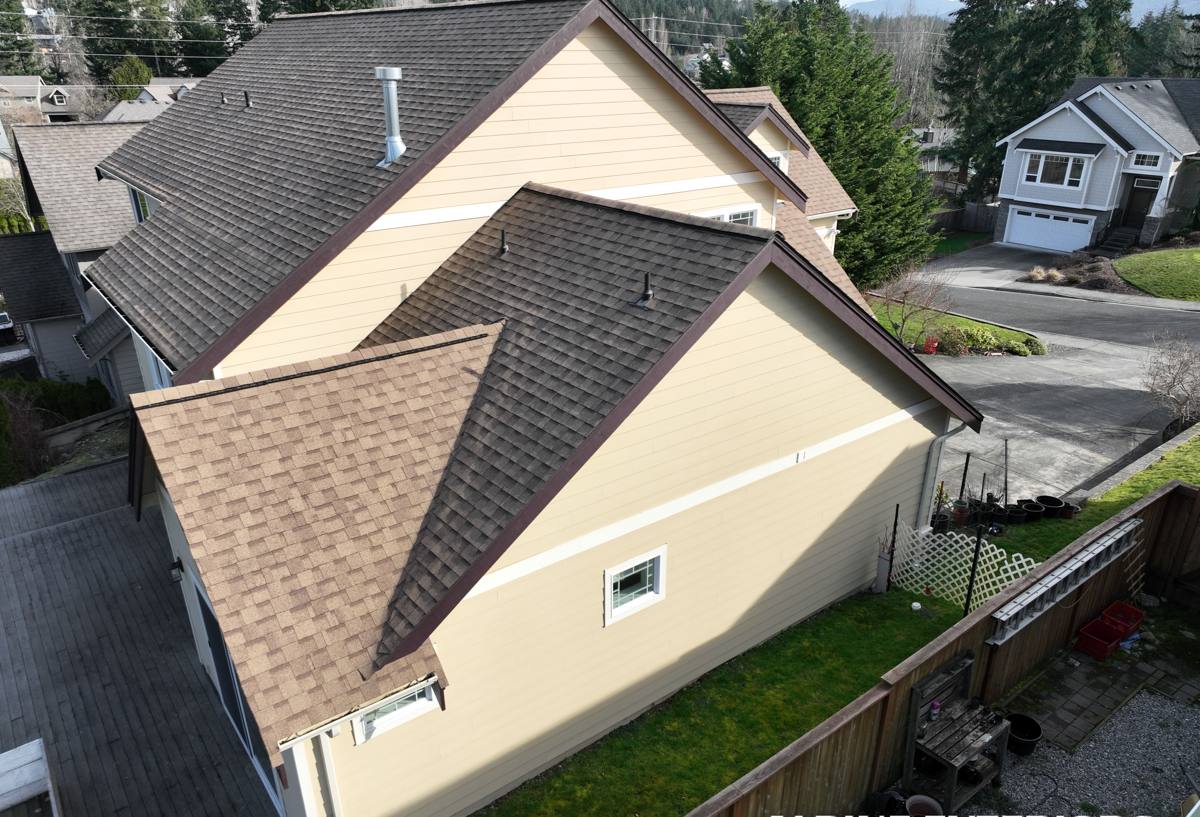
What Correct Composite Decking Installation Involves
A composite deck is really two systems: the framing underneath (the part nobody sees) and the composite boards on top (the part everybody sees). Most problems homeowners eventually complain about — squeaking, sagging, boards popping loose, mildew streaking — trace back to shortcuts in the framing, not the composite material itself.
The Substructure
In our climate, we build the frame to handle constant moisture exposure, not occasional rain. That means using joists and framing lumber rated for ground contact or coastal exposure where appropriate, protecting the tops of joists with a barrier tape so water doesn't sit in the wood, and spacing joists tighter than the bare minimum when spans or board orientation call for it. A frame that's technically "up to code" on paper can still be under-built for how much moisture and wind load an Oldsmar deck actually sees over its lifetime.
Ledger Attachment and Flashing
Where a deck attaches to the house is the single most common point of failure on any deck, composite or wood. Flashing has to be installed correctly to keep water from tracking behind the ledger board and into the house's rim joist or sheathing. This detail matters more here than in drier climates, because Oldsmar gets sustained wind-driven rain during storm season that pushes water sideways into gaps a calm-weather install might get away with.
Fastening and Spacing
Composite boards expand and contract with heat more than most homeowners expect — a deck baking in direct Florida sun all afternoon moves. Board spacing, fastener type, and picture-frame or border details all need to account for that movement. Installed too tight, boards can buckle. Installed with the wrong fasteners, hidden clips can fail under wind uplift during a strong storm.
Composite vs. Other Decking Materials
Homeowners in Oldsmar usually narrow it down to composite, pressure-treated wood, or PVC. Here's how they actually compare under our specific conditions:
| Material | UV/Fade Resistance | Moisture Behavior | Maintenance | Typical Lifespan (well-installed) |
|---|---|---|---|---|
| Composite | Good to very good, depending on brand/line | Doesn't rot, but core material can absorb moisture at cut edges if not capped/sealed | Periodic cleaning; no staining or sealing needed | 25–30+ years |
| Pressure-Treated Wood | Fades and grays quickly in full sun | Prone to cupping, splitting, and rot in humid, rainy climates | Annual staining/sealing recommended | 10–15 years with upkeep |
| PVC/Cellular PVC | Very good | Fully moisture-resistant, doesn't absorb water | Low; can show surface scratching over time | 25–30+ years |
Wood is the lowest upfront cost but the highest long-term labor and replacement cost in a climate this hard on lumber. PVC and composite both hold up well; the choice between them usually comes down to look, feel underfoot, and budget rather than one being clearly "better" for this area. We'll walk through the real trade-offs for your project rather than push one line over another.
Our Installation Process for Oldsmar Homes
- Site assessment — we evaluate drainage, sun exposure, existing structure (if replacing a deck), and how the new deck ties into the house.
- Design and layout — board direction, border details, railing style, and stair placement, matched to how the space will actually be used.
- Permitting — Pinellas County and the City of Oldsmar have specific requirements for deck permits, especially around railing height, guard spacing, and structural attachment. We handle this so it isn't on you.
- Demolition (if applicable) — removal of the old deck and inspection of the ledger area and any framing that's hidden until we open it up.
- Framing — joists, beams, and posts sized and spaced for the actual load and span, with moisture protection on ledger and joist tops.
- Composite installation — boards fastened per manufacturer spec, with attention to expansion gaps and fastener type.
- Railings, fascia, and finish details — the parts that make the deck look finished and that also need to meet code for guard height and baluster spacing.
- Final walkthrough — we go over the deck with you before calling the job done.
Drainage and Moisture Management
A lot of decking failures near the bay aren't really about the boards — they're about water that has nowhere to go. If a deck sits low, close to grade, or over a patio or living space, we pay close attention to slope, gaps between boards, and any under-deck drainage system needed to move water away from the foundation instead of letting it pool. Standing water under a deck is what eventually causes rot in the framing, corrosion at fasteners, and mildew growth that shows up as dark streaking on the underside of the boards and on siding nearby.
Ventilation matters too. A frame that's boxed in tight with no airflow underneath holds humidity longer after storms, which shortens the life of even a well-built substructure. We design the skirting and under-deck space with enough airflow to let things actually dry out between rain events, which in Oldsmar can be frequent for weeks at a stretch during the wet season.
Wind, Railings, and Code Considerations
Because Oldsmar is subject to hurricane-force wind events, deck attachment and railing construction aren't just cosmetic choices — they're structural ones. Guard rail height, baluster spacing, and post attachment all have to meet current Florida Building Code and local Pinellas County amendments, and inspectors here pay attention to deck ledger attachment specifically because it's such a common failure point. We build to pass inspection the first time, not to the bare minimum that might scrape by.
For elevated decks or decks near the water, we also think about uplift — wind getting underneath the deck surface during a storm. Correct fastening at the board and substructure level is what keeps a deck intact rather than becoming storm debris.
Living With Composite Decking Near Salt Air
Composite decking is genuinely low-maintenance compared to wood, but "low-maintenance" doesn't mean "no maintenance," especially this close to the bay. Salt air accelerates corrosion on any exposed metal hardware, so we use fasteners and brackets rated for coastal/marine exposure rather than standard interior-grade hardware. That single detail is one of the biggest differences between a deck that looks good in year one and one that still looks good in year ten.
- Rinse the deck periodically to clear salt residue and pollen buildup, especially after storms
- Sweep off leaves and debris regularly — trapped organic matter can cause dark spotting even on composite
- Check railing posts and stair connections once or twice a year for looseness
- Keep gutters and downspouts near the deck clear so runoff isn't dumping onto or under the deck structure
- Avoid dragging metal furniture or grills that can scratch the board surface
- Watch for any soft spots or movement in the frame, which usually signals a moisture issue worth checking early
Why Hiring a Crew That Works Oldsmar Regularly Matters
A contractor who builds decks across a wide range of climates might not think twice about ledger flashing detail or fastener grade — those shortcuts don't show up fast in a dry inland climate. In Oldsmar, they show up in one or two hurricane seasons. Working this area regularly means we already know what Pinellas County inspectors look for, what kind of hardware actually holds up against salt air, and how local drainage and grade conditions typically play out on a deck build here. That's the difference between a deck that needs attention every year and one that just quietly performs.
We also stand behind the work we do in this specific environment — not a generic install, but one built around what Oldsmar's climate actually demands.
Get a Free, No-Pressure Estimate
If you're considering composite decking for your Oldsmar home, we're happy to take a look at your space, talk through material options, and give you an honest, straightforward estimate — no pressure, no upselling. Use the form below to get started.