 Clearwater Siding
 Decks in Coachman Ridge Face a Specific Kind of Wear
A deck in Coachman Ridge doesn't age the same way one does in a drier, cooler climate. Clearwater sits in Pinellas County, on a peninsula surrounded by the Gulf and Tampa Bay, which means every deck here is dealing with near-constant humidity, intense UV exposure almost year-round, wind-driven rain during storms, and a steady dose of salt air carried in off the water. None of these on their own is unusual for Florida. Together, over several seasons, they're what turns a solid deck into one with soft boards, rusted fasteners, and a structure that needs a hard look before anyone uses it again.
Homeowners in this neighborhood often come to us after noticing one visible problem — a springy board, a wobbly rail, a stain that won't go away — without realizing it's usually a symptom of something happening underneath. That's the core of good deck repair: treating the visible issue as a clue, not the whole diagnosis.
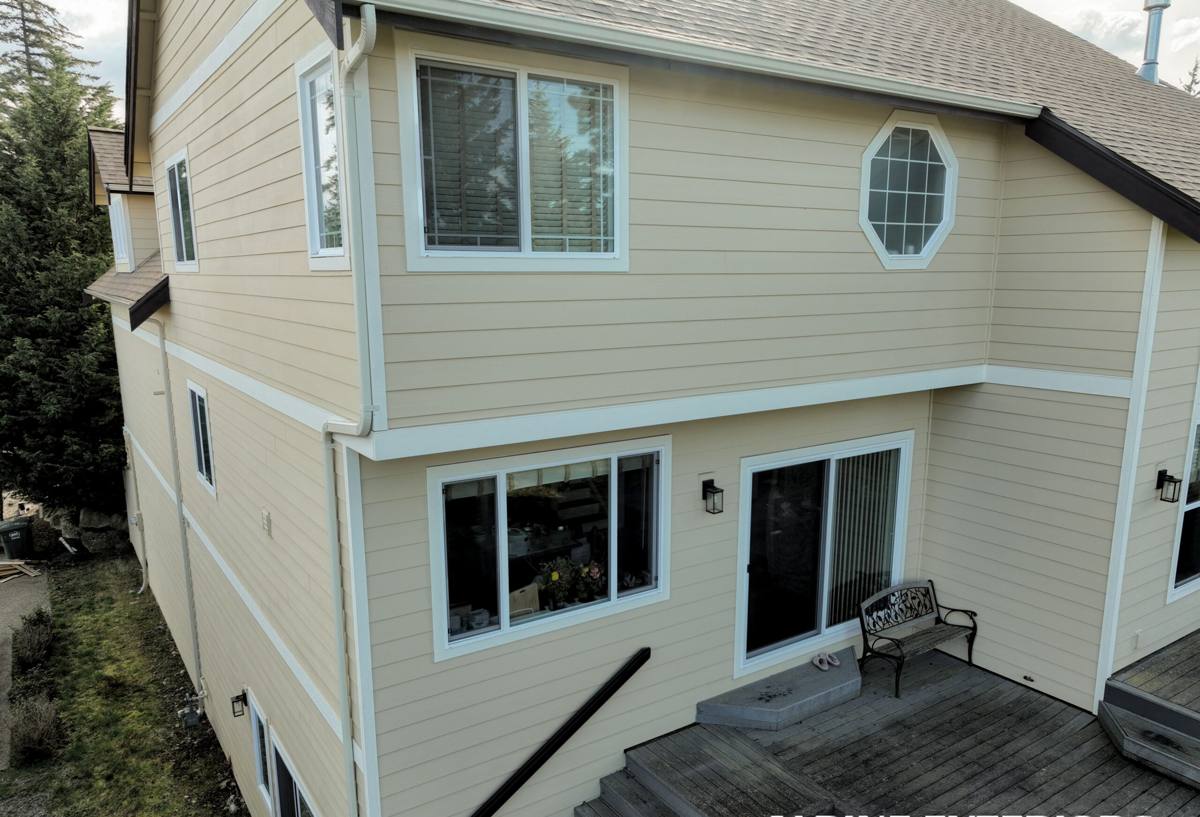
How Local Climate Damages a Deck, Piece by Piece
Humidity and Wood Movement
Wood decking swells when it absorbs moisture and shrinks as it dries out. In a climate where humidity rarely drops for long, that cycle repeats constantly instead of settling into a seasonal rhythm. The result is cupping, warping, and boards that pull away from their fasteners over time — even on decks that were installed correctly.
UV Exposure
Florida sun breaks down the lignin in wood fibers and degrades the UV inhibitors in composite decking and sealants. On unshaded decks, this shows up as graying, surface roughness, and a finish that needs renewing far sooner than the same product would in a northern climate.
Wind-Driven Rain
It's not just how much rain Clearwater gets — it's how it arrives. Wind-driven rain during storms gets pushed sideways and upward, reaching ledger boards, joist hangers, and post bases that a vertical rain would never touch. These are exactly the structural connections that matter most when we're assessing whether a deck is safe.
Salt Air
Even away from the immediate waterfront, salt-laden air moves across Pinellas County and accelerates corrosion on metal fasteners, brackets, and hardware. Once a fastener starts rusting, it loses holding strength long before the rust becomes visible on the surface.
Common Repair Issues We Find in This Neighborhood
Coachman Ridge is a mix of home ages and deck styles, so we see a wide range of problems, but a few come up repeatedly:
- Soft or spongy decking boards, usually near the edges or where water pools
- Rusted or corroded screws, nails, and joist hangers that no longer hold tight
- Ledger board separation where the deck attaches to the house — often hidden until probed
- Loose, wobbly, or leaning railings and posts
- Delamination or flaking on composite or capped-composite boards near cut ends
- Mold, mildew, and algae staining on the underside and in shaded corners
- Undersized or corroded footings and posts that have shifted slightly over time
Some of these are cosmetic and can wait. Others — especially anything involving the ledger board, posts, or footings — affect whether the deck is actually safe to stand on, and those don't get a "wait and see" recommendation from us.
What a Correct Deck Repair Actually Involves
A repair that's done right starts with an inspection, not a quote. Before we talk about fixing anything, we look at the whole structure:
Structural Assessment First
We check the ledger board connection to the house, the condition of support posts and footings, joist spacing and condition, and how water has been draining (or not draining) around the structure. This tells us whether we're dealing with a surface-level repair or something that affects the deck's structural integrity.
Then the Repair-or-Replace Decision
Not every damaged board or rusted fastener means the whole deck needs to come apart. But it's also a mistake to replace decking boards over a frame that's already compromised — that just hides the real problem under a new surface for a year or two before it resurfaces. We tell homeowners honestly which category their deck falls into.
Our Repair Process
- On-site inspection — We walk the full deck, probe suspect boards, and check the structure from underneath where access allows.
- Written findings and options — You get a clear picture of what's cosmetic, what's structural, and what your realistic options are — not just a single number.
- Repair plan — We scope exactly which boards, fasteners, framing members, or connections need attention, matched to what your deck actually needs.
- Removal of compromised material — Rotted wood, corroded hardware, and failed connections come out completely rather than being patched over.
- Rebuild with climate-appropriate materials — Framing, fasteners, and decking chosen for Gulf Coast conditions, not generic lumberyard defaults.
- Final check — We confirm the deck is level, secure, and that railings and connections meet current safety expectations before we call the job done.
Repair vs. Replace: What Actually Drives the Decision
| Factor | Repair Usually Makes Sense | Replacement Usually Makes Sense |
|---|---|---|
| Ledger board | Solid connection, minor surface wear | Separation, rot, or repeated water intrusion |
| Framing/joists | Isolated soft spots, otherwise sound | Widespread rot or undersized for current code |
| Decking boards | A handful of boards affected | Most of the surface is cupped, cracked, or delaminating |
| Fasteners/hardware | Localized corrosion | Rust throughout, especially at structural connections |
| Age of structure | Newer build with isolated issues | Older deck reaching the end of its practical service life |
| Footings/posts | Stable, no visible shifting | Settling, heaving, or undersized footings |
Cost is obviously part of this conversation, but we'd rather walk you through the actual condition of the deck than quote a repair on something that needs to be replaced — that's how homeowners end up paying twice.
Materials That Hold Up in This Climate
Our standard for repair work in coastal Pinellas County reflects the conditions decks actually face here, not just what's cheapest to install:
Fasteners and Hardware
We use stainless steel or hot-dip galvanized fasteners and connectors rated for exterior and coastal exposure. Standard coated screws and lightweight hardware corrode faster in salt-laden air, and a repair is only as strong as the fasteners holding it together.
Framing Lumber
Pressure-treated lumber rated for ground contact goes anywhere moisture regularly collects, including ledger areas and post bases, even if the original framing used a lighter-duty product.
Decking Material Choice
Whether we recommend sticking with wood or switching sections to composite depends on your budget, how much upkeep you want to do, and how the deck is used. Composite costs more up front and handles humidity and UV better with less maintenance; wood costs less initially but needs more consistent sealing and inspection in this climate. We'll walk through the honest trade-offs for your specific deck rather than push one material by default.
Maintenance Checklist for Coachman Ridge Homeowners
Between repairs, a few habits go a long way toward avoiding the next one:
- Rinse pollen, salt residue, and organic debris off the deck surface every few weeks
- Check for standing water after heavy rain and confirm the deck drains properly
- Look underneath the deck once or twice a year for staining, soft wood, or rust streaks
- Reseal or restain wood decking on a schedule suited to Florida sun exposure — typically more often than manufacturer defaults assume
- Tighten or replace any hardware showing early rust before it spreads to the wood around it
- Keep gutters and downspouts clear so runoff isn't dumping directly onto the deck or ledger area
Why It Matters to Hire a Crew That Already Works in Coachman Ridge
Deck repair done by a crew unfamiliar with local conditions tends to treat Florida the same as anywhere else — same fasteners, same lumber grade, same maintenance timeline. That approach shows up as recurring problems within a couple of years. A crew that regularly works in Clearwater and Pinellas County already knows how salt air, UV, and wind-driven rain behave on decks in this specific area, understands local permitting expectations for structural repair work, and isn't guessing at what materials actually hold up here versus what looks fine on a spec sheet.
That familiarity also means a faster, more accurate inspection. We're not learning the regional failure patterns on your deck — we've already seen them on others nearby.
Get a Straight Answer About Your Deck
If your deck has a soft board, a loose rail, or you just haven't had it looked at in a while, it's worth getting an honest assessment before the next storm season adds to the problem. We offer free, no-pressure estimates for deck repair in Coachman Ridge and the surrounding Clearwater area — use the form below to get started.