 Clearwater Siding
 Board & Batten in a Downtown Clearwater Setting
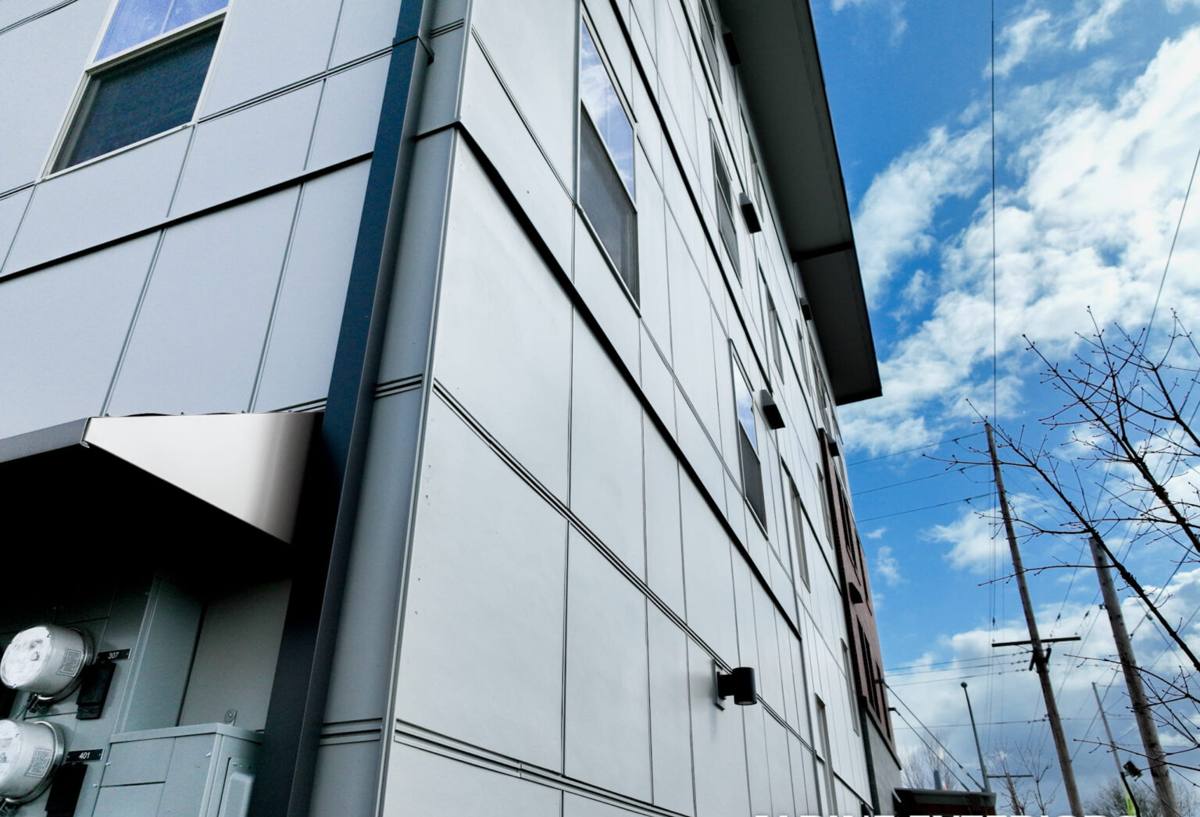
Downtown Clearwater is a mix of older bungalows, mid-century homes, and newer infill construction, many of them just a short walk from the harbor and Coachman Park. That mix of ages and styles is exactly where board and batten siding does its best work. The vertical lines read as clean and architectural on newer builds, and they pair naturally with the more traditional rooflines and porches found on the neighborhood's older housing stock. It's a look that photographs well and holds up visually over time, which matters in a walkable, visible downtown core where a home's exterior is seen up close, every day, by neighbors and foot traffic.
But board and batten is also a siding profile that punishes a mediocre installation faster than standard lap siding does. The vertical battens create more seams, more fastening points, and more opportunities for water to find a way behind the cladding if the details aren't handled correctly. In a downtown environment exposed to open sun, harbor-driven wind, and salt-laden air, those details aren't optional extras — they're the difference between siding that looks sharp for decades and siding that starts failing at the seams within a few years.
What Downtown Clearwater's Climate Actually Does to Siding
Pinellas County sits in a hurricane-exposed part of the Gulf Coast, and Downtown Clearwater's proximity to the water means homes here take on a specific combination of stresses:
- Hurricane-force wind: Uplift and lateral pressure test every fastener and every panel edge, especially on vertical profiles with more seams than lap siding.
- Wind-driven rain: Storms here don't just fall straight down — rain gets pushed sideways into joints, corners, and batten seams under pressure.
- Intense year-round UV: Florida sun breaks down paint film, causes fading, and dries out caulk and wood fiber faster than in most of the country.
- Salt air: Even a mile or two inland from the harbor, airborne salt accelerates corrosion on fasteners, trim, and any metal flashing components.
Any siding product can survive a calm, dry week. What separates a good siding system in Downtown Clearwater from a poor one is how it performs across years of that combined load — sun, salt, wind, and rain, repeated season after season.
Why We Only Install James Hardie for This Application
Board and batten siding is available in several materials — vinyl, engineered wood like LP SmartSide, and fiber cement. We install James Hardie fiber cement exclusively, and the vertical batten profile is actually where that decision matters most.
Vinyl Board and Batten
Vinyl board and batten panels are lightweight and installed with a "hanger rail" system that allows for expansion and contraction. That flexibility is manageable in mild climates, but under Gulf Coast sun the material heats, expands, and can warp or bow along the flat battens over time — and it's simply not built to the impact and wind ratings that fiber cement carries. It's also a petroleum-based product, so intense UV exposure fades and chalks the surface faster than a factory-baked finish.
LP SmartSide and Other Engineered Wood
Engineered wood board and batten looks close to real wood and installs quickly, but it's still a wood-strand product with an exterior resin coating. Once that coating is compromised — at a cut edge, a fastener hole, or a seam where caulk has failed — moisture can wick into the strand core. In a humid, storm-exposed environment like Downtown Clearwater, that's a maintenance risk we're not willing to put our name behind.
James Hardie Fiber Cement
Hardie's board and batten systems are cement, sand, and cellulose fiber — completely non-combustible and dimensionally stable, so panels don't expand and contract with heat the way vinyl or wood products do. The ColorPlus factory finish is baked on and warrantied against fading, and Hardie's HZ5 product line is specifically engineered for high-humidity, moisture-prone climates like ours. It's the only board and batten material we're comfortable standing behind on a home exposed to hurricane wind and salt air for the next several decades.
What a Correct Board & Batten Installation Involves
Board and batten looks simple from the curb — vertical boards, narrower battens over the seams — but the assembly behind it is what determines whether it lasts. On every Downtown Clearwater project, our installation follows the same sequence:
1. Water Management Layer First
Before any siding goes up, we install a code-compliant weather-resistive barrier and, on most homes, a drainage gap behind the panels. That gap gives any moisture that does get past the surface a path to drain and dry instead of sitting against the wall sheathing.
2. Correct Fastening for Wind Zone
Fastener type, spacing, and embedment are set to Pinellas County's wind requirements, not a generic national minimum. This is one of the most commonly skipped details on rushed jobs, and it's the first thing that fails when a storm hits.
3. Batten Spacing and Seam Treatment
Battens are spaced and fastened to manufacturer spec so seams stay tight and consistent, and flashing is used at every horizontal transition — window heads, roof lines, and butt joints — so wind-driven rain has nowhere to collect.
4. Corners, Trim, and Penetrations
Outside corners, trim boards, and any penetration (vents, hose bibs, light fixtures) get properly flashed and sealed. These are the spots where most siding failures actually originate, not the flat field of the wall.
5. Final Inspection Against Manufacturer Spec
We check fastener pattern, gaps, and sealant lines against James Hardie's published installation instructions before calling a job finished — not just against "does it look straight from the street."
Our Process, Start to Finish
For a Downtown Clearwater board and batten project, our process is straightforward:
- On-site assessment — we inspect existing siding, sheathing, and any moisture damage before quoting anything.
- Written estimate — a clear scope covering material, labor, disposal of old siding, and timeline.
- Prep and tear-off — removal of old siding (if applicable) and sheathing repair where needed.
- Weather barrier and drainage plane installation.
- Board and batten installation to manufacturer and local wind-code specification.
- Trim, flashing, and caulking at every seam and penetration.
- Final walkthrough with the homeowner before we consider the job done.
Because we work Downtown Clearwater regularly, we already know the practical realities of the area — tighter lots, closer neighbors, limited driveway staging space, and the need to keep a job site tidy on streets where people are out walking. That's logistics knowledge that doesn't show up in a quote, but it affects how smoothly a project actually runs.
What Affects the Cost of a Board & Batten Project
| Factor | Why It Matters |
|---|---|
| Tear-off vs. new construction | Removing and disposing of existing siding adds labor and dump fees |
| Sheathing or framing repair | Moisture damage found during tear-off must be fixed before new siding goes on |
| Home height and access | Two-story walls and tight side-yards near downtown lots require more staging and time |
| Batten spacing and reveal | Tighter batten spacing means more material and more fastening labor |
| Trim and corner detail | Custom corner boards and window trim add finish work beyond the flat field |
| ColorPlus vs. field-painted finish | Factory finish costs more upfront but eliminates repainting for years |
Maintenance in a Salt-Air, High-UV Environment
One reason we recommend Hardie's ColorPlus finish specifically for Downtown Clearwater homes is that it removes the repainting cycle that other board and batten materials require. Ongoing maintenance is still worth doing regardless of material:
- Rinse the siding a couple of times a year to clear salt residue and airborne grime, especially on wall faces exposed to prevailing wind off the water.
- Inspect caulk lines at trim and window seams annually — UV exposure and thermal cycling are what break caulk down first.
- Watch for any staining or discoloration at the base of walls, which can indicate a drainage or flashing issue worth checking early.
- Trim back landscaping that holds moisture against the siding surface.
Why a Local Crew Matters for This Job
Board and batten siding done wrong doesn't usually fail on day one — it fails two or three years in, after a few storm seasons have tested the seams and fasteners a crew didn't get right. A contractor working from a generic national spec sheet, without regular experience in Pinellas County's wind and moisture conditions, is more likely to miss the details that matter here: fastener corrosion resistance, batten seam flashing, and wind-zone-appropriate spacing.
Working Downtown Clearwater regularly means we've seen how this specific climate treats siding over time — not just how it looks the day the crew leaves. That's the standard we install to, and it's why we don't cut corners on the water-management layer just to save a day of labor.
If you're considering board and batten siding for a home in Downtown Clearwater, we're glad to come take a look, walk you through what your home specifically needs, and put together a free, no-pressure estimate.