 Clearwater Siding
 Why Metal Roofing Fits Belleair's Coastal Exposure
Belleair sits on a narrow stretch of Pinellas County with water close on more than one side — the Gulf of Mexico on one edge and Clearwater Harbor on the other — which means homes here take on weather that inland Florida properties simply don't see as often or as directly. Hurricane-force wind events, near-constant intense UV, wind-driven rain, and salt-laden air all work on a roof at the same time, year after year, and they don't take turns. A roofing material that only handles one or two of those conditions well tends to show its limits here faster than it would a few miles inland.
Metal roofing has become a common upgrade choice for exactly this reason. Done correctly, with the right panel system, fasteners, and flashing detail, it holds up to wind uplift better than most other roofing systems, reflects a meaningful amount of heat and UV rather than absorbing it, and — with the right coating — resists salt-air corrosion for decades rather than years. This page covers what actually matters for a metal roof on a Belleair home, what a correct installation involves, and why local installation experience changes the outcome.
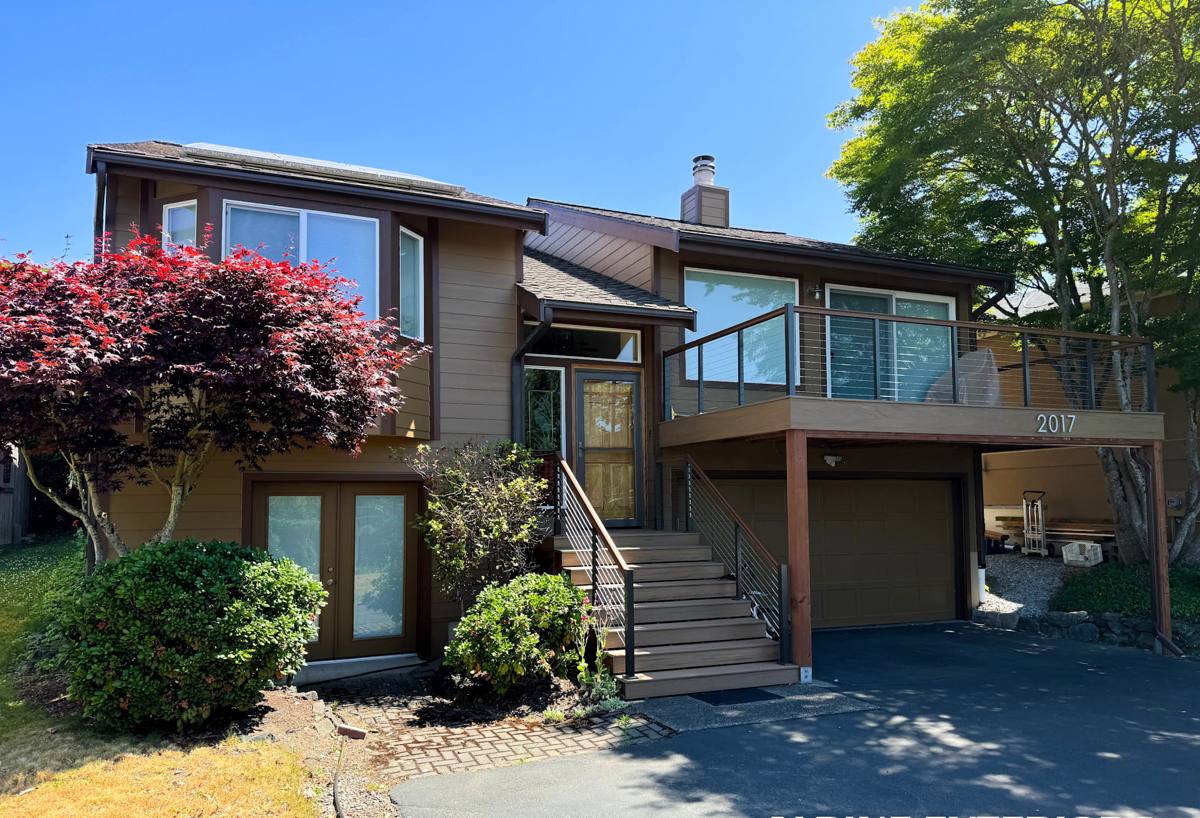
What Belleair's Climate Actually Does to a Roof
Hurricane-Force Wind and Uplift
Wind doesn't just push on a roof — it creates uplift pressure that tries to peel material away at edges, ridges, and any point where a panel or shingle isn't fully secured. On a peninsula with open water nearby, that uplift pressure is a real design condition, not a worst-case hypothetical. A metal roof's wind resistance comes almost entirely from its fastening system and panel profile, which is why the details of how it's attached matter more than the material itself.
Constant UV and Heat Load
Florida's UV exposure is among the most severe in the country, and a roof surface absorbs it directly for most daylight hours, most of the year. Over time, UV breaks down organic roofing materials from the surface inward. Metal doesn't degrade the same way, but the coating on top of it does the real work of reflecting heat and resisting UV breakdown — a bare or poorly coated metal panel will still fade and can still run hotter than it should.
Salt Air on Two Sides
Because Belleair has open water on more than one side, salt-laden air isn't limited to a single prevailing wind direction the way it might be for a property set back from the coast. That salt settles on roofing metal and fasteners continuously, not just during storms, and it's the single biggest factor in how long a metal roof's finish and hardware actually last here. This is the one variable that separates a metal roof that looks new after fifteen years from one that's chalking and staining after five.
Wind-Driven Rain
Ordinary rain falls straight down and mostly runs off a roof the way it's designed to. Wind-driven rain during storms comes in sideways, working its way under panel laps, around penetrations, and into any flashing detail that isn't sealed correctly. Most of the leaks we get called about on metal roofs trace back to a flashing or fastener detail, not a failure of the metal panel itself.
Panel Types We Install and How They Compare
Not every metal roofing profile performs the same way in a coastal wind and salt environment, and the differences matter more here than in a milder climate. We install standing seam and exposed-fastener panel systems, and we're upfront with homeowners about the trade-offs between them rather than pushing one option across every job.
| Panel Type | Wind Performance | Long-Term Maintenance | Typical Use Case |
|---|---|---|---|
| Standing seam (concealed fastener) | Strongest — fasteners are hidden under the seam and protected from direct weathering | Low — no exposed fasteners to loosen, corrode, or need re-seating | Homes closest to open water or facing the most direct wind exposure |
| Exposed-fastener panel | Good, but performance depends entirely on fastener grade and installation quality | Higher — exposed fasteners can loosen or corrode over time and need periodic checking | Lower-slope applications like porch or carport roofs, or budget-conscious projects |
| Metal shingle or tile profile | Strong when installed per manufacturer wind-rating specs | Moderate — more seams and overlaps than standing seam | Homes wanting a traditional shingle or tile look with metal's durability |
For most Belleair homes with this level of coastal exposure, we lean toward standing seam because the fastening system is protected rather than sitting in direct salt air and sun. Exposed-fastener systems can still be the right call on secondary structures or lower-exposure roof sections, and we'll tell you honestly when that's the case rather than upselling a system your specific roof doesn't need.
What a Correct Metal Roof Installation Actually Involves
The panel is the part homeowners see, but most of what determines whether a metal roof survives a real storm season happens underneath and around it. A correct installation includes:
- A wind-rated underlayment installed as a continuous secondary water barrier, not just a formality under the metal
- Fastener spacing and pattern that meets the wind-load requirements for this specific location, not a generic inland spacing pattern
- Corrosion-resistant fasteners and flashing matched to the panel metal, since mixing incompatible metals accelerates corrosion at every contact point
- Properly formed and sealed flashing at every penetration, valley, and roof-to-wall transition — the single most common source of leaks on any metal roof
- Ridge and edge detailing built to resist uplift specifically, since these are the first points a roof fails in high wind
- Adequate attic or roof-deck ventilation, which affects both energy performance and long-term moisture behavior underneath the panels
Skipping or rushing any one of these doesn't show up on day one. It shows up during the first real wind event or the first hard rain that comes in sideways, which is exactly when a homeowner least wants to discover it.
Wind Rating, Permitting, and Insurance in Pinellas County
Roofing work in Pinellas County goes through permitting and inspection, and metal roofing systems carry specific wind-uplift ratings that need to match the exposure category of the property and the requirements of the current Florida Building Code. On a peninsula community like Belleair, that wind-rating requirement isn't a formality — it reflects genuine local exposure, and installing to a lower rating than the property actually needs is a real risk, not just a paperwork issue.
Many insurance carriers also offer premium credits for wind-mitigation features, and a properly installed, correctly rated metal roof can qualify. We can't promise a specific discount amount since that's between the homeowner and their carrier, but we do provide the documentation — permit records, product wind ratings, and installation specifics — that carriers typically ask for when evaluating a wind-mitigation credit.
What Drives the Cost of a Metal Roof Here
Metal roofing costs more upfront than asphalt shingles, and the honest answer for how much depends on several factors that genuinely change the price, not just panel style preference.
| Cost Factor | Why It Matters |
|---|---|
| Panel system (standing seam vs. exposed-fastener) | Standing seam costs more in material and labor but needs less long-term maintenance |
| Roof complexity (valleys, dormers, penetrations) | More cuts, seams, and flashing details mean more labor and more places that need to be sealed correctly |
| Coating and finish quality | Higher-grade coatings resist salt-air corrosion and UV fading longer, which matters more on an exposed peninsula property |
| Tear-off vs. overlay | Removing an old roof down to the deck costs more than an overlay but lets us inspect and address deck issues that would otherwise stay hidden |
| Ventilation and decking condition | Deck repair or added ventilation, if needed, is additional scope but affects how long the new roof actually lasts |
We walk every roof and give a specific number based on what we actually find, rather than a rough estimate that gets revised once work starts.
Our Process From Estimate to Cleanup
We start with a full roof inspection, not just a walk-around — checking the existing deck, flashing points, and any signs of prior leaks, since those affect what the new roof needs underneath it. From there we give a clear, itemized estimate that spells out panel system, underlayment, and flashing scope so there's no ambiguity about what's included. Once the permit is pulled and materials are on site, installation typically moves quickly compared to shingle work, since metal panels cover more area per piece. We handle full site cleanup, including magnetic sweeps for stray fasteners, and walk the finished roof with you before calling the job done.
Maintaining a Metal Roof in a Coastal Climate
A metal roof is genuinely low-maintenance compared to most alternatives, but "low-maintenance" isn't the same as "no maintenance," especially this close to open water. A short annual routine catches most issues before they become expensive ones:
- Rinse accumulated salt residue off the roof surface periodically, especially after long dry stretches without rain to wash it off naturally
- Check exposed fasteners (on exposed-fastener systems) for early signs of loosening or corrosion, particularly after storm season
- Clear debris from valleys and around penetrations so water isn't pooling or backing up against flashing
- Inspect sealant at flashing points every year or two, since sealant is the one component with a shorter service life than the metal itself
- Have the roof looked at after any significant wind event, even if nothing looks obviously wrong from the ground
Why Hiring a Crew That Already Works Belleair Matters
A roofing crew that mostly works inland can still install a technically correct metal roof, but a property with this level of coastal exposure has variables that come up more often here than elsewhere in Pinellas County — wind-uplift requirements tied to open-water exposure on more than one side, corrosion patterns from salt air that behave differently than a few miles inland, and permitting that reflects the specific wind-exposure category for this location. Working in Belleair regularly means we're not learning those requirements mid-project. We know what fastener grade and coating spec actually hold up out here, and that translates into a more accurate estimate the first time, with less back-and-forth once work is underway.
If you're weighing a metal roof for your Belleair home or just want a straight answer on whether your current roof needs attention, we're glad to take a look and explain what we find plainly. Reach out below for a free, no-pressure estimate.