 Clearwater Siding
 Decking Built for the Belleair Bluffs Climate
Belleair Bluffs sits close enough to the water that every outdoor structure on a property earns its keep or falls apart trying. A deck here isn't just furniture for the backyard — it's exposed to intense year-round UV, wind-driven rain off Tampa Bay and the Gulf, salt-laden air, and the occasional hurricane-force wind event. Composite decking has become the go-to choice for homeowners in this part of Pinellas County precisely because it's engineered to handle that combination better than traditional lumber, but "composite" covers a wide range of products, and not all of them perform the same way once they've spent a few summers on a Belleair Bluffs deck.
This page is about that one job, done right, in this one area: what local homes actually need from a composite deck, what a correct installation looks like, and why the details matter more here than they would in a drier, cooler climate.
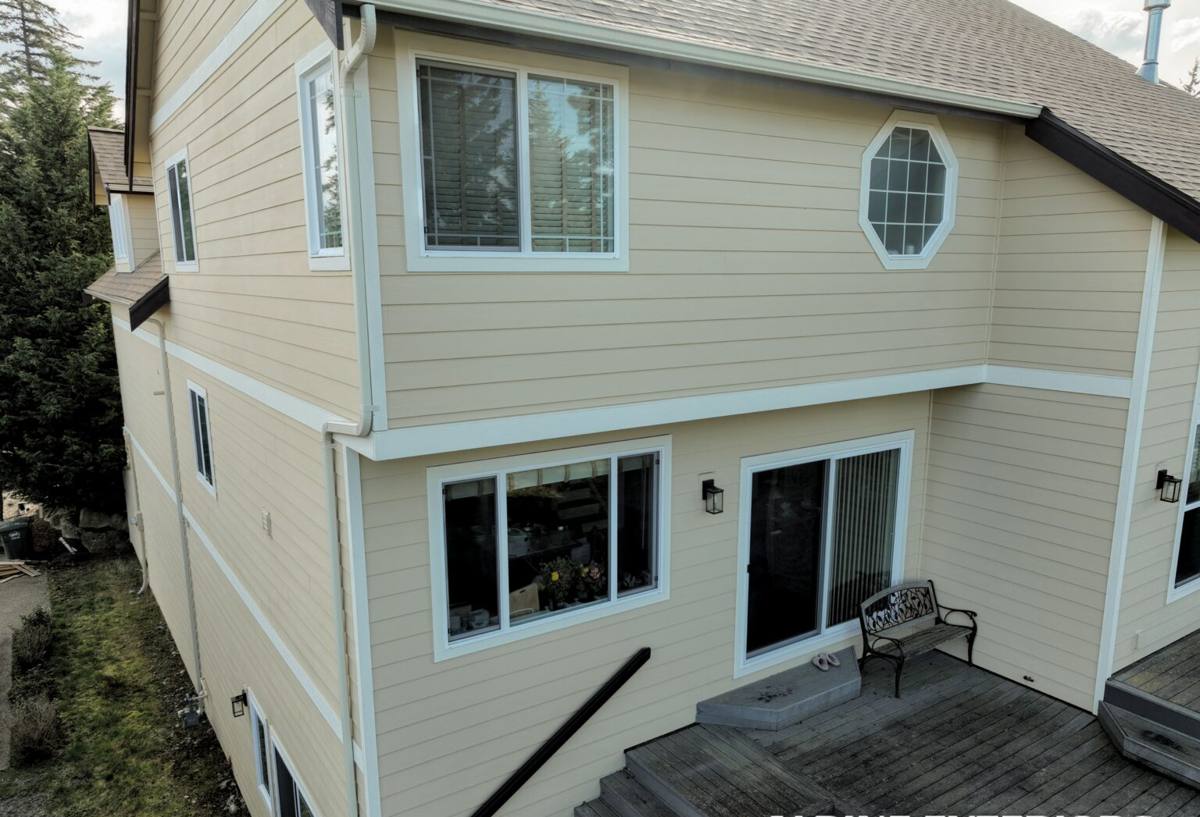
What Sun, Salt Air, and Storms Do to a Deck Here
Every material choice on a Belleair Bluffs deck should be made with four stressors in mind:
UV Exposure
Florida sun is relentless. Untreated or poorly formulated decking fades, chalks, or becomes brittle within a few seasons of full sun exposure. Composite boards rely on UV-stabilized resins and, in capped products, a protective outer shell specifically to slow that breakdown.
Wind-Driven Rain and Humidity
Afternoon storms don't just wet the surface of a deck — wind-driven rain gets under rail caps, into fastener holes, and between boards. Combined with Pinellas County's humidity, that moisture has to have somewhere to go. Decking and substructure that don't drain and dry properly stay damp long after the rain stops, which is where rot, mold, and hardware corrosion start.
Salt Air
Being near the Intracoastal and the Gulf means airborne salt settles on everything, including deck hardware. Standard fasteners and connectors corrode faster here than they would inland, which is why fastener spec matters as much as the decking material itself.
High Wind Events
Hurricane-force winds put real uplift and racking forces on an outdoor structure. A deck's boards can be top-tier, but if the ledger attachment, joist hangers, and post connections aren't built to hold under wind load, the whole structure is only as strong as its weakest connection.
Composite Decking Materials: What Actually Holds Up
"Composite decking" is a broad category. The differences between products matter more in a coastal, high-UV climate than almost anywhere else in the country.
Capped vs. Uncapped Composite
Capped composite boards have a plastic (usually polyethylene) shell bonded around a wood-fiber core, which resists moisture absorption, staining, and fading far better than older uncapped composite. Uncapped composite is more affordable but absorbs more moisture at the core and is more prone to surface wear over time in a wet, humid climate. For Belleair Bluffs, we generally steer homeowners toward capped or fully-encapsulated boards because the added moisture protection pays for itself in reduced maintenance and longer service life.
PVC (Cellular Vinyl) Decking
Fully PVC decking contains no wood fiber at all, so it doesn't absorb moisture the way any wood-composite blend can. It's a strong option directly on the water or in yards with heavy irrigation or shade, though it comes at a higher price point and has a different look and feel underfoot than wood-fiber composite.
Color and Heat
Darker composite boards absorb more heat in direct Florida sun and can get genuinely hot to bare feet at midday. Lighter and mid-tone colors, or boards with heat-mitigating technology, are worth discussing if the deck gets full afternoon sun and sees a lot of barefoot traffic.
Composite vs. Wood vs. PVC: Cost and Performance Factors
| Factor | Pressure-Treated Wood | Capped Composite | PVC / Cellular Vinyl |
|---|---|---|---|
| Upfront cost | Lowest | Mid-range | Highest |
| Moisture resistance | Low — needs sealing/staining | High | Highest |
| UV fading resistance | Fades and grays without upkeep | Good, brand-dependent | Good |
| Salt air / corrosion risk | Fasteners corrode faster | Manageable with marine-grade hardware | Manageable with marine-grade hardware |
| Ongoing maintenance | Annual sealing/staining | Periodic cleaning | Minimal cleaning |
| Typical lifespan (well-installed) | 10–15 years | 20–25+ years | 25+ years |
None of these materials fail on their own timeline if they're installed wrong. A high-end composite board over an under-built or poorly ventilated substructure will underperform a mid-range board installed correctly. The material is half the equation; the build is the other half.
What a Correct Composite Deck Installation Involves
This is where most of the long-term problems on coastal decks actually originate — not in the decking itself, but in what's underneath and holding it together.
Substructure and Framing
Joists and framing should be properly spaced for the specific composite product being installed — composite boards often require tighter joist spacing than wood, especially on angled or diagonal patterns, and manufacturer span tables should be followed exactly, not approximated.
Ventilation and Drainage
Low-clearance or poorly ventilated substructures trap humidity underneath the deck, which accelerates corrosion on hardware and can lead to a musty, damp underside even when the boards themselves are fine. Grading and airflow under the deck matter as much as what's on top.
Fasteners and Hardware
In a salt-air environment, this is non-negotiable: stainless steel or coated, corrosion-rated fasteners and structural connectors, not standard galvanized hardware that's fine inland but degrades faster here.
Ledger and Post Connections
The ledger board attachment to the house and the post-to-footing connections are what keep a deck attached to the structure and the ground during a high-wind event. These connections should be built to current wind-load requirements, not just "strong enough" by eye.
Expansion Gaps
Composite boards expand and contract with heat more than wood does. Proper gapping between boards and around fixed objects (posts, walls, planters) prevents buckling as the deck heats and cools through a Florida day.
Our Process for Belleair Bluffs Homeowners
- Site visit and assessment — we look at sun exposure, drainage, proximity to water or irrigation, and the existing structure if this is a replacement.
- Material walkthrough — we go over capped composite vs. PVC options, color and heat considerations, and realistic cost ranges for the size and layout in question.
- Framing and permit review — we confirm what the substructure needs and what Pinellas County or local permitting will require for the project.
- Build — substructure first, with corrosion-rated hardware and proper ventilation, then decking installed to manufacturer spec with correct fastening and expansion gaps.
- Final walkthrough — we check the finished deck with you before calling the job done, not just at handoff.
Permitting and Wind Load in Pinellas County
Most new decks and significant deck replacements in Pinellas County require a permit, and framing needs to meet current wind-load provisions given the area's hurricane exposure. This isn't paperwork for its own sake — it's the mechanism that makes sure the ledger attachment, post connections, and footings are actually sized for the wind this deck will see. We handle the permitting conversation as part of the process rather than leaving homeowners to sort it out separately.
Keeping a Composite Deck in Good Shape Near the Water
Composite decking is low-maintenance compared to wood, but "low" isn't "none" — especially this close to the Gulf. A simple seasonal routine goes a long way:
- Rinse or sweep off salt residue, pollen, and debris regularly, especially after storms
- Wash the deck surface a few times a year with mild soap and water to prevent mildew buildup in shaded or low-airflow areas
- Check railing posts, stair connections, and visible hardware periodically for corrosion or loosening
- Keep gutters and downspouts near the deck clear so runoff doesn't pool against the structure
- Trim back vegetation that shades the deck constantly and keeps it damp
- Confirm under-deck drainage and ventilation stay clear of stored items that block airflow
Why Local Experience in Belleair Bluffs Matters
A contractor who mostly builds decks inland doesn't always think first about salt-rated hardware, wind-load connections, or how a dark composite board behaves under a Florida noon sun. Working regularly in and around Clearwater and Belleair Bluffs means we're not guessing at what this specific coastal environment does to a deck — we're building to what we've actually seen hold up, and what hasn't, over years of jobs in this exact climate.
If you're considering composite decking for a home in Belleair Bluffs, we're happy to walk the property, talk through material options honestly, and put together a straightforward estimate — no pressure, no upsell. The form below is the easiest way to get started.