 Clearwater Siding
 Downtown Clearwater Roofs Deal With a Lot More Than Rain
A roof over a home in Downtown Clearwater earns its keep. Between hurricane season winds strong enough to lift shingles and shift tile, wind-driven rain that finds its way in sideways instead of straight down, and UV exposure that runs nearly year-round in this part of Florida, the roofing systems here age differently than they would in a milder climate. Add the salt air drifting in off the Gulf and Intracoastal, which speeds up corrosion on fasteners, flashing, and metal components, and you have a roof that's under constant low-grade stress even when no named storm has come through.
Most storm damage doesn't happen in one dramatic event. It's usually a combination: a roof already worn down by sun and salt air gets pushed past its limit by one strong wind event, and that's when leaks show up. Understanding that combination is the difference between a repair that actually holds and one that fails again during the next round of weather.
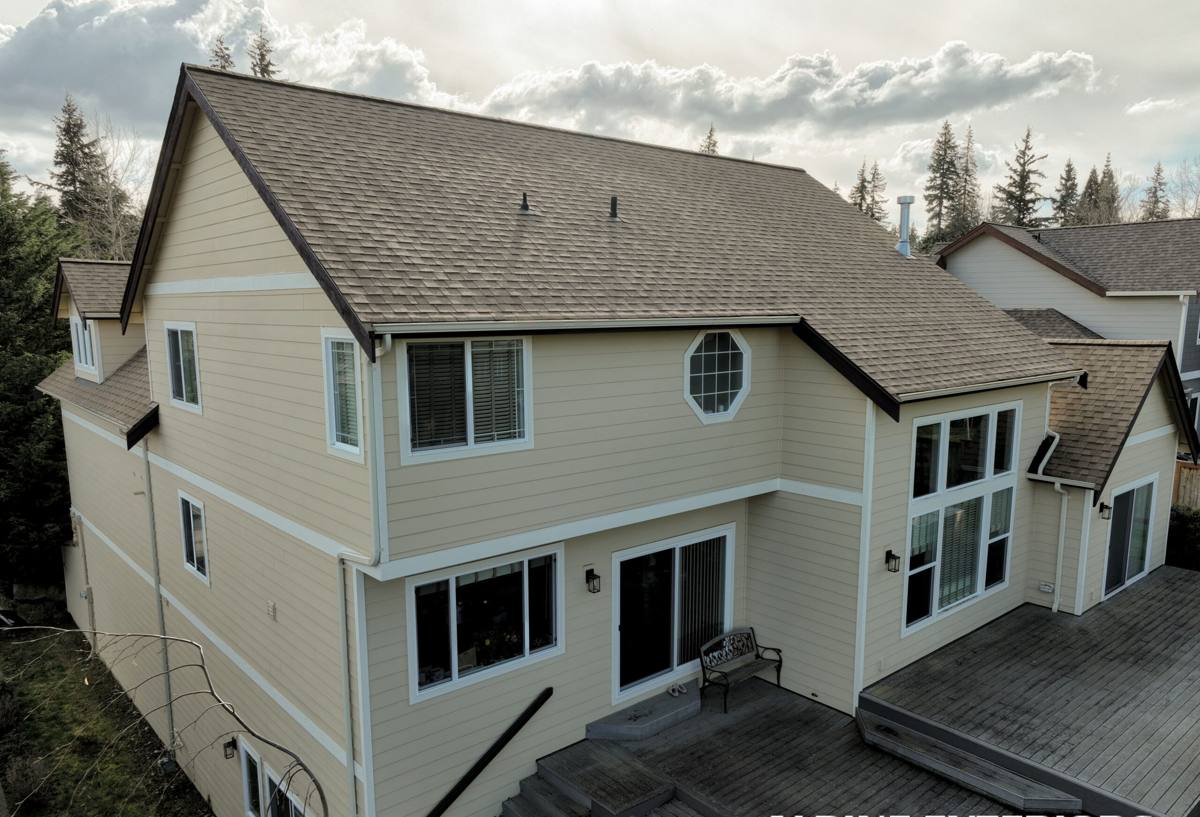
What Storm Damage Actually Looks Like
Homeowners often assume storm damage means missing shingles or a visibly torn section of roof. Sometimes it is that obvious. More often, it isn't — and the damage that's hardest to see is usually the damage that causes the most trouble down the road.
Damage You Can Spot From the Ground
- Missing, curled, or cracked shingles
- Visibly lifted or displaced tiles
- Dented or creased metal panels
- Debris punctures or torn sections
- Sagging areas or visible gaps at the roofline
Damage That Hides Until It's a Bigger Problem
Wind-driven rain doesn't need a hole to get in — it needs a weak seal. High winds can loosen the bond on shingles without tearing them off outright, break the seal around flashing at chimneys and vents, or work granules loose in ways that aren't obvious from the driveway. This kind of damage often shows up weeks or months later as a water stain on a ceiling, a musty smell in an attic, or soft spots in the decking. By the time it's visible indoors, the water has usually been getting in for a while.
How Different Roofing Systems Hold Up in Storms
Downtown Clearwater has a mix of roofing types, and each one has its own storm vulnerabilities and its own repair considerations. Knowing what you're working with helps set realistic expectations for both the damage and the fix.
| Roofing Material | Typical Storm Vulnerability | Repair Consideration |
|---|---|---|
| Asphalt Shingle | Wind lift, seal failure, granule loss from wind-driven rain | Matching existing shingle color/style gets harder as roofs age and sun-fade |
| Concrete/Clay Tile | Cracked or displaced tiles, broken hips and ridges | Underlayment beneath the tile is often the real point of failure, not the tile itself |
| Metal (standing seam or panel) | Fastener loosening, panel oil-canning, debris denting | Coastal-grade fasteners matter more here than inland due to salt air corrosion |
| Flat/Low-Slope (modified bitumen, TPO) | Membrane lifting at seams and edges, ponding after heavy rain | Edge and seam integrity is usually more urgent to fix than field damage |
Our Storm Damage Repair Process
1. Inspection and Documentation First
Before any repair work starts, we get on the roof (or use safe alternative methods when access is limited) and document what we find — photos, notes on the extent and cause of the damage, and an honest read on whether we're looking at a repair or something more extensive. This documentation is also what you'll want on hand if you're filing an insurance claim.
2. Stop Active Water Intrusion
If a roof is actively leaking, the first priority isn't the permanent fix — it's stopping water from doing more damage to the interior of the home. Temporary measures like tarping or sealing an exposed area buy time to do the real repair correctly instead of rushing it.
3. Repair vs. Replace, Explained Honestly
Not every storm-damaged roof needs to be replaced, and not every roof can be reasonably patched. We look at the age of the roof, how much of the surface is affected, whether the underlayment and decking are compromised, and how many prior repairs it's already had. If a targeted repair will genuinely hold, we'll tell you that. If the roof is old enough or damaged enough that a repair is just delaying a bigger expense, we'll tell you that too.
4. The Actual Repair Work
Depending on the damage, this can mean replacing individual shingles or tiles and re-sealing surrounding material, resetting or replacing flashing at penetrations, repairing or replacing damaged decking underneath, and re-securing loose material to current wind-resistance standards. We match materials as closely as possible, understanding that some color variation is unavoidable on an older roof.
What a Correct Repair Actually Involves
A storm repair that only addresses what's visible from the ground is a repair that's likely to fail again in the next storm. A correct repair accounts for the whole system:
- Checking and repairing decking underneath damaged shingles or tile, not just replacing the surface layer
- Re-sealing or replacing underlayment where wind-driven rain may have gotten past the outer layer
- Inspecting and resetting flashing at chimneys, vents, skylights, and roof-to-wall transitions — these are the most common leak points after a storm
- Using fasteners and materials rated for wind resistance appropriate to Pinellas County's coastal exposure
- Confirming the repair meets current Florida Building Code requirements, which can apply even to repair work depending on scope
Skipping any of these steps to save time or money usually just moves the cost down the road — either as a repeat leak or as a bigger repair once the underlying damage has spread.
A Few Honest Notes on Insurance Claims
Storm damage repair and insurance claims often go together, and it's worth knowing a few things going in. Insurance companies typically want documentation of the damage and, in many cases, evidence that it was caused by a specific storm event rather than gradual wear. That's part of why we document thoroughly at the inspection stage. We're not a public adjuster and we don't handle the claim itself, but a clear, honest assessment of what's damaged and why gives you something solid to bring to your adjuster or insurer. We'd rather tell you plainly what we find than inflate a report to make a claim look better — that kind of thing tends to cause problems for homeowners later, not help them.
What to Do the Moment You Spot Storm Damage
- Take photos of visible damage from the ground if it's safe to do so — don't get on the roof yourself
- Check attic spaces and ceilings for water stains, especially after wind-driven rain events
- Note the date of the storm and any specific damage you noticed afterward
- Avoid walking on a roof you suspect is damaged — displaced tile and weakened decking are not always obvious underfoot
- Call for an inspection sooner rather than later — small unaddressed leaks get expensive fast in this humidity
- Keep receipts for any emergency measures (tarps, temporary repairs) for insurance purposes
Why It Matters to Hire a Crew That Already Works Downtown Clearwater
Storm repair isn't one-size-fits-all, and a contractor who mostly works inland doesn't always account for the realities of a coastal Pinellas County roof — the faster fastener corrosion, the way UV exposure here is more constant than seasonal, and the specific wind-driven rain patterns that come off the water during a storm. Working in this area regularly means we're familiar with the roofing systems that are common on Downtown Clearwater homes, we understand the wind and moisture patterns specific to this stretch of coastline, and we're not guessing at what "normal wear" versus "storm damage" looks like on a roof that's spent years in this climate.
We also believe in giving you a straight answer, even when the straight answer is "this is a smaller fix than you think" or "this needs more than a patch." A repair estimate that's inflated to justify a bigger job, or one that glosses over damage to close a quick sale, isn't a service to a homeowner — it's a liability waiting to surface at the worst time, usually during the next storm.
Ready for a Straight Answer on Your Roof?
If you've had storm damage — or you're not sure whether what you're seeing is storm damage or ordinary wear — we're happy to take a look and give you an honest read on what's going on and what it would take to fix it right. There's no pressure and no obligation. Fill out the form below to request a free estimate, and we'll get back to you to schedule a time that works.