 Clearwater Siding
 Siding Replacement Built for Palm Harbor's Coastal Climate
Palm Harbor sits in a part of Pinellas County where the weather doesn't give siding a break. Homes here face intense, near year-round UV exposure, wind-driven rain that comes in sideways during summer storms, salt-laden air moving in off the Gulf, and the real possibility of hurricane-force wind loads during storm season. Siding that was fine for a drier, cooler climate often doesn't hold up the same way once it's been through a few Florida summers and a couple of named storms. Replacing siding on a Palm Harbor home isn't just a cosmetic upgrade — it's a chance to correct whatever combination of material choice, installation shortcuts, or age is letting the climate win.
This page focuses specifically on siding replacement for Palm Harbor homes: what the local climate demands, what a correct installation actually involves, how our process works from first look to final walkthrough, and why it matters that the crew on your roofline has already worked this specific area.
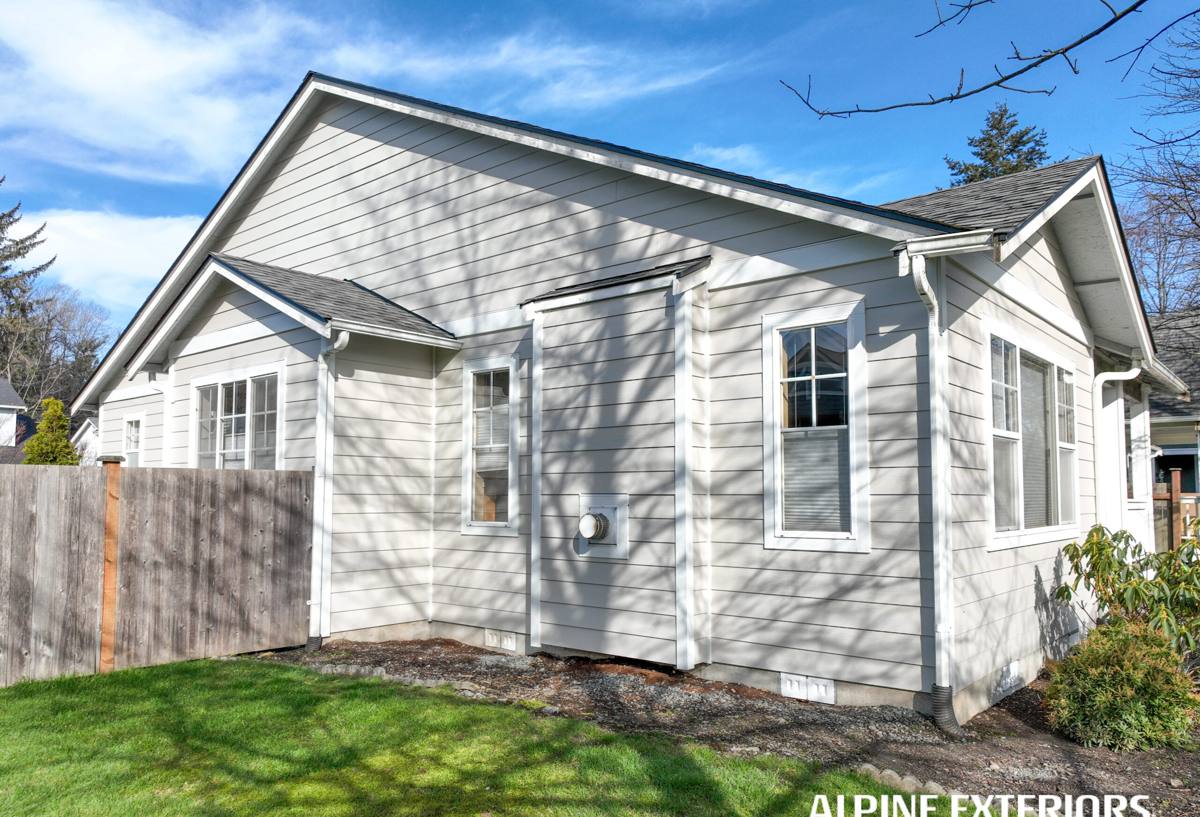
What Pinellas County Weather Does to Siding Over Time
UV Exposure
Florida's sun is stronger and more consistent than in most of the country. Cheap paint finishes chalk, fade, and crack under that kind of exposure, and any siding material with a weak factory finish will show uneven color within a few years — especially on south- and west-facing walls that take the brunt of the afternoon sun.
Wind-Driven Rain
Summer storms in this part of Florida rarely fall straight down. Wind pushes rain sideways and up under laps, around trim, and into any gap in the water-management layer behind the siding. If the house wrap, flashing, and fastening weren't done correctly the first time, this is where moisture finds its way into the wall assembly — often invisibly, until rot or mold shows up months or years later.
Salt Air
Palm Harbor's proximity to the Gulf means salt-laden air is a constant, even well away from the immediate waterfront. Salt is corrosive to fasteners and hard on certain trim and finish systems, and it accelerates wear on materials that aren't formulated to handle it.
Hurricane-Force Wind
Storm season brings the risk of sustained high winds and wind-borne debris. Siding that isn't rated and fastened for those loads can lift, crack, or tear away — turning a siding problem into a bigger repair involving sheathing, insulation, and interior finishes.
None of this is unique to Palm Harbor, but it's the reality every Pinellas County home faces, and it's why we treat siding replacement here differently than we would in a milder climate.
Signs a Palm Harbor Home Needs Siding Replacement
Not every siding problem calls for a full replacement, but in a climate this demanding, small issues escalate faster than homeowners expect. Watch for:
- Soft, spongy, or crumbling spots when you press on the siding, especially near the bottom courses or around windows and doors
- Visible warping, buckling, or bowing panels
- Persistent staining, streaking, or a musty smell along interior walls that back up to exterior siding
- Paint that's peeling, bubbling, or chalking heavily despite being repainted in the last several years
- Cracked, split, or missing panels after a storm
- Visible gaps at seams, corners, or trim where caulking has failed and not been maintained
- Siding that's original to a home more than 20-25 years old and has never been fully inspected behind the surface
If you're seeing more than one of these at once, it's usually a sign the water-management layer behind the siding has been compromised, not just the visible surface.
Why We Only Install James Hardie Fiber Cement
We install James Hardie fiber cement exclusively — not vinyl, not LP SmartSide, not Cemplank or Allura, not primed wood. That's a deliberate standard, not a lack of options. Vinyl can warp and fade under sustained Florida UV and doesn't hold up well to wind-borne debris. Wood-based and engineered-wood products carry ongoing moisture and edge-swelling risk in a climate this humid, no matter how well they're maintained. Fiber cement alternatives to Hardie exist, but we've standardized on Hardie specifically for its factory-applied ColorPlus finish, its climate-engineered product lines built for regions exactly like ours, and the strength of its transferable warranty. When we put our name behind a siding job, we want the product underneath it to be one we trust to perform in this specific climate for decades, not just look good on installation day.
James Hardie's HardieZone system assigns products by climate region. Homes in our area fall under HZ5, engineered for the moisture, humidity, and storm exposure typical of the Gulf Coast — as opposed to HZ10, which is formulated for drier, more moderate climates. Installing the wrong zone product is a real and avoidable mistake; it's one of the first things we check on any replacement job.
What a Correct Siding Replacement Involves
Tear-Off and Inspection
Replacement starts with full removal of the old siding, not installation over it. That's the only way to see the sheathing, framing, and any hidden moisture damage underneath. Any soft or rotted sheathing gets identified and repaired before new siding goes on — covering it up only hides the problem.
Water-Resistive Barrier
A correctly lapped and sealed house wrap is the layer that actually keeps wind-driven rain out of the wall assembly. Siding sheds most water, but the barrier behind it is the backup system, and in this climate that backup gets tested constantly.
Flashing at Every Penetration
Windows, doors, hose bibs, light fixtures, and any other wall penetration need proper flashing integrated with the water-resistive barrier. This is one of the most commonly rushed steps in low-quality installations, and it's usually where leaks originate.
Fastening to Spec
James Hardie publishes specific fastener types, spacing, and placement requirements for high-wind zones. Following that spec — not a generic pattern — is what gives the finished siding its actual wind resistance rating. Corrosion-resistant fasteners matter here given the salt air.
Trim, Caulking, and Finish Detailing
Clean joints, correctly sized gaps for expansion, and proper caulking at trim and corners round out a job that will actually resist wind-driven rain rather than just look finished from the curb.
Our Process, Start to Finish
- Free on-site assessment — we walk the exterior, check for soft spots and existing damage, and discuss what's driving the replacement (age, storm damage, ongoing moisture issues, or a planned renovation).
- Written estimate — a clear scope covering tear-off, repairs anticipated, product line and profile selection, color, and timeline, with no pressure to sign on the spot.
- Scheduling — we work around Florida's storm season where possible and communicate realistic start and completion windows.
- Tear-off and sheathing inspection — old material removed, substrate checked, any necessary repairs addressed and documented before covering anything back up.
- Water barrier and flashing installation — the part of the job that determines how the house performs in a storm, done to manufacturer spec.
- Hardie installation — panels or planks installed with correct fastening, clearances, and joint treatment for our HZ5 zone.
- Final walkthrough — we review the finished work with you, point out anything worth knowing for future maintenance, and make sure the job matches what was scoped.
Cost Factors for a Palm Harbor Siding Replacement
Every home is different, and we don't publish blanket per-square-foot pricing because it can mislead more than it informs. What we can tell you is what actually drives cost up or down on a real Palm Harbor project:
| Factor | How It Affects the Job |
|---|---|
| Extent of hidden sheathing damage | More rot found during tear-off means more repair before new siding goes on |
| Home size and wall complexity | More corners, gables, and dormers mean more cutting, flashing, and labor time |
| Siding profile and finish choice | Lap, panel, and shingle-style Hardie products vary in material and labor cost |
| Trim and accessory scope | Replacing trim, fascia, or soffit alongside siding adds scope but avoids mismatched future repairs |
| Access and site conditions | Landscaping, fencing, pools, or tight lot lines near neighboring homes can affect labor time |
| Current condition of the exterior | A well-maintained home with only cosmetic wear costs less to correct than one with years of moisture intrusion |
We walk through these factors with you during the on-site assessment so the estimate reflects your actual home, not a generic average.
Why a Crew That Already Works Palm Harbor Matters
Siding installed to the same specification can still perform differently depending on whether the crew understands the conditions it's going into. A contractor who regularly works Palm Harbor and the surrounding Pinellas County area knows to check for salt-air corrosion on fasteners and flashing, to size and detail joints for the humidity swings here, and to fasten to the wind ratings this coastline actually requires rather than a lower national baseline. That familiarity shows up in the details — the ones you won't see until a storm tests them.
It also means realistic expectations about scheduling around Florida's storm season, straightforward answers about product choice instead of a sales pitch for whatever's cheapest to install, and a company that will still be answering the phone if a question comes up two, five, or ten years down the road.
Get a Free, No-Pressure Estimate
If your Palm Harbor home's siding is showing its age, took storm damage, or you're simply planning ahead, we're glad to take a look. Fill out the form below for a free on-site assessment and a straightforward, no-pressure estimate for James Hardie siding replacement built for this climate.