 Clearwater Siding
 Siding Replacement Built for Countryside's Climate Reality
Countryside is one of Clearwater's larger established residential areas, and homes here face the same environmental pressures as the rest of Pinellas County: hurricane-force wind events, wind-driven rain that gets forced sideways into wall assemblies, intense year-round UV exposure, and salt-laden air moving in off the Gulf. None of that is unique to waterfront property. Salt air travels inland on the breeze, UV doesn't care how far you are from the beach, and a tropical system's wind field doesn't stop at the coastline. If your siding was chosen or installed without those factors in mind, it's working against the climate instead of with it.
This page focuses specifically on siding replacement for homes in the Countryside area — what the local conditions demand, what a correctly done job actually involves, and why the product we put on the wall matters as much as the labor.
What Makes Countryside's Housing Stock Worth Paying Attention To
Countryside has a mix of home ages and construction styles typical of Clearwater's inland-of-the-beach neighborhoods — mature tree canopy in many sections, established landscaping, and a range of original exterior claddings depending on when a given section of the neighborhood was built. Older wood or hardboard siding in this kind of setting has usually already absorbed decades of humidity cycling and sun exposure, and mature trees mean more shade-and-moisture cycling on north- and east-facing walls, plus more debris contact during wind events. None of that is a defect specific to Countryside — it's just what happens to exterior cladding over time in a subtropical climate — but it does mean a replacement job should account for the specific exposure of each elevation rather than treating all four walls the same.
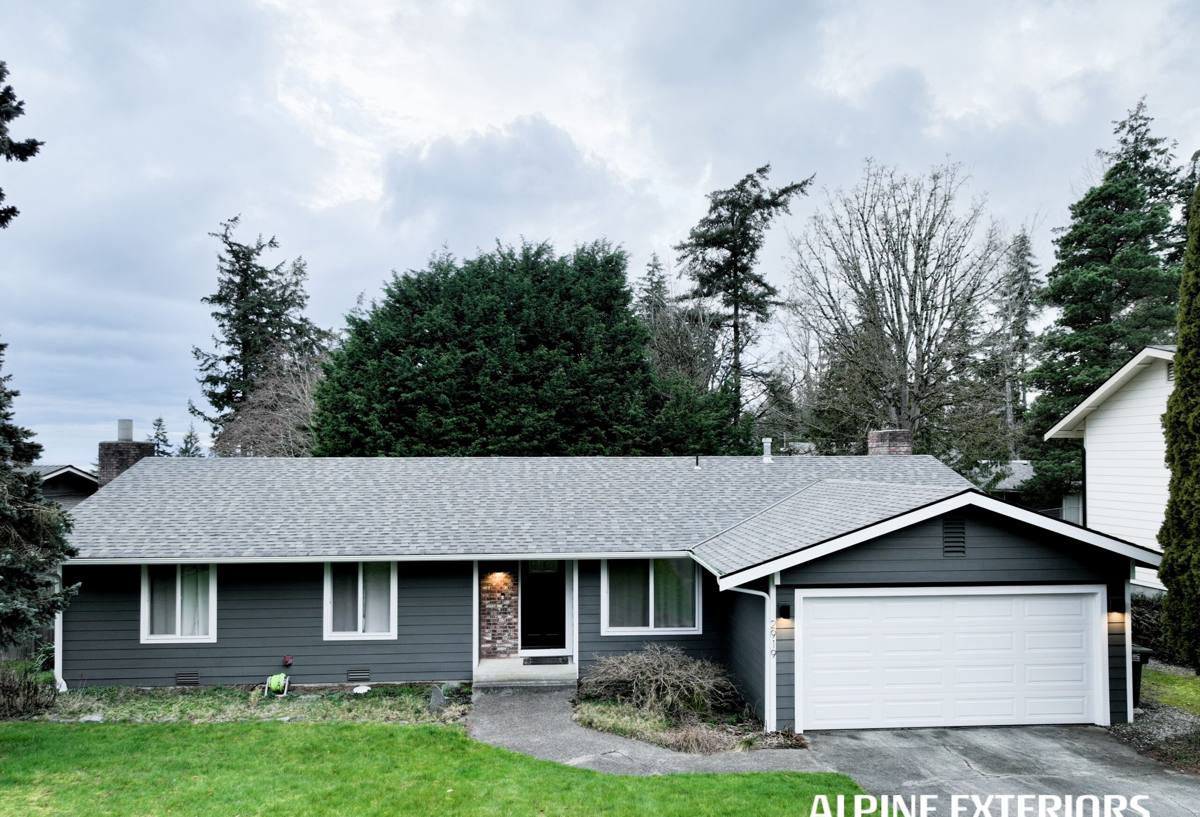
Signs a Countryside Home Needs Siding Replacement
Some damage is obvious. A lot of it isn't, especially with siding materials that hide moisture problems behind an intact-looking surface. Here's what we look for and what you can check yourself before calling anyone:
- Soft, spongy, or crumbling spots when you press on the siding, especially near the bottom courses and around window and door trim
- Visible cracking, warping, or bubbling, particularly on walls that get the most direct afternoon sun
- Paint that won't hold — repeated peeling or blistering within a year or two of repainting is usually a sign moisture is moving through the material, not just a bad paint job
- Gaps opening up at seams, corners, or trim boards where caulk has failed and wasn't replaced
- Discoloration or streaking that keeps returning shortly after cleaning, which often points to organic growth taking hold in porous or damaged material
- Rising energy bills with no other explanation, which can mean compromised siding and underlying sheathing are no longer providing a consistent thermal and moisture barrier
- Visible fastener corrosion or staining around nail heads, common in salt-air exposure once a protective finish has broken down
Any one of these on its own might just need a repair. Several at once, or damage that keeps recurring in the same spots after repair, usually means the material itself has reached the end of its useful life and full replacement is the more honest recommendation.
Why We Install Only James Hardie Fiber Cement Siding
We don't install vinyl, LP SmartSide, Cemplank, Allura, or primed wood species like spruce or cedar. That's a deliberate standard, not a sales pitch, and it's worth explaining honestly rather than just asserting it.
Vinyl siding is inexpensive and easy to install, and in a lot of climates it performs fine. In direct, sustained Florida UV, vinyl fades and can become brittle faster than in milder climates, and it's rated for wind resistance well below what fiber cement handles — a real consideration when hurricane-force gusts are a normal part of the local weather pattern, not a rare event. LP SmartSide and other engineered wood products use a wood-strand core, and wood-based products are inherently more sensitive to sustained moisture exposure than fiber cement — if a seam, cut edge, or fastener point isn't sealed exactly right and stays wet, that's where problems start, and Florida's humidity and wind-driven rain give a moisture path more opportunities to find a weak point. Primed spruce and cedar are real wood, full stop, which means they need ongoing paint and sealant maintenance to keep moisture out; skip a maintenance cycle in this climate and the clock on rot starts running.
James Hardie fiber cement siding is cement, sand, and cellulose fiber — it doesn't have an organic core for moisture or pests to compromise, and it's non-combustible. Hardie's HZ5 product line is specifically engineered for high-humidity, wind-driven-rain climates like ours, and the factory-applied ColorPlus finish is baked on under controlled conditions rather than field-painted, which gives it more consistent UV resistance than a job-site paint job and carries its own finish warranty. It's also a heavier, stiffer material than vinyl or engineered wood, which matters when it's fastened against sustained coastal wind loads.
We're not saying every other product is unusable everywhere. We're saying that after years of servicing homes in this specific climate, fiber cement is the material we're willing to warranty our workmanship on and stand behind long-term — and that's the whole reason for the standard.
What a Correct Siding Replacement Job Actually Involves
The siding itself is only part of the system. A lot of siding failures in Florida trace back not to the cladding material but to what's underneath it, or how it was fastened, and this is where installation quality matters as much as product choice.
Tear-off and substrate inspection
Old siding comes off down to the sheathing, and that sheathing gets inspected — not assumed to be fine. Hidden rot, soft spots, or prior water intrusion at windows, doors, and penetrations gets found and repaired before anything new goes up. Installing new siding over a compromised substrate just hides the problem for another few years.
Weather-resistive barrier and flashing
A correctly lapped weather-resistive barrier, properly integrated window and door flashing, and correct flashing at every penetration are what actually keep wind-driven rain out of the wall assembly. This is the least visible part of the job and the part most likely to get shortcut by a crew in a hurry — and it's the part that determines whether the wall stays dry through the next tropical system.
Fastening and clearances
James Hardie specifies fastener type, spacing, and pattern for a reason — correct fastening is what gives the finished wall its wind resistance. Manufacturer-specified clearances above rooflines, decks, and grade also matter for long-term moisture management, and skipping them to save time is a common source of early failure.
Trim, caulking, and finish details
Seams, corners, and trim transitions get sealed with products compatible with the ColorPlus finish, and joints are placed and treated according to Hardie's installation specs rather than however is fastest. These are small details that determine whether the job looks clean and performs well five and ten years out, not just on install day.
Our Process for a Countryside Siding Replacement
- On-site assessment — we walk the property, check the current siding and substrate condition elevation by elevation, and note anything specific to your home's exposure (shade, prior moisture issues, trim condition).
- Written estimate — a clear scope and price, not a vague range, so you know what's included before work starts.
- Tear-off and substrate repair — old material removed, sheathing inspected and repaired as needed.
- Weather barrier and flashing installation — done to manufacturer spec before a single piece of siding goes up.
- James Hardie installation — fastened, spaced, and finished to Hardie's published installation requirements.
- Final walkthrough — we go over the finished job with you before we consider it done.
Comparing Siding Options for Gulf Coast Homes
| Factor | Vinyl | LP SmartSide / Engineered Wood | James Hardie Fiber Cement |
|---|---|---|---|
| Wind resistance | Lower impact and wind ratings | Moderate; depends on fastening and edge sealing | High; engineered for coastal wind exposure |
| Moisture behavior | Doesn't rot, but can warp/buckle | Wood-strand core is moisture-sensitive at cut edges and seams | No organic core; not vulnerable to rot |
| UV / fade resistance | Can fade and become brittle over time | Depends on field-applied or factory finish quality | Factory-baked ColorPlus finish resists fading |
| Combustibility | Combustible | Combustible (wood-based) | Non-combustible |
| Maintenance | Low, but limited repairability | Requires diligent sealant/paint upkeep | Low; periodic cleaning and caulk checks |
Cost Factors for Countryside Siding Replacement
We don't quote firm numbers without seeing the house, but the main variables that move the price are consistent from project to project:
- Total square footage of siding being replaced
- Condition of the substrate underneath the old siding, and whether repairs are needed
- Home elevation complexity — cut-ups, dormers, gables, and trim detail add labor
- James Hardie product line and profile selected (lap siding, shingle-style, board-and-batten)
- Whether existing trim, fascia, or soffit also need attention while the walls are open
- Access and site conditions, including mature landscaping that may need protection or clearance
The honest answer is that a full home re-side is a meaningful investment, and the range depends heavily on the specifics above. That's exactly why we start with an on-site look rather than a phone-quote guess.
Why a Crew That Already Works Countryside Matters
Siding replacement in this climate isn't a generic install — it's a job that has to account for Pinellas County's wind-load requirements, Florida's building permitting process, and the practical realities of working around established landscaping and neighborhood conditions in an area like Countryside. A crew that regularly works this part of Clearwater already knows what Florida Building Code inspection expects, how to sequence a tear-off around Gulf Coast weather patterns, and what failure points show up most often in homes with this area's mix of ages and construction styles. That familiarity shows up in fewer surprises mid-project and a finished job that's built for the specific conditions your house actually faces, not a one-size-fits-all national installation standard.
If your Countryside home's siding is showing its age or you just want an honest read on its condition, we're happy to take a look. Use the form below to request a free, no-pressure estimate.