 Clearwater Siding
 What Clearwater's Climate Does to a Deck in Skycrest
Skycrest sits inland from the Gulf, but "inland" in Pinellas County still means salt-laden air, heavy afternoon storms, and some of the most intense year-round UV exposure in the continental United States. A deck built for a drier, cooler climate simply doesn't hold up the same way here, and a deck that was built correctly ten or fifteen years ago is still fighting a losing battle against the same conditions every single day.
Sun and heat
Clearwater gets strong, direct sun most of the year. On wood decking, UV breaks down the lignin that holds fibers together, leaving boards gray, splintery, and brittle even when they still look structurally sound from a distance. On composite decking, UV and heat cycling can cause fading, surface chalking, and expansion and contraction that works fasteners loose over time.
Wind-driven rain and humidity
Afternoon storms here don't just fall straight down — wind pushes rain sideways into railings, under boards, and into any gap where end grain is exposed. Combined with Pinellas County's humidity, that moisture rarely gets a long enough dry stretch between storms to fully evaporate, which is exactly the condition wood rot and hardware corrosion need to take hold.
Salt air
Even a mile or more from the water, Gulf breezes carry enough salt to accelerate corrosion on fasteners, brackets, and railing hardware. It's a slower process than what beachfront homes see, but it's steady, and it's one of the reasons a deck that looks fine on the surface can have hardware failing underneath.
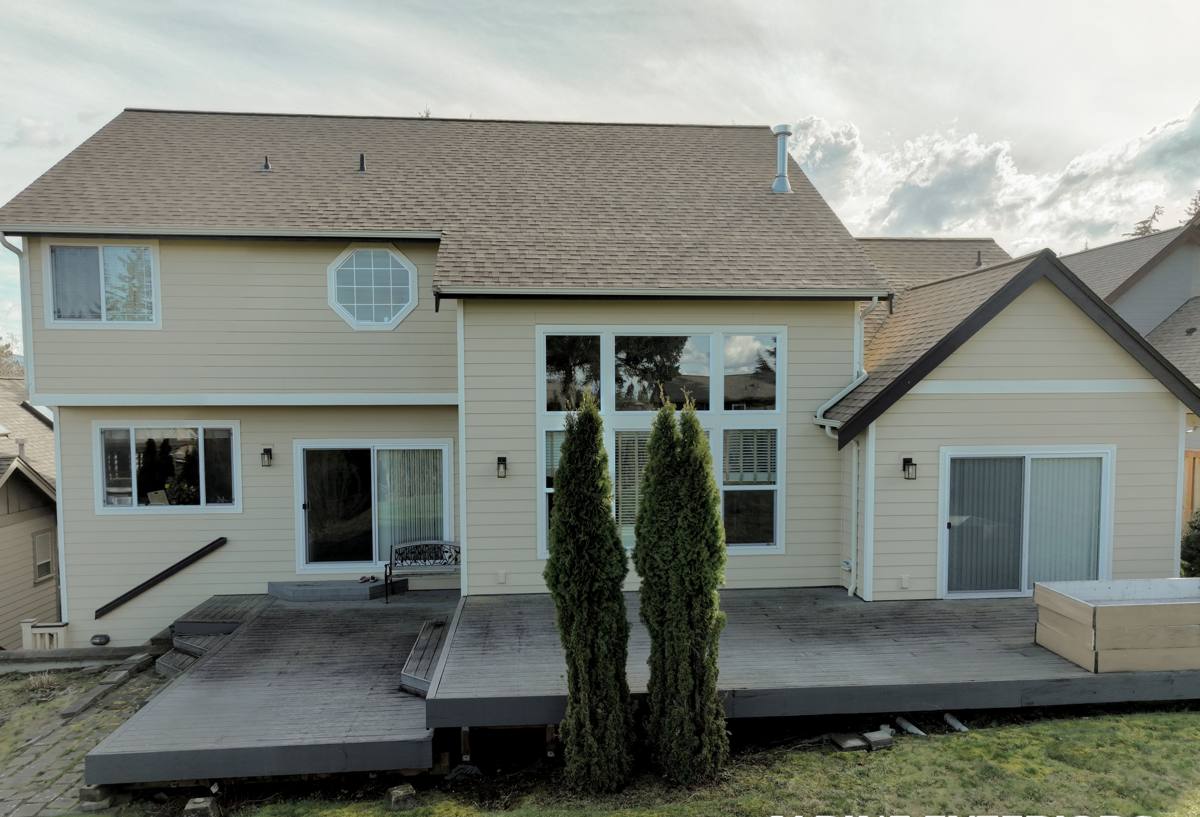
Early Warning Signs a Skycrest Deck Needs Attention
Most deck failures don't happen suddenly — they build for months or years while the deck still looks usable. These are the signs we tell Skycrest homeowners to check for before a small repair turns into a safety issue:
- Boards that feel spongy, springy, or noticeably softer underfoot in one area
- Rust streaks running down from screw heads, joist hangers, or bolts
- Railings or stair rails that wobble or flex when you lean on them
- Visible gaps opening up where the deck meets the house, at the ledger board connection
- Cracked, splitting, or cupped boards, especially on sections that get the most afternoon sun
- Any post that feels loose at its base or a footing that looks like it has shifted or settled
- Stains or dark discoloration on the underside of the deck, which usually means standing water isn't draining
None of these signs mean you need a full rebuild. Most of them are exactly what a targeted repair is meant to catch early, before the damage spreads into framing that costs a lot more to fix.
The Most Common Deck Problems We Find in Skycrest Homes
Ledger board and house connection
The ledger board — the piece that bolts the deck to the house — is the single most safety-critical part of most decks, and it's also the part most exposed to wind-driven rain running down the siding. When flashing is missing or was installed poorly, water gets trapped between the ledger and the house and rots both from the inside out, long before it shows on the surface.
Fasteners and hardware
Older decks around Skycrest were often built with standard galvanized screws and nails, which corrode faster than the coated or stainless fasteners used in coastal-rated construction today. Corroded fasteners lose grip strength gradually, so a board can look attached while actually being held by a fraction of its original fastener strength.
Decking boards and surface
Wood decking takes the brunt of UV and moisture cycling and typically needs board-level repair or replacement before the structure underneath does. Composite boards last longer on the surface but can still show fastener pull-through, edge swelling at cut ends that weren't properly sealed, or heat-related warping in full-sun sections.
Railings and stairs
Railings get more direct wind and rain exposure than almost any other part of a deck, and they're also the part homeowners lean on hardest. A wobbly railing post is rarely just a loose screw — it's usually a sign that the wood around the post anchor has started to soften.
Posts, footings, and framing
This is the part of a deck you can't see, and it's where a small problem left alone turns into a real structural issue. Posts that sit in standing water, footings that have settled unevenly, or joists that were undersized for the deck's actual load all show up eventually as sag, bounce, or uneven decking.
What a Correct Deck Repair Actually Involves
A repair done right starts with figuring out whether a problem is cosmetic or structural, because the fix — and the cost — are completely different depending on which one you're dealing with.
Cosmetic repairs address surface-level wear: replacing individual worn boards, sanding and refinishing wood, tightening loose railing hardware, or resealing exposed end grain. These extend the life and appearance of a deck that's still structurally sound.
Structural repairs deal with anything load-bearing: reinforcing or replacing a rotted ledger board with correct flashing, sistering or replacing damaged joists, resetting or replacing footings, and swapping out corroded fasteners and hardware for coated or stainless alternatives rated for the exposure a Skycrest deck actually sees.
The mistake we see most often on older repairs is treating a structural problem as a cosmetic one — replacing a rotted board without checking why it rotted, then having the same problem reappear a season later because the moisture source underneath was never addressed.
Repair or Replace? How We Help Skycrest Homeowners Decide
Not every deck problem calls for a full rebuild, and not every deck is worth saving with patchwork repairs. Here's the general breakdown we walk homeowners through:
| Factor | Repair usually makes sense | Replacement usually makes sense |
|---|---|---|
| Framing and structure | Solid, with isolated rot or damage in one area | Widespread rot, sagging, or undersized framing throughout |
| Age of the deck | Under 10-15 years old, built to a reasonable standard | Older deck already near the end of its practical service life |
| Ledger board condition | Sound, properly flashed, no ongoing water intrusion | Rotted, poorly flashed, or a repeat source of leaks |
| Scope of damage | Limited to a few boards, railings, or fasteners | Damage found in multiple structural components at once |
| Your plans for the deck | Keeping the same size and layout | Wanting a different footprint, material, or design upgrade |
We'll always tell you honestly which side of that line your deck falls on. There's no benefit to us talking a homeowner into a full replacement when a targeted repair will genuinely hold up.
Our Deck Repair Process
- Full inspection. We check the ledger connection, every post and footing, the framing underneath, fastener condition, and the decking surface itself — not just the areas you flagged as a concern.
- Written assessment. You get a plain-English explanation of what's cosmetic, what's structural, and what your realistic options are, with no pressure toward the more expensive one.
- Scope and estimate. A clear breakdown of what's being repaired, the materials and fasteners being used, and what it will cost.
- Repair work. Structural issues get addressed first — framing, ledger, footings — followed by surface-level fixes like decking and railings.
- Final check. We test load-bearing points, railings, and stairs before we consider the job finished, not just a visual walkthrough.
Materials and Fasteners We Use, and Why
For framing repairs, we use pressure-treated lumber rated for ground contact where it's called for, since Florida's humidity and rain make anything less a short-term fix. For decking board replacement, we'll work with wood or composite depending on what's already on your deck and what you want going forward — our job is matching the repair to the existing structure, not pushing a product.
Fasteners matter more here than in most parts of the country. We use coated or stainless-rated screws and structural hardware appropriate for coastal exposure rather than standard galvanized fasteners, because the cost difference is small and the corrosion resistance difference over ten years is not. Where a ledger board is involved, correct flashing is non-negotiable — it's the single detail that determines whether that connection lasts or rots again.
Permits and Codes for Deck Repair in Pinellas County
Structural deck repairs — anything touching framing, footings, ledger boards, or load-bearing posts — typically require a permit and inspection in Clearwater and unincorporated Pinellas County, even when the deck itself was originally built without one. Purely cosmetic work, like replacing worn boards or refinishing, generally doesn't. We handle the permitting conversation as part of the estimate so you know upfront what's involved, rather than finding out partway through the job.
Why Hire a Crew That Already Works in Skycrest
Deck repair done by someone unfamiliar with this area tends to repeat the same mistake: fixing what's visible without accounting for what Pinellas County's sun, storms, and salt air will do to that repair over the next few years. A crew that already works in and around Skycrest knows which fastener grades actually hold up here, how local wind-driven rain finds its way into ledger connections, and what the permitting process with the city and county actually looks like — so the repair is done right the first time instead of needing to be redone in a season or two.
If you're seeing any of the warning signs above, or you just want an honest read on your deck's condition, we're happy to take a look. Reach out for a free, no-pressure estimate using the form below — we'll tell you straight whether you're looking at a simple repair or something bigger.