 Clearwater Siding
 Siding a Safety Harbor Home Is Not the Same Job as Siding a House Inland
Safety Harbor sits directly on Old Tampa Bay, which puts homes here in a different exposure category than a house even a few miles inland. Waterfront and near-waterfront properties take on humidity, salt-laden air, and wind loading that a standard siding job in a landlocked subdivision never has to deal with. Add in the broader Pinellas County climate — hurricane-force wind events, some of the most intense year-round UV in the continental United States, and driving rain that gets pushed sideways into wall assemblies during storms — and it becomes clear why a generic siding install doesn't hold up here the way it might in a milder climate.
This page is about one job done right: fiber cement siding, installed correctly, on a Safety Harbor home. We only install James Hardie fiber cement, and we'll explain why later on. But the bigger point is that the material is only half the equation — how it's installed, detailed, and flashed against this specific climate is what actually determines whether a siding job lasts fifteen years or fails at year five.
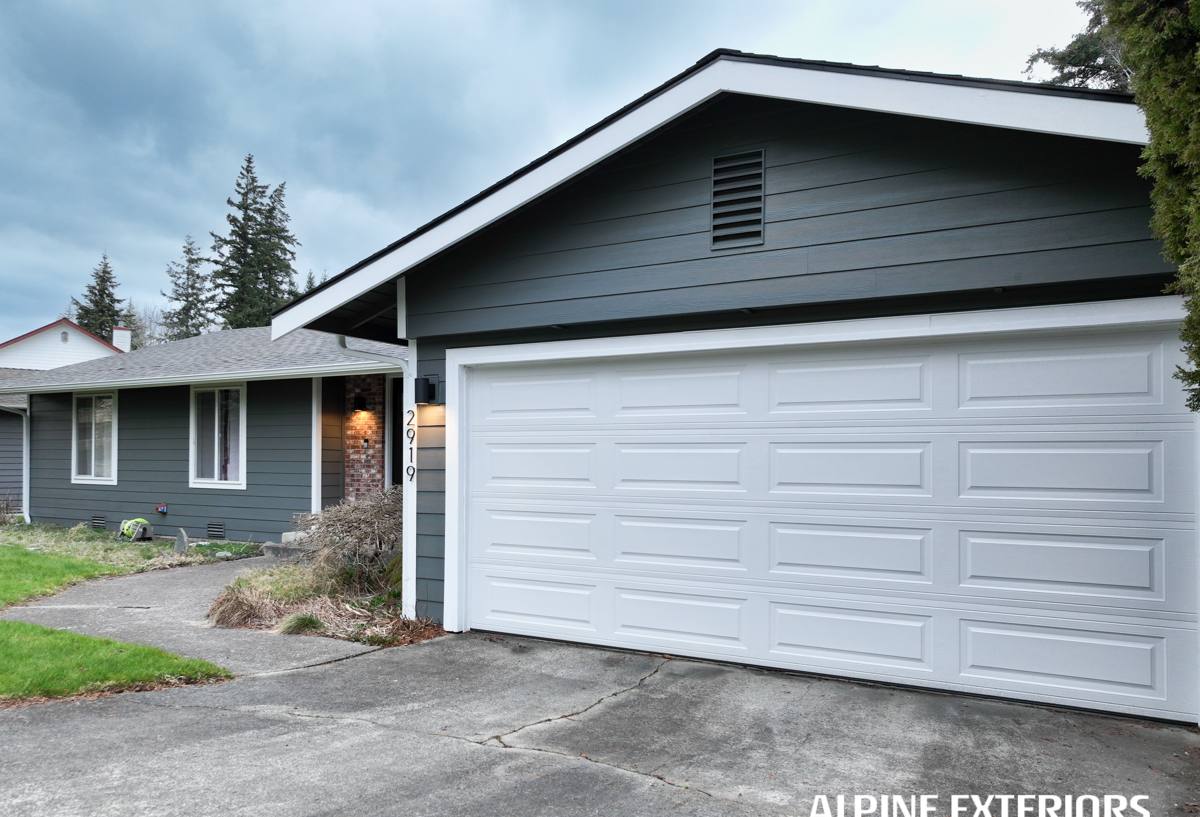
What Tampa Bay Weather Actually Does to a Home's Exterior
Wind
Pinellas County sits in a wind-borne debris region, and Safety Harbor's position along the bay means storm winds arrive with little to slow them down before hitting exterior walls. Siding that isn't fastened to spec — wrong nail pattern, wrong penetration depth, panels hung without proper blocking — is one of the first things to fail in a serious wind event. It's not usually the material that gives out; it's the installation shortcuts.
UV and Heat
Florida gets brutal, sustained UV exposure nearly every month of the year. Painted wood and lower-grade composite siding chalk, fade, and break down under that kind of sun load faster than most homeowners expect. Dark colors on south- and west-facing walls take the worst of it, and any siding product with a weak factory finish will show uneven fading within a few years.
Wind-Driven Rain
Rain in a Gulf Coast storm rarely falls straight down — it's pushed horizontally into walls, seams, window trim, and butt joints. This is where most siding failures actually start: not on the face of the panel, but at the gaps, laps, and penetrations where water finds a way behind the cladding. A siding system is only as good as its weakest joint.
Salt Air
Because Safety Harbor is a bay-front community, salt content in the air is higher here than it is for homes further inland in Clearwater or Largo. Salt air accelerates corrosion on fasteners, trim accessories, and any metal components in the wall assembly, and it degrades lower-quality finishes faster. This is one of the clearest reasons material choice matters as much as installation quality.
Why We Install Only James Hardie Fiber Cement
We don't install vinyl, LP SmartSide, primed wood, cedar, or other fiber cement brands like Cemplank or Allura. That's a deliberate standard, not a sales pitch, and it's worth explaining in the context of a bay-front climate specifically:
- Non-combustible core: Hardie's fiber cement doesn't burn, warp, or feed a fire the way wood-based or engineered wood siding can.
- Climate-engineered product lines (HZ5): Hardie manufactures regional formulations built for high-humidity, high-moisture climates like ours, rather than a single one-size-fits-all product sold nationwide.
- ColorPlus factory finish: A baked-on, multi-coat finish applied under controlled conditions holds color and resists UV fading far better than field-applied paint, which matters enormously under Florida sun.
- Moisture stability: Fiber cement doesn't absorb and swell with humidity the way wood-based composites can, which reduces the risk of warping, buckling, or rot at seams over time.
- Transferable warranty backed by a large manufacturer: Hardie's warranty structure and market presence give homeowners more confidence than smaller or regional composite brands.
None of this means other products are worthless — LP SmartSide and vinyl both have legitimate uses and price points. But for a bay-front, hurricane-exposed Pinellas County home, we don't think the trade-offs (moisture sensitivity, finish longevity, impact and fire performance) are worth it, so we build our business around one product installed correctly rather than offering several installed to a lower standard.
What a Correct Fiber Cement Install Actually Involves
Fiber cement is an unforgiving material when it comes to installation quality. The product itself is durable, but a rushed or under-detailed install can undercut most of that durability. A correct installation on a Safety Harbor home includes:
- Proper fastener type, spacing, and penetration depth — matched to wind zone requirements, not just "close enough"
- A continuous weather-resistive barrier behind the panels, lapped correctly top-to-bottom
- Correct clearance between siding and grade, roofing, decks, and hardscape to prevent wicking moisture
- Properly flashed and sealed window and door penetrations — the single most common source of hidden water intrusion
- Factory-mitered or properly caulked joints at butt seams and corners, using sealants rated for exterior, high-UV use
- Correct starter strip and J-channel installation so panels sit flat and true, not bowed
Where Installs Commonly Go Wrong
| Detail | Correct Practice | Common Shortcut |
|---|---|---|
| Fastening | Manufacturer-specified nail type, spacing, and depth per wind zone | Standard nail pattern regardless of exposure, driven too deep or too shallow |
| Clearance to grade/roof | Minimum gap maintained per Hardie spec | Siding installed tight to hardscape or roofline, trapping moisture |
| Window/door flashing | Integrated flashing and sealant sequencing before siding goes on | Caulk used as a substitute for proper flashing |
| Butt joints | Sealed or shadow-gapped per spec, staggered pattern | Tight, unsealed joints that trap water at seams |
| Cut edges | Factory-primed edges sealed or back-primed before install | Raw cut edges left exposed to moisture |
Our Process for a Safety Harbor Siding Project
The steps don't change much from house to house, but the details we pay attention to are shaped by the bay-front environment:
- On-site assessment: We look at current siding condition, wall assembly, moisture signs, and exposure — a west- or bay-facing wall gets evaluated differently than a shaded, protected elevation.
- Written estimate: Clear scope, product line, color, and cost — no vague allowances.
- Tear-off and inspection: Removing old siding lets us check sheathing and framing for hidden moisture damage before anything new goes on, which is common on older bay-area homes.
- Weather barrier and flashing: This step gets the most attention, since it's the layer that actually keeps water out even if a seam eventually opens up.
- Panel installation: Fastened, spaced, and joined to spec — not to whatever's fastest.
- Trim, caulking, and finish detailing: The visible layer, but also the last line of defense against wind-driven rain at every seam and penetration.
- Final walkthrough: We go over the finished work with the homeowner before calling the job done.
Matching the Character of Safety Harbor Homes
Safety Harbor has a mix of housing stock — older, established homes closer to downtown and the waterfront, alongside newer construction further out. James Hardie's product lines give us the flexibility to match either: lap siding for a more traditional look, shingle-style panels for a coastal cottage feel, or board-and-batten accents for a more modern facade. ColorPlus finishes come in a range of factory colors, which matters in a climate where field-painted siding tends to need repainting far sooner than a baked-on finish.
Cost Factors Homeowners Should Understand
Every home is different, so we don't post fixed prices — but the factors that actually move the number are consistent:
| Factor | Why It Matters |
|---|---|
| Home size and wall complexity | More corners, dormers, and cutouts mean more labor and material waste |
| Existing siding condition | Rotted sheathing found during tear-off adds repair scope before new siding goes on |
| Product line and profile | Lap width, shingle-style panels, and trim details vary in material cost |
| Access and site conditions | Waterfront lots, tight setbacks, or landscaping can affect crew access and staging |
| Wind zone requirements | Fastening schedules and detailing get stricter with exposure, which affects labor time |
We'll walk through these specifics for your home during the estimate rather than quoting a number sight unseen.
Why It Matters That We Already Work in Safety Harbor
A crew that mainly works inland subdivisions can install siding correctly on paper and still miss what matters for a bay-front property — the extra flashing attention a waterfront-facing wall needs, how much faster salt air ages exposed fasteners, or how local wind exposure should influence fastening decisions. Working regularly in Safety Harbor and the surrounding Clearwater area means we're not guessing at how this specific stretch of Pinellas County treats exterior materials — we're applying what we've already seen hold up, and what hasn't.
It also means straightforward logistics: local permitting familiarity, a crew that isn't traveling far to reach your property, and a company that's going to still be nearby if a warranty question comes up years down the road.
Living With Fiber Cement Siding After Installation
One advantage of a correctly installed Hardie system is how little upkeep it asks for compared to painted wood or lower-grade composites. That said, a bay-front climate still calls for basic attention:
- Rinse siding periodically to clear salt residue, pollen, and airborne grime — a garden hose is usually enough
- Inspect caulked joints and trim annually, especially after a significant storm
- Keep sprinklers and irrigation from spraying directly on siding long-term
- Trim vegetation back from walls to maintain airflow and reduce moisture retention
- Address any impact damage or cracked caulk promptly rather than letting water find a way in
None of this is heavy maintenance — it's the kind of periodic attention that keeps a well-installed system performing the way it's designed to for decades.
If you're considering new siding for a home in Safety Harbor or elsewhere around Clearwater, we're happy to take a look and walk you through what your house specifically needs. The estimate is free, there's no pressure, and you'll get a straight answer about scope and cost before deciding anything.