 Clearwater Siding
 Decks Built for Countryside, Not for a Catalog Photo
Countryside is one of Clearwater's larger inland residential areas, developed mostly with ranch and split-level homes on modest lots, many backing up to canals, retention ponds, or shared green space rather than open water. That matters for deck design. A deck here isn't a dockside showpiece — it's a backyard living space that has to survive Pinellas County's full weather cycle: months of intense subtropical sun, a summer rainy season that dumps water fast and often, and the real chance of a tropical system pushing hurricane-force gusts through the neighborhood at least once a year. A deck built with beach-town assumptions, or built to a generic national spec, tends to show its age in Countryside within a few seasons. One built for this specific climate holds up for decades.
This page is about deck building specifically for homes in the Countryside area of Clearwater — what the local conditions demand, what a correctly built deck actually involves under the surface, and how we approach the job from first call to final walkthrough.
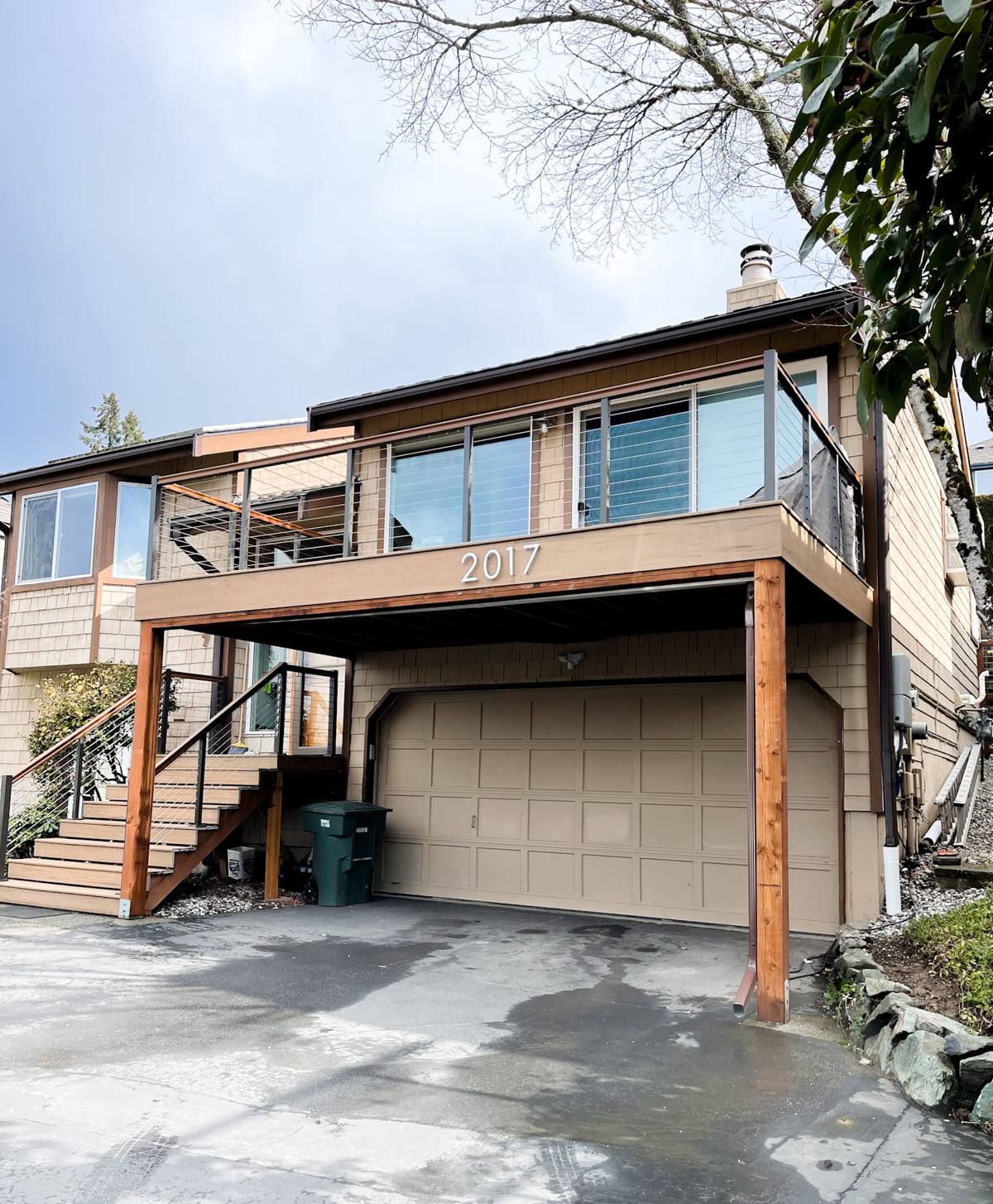
What Florida's Climate Does to an Under-Built Deck
UV and Heat
Clearwater sees strong, direct sun essentially year-round. On uncovered decks, that UV load bleaches and dries out wood fibers, breaks down cheaper composite formulations, and can make dark-colored decking uncomfortably hot underfoot by mid-afternoon. Finishes that aren't rated for this level of exposure fail early — you'll see graying, checking, and splintering on wood decks well before the structure itself is actually worn out.
Humidity and Wind-Driven Rain
Pinellas County's rainy season brings short, heavy downpours, often blown sideways by gusty storm cells. Water gets driven into places a mild-climate deck design would never have to account for — under railings, behind ledger boards, into fastener holes. Combined with our humidity, any spot where water can collect and not dry out quickly becomes a rot or corrosion point.
Hurricane-Force Wind Loads
Countryside sits inland relative to the immediate Gulf beaches, but it is still squarely inside Pinellas County's hurricane exposure zone, and Florida Building Code wind provisions apply to the whole county, not just the coastline. A deck attached to the house has to resist uplift and lateral load without pulling its ledger board loose — a failure we see disproportionately on decks that were originally built without a proper ledger connection or without engineered hardware.
Salt-Laden Air
Because Clearwater is a coastal city, salt-bearing air moves further inland than most homeowners assume, especially during onshore wind events. Standard steel fasteners and connectors that would be fine in a landlocked state corrode faster here, even a few miles from the water. It's a slower process in Countryside than it would be on a beachfront lot, but it's not zero, and it's the kind of thing that only shows up as a problem years after a corner-cutting install.
Choosing a Decking Material That Actually Fits This Climate
There's no single "best" decking material — there's a best material for your budget, your maintenance appetite, and how much direct sun the deck gets. Here's how the common options actually perform under Clearwater conditions:
| Material | Upfront Cost | Maintenance | Heat Underfoot | Realistic Lifespan Here |
|---|---|---|---|---|
| Pressure-treated pine | Lowest | Re-seal or re-stain every 1-2 years | Moderate | 10-15 years with upkeep |
| Tropical hardwood (e.g. ipe) | High | Periodic oiling to prevent graying | Moderate to warm | 25+ years, very dense and rot-resistant |
| Traditional composite | Mid to high | Occasional washing, no sealing | Can run hot in dark colors | 15-25 years, quality-dependent |
| Capped/PVC composite | Highest | Wash only | Better UV and heat performance than uncapped composite | 25-30+ years, backed by manufacturer warranty |
Pressure-treated pine remains a reasonable choice for homeowners who don't mind a re-stain schedule and want the lowest entry cost. Capped composite boards from established manufacturers have gotten genuinely good at resisting our UV load and humidity without the maintenance burden of wood — that's why we recommend them for most uncovered Countryside decks that get full afternoon sun. Uncapped or budget composite is where we're more cautious: without a protective cap layer, some of these products absorb moisture at the core over time in a climate this humid, which is a maintenance and warranty headache down the road rather than a true failure of the material itself.
What a Correctly Built Deck Actually Involves
The decking surface is the part homeowners see and choose; the framing underneath is what determines whether the deck is still solid in fifteen years. A correct build in this climate means:
- A properly flashed ledger board, mechanically fastened into the house rim joist — not just lag-bolted through siding
- Joist hangers and structural connectors rated for the actual load and corrosion-resistant (stainless or hot-dip galvanized, not standard zinc-coated)
- Footings sized and set to Florida Building Code depth and bearing requirements for our soil conditions, not a generic minimum
- Fastener spacing and blocking that accounts for composite or PVC board expansion in our heat, so boards don't buckle or gap unevenly
- Railing posts through-bolted to framing, not just screwed to the rim board
- Proper drainage slope and gapping so standing water doesn't sit against framing after a downpour
- Baluster spacing and railing height that meet current code, checked against the local jurisdiction's requirements at permit time
Every one of these is invisible once the deck is finished and the boards are down. That's exactly why they're worth asking a contractor about directly before work starts, not after.
Permits and Wind Load in Pinellas County
Clearwater and unincorporated Pinellas County both require a permit for new deck construction and for most significant deck rebuilds — this isn't optional paperwork, it's what triggers the wind-load and structural review that keeps a deck attached to your house during a storm. Depending on the deck's size, height, and attachment method, the plans may need engineering sign-off to demonstrate the structure meets Florida Building Code wind provisions for this zone. Skipping the permit might save a few days upfront, but it creates real problems later: unpermitted structural work can complicate a home sale, and it removes the built-in inspection check that catches a bad connection before it's buried under decking boards. We pull permits as a standard part of the job and schedule the required inspections around the build, not as an afterthought.
Our Deck Building Process
The process is the same whether it's a first deck on a bare slab of yard or a replacement for one that's finally worn out:
- On-site assessment — we look at the house's rim joist condition, grade and drainage, sun exposure through the day, and how the deck will connect to existing doors or steps.
- Design and material selection — sizing, layout, decking material, and railing style, matched to budget and how the space will actually be used.
- Permitting — we prepare and submit the permit package, including engineering documentation where the design requires it, and handle the back-and-forth with the local building department.
- Footings and framing — footings set to code depth, ledger properly flashed and fastened, joists and beams sized for the span and load, all connectors corrosion-resistant hardware.
- Decking and railing installation — boards installed with correct fastening and spacing for the material chosen, railing set and through-bolted to structure.
- Final walkthrough and inspection — we walk the finished deck with you, confirm it passes the required inspections, and go over basic care for whatever material you chose.
Railings and Hardware That Hold Up Here
Railings take more abuse than most homeowners expect — they're handled constantly, they're the most exposed part of the structure, and they're the first thing to look bad if the hardware corrodes. We use stainless steel or coated fasteners rated for coastal exposure on every railing connection, not just the decking surface, and we set posts to bolt through the frame rather than relying on surface screws. On the finish side, aluminum and PVC railing systems have become popular in this climate specifically because they don't need re-painting or re-staining the way wood rails do, and they don't develop the rust streaking that plain steel hardware eventually shows once salt air gets to it.
Maintaining a Deck in Countryside's Climate
Material choice determines how much maintenance a deck needs, but every deck in this climate benefits from a basic seasonal check:
- Rinse pollen, dirt, and salt residue off the surface a few times a year, especially after dry spells followed by rain
- Check railing posts and stair connections for any looseness after a windy season
- Look under the deck after heavy rain for standing water against footings or framing
- Re-seal or re-stain wood decking on the schedule the product actually needs — don't wait for visible graying
- Clear leaves and debris from between boards so moisture doesn't stay trapped against the framing
- After any named storm, do a quick visual check of railings, stairs, and the ledger connection before assuming everything's fine
Why It Matters That We Already Work in Countryside
A lot of what makes a deck last in this specific area isn't exotic — it's familiarity. Knowing how the Clearwater and Pinellas County permitting offices actually want plans submitted, knowing which connector hardware holds up through a real Gulf Coast humid season instead of just looking fine on day one, and knowing how the sun tracks across a typical Countryside lot through the afternoon all come from doing this work locally and repeatedly, not from a general contracting background applied to a new region. We're not guessing at how this climate treats a deck over ten or twenty years — we're building to what we've already seen happen to the ones that weren't built right the first time.
If you're planning a new deck or replacing one that's past its prime, we're glad to come take a look and talk through what makes sense for your yard, your budget, and how you actually want to use the space. There's a free, no-pressure estimate form below whenever you're ready.