 Clearwater Siding
 Palm Harbor sits in the part of Pinellas County where Gulf weather isn't background noise — it's a design constraint. Homes here take on hurricane-force wind gusts, months of unrelenting UV exposure, wind-driven rain that finds every gap in a wall assembly, and a steady drift of salt air off the coast. Siding installed without that reality in mind doesn't fail because the crew was careless on installation day; it fails slowly, over years, because the product or the method was never built for this climate in the first place. This page covers what a correct siding installation actually involves for a Palm Harbor home, and why we install nothing but James Hardie fiber cement to do it.
What Palm Harbor's Climate Actually Does to Siding
It helps to be specific about what "coastal Florida climate" means for a wall system, because the failure modes aren't abstract:
- Wind: Tropical storms and hurricanes push wind loads that can pull poorly fastened panels off the wall or work them loose at the edges over repeated storm cycles, even when the panel itself never fails outright.
- UV exposure: Nearly year-round sun bakes paint and coatings, which is why field-applied finishes on wood or engineered wood products chalk, fade, and crack faster here than in milder climates.
- Wind-driven rain: Storms in this area don't just fall straight down — rain gets pushed sideways into laps, seams, and trim joints, which means the water management behind the siding matters as much as the siding itself.
- Salt air: Even homes that aren't waterfront pick up airborne salt, which accelerates corrosion on fasteners and metal trim and speeds up the breakdown of lower-grade coatings.
None of these forces are unique to Palm Harbor, but they're constant here in a way that shapes every decision about what siding product to use and how to install it.
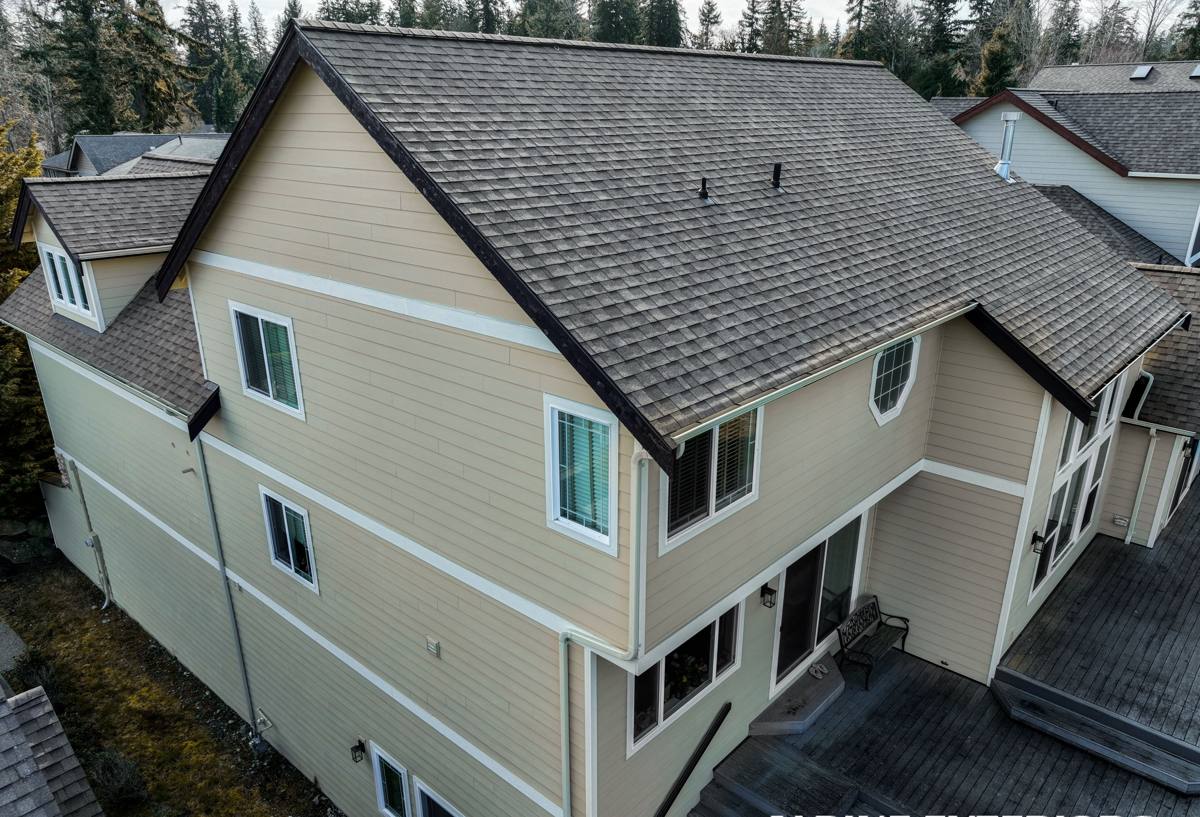
What a Correct Siding Installation Involves
Tear-off and substrate inspection
Removing the old siding is also the only point in the project where the crew can actually see the sheathing, framing, and any prior water damage. A correct installation treats this as an inspection step, not just demolition — rotted sheathing, compromised framing, or old moisture intrusion needs to be addressed before a single new panel goes up. Skipping this step is how new siding ends up covering an old problem.
Moisture barrier and flashing
Behind every properly installed siding system is a weather-resistive barrier and a flashing plan around windows, doors, and penetrations that gives water a path out if it gets behind the cladding — because in a climate with wind-driven rain, some water will eventually get behind the cladding. This layer is invisible once the job is done, which is exactly why it's the part most likely to get shortcut by crews trying to move fast.
Fastening to spec, not to habit
Fiber cement siding has manufacturer-specified fastener types, spacing, and embedment depth, and those specs get more conservative in higher wind zones. Installing it the way you'd fasten siding in a low-wind inland market is a real gap between "looks installed" and "installed to hold in a hurricane."
Factory-applied finish vs. field paint
A factory-applied finish, cured and bonded under controlled conditions, holds up to UV and humidity cycling far better than paint applied on-site after installation. This is one of the clearest differences between product systems, and it's covered in more detail below.
Why We Only Install James Hardie Fiber Cement
We made a decision, as a company, to install exclusively James Hardie fiber cement siding — not vinyl, not LP SmartSide, not Cemplank or Allura, not primed spruce or cedar. That's not a marketing position; it's a standard we set after weighing how each category of product actually performs under sustained coastal exposure versus how it looks on a spec sheet.
Fiber cement is non-combustible, which matters in a state where wildfire and ember exposure are a real consideration for insurance and code discussions. It doesn't rely on a plastic substrate that can soften and warp in extended heat the way vinyl can. And unlike wood-based or engineered-wood siding, it isn't fundamentally a cellulose product trying to resist moisture — it's a cement-based product that was never going to swell, rot, or feed fungal growth the way an organic substrate can if water gets in. James Hardie backs its products with ColorPlus Technology, a factory-baked finish system, and climate-engineered HZ product lines built specifically for high-humidity, high-UV regions like Florida's Gulf Coast — plus a strong transferable warranty that reflects the manufacturer's confidence in how the product performs when it's installed correctly. That combination is why it's the only siding system we put our name behind.
Our Palm Harbor Installation Process
- On-site assessment. We walk the home, check the current siding and substrate condition, and note anything unusual about wind exposure, roof lines, or trim details that will affect the job.
- Product and line selection. We help you choose the right Hardie panel style, texture, and HZ product line for this climate zone, along with a ColorPlus finish or field-paint option depending on the look you want.
- Tear-off and inspection. Old siding comes off, sheathing and framing get inspected, and any repairs are identified and priced before new material goes up — no surprises buried under new panels.
- Weather barrier and flashing installation. A new moisture barrier goes on, with flashing detailed around every window, door, and penetration to manage wind-driven rain correctly.
- Panel installation to manufacturer and wind-zone spec. Fastening pattern, spacing, and clearances follow Hardie's published installation requirements for this region, not a generic national default.
- Trim, caulking, and final finish. Trim boards, corners, and joints are sealed and finished to shed water, not just to look clean on install day.
- Final walkthrough. We go over the completed job with you before we consider it done.
Signs a Palm Harbor Home Needs New Siding
Not every siding problem is obvious from the curb. Some worth taking seriously:
- Visible warping, buckling, or panels that have pulled away from the wall at seams or corners
- Soft or spongy spots when you press on the siding, which usually means moisture has gotten behind it
- Paint that's chalking heavily, peeling, or fading unevenly across sun-exposed walls
- Cracked or crumbling caulk lines around windows, doors, and trim
- Rising energy bills with no other clear cause, which can point to a compromised weather barrier
- Visible mold, mildew, or a persistent musty smell near exterior walls
- Siding that's noticeably older than the roof and has never been fully replaced
Any one of these on its own might be minor. Several together usually means it's time for a real evaluation rather than another round of spot repairs.
What Drives the Cost of a Siding Installation
Every home is different, but the same handful of factors move the price up or down on most Palm Harbor projects:
| Factor | Why It Matters |
|---|---|
| Home size and wall area | More square footage means more material and labor hours, the most direct cost driver |
| Story height | Two-story and multi-level homes require more scaffolding, staging, and safety setup than single-story homes |
| Current siding removal | Tear-off complexity varies a lot depending on what's currently on the wall and how it's attached |
| Substrate repairs | Rotted sheathing or framing found during tear-off adds cost, but skipping the repair costs far more later |
| Product line and finish | Panel style, texture, and ColorPlus finish selections carry different material costs |
| Trim and architectural detail | Homes with more corners, windows, gables, and trim detail take more labor to finish correctly |
We walk through these factors with you during the estimate so the number you get reflects your actual home, not a generic per-square-foot guess.
Why a Crew That Already Works Palm Harbor Matters
Siding installation in this part of Pinellas County isn't the same job as siding installation in a low-wind inland market. Wind-load requirements, permitting expectations, and the water-management detailing that actually holds up to Gulf Coast storms are things a crew learns by doing the work here repeatedly — not by reading a national installation manual once. A crew that's already familiar with local permitting offices and the wind-zone requirements that apply to Pinellas County homes moves through the process with fewer delays and fewer surprises. That local familiarity is also why we can speak plainly about what a given home actually needs instead of defaulting to the most expensive option on the list.
Caring for Hardie Siding After Installation
Fiber cement is low-maintenance compared to wood or engineered wood, but "low-maintenance" isn't "no-maintenance," especially in a climate this demanding. A rinse down once or twice a year removes salt residue and airborne grime before it builds up. Caulking around trim and penetrations should get a visual check annually, since caulk is a maintenance item on any siding system regardless of the panel material. And it's worth walking the exterior after any major storm to look for impact damage, loose trim, or anything that needs attention before the next system rolls through.
If you're weighing a siding project for a Palm Harbor home, we're glad to come take a look and give you a straightforward, no-pressure estimate — no obligation, just an honest read on what your home actually needs.