 Clearwater Siding
 Palm Harbor sits on the Gulf side of Pinellas County, and that stretch of coastline puts more stress on a home's siding than most inland Florida neighborhoods ever see. Homes here deal with hurricane-force wind gusts most storm seasons, salt-laden air that never really stops working on exterior materials, wind-driven rain that gets pushed sideways into wall assemblies instead of falling straight down, and some of the most intense year-round UV exposure in the country. Fiber cement siding is built to hold up to that combination better than almost anything else on the market — but only when it's the right product for this specific environment, and only when it goes on correctly. This page covers both: what Palm Harbor homes actually need from their siding, and what a crew that already works this area does differently because of it.
Why Palm Harbor Siding Jobs Aren't Standard Inland Work
The housing stock around Palm Harbor is a mix — older ranch and canal-front homes built decades ago, ranch homes on wider inland lots, and newer construction filling in the gaps. What almost all of them share is proximity to water. Even homes that aren't directly on a canal or the Gulf are close enough that salt air, humidity, and storm exposure affect the siding the same way. That's different from a lot of siding work inland in Florida, where the climate is still tough but the salt and wind-driven rain components are lighter.
A siding job planned around "general Florida climate" instead of this specific coastal exposure tends to under-spec the fastening, skip the extra flashing detail a wind-driven rain event actually needs, or use a factory finish that wasn't engineered for constant salt and humidity. None of that shows up on install day. It shows up two, five, or ten years later, which is exactly why the planning stage matters more here than it does a few miles inland.
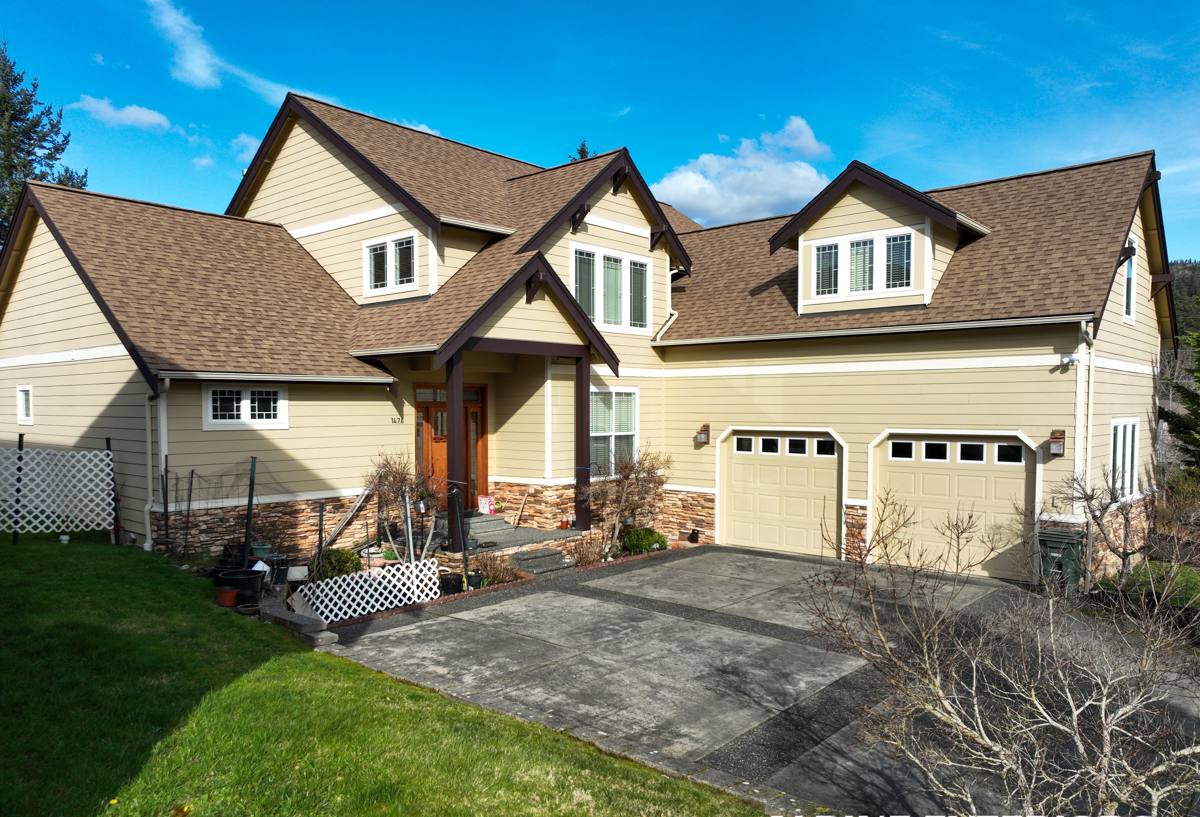
What This Coastal Climate Actually Does to Siding
Salt Air and Corrosion
Salt in the air off the Gulf settles on every exterior surface, including the fasteners, trim, and flashing behind the siding panels, not just the siding itself. Standard fasteners corrode faster in this environment, and a corroded fastener doesn't hold a panel the way it did on day one. This isn't a storm-event problem — it's a slow process that runs every single day a home sits this close to the water.
Wind-Driven Rain and Wall Moisture
Rain in a Gulf coast storm rarely falls straight down. It gets pushed sideways by wind, which means it hits siding laps, trim joints, and window and door transitions from angles a standard installation detail doesn't always account for. If the weather-resistant barrier behind the siding, the lap spacing, or the flashing at penetrations isn't built for that sideways pressure, water works its way behind the cladding rather than shedding off the face of it.
Hurricane Wind Loads
Siding on a Palm Harbor home has to survive direct wind pressure and uplift during storm season, not just look good the rest of the year. That means fastener type, fastener spacing, and panel clearance all have to be installed to meet Florida Building Code's wind-borne debris and fastening requirements for this coastal wind zone — not a generic nailing pattern pulled from a product's minimum instructions.
Year-Round UV
Florida's UV load doesn't ease up seasonally the way it does further north. A factory-cured finish holds its color and its bond far longer under that kind of constant exposure than a coating applied on site after installation, which is one of the bigger reasons finish choice matters as much as the substrate underneath it.
Why We Only Install James Hardie Fiber Cement
Fiber cement as a category already outperforms vinyl and wood-based sidings in a climate like this — it doesn't warp under intense heat the way vinyl can, it doesn't absorb and swell with moisture the way raw or engineered wood products do in a humid coastal environment, and it's non-combustible. But not every fiber cement or engineered-wood product on the market is built the same way, and that's why we standardized on James Hardie rather than treating "fiber cement" as a single interchangeable category.
James Hardie makes an HZ5 product line specifically engineered for humid, high-moisture climate zones like ours, and finishes it with a factory-applied ColorPlus coating that's baked on and warranted against fading and chipping in a way field-applied paint isn't. That combination matters more in Palm Harbor than in a drier, milder climate, because both the moisture resistance and the UV stability get tested constantly here, not occasionally.
It's also why we don't install LP SmartSide, vinyl siding, Cemplank, Allura, primed spruce, or cedar. Each of those has real strengths elsewhere, but every one of them comes with a trade-off that gets magnified by this specific climate — engineered wood products carry more moisture sensitivity at cut edges and panel joints, vinyl can distort under sustained heat and doesn't carry the same wind-load performance in every profile, and raw or primed wood siding needs a maintenance schedule that constant sun and salt air make harder to keep up with. We'd rather stand behind one system we know performs here than install several and hope each one holds up.
What a Correct Fiber Cement Installation Involves
A Water-Managed Wall Assembly
Fiber cement siding is only as good as what's behind it. That means a properly lapped weather-resistant barrier, correct starter strip placement, and a drainage plane that lets any moisture that does get past the face of the siding find its way back out instead of sitting against the sheathing.
Fastening Built for Wind, Not Just for Hold
Fasteners need to be corrosion-resistant given the salt air, and they need to be placed at the spacing and clearance that actually meets the wind requirements for this part of Pinellas County — not just enough to hold the board up on a calm day. Panel clearance from the ground, from roof lines, and from other siding runs also has to be correct so the material isn't sitting in standing water or trapped moisture.
Flashing, Trim, and the Failure Points
Almost every siding failure we get called out to fix traces back to a flashing or trim detail, not the siding panel itself — a missing kick-out flashing above a roofline, a window head flashing that wasn't lapped correctly, a butt joint that wasn't sealed the way the manufacturer specifies. Getting those right the first time is a bigger factor in how long a job lasts than almost anything else in the installation.
Caulk and Touch-Up That Match the System
ColorPlus siding needs a caulk and touch-up system designed to match its factory finish and flex with the material's expansion and contraction, not a generic exterior caulk. Using the wrong sealant at joints is a common shortcut that shows up as visible lines and early failure points within a few years.
Choosing the Right Hardie Profile and Finish for Palm Harbor
James Hardie offers several lap profiles and textures, and the right one for a given home in Palm Harbor depends on the architecture, the exposure, and how much upkeep the homeowner wants going forward.
| Profile | Look | Best Fit in Palm Harbor |
|---|---|---|
| HardiePlank Lap Siding, Cedarmill texture | Traditional wood-grain lap look | Ranch and traditional-style homes wanting a classic exterior without wood upkeep |
| HardiePlank Lap Siding, Smooth texture | Clean, modern lap finish | Newer builds and updated coastal-style homes |
| HardieShingle | Staggered or straight-edge shingle look | Accent gables, dormers, or homes going for a coastal cottage look |
| Board and Batten (HardiePanel) | Vertical panel with raised battens | Modern facades, garage fronts, and accent walls |
| ColorPlus factory finish | Baked-on, warranted color | Recommended for nearly every Palm Harbor job given the UV and salt exposure |
Before You Sign a Siding Contract
- Confirm the product is James Hardie HZ5 (or equivalent climate-zone-rated line), not a generic "fiber cement" substitute
- Ask whether you're getting ColorPlus factory finish or field-applied paint, and understand the warranty difference
- Get the fastener type and spacing plan in writing, specific to your home's wind exposure
- Ask how flashing will be handled at every window, door, and roofline transition — not just a general answer
- Confirm what happens to the old siding and any hidden sheathing or framing issues found underneath it
- Get a written scope that separates material warranty from installation labor warranty
Our Installation Process, Start to Finish
- On-site assessment — we inspect the existing siding, sheathing, and any moisture or rot issues before quoting anything
- Product and profile selection — we walk through the right Hardie line, profile, and ColorPlus color for your home and exposure
- Tear-off and substrate check — old siding comes off and we address any framing or sheathing damage found underneath before covering it back up
- Weather barrier and drainage plane — the water-management layer goes on correctly lapped and sealed before a single course of siding is installed
- Installation — panels are fastened to spec for wind exposure, with correct clearances and lap spacing throughout
- Flashing, trim, and joint sealing — every transition point gets flashed and sealed with materials matched to the system
- Final walkthrough — we go over the finished job with you before calling it done
What Actually Drives Cost on a Palm Harbor Job
We don't quote a job without seeing the house, but these are the factors that tend to move the price up or down on a real Palm Harbor project.
| Factor | Why It Matters Here |
|---|---|
| Substrate condition | Older canal and waterfront homes more often have hidden moisture or rot behind existing siding that needs repair before new siding goes on |
| Home height and stories | Multi-story and steep-roof homes need more access and safety setup, which affects labor time |
| Trim and architectural detail | Homes with more corners, gables, and window openings need more flashing and cutting than a simple rectangular footprint |
| Profile and finish choice | Board and batten, shingle accents, and custom ColorPlus colors cost more than a standard smooth lap in a stock color |
| Full tear-off vs. overlay eligibility | A full tear-off to bare sheathing costs more upfront but is usually the right call on older coastal homes with moisture history |
Why Hiring a Crew That Already Works Palm Harbor Matters
Manufacturer installation guides are written for average conditions, and a home a few blocks from the Gulf in Palm Harbor rarely qualifies as average. A crew that doesn't work this stretch of Pinellas County regularly can get the product right and still miss the details that matter most here — how much lap overlap a wind-driven rain event actually needs versus the code minimum, which fastening pattern holds up under sustained hurricane-force gusts rather than just passing inspection, or when a sealant joint needs extra attention because of constant salt and UV cycling. Those are judgment calls made on the job site, not something a spec sheet decides for you.
We work in and around Clearwater and Palm Harbor regularly, so we're not guessing at how a particular exposure, home style, or lot type tends to hold up here over time. That's the difference between siding that still looks and performs like new after a few hurricane seasons and siding that starts showing problems within a couple of years.
If you're planning a re-side, replacing storm-damaged siding, or just want an honest look at what your Palm Harbor home actually needs, we offer free, no-pressure estimates — use the form below to get a time on the schedule.