 Clearwater Siding
 Why a Deck in Palm Harbor Needs to Be Built Differently
Palm Harbor sits along the Gulf side of Pinellas County, where a lot of homes back up to canals, open water, or wooded lots with heavy tree cover. That mix of waterfront exposure and coastal weather means a deck here works harder than one built inland. Hurricane-force wind gusts test every connection point. Nearly year-round UV breaks down finishes and dries out wood fibers. Wind-driven rain finds its way under flashing that would hold up fine somewhere drier. Salt air works on any exposed metal fastener, hinge, or bracket, slowly, from the day it's installed. A deck built to a generic, one-size-fits-all spec might look fine for the first year or two here — the problems show up later, and they show up in the places that are hardest to fix after the fact.
We build custom decks for Palm Harbor homeowners with all of that in mind from the design stage forward, not as an afterthought once the framing is already up.
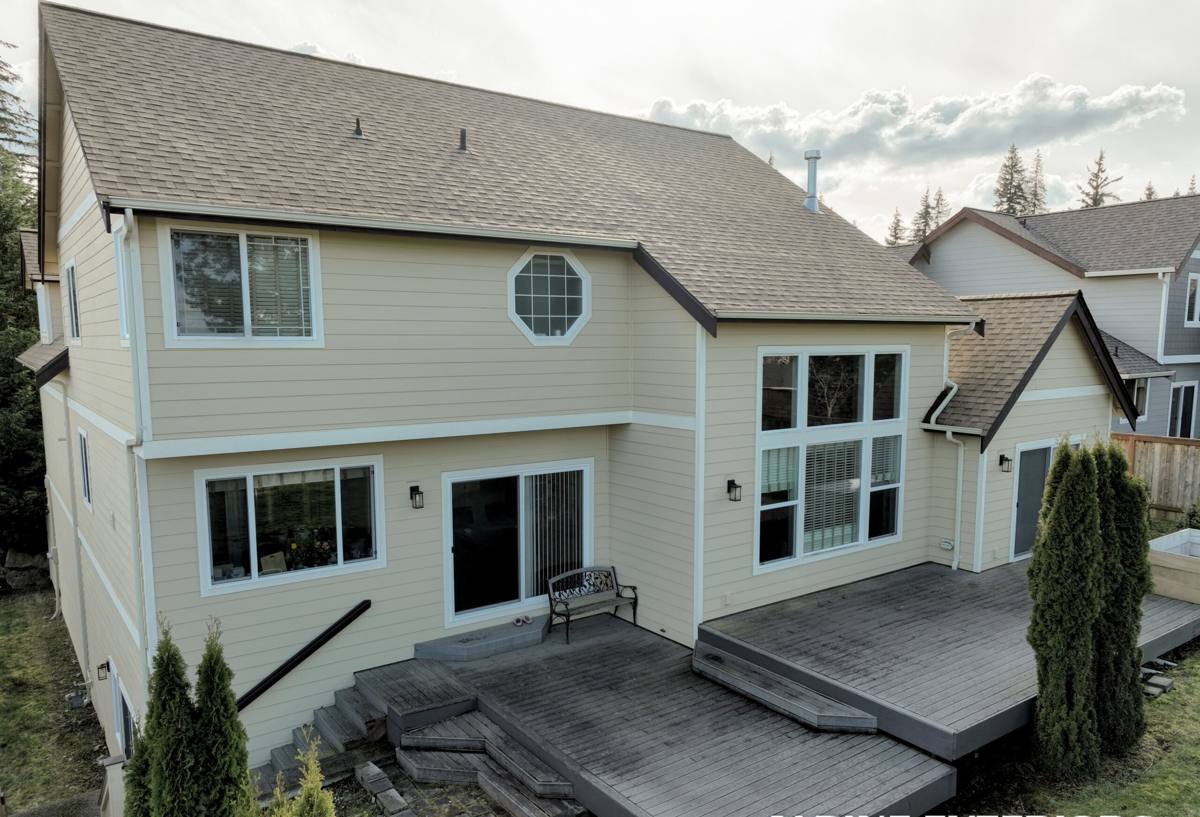
What Palm Harbor Properties Typically Need From a Deck
Waterfront and Canal Lots
Homes on canals or open water deal with the most direct salt exposure and the most consistent wind. Railings, fasteners, and any structural connectors on these decks need to be rated for that environment, and the deck's orientation and height often have to account for dock access, seawalls, or elevation changes at the property line.
Shaded, Tree-Canopy Lots
Palm Harbor also has plenty of established, tree-covered neighborhoods. Shade sounds like an advantage, and it does reduce UV exposure on the decking surface, but it also means more standing moisture, more leaf litter collecting between boards, and slower drying after a storm. Ventilation underneath the deck and drainage at ground level matter more on these lots, not less.
Older Homes vs. Newer Construction
A lot of Palm Harbor housing stock is several decades old. Before we attach anything to an existing structure, we check the condition of the rim joist, sheathing, and framing behind it — a deck is only as good as what it's fastened to, and that's not something you can assume on an older home without looking.
Choosing the Right Decking Material for This Climate
There's no single "best" decking material for every Palm Harbor home — it depends on budget, sun exposure, proximity to water, and how much upkeep you actually want to do. Here's how the common options compare under Gulf Coast conditions:
| Material | Moisture Behavior | UV/Fading | Maintenance | Typical Lifespan Here |
|---|---|---|---|---|
| Pressure-treated wood | Absorbs and releases moisture; prone to cupping if not sealed | Grays without regular finish | Annual cleaning/sealing recommended | Shorter without upkeep, longer with it |
| Capped composite | Resists moisture absorption well | Fade-resistant cap layer, though color can shift slightly over years | Periodic washing, no sealing | Long, with a manufacturer warranty |
| PVC/cellular decking | Essentially unaffected by moisture | Very stable in intense sun | Low; occasional cleaning | Long, higher upfront cost |
| Tropical hardwood | Naturally dense and rot-resistant | Grays without oiling | Regular oiling to hold color | Long if maintained, more labor-intensive |
Our default recommendation for most Palm Harbor homes is a capped composite or PVC board specifically because it doesn't care about the humidity swings and salt air the way wood does. Real wood still has its place — it's often the right call for a homeowner who wants a specific look and is genuinely willing to maintain it — but we won't tell you it's "low maintenance" here, because in this climate it isn't.
Structural Details That Matter More Here Than Inland
Fasteners and Hardware
Standard galvanized hardware corrodes faster near the coast. We use stainless steel or coastal-rated, heavily coated fasteners and connectors on every deck we build in this area, including the parts you won't see once the project is finished. That's where corrosion starts quietly and shows up years later as a loose railing or a failed ledger connection.
Ledger Attachment and Flashing
For decks attached to the house, the ledger board connection and its flashing are the single most important detail on the whole project. Wind-driven rain in this climate will find any gap in flashing that isn't properly lapped and sealed, and a compromised ledger connection is a structural problem, not a cosmetic one.
Footings and Framing
Florida doesn't have a frost line to worry about, but footing depth and sizing still need to match the soil conditions on your specific lot and the loads the deck will carry. We size footings and framing to current Florida Building Code requirements rather than reusing whatever spec was used on the last job.
Uplift and Connection Hardware
Wind uplift, not just lateral wind load, is a real design factor for anything built outdoors in this part of Florida. Post-to-beam and beam-to-joist connections get engineered hardware rated for uplift resistance, not just gravity load, especially on open, more exposed lots.
Permitting and Code Requirements in Pinellas County
Most custom decks in Palm Harbor require a permit through Pinellas County or the applicable local building department, and that's true whether the deck is attached to the house or freestanding. Permitted work means the design gets checked against current Florida Building Code wind-load and structural requirements before construction starts, and the footings and framing get inspected before the decking goes down. Skipping the permit might save time upfront, but it creates real problems later — at resale, with insurance claims after a storm, or if the work doesn't hold up and there's no inspection record behind it. We handle the permitting and inspection scheduling as part of the job, not as a separate hurdle for the homeowner to manage.
Our Custom Deck Process
- Site visit and consultation — we walk the lot, look at how the deck will attach (or whether it should be freestanding), check drainage, sun exposure, and any water or canal proximity.
- Design — layout, decking material, railing style, and stairs get worked out with you based on how you'll actually use the space, not a generic template.
- Permitting — plans go to the local building department; we handle the submission and respond to any plan review comments.
- Construction — footings, framing, decking, and railing, built in that order with inspections at the required stages.
- Final walkthrough — we go over the finished deck with you, including what maintenance it actually needs going forward.
Keeping a Palm Harbor Deck Looking Good Year After Year
Whatever material you choose, a little regular attention goes a long way in this climate. A basic seasonal checklist:
- Sweep off leaves, pollen, and debris regularly, especially on shaded or tree-covered lots where moisture collects between boards
- Rinse salt residue off railings and hardware periodically if you're near open water or a canal
- Check fastener heads and railing connections once or twice a year for any early signs of corrosion or loosening
- Reseal or re-oil real wood decking on the schedule the finish product actually calls for — don't stretch it out
- Clear gutters and downspouts near the deck so runoff isn't draining directly onto or under it
- After any major storm, walk the deck and check railings, stairs, and ledger connections before assuming everything's fine
What Affects the Cost of a Custom Deck in Palm Harbor
We'd rather explain what drives cost up or down than throw out a number that doesn't mean much without seeing your property. In general terms:
| Factor | Effect on Cost |
|---|---|
| Decking material (treated wood vs. composite vs. PVC) | Composite and PVC cost more upfront, less over the life of the deck |
| Elevated or multi-level design | Increases framing, footing, and stair costs |
| Attached vs. freestanding | Attached decks need ledger and flashing work; freestanding decks need more footings |
| Railing type (wood, aluminum, cable) | Ranges from modest to a significant line item depending on material |
| Site access and existing structure condition | Difficult access or repair work behind an old ledger adds labor |
| Waterfront/canal exposure | Coastal-rated hardware and additional corrosion protection add modest cost |
A straightforward, low-elevation deck in easy-access treated wood is going to land on the lower end of any range; an elevated, multi-level composite deck with custom railing on a canal-front lot is going to cost more. We'll walk your specific project through these factors during the estimate rather than quoting off a size alone.
Why Hiring a Crew That Already Works in Palm Harbor Matters
Building decks in this specific part of Pinellas County means dealing with the same building department, the same soil and drainage conditions, and the same salt-and-storm exposure over and over. A crew that already works in Palm Harbor knows what the local inspectors look for, knows which hardware actually holds up on a canal lot versus an inland one, and isn't learning the area's quirks on your project. That local experience shows up in fewer surprises during permitting, fewer callbacks after the first storm season, and a deck that's actually specified for where it's being built instead of wherever the crew normally works.
If you're thinking about a custom deck for your Palm Harbor home, we're happy to walk the property with you and put together a straightforward, no-pressure estimate — just fill out the form below to get started.