 Clearwater Siding
 Why Oldsmar Homes Need Siding Built for This Climate
Oldsmar sits in northeast Pinellas County along the edge of Tampa Bay, which means homes here take on a specific combination of stress that inland Florida properties don't deal with in the same way. You've got humidity that never really lets up, salt-laden air rolling in off the water, intense UV exposure nearly every day of the year, and the very real threat of hurricane-force wind and wind-driven rain during storm season. Any one of these on its own is manageable. All four at once, year after year, is what actually wears siding out — and it's why the material and installation choices that work fine in a drier, cooler climate often fall short here.
We work on homes throughout Oldsmar and the surrounding Tampa Bay area, and the pattern we see repeats: siding that looked fine for the first several years starts showing problems once moisture finds a way behind the surface, or once UV breaks down a finish that wasn't built to take direct Gulf Coast sun. The right product, installed the right way, is the difference between siding that quietly does its job for decades and siding that becomes a recurring maintenance headache.
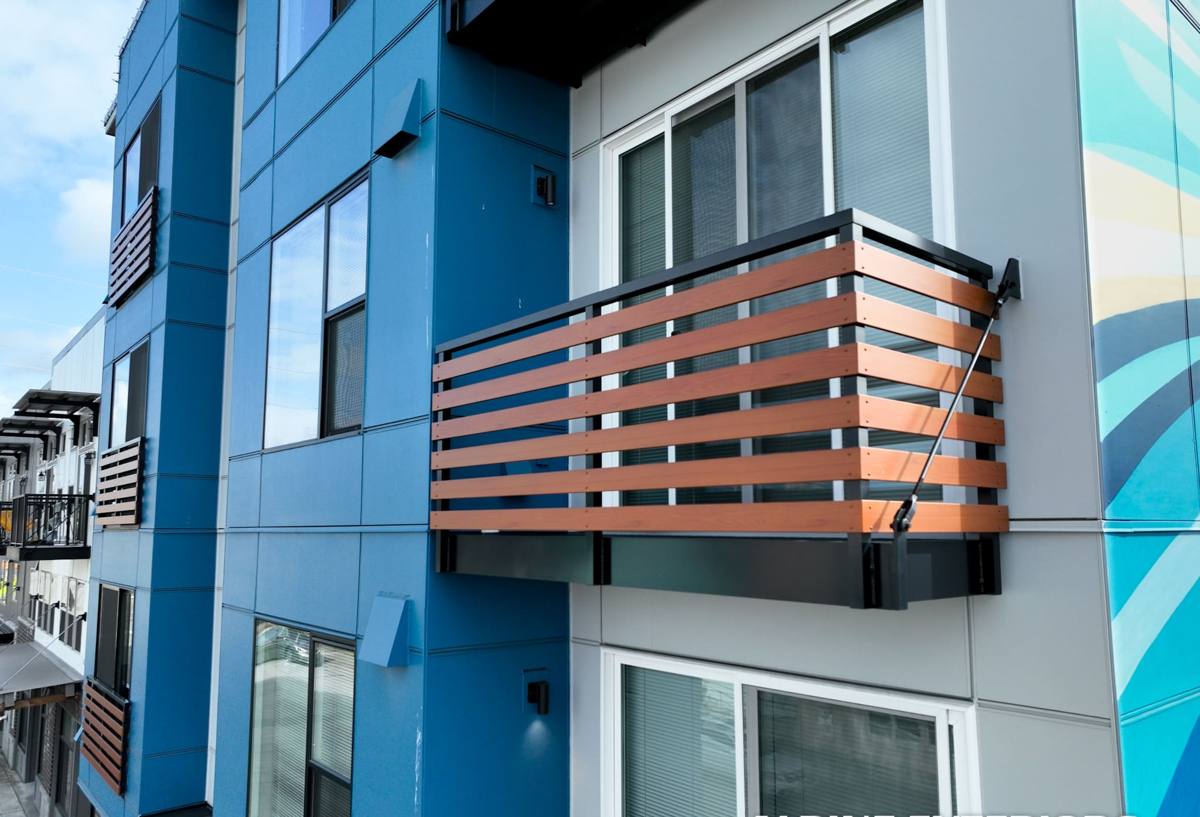
What "Correct" Fiber Cement Installation Actually Involves
Fiber cement siding is only as good as the installation behind it. The board itself is durable, but the details around it — flashing, fastening, clearances, and moisture management — are what determine whether a home stays protected for 30-plus years or starts having problems in year five. A correct installation includes:
- Proper weather-resistive barrier: A continuous, correctly lapped moisture barrier behind the siding, with all penetrations (pipes, outlets, hose bibs) properly sealed before a single board goes up.
- Flashing at every transition: Windows, doors, rooflines, and any place two different materials meet need metal or manufacturer-approved flashing so water is directed out and away from the wall assembly, not trapped behind it.
- Correct fastener type, spacing, and depth: Fiber cement requires specific corrosion-resistant fasteners driven to the manufacturer's spec — too shallow or too deep, and the board can crack, work loose, or fail to seal properly over time.
- Ground and roof clearance: Siding installed too close to grade, a roofline, or a deck surface wicks up moisture and never fully dries, which is a common cause of premature failure regardless of what material is used.
- Factory-finished, field-caulked joints: Butt joints and trim intersections need to be sealed with a compatible, paintable sealant rated for exterior use — not left to rely on the board alone.
None of this is exotic. It's just detail work that takes time and experience to get right on every single board, on every wall, on every home — which is exactly where corners tend to get cut on rushed jobs.
Why We Install Only James Hardie — Not LP SmartSide, Vinyl, or Others
Clearwater Siding Co made a decision to install James Hardie fiber cement siding exclusively, and it's worth explaining why, because it shapes every recommendation we make on an Oldsmar home. This isn't a marketing position — it's a standard we hold ourselves to because of what we've seen hold up in this climate and what hasn't.
Vinyl siding is inexpensive and easy to install, but it's a petroleum-based product that softens and can warp under sustained direct heat, and it's rated for far lower wind resistance than fiber cement in most manufacturer specs — a real consideration for a bay-front community in a hurricane-prone county. Wood and primed spruce products look good on day one, but they require an ongoing paint and caulk maintenance cycle to keep moisture out, and Gulf Coast humidity does not forgive gaps in that maintenance. LP SmartSide is an engineered wood product with real strengths, but as a wood-based product it depends heavily on unbroken factory coating and careful field sealing at every cut edge and joint to keep moisture from reaching the wood strand core over the long term — a maintenance sensitivity we've chosen not to build our business around in a climate this humid.
James Hardie fiber cement is non-combustible, engineered specifically for high-humidity, high-UV climates through its HZ5 product line, and finished at the factory with ColorPlus technology rather than a field-applied paint job — which matters enormously in a market where UV breaks down conventional paint faster than almost anywhere else in the country. It's also backed by a strong, transferable limited warranty, which adds real value if you sell the home down the road. We stand behind it because, installed to spec, it's the product we've seen perform best against everything Tampa Bay throws at a house.
Product and Material Comparison for Coastal Pinellas Conditions
| Material | Wind/Impact Resistance | Moisture Behavior | UV/Fade Resistance | Typical Maintenance |
|---|---|---|---|---|
| James Hardie Fiber Cement | High — rated for high-wind zones | Cement-based, does not rot; engineered for humid climates | Factory ColorPlus finish resists fading | Occasional wash; repaint only if desired, not required |
| Vinyl | Lower — can crack or blow off in high wind | Doesn't rot but can trap moisture behind it if installed loose | Can fade and chalk with sustained sun exposure | Low, but replacement (not repair) is often the only fix |
| LP SmartSide (engineered wood) | Good when intact | Wood-strand core vulnerable if coating or caulking fails | Factory finish holds up but edges need diligent sealing | Moderate — edge and joint inspection is important |
| Primed Wood/Cedar | Moderate | Prone to rot without consistent upkeep | Paint fades and needs recoating on a regular cycle | High — regular painting and caulking required |
How Our Process Works on an Oldsmar Home
We keep the process straightforward because homeowners deserve to know what's happening at each stage, especially with a job that involves removing the existing exterior of the house.
- On-site assessment: We walk the exterior with you, check for existing moisture damage, rot, or prior repair issues, and take accurate measurements for a real quote — not a rough guess.
- Product and color selection: We go through the applicable James Hardie HZ5 board profiles and ColorPlus color options suited to the home's style and the coastal Pinellas environment.
- Tear-off and inspection: Old siding comes off and we inspect the sheathing underneath for any moisture intrusion or damage that needs to be addressed before new material goes up — this is often where hidden problems from a prior installation surface.
- Weather barrier and flashing: A new, continuous moisture barrier goes on, with flashing detailed at every window, door, and roofline transition.
- Installation to manufacturer spec: Boards are fastened, spaced, and clearance-checked according to James Hardie's published installation requirements — not shortcuts to save time.
- Trim, caulking, and finish work: Joints and transitions are sealed with compatible sealant, and trim is finished cleanly around every opening.
- Final walkthrough and cleanup: We walk the finished job with you, and the property is cleared of debris and old material before we consider the job done.
What Affects Cost on a Fiber Cement Siding Job
Every home is different, so we're not going to throw out a number that doesn't mean anything without seeing your house. What we can tell you is what actually drives the cost up or down on a job like this:
| Factor | Why It Matters |
|---|---|
| Home size and wall complexity | More square footage and more corners, gables, and dormers means more board, more cuts, and more labor hours |
| Condition of existing sheathing | Hidden rot or moisture damage found during tear-off adds repair work before new siding can go on |
| Board profile and trim details | Lap siding, shingle-style panels, and custom trim packages carry different material and labor costs |
| Color and finish selection | Standard ColorPlus colors versus custom or premium finishes can shift material pricing |
| Accessibility of the home | Multi-story sections, tight lot lines, or waterfront-adjacent access can affect equipment and labor time |
We give a straightforward, itemized quote after the on-site assessment so you know exactly what you're paying for and why.
Checklist: What to Confirm Before Hiring Anyone for This Job
Whether you go with us or another contractor, this is worth knowing before signing anything:
- Confirm the crew is licensed and insured to do exterior work in Florida, and ask to see current proof — not just a claim.
- Ask specifically whether they are a certified or authorized installer for the fiber cement brand they're quoting, and what training that involved.
- Get the warranty terms in writing — both the manufacturer's product warranty and the contractor's labor warranty, since these are separate things.
- Ask how they handle sheathing repair if rot or moisture damage is found during tear-off, and whether that's priced separately.
- Ask what fastener type and spacing they use, and whether it matches the manufacturer's published installation instructions for your wind zone.
- Ask for a firm timeline and how they handle exposed sheathing if weather interrupts the job mid-installation — a real concern during Florida's storm season.
Why Local Experience in Oldsmar Matters
Fiber cement installation isn't fundamentally different from one Pinellas County neighborhood to the next, but local experience still matters in practical ways. A crew that regularly works homes along the Tampa Bay shoreline knows what wind-load and flashing details actually hold up here, understands the permitting process with the applicable county and municipal offices, and has already seen how the combination of humidity, salt air, and sun exposure plays out on real houses over time — not just in a manufacturer's spec sheet. That experience shows up in the small decisions made on-site: where extra flashing gets added even if it's not the bare minimum, how joints get sealed heading into storm season, and how tear-off is scheduled around weather rather than around convenience.
Long-Term Maintenance and What to Expect After Installation
One of the real advantages of a correctly installed James Hardie system is how little it asks of you afterward. There's no repainting cycle required to keep water out, since the ColorPlus finish is baked on at the factory and covered under its own warranty terms. Normal upkeep is limited to an occasional rinse to clear salt residue and pollen buildup, keeping gutters clear so water isn't dumping directly onto a wall section, and a visual check after major storms for any dislodged trim or caulking that needs attention. That's a meaningfully lighter maintenance burden than a product that depends on a repaint-and-recaulk schedule to keep performing, which matters to homeowners who'd rather spend a Saturday doing anything other than exterior maintenance.
If you're weighing a siding project on an Oldsmar home, we're happy to walk the exterior with you, look at what's actually going on with your current siding, and put together a clear, no-pressure estimate. There's no obligation — just a straight answer about what your home needs. The form below gets you started.