 Clearwater Siding
 Dunedin Sits Right on the Edge of the Weather
Dunedin's charm comes from being close to the water — the causeway, the marina, the bike trail that hugs the coast. That same closeness to the Gulf is exactly what shortens the life of ordinary siding. Homes here take a harder hit from wind-driven rain, salt-laden air, and sun exposure than homes even a few miles inland in Clearwater. If you're planning a siding project in Dunedin, the material and the installation both need to be chosen with that specific exposure in mind, not a generic Florida spec.
This page is about one job: installing James Hardie fiber cement siding correctly on a Dunedin home. Not a general overview of siding materials, not a citywide pitch — the specific conditions this neighborhood deals with, what a correct installation looks like here, and why it matters that the crew on your roofline already knows this stretch of Pinellas County.
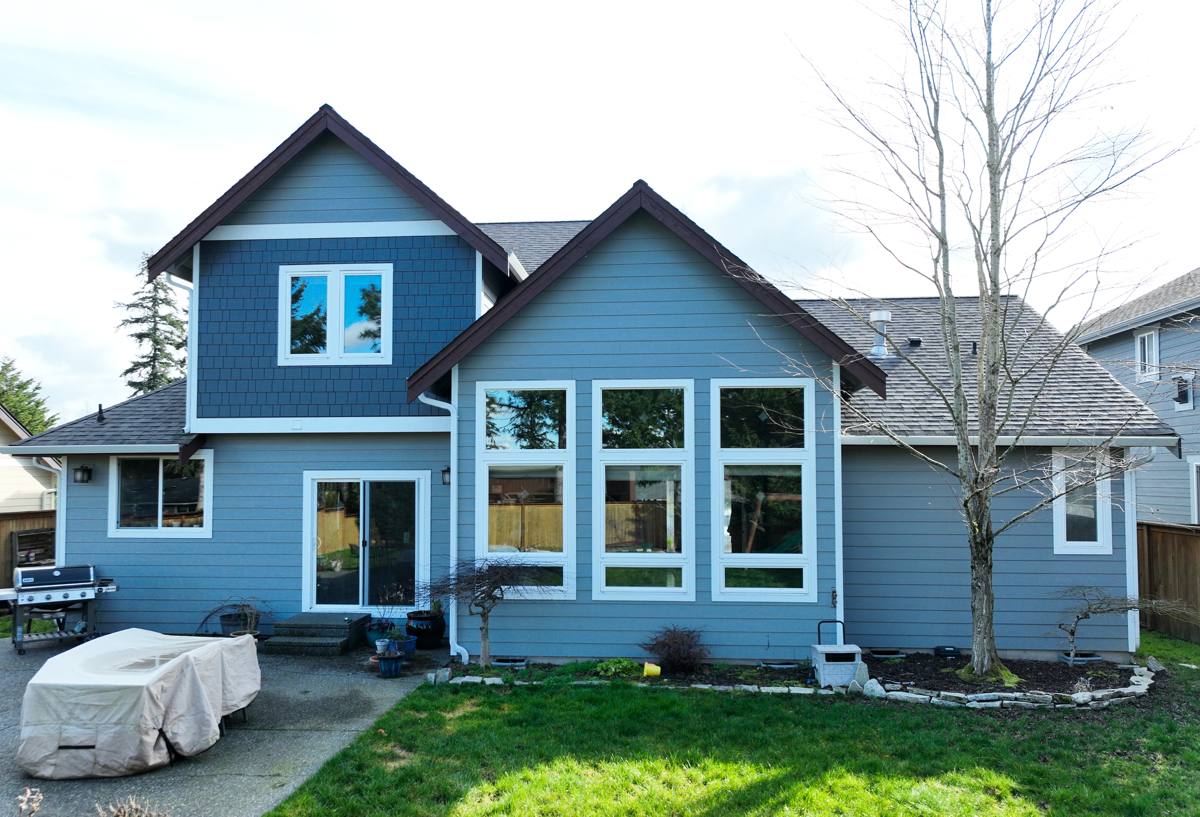
What Dunedin's Climate Actually Does to Siding
Wind
Dunedin sits in a hurricane-exposed corridor. Even outside of a named storm, sustained coastal wind puts constant pressure and suction on exterior wall systems — pulling at fasteners, working joints loose, and testing every seam in a siding installation year after year. A panel that's face-nailed instead of properly fastened to manufacturer spec, or trim that's caulked instead of correctly flashed, is the piece that fails first when a real wind event comes through.
UV load
Florida sun is intense and it's relentless nearly twelve months a year. Paint-grade siding and field-applied finishes chalk, fade, and break down faster here than almost anywhere else in the country. A factory-applied finish engineered for UV exposure isn't a luxury upgrade in Dunedin — it's the difference between a paint job that looks tired in three years and one that still looks right after a decade.
Salt air
Proximity to the Gulf means airborne salt settles on every exterior surface, including siding, trim, and fasteners. Salt accelerates corrosion in anything metallic and it degrades material that isn't built to resist moisture intrusion. This is one of the biggest reasons material choice matters more here than in a landlocked market.
Wind-driven rain
Florida storms rarely fall straight down. Wind pushes rain sideways and up under laps, trim, and penetrations that would stay dry in a calmer climate. Any gap in the water-management plan behind the siding — a missed flashing detail, a skipped house wrap seam, a butt joint that isn't backed — becomes the entry point for moisture that can sit against sheathing and framing long after the rain stops.
Why We Install Only James Hardie Fiber Cement
We made a decision to standardize on James Hardie fiber cement siding across every job we take on, including here in Dunedin. That's not a brand preference — it's a response to exactly the four conditions above. Hardie's fiber cement is non-combustible, dimensionally stable in heat and humidity swings, and backed by a factory-applied ColorPlus finish designed to hold up under sustained UV exposure. James Hardie also engineers specific product lines for high-exposure climates like ours, which we'll get into below.
We don't install vinyl, LP SmartSide, Cemplank, Allura, or unfinished wood siding. Each of those has legitimate uses in other markets, but for a Gulf-adjacent property in Dunedin, we've found the trade-offs — moisture sensitivity, finish durability, or long-term maintenance burden — aren't worth it when a better-engineered option exists. Standardizing on one product also means our crew installs it the same correct way, every time, instead of switching techniques between different systems.
HardieZone: Matching the Product to This Exposure
James Hardie engineers its siding by climate zone, and Dunedin falls squarely into the HZ10 zone — Hardie's designation for humid, high-moisture, high-UV regions like the Gulf Coast. HZ10 products are formulated with that moisture and humidity exposure in mind, which matters more here than in a drier or more temperate HZ5 zone. Specifying the correct zone product isn't a minor detail — it's part of what makes the installation correct for this address.
| Climate Factor | What It Does to Siding Over Time | How the Job Is Built to Handle It |
|---|---|---|
| Sustained coastal wind | Loosens improperly fastened panels, opens joints | Fastener placement and spacing to Hardie spec, proper blocking behind seams |
| Year-round UV | Fades and chalks field-applied paint finishes | Factory-applied ColorPlus finish, not job-site painted siding |
| Salt air | Corrodes fasteners, degrades vulnerable materials | Corrosion-resistant fastener selection, HZ10-rated Hardie product |
| Wind-driven rain | Forces water under laps and trim | Correct water-resistive barrier, flashing at every penetration and joint |
What a Correct Installation Actually Involves
The siding material is only half the job. Most siding failures we're called out to inspect in this area trace back to installation shortcuts, not the product itself. A correct Hardie installation on a Dunedin home involves:
- Removing old siding down to the sheathing and inspecting for existing moisture damage before anything new goes up
- Repairing or replacing any compromised sheathing — covering over rot locks in a problem, it doesn't solve it
- Installing a continuous, properly lapped water-resistive barrier with no gaps at seams
- Flashing every window, door, and penetration so water sheds outward, not inward
- Fastening Hardie panels per manufacturer spec — correct nail type, spacing, and depth, not whatever is fastest
- Backing and sealing butt joints correctly rather than relying on caulk alone to keep water out
- Maintaining proper clearance between siding and grade, roofing, and hardscape per Hardie's installation instructions
Skip any one of these and the siding may look fine for a season or two before the real problem shows up — usually as moisture damage behind the wall, which costs far more to fix than it would have to do the job right the first time.
Our Process on a Dunedin Project
Assessment
We start with an on-site walk of the exterior, checking existing siding, trim, and any visible signs of moisture intrusion or wind damage. We'll be honest about what's actually needed versus what can wait.
Scope and product selection
We spec the correct HZ10 James Hardie product line, profile, and factory finish for the home, and walk through the plan in plain terms before any work begins.
Tear-off and inspection
Old siding comes off, sheathing gets inspected, and any structural or moisture issues are addressed before the new water-resistive barrier goes on — not papered over.
Installation
Panels, trim, and flashing go in to Hardie's published specifications, built for the HZ10 exposure this property actually faces.
Final walk-through
We walk the finished job with you, point out what was done and why, and make sure everything is sealed and finished correctly before we consider it complete.
Longevity and Maintenance in a Coastal Climate
Correctly installed James Hardie siding with a factory ColorPlus finish is built to go a long time between repaints — often a decade or more — even under Dunedin's UV load, provided it's kept clean of salt buildup and organic growth. Maintenance is modest compared to wood or vinyl: periodic rinsing to clear salt residue, prompt attention to any caulk or trim wear at joints, and keeping irrigation and sprinklers from constantly wetting the base of the wall. None of that is complicated, but it does need to happen — no siding product is truly maintenance-free in this climate, Hardie included.
Why It Matters That the Crew Already Works Dunedin
A crew that installs siding across a range of inland and coastal Florida markets without distinguishing between them will often use the same generic approach everywhere. A crew that regularly works Dunedin and the surrounding Clearwater coastline already accounts for the wind exposure, the salt air, and the storm patterns specific to this stretch of Pinellas County — because they've seen what happens when those details get skipped. That local familiarity shows up in the small decisions: fastener choice, flashing detail, product zone selection — the parts of the job that aren't visible once the siding is up but determine how it holds up over the next fifteen or twenty years.
Questions Worth Asking Before You Hire
- Is the siding product rated for this specific climate zone, or just generically "Florida-rated"?
- Will the crew inspect and repair sheathing before installing new siding, or install over existing conditions?
- What fastener type and spacing will be used, and does it match manufacturer specifications?
- How will water-resistive barrier and flashing be handled at joints, windows, and penetrations?
- Does the crew have direct, regular experience working in Dunedin or comparable coastal Pinellas County neighborhoods?
- What does the manufacturer's warranty actually cover, and is it transferable if you sell the home?
If your Dunedin home's siding is aging, showing wear, or you're simply planning ahead of the next storm season, we're happy to take a look and give you a straightforward, no-pressure estimate — no obligation, just an honest read on where things stand and what correct James Hardie installation would involve for your home.