 Clearwater Siding
 Belleair Bluffs Sits Right Where Florida's Climate Gets Hardest on Windows
Belleair Bluffs is a small community wedged between Largo and Clearwater in Pinellas County, and it earns its name honestly — much of it sits on elevated ground overlooking Clearwater Harbor and the Intracoastal Waterway. That elevation and open water exposure is a selling point for the view, but it's also exactly the combination that wears out windows faster than in more sheltered inland neighborhoods. Salt-laden air off the water corrodes hardware and fasteners. Wind that has a clear run across open water hits window walls with more force and more sustained pressure during storms. Add year-round UV that doesn't let up in any season, and you've got a set of conditions that will find every weak point in a window — the seal, the frame, the glass, and the flashing behind it.
None of that means every window in Belleair Bluffs needs to be replaced tomorrow. It does mean that when a window does need replacing, "whatever's cheapest at the box store" is not a good long-term plan for this specific stretch of Pinellas County. Custom windows, sized and specified for the actual house and its actual exposure, are what hold up here.
What "Custom" Actually Means for a Window Job
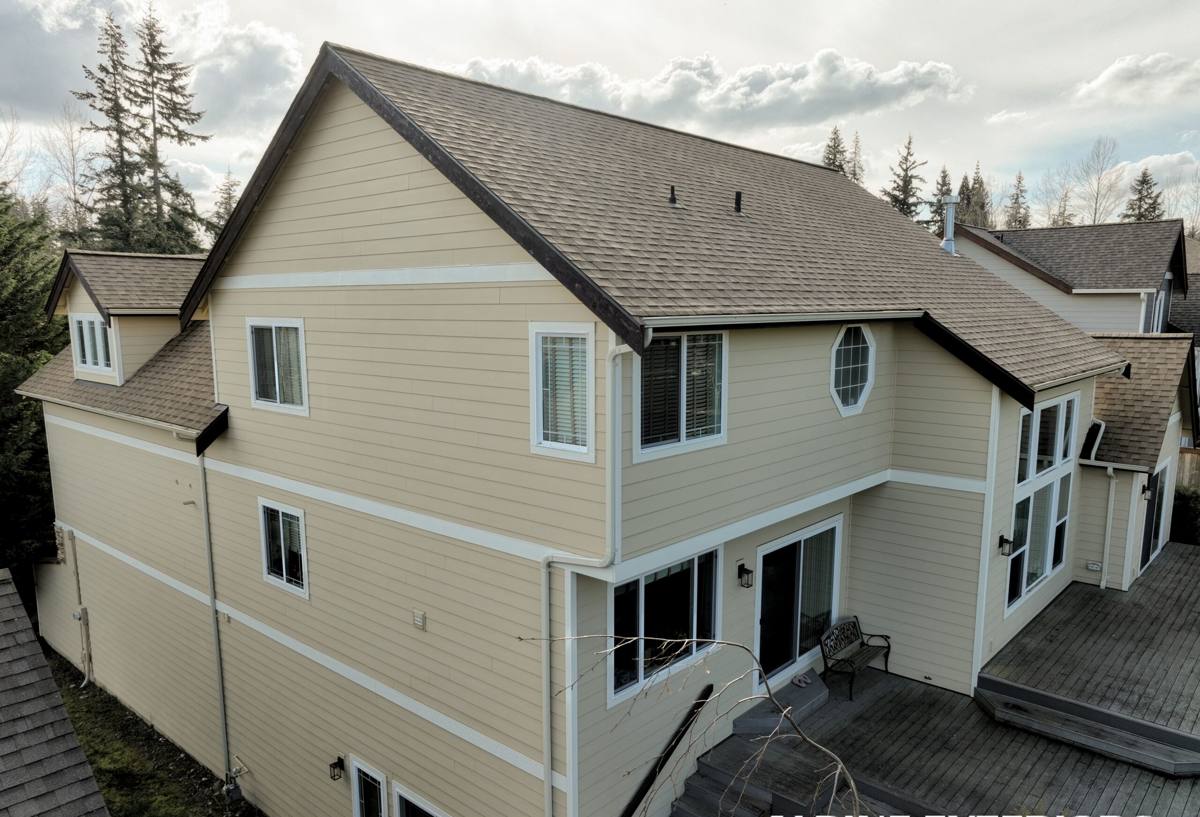
"Custom" doesn't mean expensive for its own sake — it means the window is built to fit the opening and the house in front of us, instead of forcing the house to fit a stock size. Homes in this part of Clearwater span a wide range of ages and construction styles, and a lot of the older housing stock has openings that don't match the standard sizes big retailers stock off the shelf. When a stock-sized window gets forced into a non-standard opening, installers end up building out the frame with extra material, packing gaps with foam or caulk that was never meant to be a structural or weatherproofing layer, or trimming the opening in ways that weaken it. That's how you get a window that looks fine for a year or two and then starts leaking air, water, or both.
A custom approach means we measure the actual rough opening, account for the wall assembly behind it (stucco, siding, block, wood frame), and select or fabricate a window that matches those dimensions and that exposure. It also means matching the look of the house — older Florida homes in this area often have proportions and trim details that a generic "contractor grade" replacement window doesn't respect, which can hurt curb appeal even when the window itself performs fine.
Why This Matters More Near the Water
Gaps and shortcuts that might just be a minor energy loss in an inland home become water intrusion points here. Wind-driven rain during a tropical storm or hurricane doesn't fall straight down — it gets pushed sideways and upward under eaves and into any gap in a window assembly that isn't properly flashed and sealed. A window that's slightly the wrong size and packed in with sealant alone is one of the more common reasons we find hidden moisture damage behind window trim on older coastal-adjacent homes.
Frame Material and Glass — What Actually Holds Up in This Exposure
There's no single "best" window for every house, but there are real trade-offs worth understanding before you choose. Here's how the common options actually perform under Belleair Bluffs conditions specifically — salt air, high UV, and wind exposure from open water.
| Frame Material | Salt Air / Corrosion Behavior | UV / Sun Durability | Maintenance | General Cost Tier |
|---|---|---|---|---|
| Vinyl | Doesn't corrode; hardware inside still needs to be corrosion-rated | Quality varies — cheaper vinyl can yellow or warp over years of direct sun | Low | Lower |
| Aluminum | Prone to pitting and oxidation near salt air unless properly coated/anodized | Holds up well structurally, finish can chalk over time | Moderate | Lower–Mid |
| Fiberglass | Excellent — inert to salt corrosion | Very stable, minimal expansion/contraction | Low | Mid–Higher |
| Wood / Wood-clad | Needs a sound exterior clad or coating system to keep salt and moisture off the wood core | Requires upkeep to protect finish | Higher | Higher |
Glass matters as much as frame. For this area we default to laminated glass in impact-rated assemblies where it fits the budget and the house — it holds together under impact instead of shattering outward, and it does double duty cutting UV transmission and outside noise. A Low-E coating on top of that cuts down on solar heat gain, which matters given how much direct sun this part of Florida gets in every season, not just summer.
Impact-Rated Windows vs. Standard Glass with Shutters
Homeowners often ask whether they need true impact-rated windows or whether standard glass with separate hurricane shutters is enough. Both are legitimate approaches and both can meet Florida's coastal building requirements — the right answer depends on the house, the budget, and how much you want to rely on someone being home (or a crew being available) to put shutters up before a storm.
- Impact-rated windows: protection is built into the window itself, no separate action needed before a storm, generally the higher upfront cost.
- Standard windows plus code-rated shutters: lower upfront window cost, but requires the shutters to actually be deployed in time, and shutters have their own maintenance and storage needs.
- Mixed approach: some homeowners choose impact glass for the most exposed or hardest-to-shutter elevations and rely on shutters elsewhere.
We'll walk through this trade-off honestly during the estimate rather than pushing whichever option carries a bigger price tag.
What a Correct Installation Involves
The window product only performs as well as the installation around it. A correct job includes several steps that are easy to skip and impossible to verify once trim goes back on:
- Confirming the rough opening is square, sound, and free of hidden rot or moisture damage before the new window goes in
- Proper flashing integrated with the wall's water management system — not just caulk over a gap
- Correct shimming so the frame isn't racked, which affects both the seal and how smoothly the window operates for years to come
- Fastening per the product's Florida product approval, not a generic fastener schedule
- Sealant appropriate to the substrate (stucco, wood trim, siding) and rated for sustained sun and salt exposure
- Maintaining weep paths so any incidental water that does get past the outer seal can drain back out instead of pooling in the frame
Any one of these done wrong can lead to a window that looks fine at handoff and fails quietly over the next few years — usually as a soft spot in the wall, a musty smell, or a window that suddenly won't close right.
Our Process, Start to Finish
- On-site assessment — we measure actual openings, check the condition of the surrounding wall, and look at which elevations take the most sun and wind on your specific lot.
- Product selection — we go over frame material, glass, and impact rating trade-offs based on your home, your budget, and how exposed that side of the house is.
- Permitting — window replacement in Pinellas County generally requires a permit and code-compliant product approval documentation; we handle that paperwork rather than leaving it to you.
- Removal — old windows come out carefully so we can check the opening underneath for rot, moisture staining, or pest damage before anything new goes in.
- Installation — flashing, shimming, fastening, and sealing done to the product's approved specifications.
- Inspection and walkthrough — we confirm operation, seal quality, and finish work with you before calling the job done, and coordinate any required county inspection.
Signs It's Time to Replace, Not Repair
Not every window problem means full replacement — some issues are just hardware or sealant. But these are the signs we see most often on homes in this stretch of Clearwater where a repair won't hold:
- Fogging or a visible haze between panes on double-glazed windows (the seal has failed and can't be fixed, only replaced)
- Aluminum frames that are pitted, chalky, or corroded around the hardware and fasteners
- Windows that are difficult to open, close, or lock, especially after they've swollen or stuck following humid stretches
- Noticeable drafts or a whistling sound during windy conditions
- Soft trim, staining, or a musty smell in the wall or sill around the window
- Single-pane glass still in place on a home that otherwise has updated windows elsewhere
- Rising cooling bills that track with one particular room or elevation of the house
Why a Crew That Already Works Belleair Bluffs Is Worth Something
Window replacement is code-driven, and coastal Pinellas County code isn't identical to what a crew coming from further inland deals with every day. A contractor who regularly works this specific area already understands the wind exposure categories that apply to bluff and waterfront-adjacent lots, has a working relationship with the local permitting process, and has seen firsthand how the housing stock in this part of Clearwater tends to be built — which openings are non-standard, which walls hide moisture problems, and which elevations take the worst of the weather off the water. That local familiarity shows up less in the sales pitch and more in the details: the flashing detail that gets it right the first time, the permit that doesn't bounce back for missing documentation, the honest read on whether a window needs full impact glass or would do fine with shutters.
If you're weighing window replacement for a home in Belleair Bluffs, we're happy to come take a look, measure the actual openings, and talk through what makes sense for your house and your budget — no pressure, no pushy upsell. Use the form below to request a free estimate.