 Clearwater Siding
 Building Decks That Actually Hold Up in Largo
Largo sits inland enough from the Gulf to avoid the worst of the direct salt spray that Clearwater Beach and the barrier islands deal with, but don't let that fool you. This is still Pinellas County — humidity sits high most of the year, afternoon thunderstorms roll through on a near-daily schedule in summer, and the sun here is strong enough to break down materials that would last decades up north. Add in the occasional tropical system with sustained wind and wind-driven rain, and you've got a climate that's genuinely tough on outdoor structures. A deck that's framed, fastened, and finished the way it should be will handle all of that without drama. One that isn't will show problems within a year or two — and by "problems" we mean soft spots, popped fasteners, cupped boards, and rot where nobody's looking until it's a safety issue.
We build and replace decks for homeowners throughout the Largo area as part of our exterior work, and we approach decks the same way we approach siding and roofing: get the structure and moisture management right first, then worry about how it looks. A deck that looks good on install day but wasn't built for this climate is a deck you'll be calling someone about in three years.
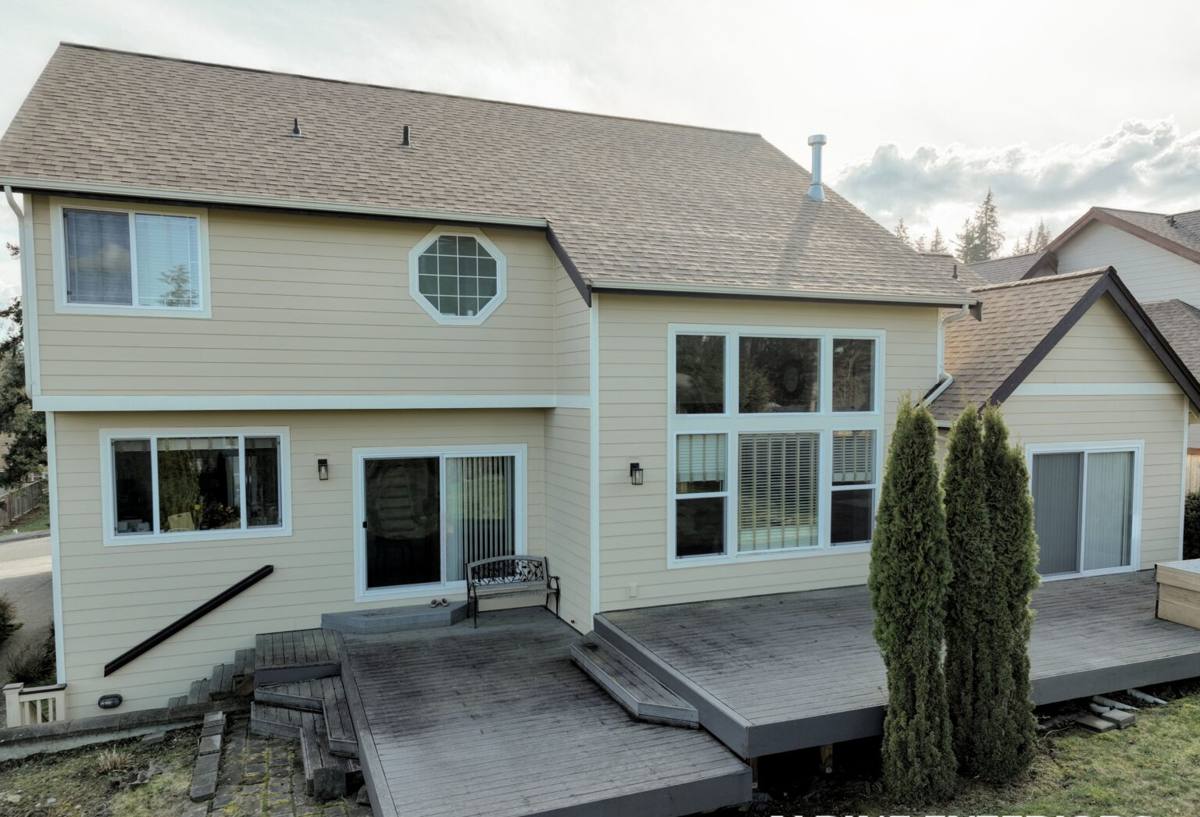
What Largo's Climate Actually Does to a Deck
Sun and UV
Florida sun is relentless on anything outdoors. Wood decking without proper finish maintenance will gray, split, and splinter faster than the same product would in a milder climate. Composite and PVC decking handle UV much better, but even those products vary — cheaper composites can fade or chalk over time, which is one of the reasons product selection matters more here than it would somewhere with a gentler climate.
Humidity and Wind-Driven Rain
Pinellas County humidity means wood never fully dries out between rain events for much of the year. That's exactly the condition that rot, mold, and fastener corrosion need to take hold. Wind-driven rain during storms also pushes moisture into places a calm rain never would — under railings, into end-grain cuts, behind ledger boards. If those areas aren't sealed or flashed correctly at the time of construction, water finds its way in and stays there.
Wind Load
Largo doesn't get hit as hard as the immediate coastline, but it's still within range of tropical storm and hurricane-force wind events most years. A deck attached to your house, or a freestanding structure with railings and stairs, needs framing and fastening that accounts for real wind load — not just gravity. This is a building code issue as much as a durability one.
Salt Air
Even a few miles inland, Gulf air carries salt content that accelerates corrosion on fasteners, brackets, and any exposed metal hardware. Standard hardware store screws and nails will rust and weaken well before a coastal-rated fastener would. It's a small line-item cost that makes a real difference in how long a deck's connections stay tight.
What a Correctly Built Deck Involves
A deck is a structure first and a finish surface second. Getting the order of operations right is what separates a deck that lasts 20+ years from one that needs major repair inside five.
Ledger Attachment and Flashing
If the deck attaches to the house, the ledger board connection is the single most important detail on the whole project. It has to be properly flashed to keep water from getting behind the siding or into the house framing, and it has to be lag-bolted or through-bolted into structural framing — not just the exterior sheathing. This is also the point where deck failures most often start, because it's easy to do wrong and hard to inspect once it's covered up.
Footings and Framing
Post footings need to be sized and set to local frost-free, load-bearing standards (frost isn't a Florida concern, but soil-bearing capacity and hurricane wind uplift are). Joist spacing, beam sizing, and post spacing all need to match the actual span and load — not just "what's typical." We use joist hangers and structural screws rated for exterior and coastal-adjacent exposure rather than standard interior-grade hardware.
Decking Material
This is the choice most homeowners want to talk about first, and it deserves real thought given what Largo's climate does to outdoor materials over time.
Railings and Stairs
Pinellas County has specific code requirements for railing height, baluster spacing, and stair geometry — these aren't optional style choices, they're safety code, and they get inspected. We build to code as a baseline, then work with you on the railing style and material that fits the house.
Fasteners and Hardware
Every screw, bolt, hanger, and bracket on a deck in this climate should be stainless steel or a coated exterior/coastal-rated product. This is one of the areas where corner-cutting is invisible on install day and expensive five years later.
Decking Material Comparison
| Material | UV/Sun Performance | Moisture Behavior | Maintenance | Typical Lifespan |
|---|---|---|---|---|
| Pressure-treated wood | Grays and can splinter without regular sealing | Absorbs and releases moisture; prone to cupping in humid climates | Sealing/staining every 1-2 years | 10-15 years with upkeep |
| Composite decking | Good on quality products; cheaper lines can fade or chalk | Doesn't absorb moisture the way wood does; resists rot | Occasional cleaning, no sealing | 20-30 years |
| PVC/capped polymer decking | Best UV stability of the common options | Fully moisture-resistant, won't rot or swell | Cleaning only | 25-30+ years |
| Tropical hardwood (ipe, etc.) | Very good, naturally dense | Excellent moisture resistance | Periodic oiling to maintain color; will gray if left untreated | 25+ years |
There's no universally "correct" answer here — it's a trade-off between upfront cost, maintenance tolerance, and how long you plan to be in the house. What we won't do is put a low-grade composite or unrated hardware on a deck in this climate just to hit a lower price point, because that's the combination that leads to callbacks and disappointed homeowners.
Our Process for a Largo Deck Project
- On-site assessment: We look at the attachment point (if any), the ground/soil conditions, drainage around the area, sun exposure, and how the space will actually be used.
- Design and material selection: We talk through decking material, railing style, footprint, and layout based on your budget and how you use the space — entertaining, grilling, a quiet spot off the back door, pool deck, whatever it is.
- Permitting: Deck construction in Pinellas County typically requires a permit and inspection. We handle that process rather than leaving it on you.
- Structural build: Footings, framing, ledger flashing, and structural connections go in first, built to code for wind and load.
- Decking, railing, and stairs: Surface material and railings go on once the structure is inspected and sound.
- Final walkthrough: We go over the finished deck with you, including any maintenance the specific material needs going forward.
Repair, Replace, or Rebuild?
Not every deck problem means starting over. If the framing and footings are sound and the issue is surface-level — worn boards, a failing railing, discolored wood — repair or a decking swap can make sense. But in Florida's climate, once moisture has reached the framing or ledger connection, patching the visible symptom without addressing the structure underneath just delays the real fix. Signs that point toward a rebuild rather than a repair:
- Soft, spongy, or visibly rotted framing members, not just surface boards
- Rust staining or visibly corroded fasteners and hardware
- A ledger board connection that was never properly flashed
- Railings or stairs that don't meet current code (common on older decks)
- Footings that are undersized, cracked, or were never properly set
- Persistent movement, bounce, or separation between the deck and the house
We'll tell you honestly which category your deck falls into rather than pushing a full rebuild when a targeted repair would genuinely do the job.
Maintenance That Actually Matters Here
Whatever material you choose, a few habits go a long way in Pinellas County's climate:
- Keep gutters and downspouts directing water away from deck footings, not onto them
- Clear debris from between boards regularly — trapped organic material holds moisture against the surface
- Check railings and stair connections for looseness once or twice a year, especially after storm season
- If you have wood decking, stay on top of the sealing schedule — skipping a year in this humidity shows fast
- After any major storm, do a quick visual check for loose boards, hardware, or railing movement
Why Hire a Crew That Already Works in Largo
Deck construction here isn't the same job it would be in a drier, milder climate. A crew that mostly builds decks in other parts of the country may not default to coastal-rated hardware, may not think hard about ledger flashing in a high-humidity environment, and may not be familiar with Pinellas County's permitting and inspection process. We work exteriors throughout the Clearwater and Largo area — siding, roofing, and decks — so we're already thinking about how water moves around a house, how salt air affects hardware choices, and what actually survives a Florida summer and storm season. That's not a marketing point, it's just what the work requires here.
Get a Straightforward Estimate
If you're planning a new deck or dealing with one that's showing its age, we're happy to come take a look and give you an honest read on what it needs — no pressure, no upsell. Fill out the form below to get a free estimate for your Largo property.