 Clearwater Siding
 Composite Decking Built for Coachman Ridge, Not Just "Florida"
Coachman Ridge sits inland enough from the Gulf to feel a little removed from beach weather, but it still gets everything Pinellas County throws at an outdoor structure: long stretches of intense UV, sudden wind-driven downpours, thick summer humidity, and salt-laden air that travels farther inland than most homeowners expect. A deck built here has to survive all of that every single year, not just the occasional bad storm season. This page is about one job done right in this one neighborhood: composite decking, installed the way Clearwater's climate actually demands.
A lot of decking content online is generic — written for a national audience and stripped of anything specific to a region. We wanted to write something useful instead: what Coachman Ridge homes need from a deck, what correct installation looks like here, and why a crew that already works this neighborhood catches problems that an out-of-town installer might miss.
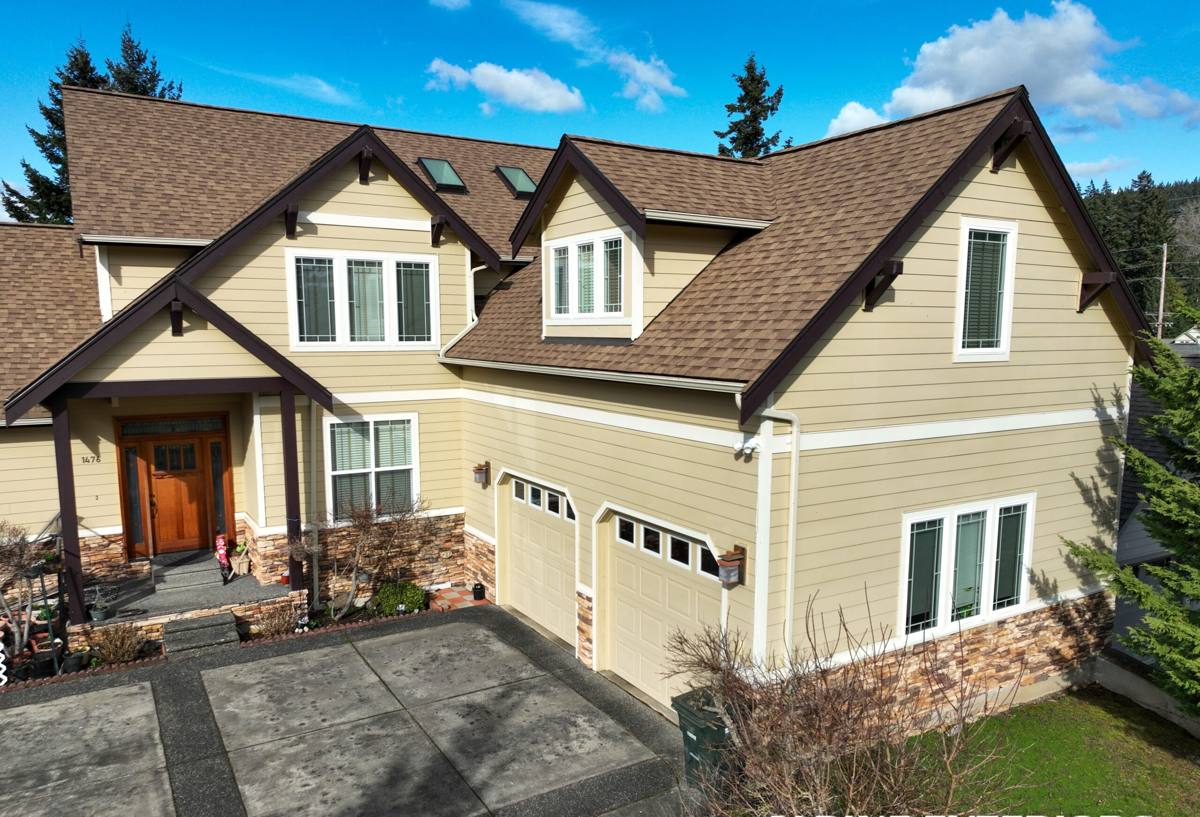
What Clearwater's Climate Actually Does to a Deck
UV and Heat
Central Florida sun is intense nearly year-round. On wood decking, UV breaks down surface fibers, causing graying, splintering, and checking within a few seasons even with regular sealing. Composite decking is engineered with UV inhibitors and a capped outer layer specifically to resist this fading and surface breakdown — but not every composite product handles it equally well, which is why brand and cap-type selection matters more here than in cooler climates.
Wind-Driven Rain and Humidity
Pinellas County doesn't just get rain — it gets rain that comes in sideways during summer thunderstorms and tropical systems, driving moisture into joints, fastener holes, and end cuts that a vertical-rain climate would rarely touch. Combined with year-round humidity, this creates conditions where any gap in sealing or flashing becomes a slow-moisture entry point. Composite boards resist water absorption far better than wood, but the framing underneath, the fasteners, and every cut edge still need to be treated correctly, or moisture problems show up at the substructure even when the decking surface looks fine.
Salt Air
Coachman Ridge is inland relative to the immediate coastline, but salt air still travels on Gulf breezes and settles on exposed metal. Over time it accelerates corrosion on fasteners, brackets, and any hardware that isn't rated for coastal exposure. This is one of the most commonly overlooked details in decking installs — the boards get all the attention, but under-spec hardware is often what fails first.
Hurricane-Force Wind Loads
Any structure attached to a Clearwater home needs to be built with real wind load in mind, not just aesthetics. Ledger board attachment, joist hangers, post connections, and railing anchoring all need to meet the structural expectations of a hurricane-prone county, not the minimum a mild-climate build would use.
Why Composite Decking Fits This Neighborhood
We install composite decking in Coachman Ridge because it holds up to this specific mix of conditions better than traditional wood, with fewer years of maintenance burden. That doesn't mean it's the right call for every homeowner or every budget — it's a trade-off, and we'll walk through it honestly.
| Factor | Pressure-Treated Wood | Composite Decking |
|---|---|---|
| UV / fading resistance | Grays and roughens within a few seasons without upkeep | Capped boards resist fading much longer |
| Moisture behavior | Absorbs water, can warp, cup, or rot at fastener points | Low absorption; core still needs correct drainage design |
| Maintenance | Annual sanding, staining, or sealing recommended | Periodic cleaning; no sealing or staining required |
| Upfront cost | Lower material cost | Higher material cost |
| Long-term cost | Ongoing labor and material for upkeep | Lower lifetime maintenance spend |
| Installation sensitivity | More forgiving of minor framing imperfections | Requires precise spacing and fastening per manufacturer spec |
We won't tell a homeowner wood is a bad choice — it isn't, and plenty of people prefer the look and lower upfront cost. What we will say is that in a climate like this one, composite decking generally means less of your weekend spent maintaining the deck and more of it spent using it.
What a Correct Composite Deck Installation Actually Involves
The decking boards themselves get most of the attention, but most deck failures we see in this area start below the surface — in the framing, the drainage plan, or the fastener choices. A correct install includes:
- Structural framing sized and spaced to manufacturer spec, not just "what looks sturdy"
- Ledger attachment flashed and fastened to resist both moisture intrusion and wind uplift
- Joist spacing tightened where boards run at an angle or where extra load is expected
- Corrosion-resistant fasteners and hardware rated for coastal/humid exposure, not standard interior-grade hardware
- Proper ventilation and drainage underneath the deck so moisture doesn't pool against framing
- Expansion gaps at board ends and around fixed objects, since composite material expands and contracts with Florida's heat swings more than people expect
- Hidden or approved fastening systems installed per the manufacturer's pattern to preserve the warranty
Skipping any one of these doesn't usually cause an obvious problem on day one. It shows up two or three years later as a soft spot, a rust streak, a board that's crowned unevenly, or a railing post that's gone loose — the kind of thing that's expensive to fix after the fact and cheap to avoid during installation.
Our Process for a Coachman Ridge Composite Deck
1. On-Site Evaluation
We walk the property, assess the existing structure if there is one, check drainage and grading around the footprint, and talk through how the space will actually be used — entertaining, grilling, a hot tub, direct pool access — since load and layout depend on that.
2. Design and Product Selection
We go through board profiles, colors, and cap types with the actual trade-offs explained — not just a sample board and a price tag. Homeowners in this neighborhood often ask about heat underfoot, slip resistance near a pool, and how a given color holds up to years of Florida sun; we answer those questions with the specifics of the product line, not generic marketing claims.
3. Permitting
Deck additions and structural attachments in Pinellas County typically require permitting, and homes in an established community like Coachman Ridge may also have HOA guidelines to account for. We handle the permitting process as part of the job so the homeowner isn't chasing paperwork.
4. Installation
Framing first, inspected before boards go down, then decking installed to spec with attention to the details above — fastening pattern, expansion gaps, hardware grade, and drainage.
5. Final Walkthrough
We walk the finished deck with the homeowner, check railings and stairs for solid attachment, and go over basic care so the deck stays looking right for years, not just for the first season.
What Drives Cost on a Composite Deck
Every deck is priced on its own specifics, but these are the factors that move the number most:
| Factor | Why It Matters |
|---|---|
| Deck size and shape | Square footage and complexity (angles, multiple levels) affect both material and labor |
| Board tier and brand | Entry-level, mid-tier, and premium composite lines vary significantly in price and cap quality |
| Substructure condition | Replacing or reinforcing existing framing adds cost but is not optional if it's undersized or damaged |
| Railing system | Composite, aluminum, or cable railing all price differently and affect wind/code compliance |
| Site access and grading | Sloped lots, tight access, or drainage corrections add labor |
| Permitting requirements | Structural attachments and elevated decks generally require permits and inspections |
We give straightforward, itemized estimates rather than a single vague number, so homeowners can see exactly what's driving the cost and where there's room to adjust the scope.
Maintaining a Composite Deck in This Climate
Composite decking cuts maintenance significantly compared to wood, but "low maintenance" doesn't mean "no maintenance" — especially with the mix of humidity, pollen, and salt air common in this part of Pinellas County.
- Rinse or sweep off debris, pollen, and organic buildup regularly so it doesn't trap moisture against the board surface
- Clean periodically with mild soap and water to prevent mildew films that Florida humidity encourages
- Check railing posts and stair connections annually for looseness
- Inspect fastener heads and hardware for early corrosion, particularly on decks closer to the coast
- Keep gutters and nearby drainage clear so runoff isn't pooling near deck footings
Why a Crew That Already Works This Neighborhood Matters
A deck built to a generic national spec can still fail here — not because the product was wrong, but because the installation didn't account for what Clearwater actually does to a structure over time. A crew that regularly works in and around Coachman Ridge has already seen how local drainage patterns behave during summer storms, which hardware grades hold up against the area's humidity and salt exposure, and what Pinellas County's permitting process actually requires — not in theory, but from doing it repeatedly. That local repetition is what keeps a deck holding up in year five the same way it did in year one.
If you're weighing a composite deck for a Coachman Ridge property, we're happy to walk the site, talk through honest product and design trade-offs, and put together a clear, no-pressure estimate. Use the form below to get started.