 Clearwater Siding
 Clearwater Beach Homes Take a Different Kind of Beating
Clearwater Beach sits on a barrier island, which means every exterior surface on your home is exposed to conditions that inland Pinellas County homes simply don't deal with at the same intensity. Salt-laden air moves off the Gulf and settles on siding, trim, and fasteners around the clock. Summer sun delivers some of the most intense UV exposure in the continental United States, day after day, year-round. And when storms roll through, wind-driven rain doesn't just fall on your siding — it drives sideways into every seam, lap, and joint under real pressure.
Add hurricane-force wind events to that mix, and you have a combination that ages ordinary siding materials faster here than almost anywhere else in the state. Siding that might hold up for decades in a inland subdivision can show real distress in half that time a few blocks from the Gulf. That's not a knock on any single product — it's just the physics of barrier island exposure, and it's why a siding replacement on Clearwater Beach needs to be approached differently than a routine re-side elsewhere in Pinellas County.
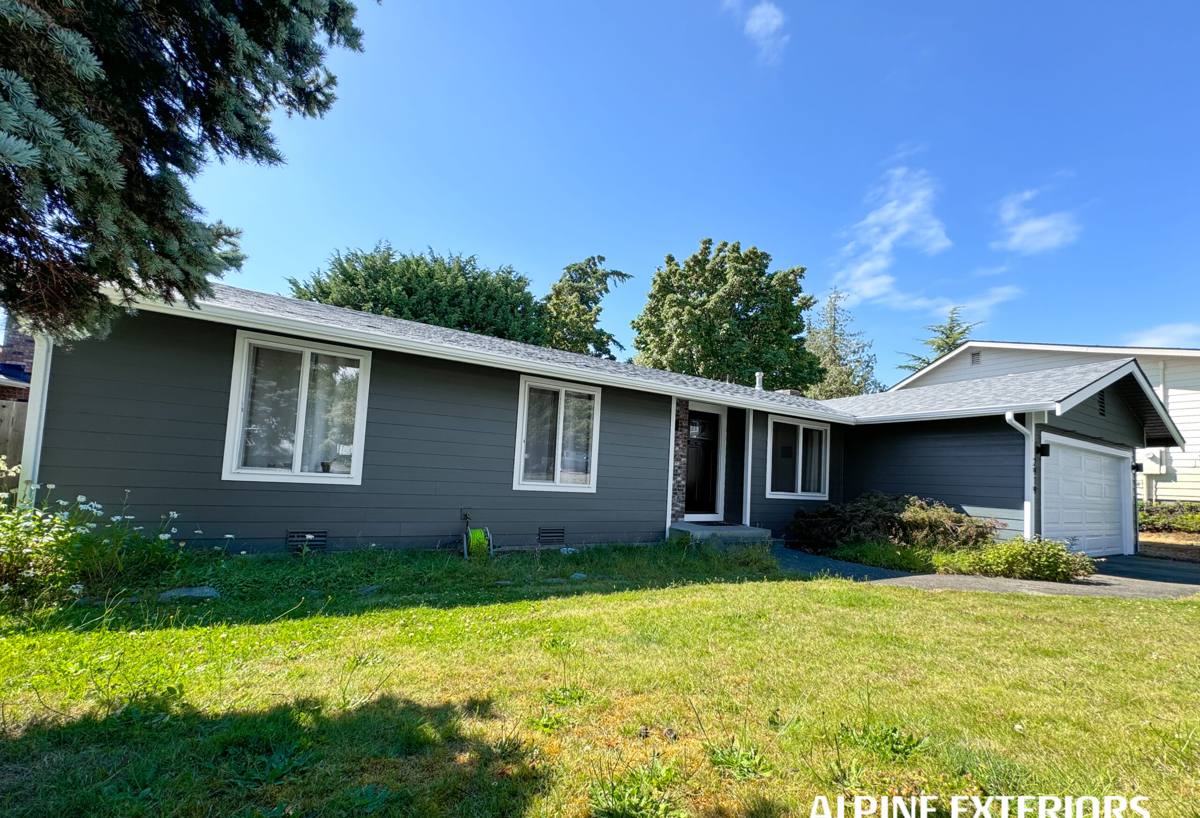
Signs Your Clearwater Beach Home Needs Replacement, Not Repair
Salt air and UV don't always announce themselves with obvious damage. A lot of the deterioration we see on barrier island homes happens gradually, and homeowners often don't realize how much ground has been lost until they're up close.
- Visible swelling, softness, or crumbling at panel edges, corners, and butt joints
- Paint that's chalking, peeling, or fading unevenly across sun-exposed walls
- Rust streaking or corrosion around fasteners, trim edges, and flashing
- Gaps opening up at seams and joints where caulk has dried out and pulled away
- A musty smell, soft drywall, or discoloration on interior walls that back up to exterior siding
- Warping or bowing that's visible when you sight down a wall from the corner
- Siding that's more than 15-20 years old and was never rated for coastal wind and moisture exposure
Any one of these on its own might be a repair. Several at once, especially on a home that's taken a few storm seasons of direct Gulf exposure, usually means the underlying material has reached the end of what it can reasonably protect against — and patching it is a short-term fix on a long-term problem.
What a Correct Replacement Actually Involves Here
Siding replacement on a barrier island home isn't just pulling off old panels and nailing up new ones. The parts of the job that don't show — moisture management, fastening, and how the assembly handles wind — matter more here than the visible finish coat.
Moisture Management Comes First
Before any new siding goes up, the water-resistive barrier underneath has to be right. On a Clearwater Beach home, that means a properly lapped and sealed weather barrier, correctly integrated flashing at every window, door, and penetration, and a drainage plane that actually lets incidental moisture get out instead of trapping it against the sheathing. Wind-driven rain finds every shortcut in this layer, and salt air accelerates corrosion on any metal flashing that isn't installed or fastened correctly.
Fastening for Wind, Not Just Gravity
Siding on a barrier island needs to be fastened to withstand real uplift and lateral pressure, not just hold its own weight. That means the right fastener type, spacing, and embedment for the wind exposure category the home actually sits in — and it means using corrosion-resistant fasteners, since standard hardware pits and stains fast in salt air.
Building Code Compliance
Coastal Pinellas County falls within Florida's wind-borne debris region under the Florida Building Code, which sets specific requirements for exterior wall coverings, fastening schedules, and product approvals in high-wind areas. A correct replacement is permitted, inspected, and installed to the manufacturer's wind-rated specifications for the zone — not just installed to "look right" and hoped to hold.
Why We Install James Hardie Fiber Cement — And Nothing Else
We standardized on James Hardie fiber cement siding, and we don't install vinyl, LP SmartSide, or other fiber cement brands. That's not a marketing position — it's a decision based on what actually performs under sustained salt air, UV, and wind exposure on homes like the ones on Clearwater Beach.
Vinyl siding can soften, warp, or crack under intense heat and direct sun, and its fastening system relies on flexibility that can work against it in sustained high wind. LP SmartSide and other engineered wood products perform well in many climates, but wood-based substrates are inherently more sensitive to sustained moisture exposure — a real concern on a barrier island where humidity and wind-driven rain are constants rather than occasional events. James Hardie's fiber cement is non-combustible, doesn't rot or absorb moisture the way wood-based products can, and its ColorPlus factory finish is baked on and formulated to resist fading under UV loads like the ones Clearwater Beach sees year-round.
| Factor | James Hardie Fiber Cement | Vinyl Siding | Engineered Wood (LP SmartSide) |
|---|---|---|---|
| UV / fade resistance | ColorPlus factory finish, formulated for long-term color retention | Can fade and chalk faster under intense, sustained sun | Field-applied paint requires more frequent recoating |
| Moisture behavior | Won't rot; engineered to resist moisture damage | Doesn't rot, but seams can trap moisture behind panels | Wood-based substrate is more moisture-sensitive over time |
| Wind / impact performance | Rigid, heavy panel with wind-rated fastening systems | Lighter panel, more prone to distortion in extreme heat/wind | Solid performer but less impact-resistant than fiber cement |
| Combustibility | Non-combustible | Combustible | Combustible |
| Warranty structure | Strong transferable manufacturer warranty | Varies widely by manufacturer and product line | Manufacturer-specific, generally shorter than Hardie's |
James Hardie also engineers its siding by climate zone. The HZ5 product line used across most of Florida is formulated specifically for the kind of heat, humidity, and moisture cycling that coastal Pinellas County homes deal with every year — it's not a one-size-fits-all product adapted after the fact.
Our Replacement Process
Every Clearwater Beach project follows the same core sequence, adjusted for the specific home's exposure and condition.
- On-site assessment — We inspect the existing siding, sheathing, and any areas of visible or suspected moisture damage, and check how the home's orientation and exposure affect wind and sun loading.
- Tear-off and substrate check — Old siding comes off and we inspect the sheathing underneath for rot or soft spots before anything new goes up. Damaged sheathing gets repaired, not covered over.
- Weather barrier and flashing — A new water-resistive barrier is installed with correctly lapped and sealed flashing at every window, door, and penetration point.
- James Hardie installation — Panels, fasteners, and spacing follow James Hardie's published installation specifications and the local wind-rated fastening schedule.
- Trim, caulking, and finish detail — Joints, corners, and penetrations are sealed with products rated for coastal exposure, not standard-grade caulk that dries out fast in this climate.
- Final walkthrough — We review the completed work with you before calling the job done.
What Drives the Cost
Every home is different, but a few factors consistently move the price on Clearwater Beach jobs more than they would elsewhere in Pinellas County.
| Cost Factor | Why It Matters on Clearwater Beach |
|---|---|
| Substrate condition | Homes with hidden moisture damage behind old siding need sheathing repair before new siding can go on correctly |
| Home size and complexity | More corners, dormers, and trim detail mean more labor and material for proper flashing and fastening |
| Access and staging | Barrier island lots, narrow streets, and limited parking can affect equipment staging and material delivery |
| Siding profile and trim selection | Lap width, trim style, and accessory choices (soffit, fascia, trim boards) all affect material cost |
| Permitting and inspection | Wind-borne debris region permitting adds a required step that a straightforward inland project may not need |
We give every homeowner a clear, itemized estimate before any work starts — no vague allowances, and no surprises once the crew is on site.
Why Hiring a Crew That Already Works Clearwater Beach Matters
A contractor who mostly works inland subdivisions and occasionally takes a beach job is learning on your house. A crew that regularly works Clearwater Beach already knows how the wind-borne debris region permitting process works with Pinellas County and the City of Clearwater, already understands how salt air affects fastener choice and flashing detail, and already knows how to sequence a project around barrier island access and parking constraints without it turning into a headache for you or your neighbors.
That familiarity shows up in small decisions that add up: using corrosion-resistant hardware without being asked, catching a flashing detail that would otherwise fail in year two instead of year fifteen, and setting realistic timelines that account for weather windows on a barrier island rather than a generic inland schedule.
Questions Worth Asking Before You Hire
- Are you licensed and insured to work in Pinellas County, and can you provide proof?
- Do you pull permits directly, and are you familiar with wind-borne debris region requirements here?
- What fastener and flashing materials do you use specifically for coastal salt-air exposure?
- Can you show me the manufacturer installation specs you follow, not just a general approach?
- What does your warranty cover, and is it backed by the manufacturer or just your labor?
- How do you handle sheathing repair if it's found once old siding comes off?
Protecting a Barrier Island Home for the Long Term
Siding is one of the few home systems that's working against the elements every single day, and on Clearwater Beach that work is harder than almost anywhere else in Pinellas County. Getting the replacement right — the right material, the right moisture management, the right fastening for real wind loads — is what determines whether you're dealing with this again in eight years or genuinely done with it for decades.
If you're seeing signs of wear on your Clearwater Beach home, or you just want an honest read on where your siding actually stands, we're happy to take a look. Request a free, no-pressure estimate using the form below and we'll walk the property with you and tell you what we actually see — no obligation.