 Clearwater Siding
 Belleair's Waterfront Location Puts Real Demands on Siding
Belleair sits along Clearwater Harbor on the Pinellas County peninsula, which means most homes here deal with a tougher combination of weather than siding just a few miles inland ever sees. Wind off the harbor carries salt, the sun is intense and nearly constant, and summer storms bring wind-driven rain that gets pushed sideways into wall assemblies rather than just falling straight down. Add in the wind loads that come with hurricane season, and it's easy to see why siding that performs fine in a drier, calmer climate can fail early once it's installed on a home this close to the water.
None of this is unique to any one house in Belleair — it's the baseline every home in this part of Pinellas County has to be built to handle. The difference shows up in how long the siding lasts and how much work it takes to keep it looking right. That's the lens we use when we talk to Belleair homeowners about James Hardie siding: not as an upgrade for its own sake, but as a material chosen because of what this specific location does to a home's exterior over time.
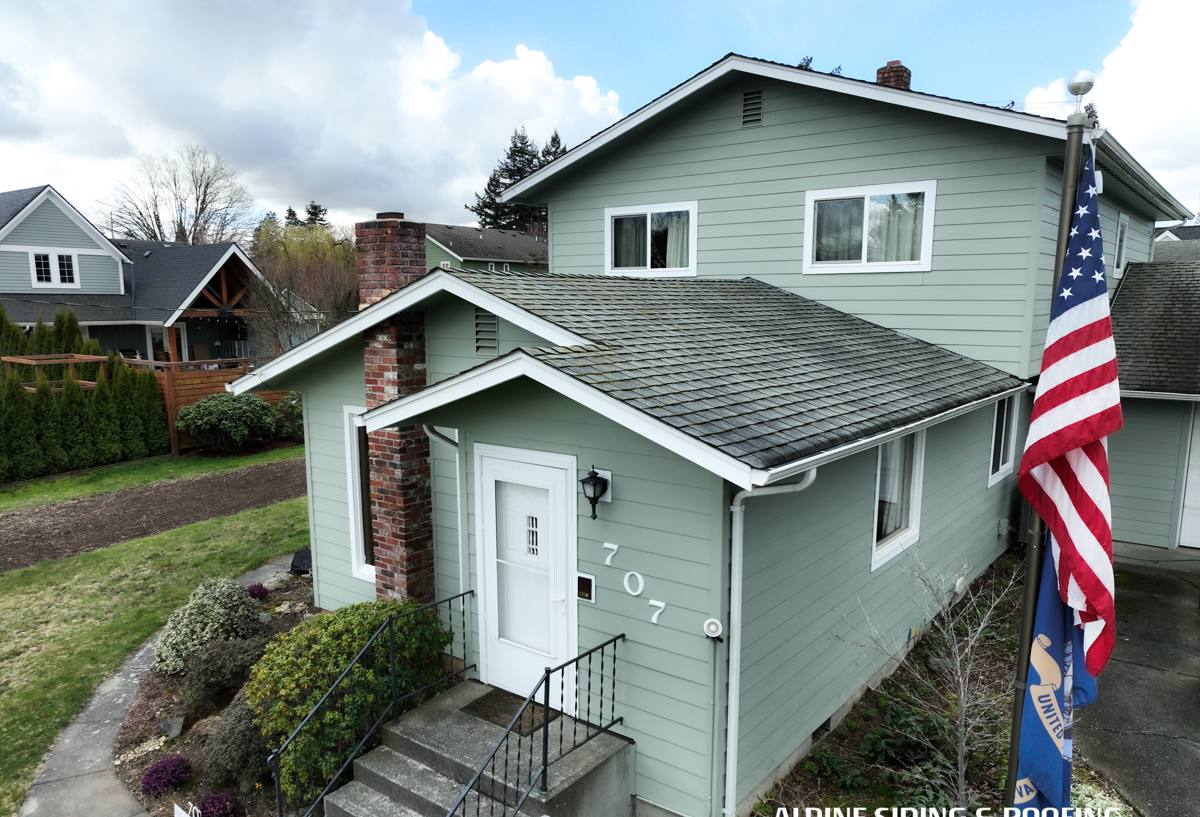
Why We Install Only James Hardie Fiber Cement
Clearwater Siding Co installs James Hardie fiber cement siding exclusively. We don't offer vinyl, LP SmartSide, Cemplank, Allura, or primed wood alternatives, and that's a deliberate standard, not a limitation in what we're capable of installing. Fiber cement is made from cement, sand, and cellulose fibers, which gives it properties that matter a lot in a coastal climate: it doesn't combust, it doesn't warp or rot the way wood-based products can when they take on repeated moisture, and it holds its shape and color under UV exposure far better than vinyl.
James Hardie also builds region-specific products. Their HZ5 line is engineered for hot, humid climates like ours, with a formulation designed to resist moisture-related damage in exactly the conditions Belleair sees year-round. The factory-applied ColorPlus finish is baked on and warranted separately from the substrate, which matters here because UV is one of the fastest ways a painted exterior loses its finish in Florida. We're not claiming other products can't do a reasonable job elsewhere — we're saying that for what this specific climate does to a house, this is the system we trust enough to put our name behind.
Signs Your Belleair Home's Current Siding Is Falling Behind
If your home currently has vinyl, wood, or an older fiber cement product, there are usually warning signs before things get bad enough to cause real damage. Homeowners in Belleair should watch for:
- Warping, buckling, or visible gaps between panels, especially on walls that face the water or catch the most afternoon sun
- Chalking or fading paint that leaves a powdery residue on your hand when you touch it
- Soft spots, especially near the bottom of walls or around window and door trim, which usually mean moisture has gotten behind the siding
- Cracked or split panels after storm season, particularly on corners and edges exposed to wind
- Visible caulk failure at seams and trim joints, which lets water in even if the siding itself looks intact
- A chalky, salt-like film that doesn't wash off easily, a sign the finish is breaking down under UV and salt exposure
Any one of these on its own isn't necessarily an emergency, but they tend to compound. Moisture that gets behind siding doesn't just damage the siding — it can reach sheathing and framing, which turns a surface-level repair into a structural one.
What a Correct James Hardie Installation Involves
James Hardie siding performs the way it's rated to perform only when it's installed to the manufacturer's specifications. A rushed or generic install is one of the most common reasons fiber cement siding underperforms — the material gets blamed for what's actually an installation shortcut.
Flashing and Water Management
Correct installation starts underneath the siding, not with the siding itself. That means proper weather-resistive barrier, correctly lapped flashing at windows, doors, and any wall penetrations, and starter strips set to manufacturer spec. In a climate with regular wind-driven rain, water management behind the panels is what actually keeps a wall assembly dry — the siding is the visible layer, but it's not the only layer doing the work.
Fastening and Clearances
James Hardie specifies exact fastener types, spacing, and penetration depth, along with minimum clearances from grade, roof lines, and other surfaces. Getting these wrong doesn't always show up immediately — it shows up two or three years later as cracking, popped fasteners, or moisture intrusion at panel edges. In coastal wind conditions, correct fastening is also part of what keeps siding attached during high winds.
Finish and Joint Treatment
Cut edges need to be sealed, joints need the right sealant and gap width, and butt joints need to be treated correctly to avoid becoming water entry points. This is detail work that's easy to skip and hard to notice until it fails.
Siding Options for Belleair Homes: A Side-by-Side Look
We only install James Hardie, but we think Belleair homeowners deserve an honest comparison of why, not just a sales pitch. Here's how the common options stack up against the conditions this area actually sees:
| Factor | James Hardie Fiber Cement | Vinyl | Wood / LP-Style Products |
|---|---|---|---|
| Wind resistance | Engineered and rated for high-wind installation | Can crack or blow off in sustained high winds | Depends heavily on fastening; edges vulnerable |
| Moisture behavior | Resists rot; HZ5 formulated for humid climates | Doesn't rot but can trap moisture behind panels | Prone to swelling, delamination, and rot if moisture gets in |
| UV / fade resistance | Factory ColorPlus finish, separately warranted | Fades and can become brittle over time | Painted finish fades and needs repainting |
| Fire resistance | Non-combustible | Combustible | Combustible |
| Typical maintenance | Occasional washing; repaint only if not ColorPlus | Low maintenance but limited repair options | Regular repainting and moisture monitoring |
| Expected lifespan when installed correctly | Multiple decades | Shorter, especially in coastal sun and salt | Shorter without diligent upkeep |
This isn't about any one product being universally wrong — it's about what holds up best under Belleair's specific combination of salt air, sun, and storm exposure, which is the standard we've chosen to build our business around.
Our Process for Belleair Installations
- Assessment: We walk the home, evaluate the current siding and any moisture or structural concerns, and check wall conditions before recommending a scope of work.
- Measurement and product selection: We measure exact square footage, discuss HZ5 profiles and ColorPlus color options, and account for any architectural details specific to the home.
- Permitting: Siding work in Pinellas County requires permitting, and we handle that process as part of the job rather than leaving it to the homeowner.
- Prep and water management: We address the weather-resistive barrier and flashing before a single piece of siding goes up, since this layer is what actually protects the wall assembly.
- Installation to manufacturer spec: Fastening, clearances, and joint treatment follow James Hardie's published requirements, not shortcuts.
- Final walkthrough and cleanup: We review the finished work with the homeowner and clean the site before we consider the job done.
Why Hiring a Crew That Already Works in Belleair Matters
Siding work in a coastal Pinellas County community isn't identical to siding work fifty miles inland, and it isn't identical to siding work in a different state entirely. A crew that regularly works in Belleair already understands the local permitting process, the wind-resistant construction requirements that apply to homes in this part of the county, and the practical realities of scheduling around Florida's storm season. That familiarity shows up in fewer surprises during the job — permits that move faster because the paperwork is done right the first time, and installation choices that already account for the wind and moisture exposure specific to a harbor-adjacent property.
It also matters for warranty coverage. James Hardie's product warranties are tied to installation according to their specifications, and a crew that installs this material regularly in this exact climate is less likely to make the kind of mistake that jeopardizes that coverage down the road.
Questions to Ask Before You Hire Anyone for This Job
- Are you installing manufacturer-specified flashing and weather barriers, or just the visible siding panels?
- What fastener type and spacing will you use, and does that match James Hardie's published requirements?
- Will the job be permitted through Pinellas County before work begins?
- What warranty applies to the labor, separate from the manufacturer's product warranty?
- Have you installed James Hardie siding on homes in this area before, and can you explain how the coastal conditions here affect the install?
Caring for James Hardie Siding After It's Installed
One of the practical advantages of fiber cement in this climate is how little ongoing maintenance it needs compared to wood or aging vinyl. A periodic rinse with a garden hose to remove salt film and airborne debris is usually enough. Because the ColorPlus finish is factory-applied and UV-resistant, repainting isn't a routine requirement the way it is with painted wood siding. It's still worth doing a visual check after major storms — looking at caulking around trim, corners, and joints — since even a well-installed system benefits from catching small sealant issues before they become water intrusion problems.
If you're weighing your options for a Belleair home, we're happy to take a look at what you have now and talk through what James Hardie siding would actually involve for your property — no pressure, no obligation. Fill out the form below and we'll set up a free estimate.