 Clearwater Siding
 Storm Damage Roof Repair for Skycrest Homes
Skycrest sits inland from the immediate coastline but still takes the full brunt of whatever moves through Pinellas County — tropical storm bands, straight-line wind gusts ahead of a front, and the pop-up summer thunderstorms that roll off the Gulf almost every afternoon in season. The neighborhood's mix of older single-story ranch homes and newer roofs means storm damage shows up differently from house to house, and a repair that's right for one roof can be the wrong call for the one next door. We work Skycrest regularly, which means we already know the roof ages, common pitches, and typical shingle and tile profiles in the area before we ever climb a ladder.
This page covers what storm damage repair actually involves here — not a general "we fix roofs" pitch, but the specific things a Clearwater roof goes through and what a correct repair looks like once the wind and rain have passed.
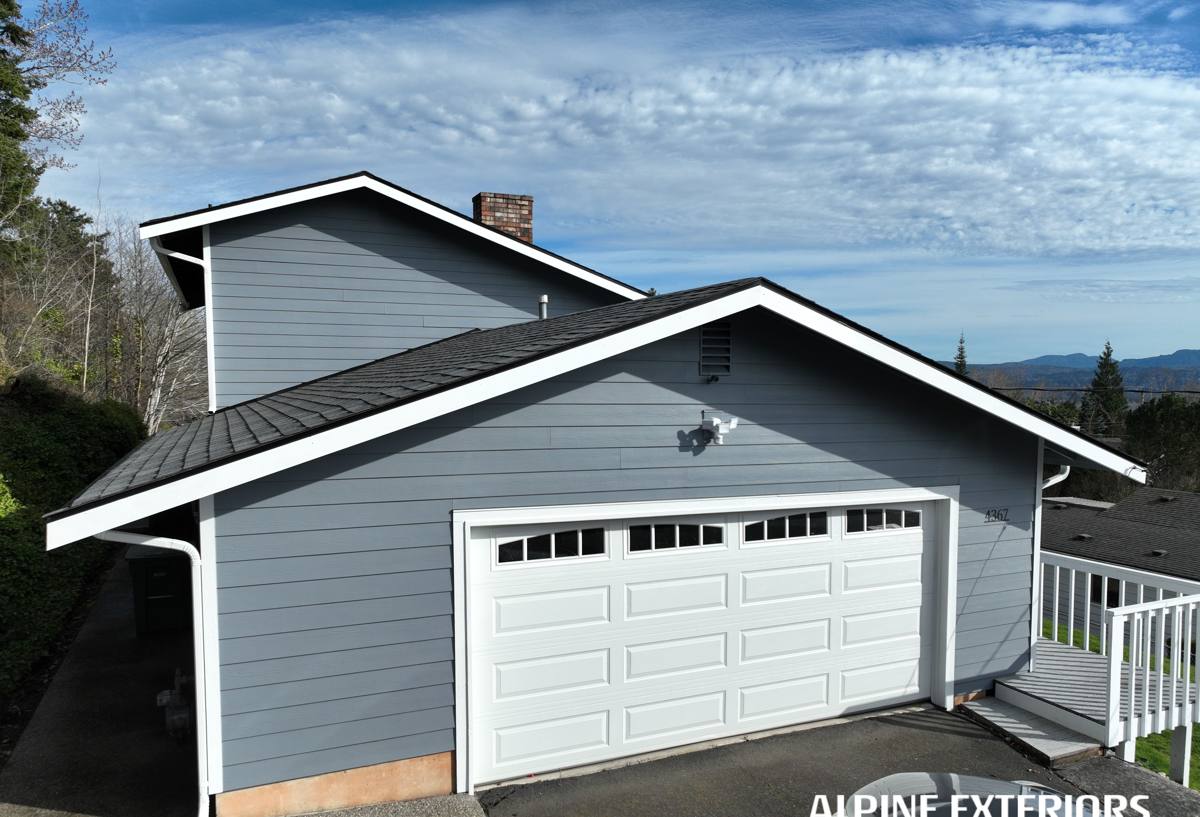
What Clearwater Storms Do to a Skycrest Roof
Wind
Sustained tropical-storm-force wind, and the higher gusts that come with a hurricane passing anywhere in the Gulf, work roofing material loose in predictable ways: lifted or creased shingle tabs, cracked or slid tiles, and torn ridge caps where the wind gets under an edge and peels back from there. Older roofs with weathered adhesive strips or brittle tile mortar go first. Even roofs that look fine from the ground can have shingles that lifted and re-sealed slightly out of place, which is where leaks start weeks later, not during the storm itself.
Wind-Driven Rain
Straight-down rain and wind-driven rain behave completely differently on a roof. Wind-driven rain gets pushed sideways and upward under flashing, around vent boots, and into any gap that would never leak in a normal afternoon shower. This is why a roof can pass a casual inspection after a storm and still develop a ceiling stain two or three rain events later — the entry point only leaks when rain is coming in at an angle.
UV and Heat
Between storms, Florida's year-round sun bakes asphalt shingles and dries out sealants and mortar joints. A roof that's already brittle from UV exposure is far more likely to crack, lift, or shatter (in the case of tile) when storm-force wind hits it. This is part of why two roofs of the same age can come through the same storm with very different amounts of damage — sun exposure and prior maintenance matter as much as the storm itself.
Salt Air
Clearwater's proximity to the Gulf means salt-laden air reaches inland neighborhoods like Skycrest too, accelerating corrosion on exposed metal — flashing, fasteners, and vent stacks. Corroded fasteners back out or lose holding strength, which is a common reason flashing fails during high wind even when the shingles or tiles around it are intact.
What a Correct Storm Damage Repair Actually Involves
A storm repair done right is not just "replace what's visibly missing." It's a sequence:
- Full roof inspection, not just the area you can see from the driveway — including the back slopes, valleys, and anywhere flashing meets a wall or chimney.
- Documentation of the damage in enough detail to support an insurance claim if you're filing one, including photos and a written scope.
- Underlayment and decking check wherever shingles or tiles were removed or missing — if water got under the surface layer, the underlayment or even the wood decking underneath may need attention before anything goes back down.
- Matching repair materials to what's already on the roof as closely as possible, so the repaired section doesn't stand out or perform differently than the rest of the roof.
- Flashing and fastener check at every penetration and edge, since these are the most common repeat-failure points after a storm.
- Final walk-through so you know exactly what was found, what was repaired, and what to watch going forward.
Skipping steps — especially the decking check under removed materials — is how a "repaired" roof leaks again in the next storm.
Common Repair Scenarios We See in Skycrest
| Damage Type | What It Looks Like | Typical Fix |
|---|---|---|
| Lifted or missing shingles | Bare patches, shingle tabs curled up, granules in gutters | Section replacement matched to existing shingle line |
| Cracked or slipped tiles | Visible cracks, tiles out of alignment, gaps in the field | Individual tile replacement or re-set, mortar repair at ridges |
| Flashing failure | Rust streaks, gaps at chimney/wall junctions, staining below | Flashing replacement and proper re-sealing |
| Soft or stained decking | Interior ceiling stains, sagging felt under removed shingles | Decking repair or replacement before re-covering |
| Damaged vent boots | Cracked rubber collar around plumbing vents | Boot replacement — a low-cost fix that prevents a common leak source |
Roof Type Matters for the Repair Approach
Asphalt Shingle Roofs
The most common roof type in and around Skycrest. Repairs are usually straightforward if the shingle line is still available or close enough to match, but sun-faded older shingles can be visibly different from new ones — we'll tell you honestly if a patch will be noticeable rather than let you assume it'll blend in perfectly.
Tile Roofs
Tile is durable against wind when properly fastened, but individual tiles crack under impact or slide loose when the mortar or fastening system underneath has weathered. Tile repair requires care not to crack surrounding tiles while walking the roof, and matching tile profile and color is not always possible on older roofs — we'll flag that upfront rather than after the work is done.
Metal Roofs
Less common but present in the area. Metal handles wind well when panels and seams are intact, but storm damage usually shows up as loosened fasteners or panel edge lift, which needs to be caught and corrected before it becomes a larger leak path.
Our Process for Skycrest Homeowners
We keep this simple and don't push work you don't need:
- Prompt inspection after you call — storm damage repair is time-sensitive, since exposed decking and underlayment degrade quickly in Florida humidity
- A written, itemized scope of what's actually damaged, not a blanket "full roof replacement" recommendation unless the roof genuinely warrants it
- Straight talk on what's a repair versus what's a sign the roof is near the end of its service life
- Documentation you can hand directly to your insurance adjuster if you're filing a claim
- Repair work matched to your existing roofing material as closely as materials allow
Insurance Claims: What Homeowners Should Know
Storm damage repairs are frequently insurance claims, and the process goes smoother when the documentation is thorough from the first inspection. We provide photos and a written scope you can submit, but we're not a public adjuster and won't promise a claim outcome — that's between you and your insurer. What we can promise is an honest assessment of what's actually storm damage versus what's pre-existing wear, since insurers scrutinize that distinction closely and a vague or inflated scope can slow down or jeopardize a claim.
Pre-Storm and Post-Storm Checklist
- Before storm season: have loose or lifted shingles/tiles re-secured — small issues are cheap to fix and expensive to ignore
- Before storm season: check that gutters and downspouts are clear so wind-driven rain has somewhere to go
- After any significant storm: look for granules collecting in gutters or at downspout outlets (a sign of shingle wear)
- After any significant storm: check interior ceilings for new stains, even faint ones
- After any significant storm: don't wait — exposed decking degrades fast in Florida humidity even without additional rain
- Anytime: don't walk a tile roof yourself to inspect it — it's easy to crack tiles that weren't damaged to begin with
Why a Local Crew Matters for This Kind of Repair
Storm damage repair rewards familiarity with the specific conditions a roof has been through. A crew that already works in Skycrest and the surrounding Clearwater area knows the typical roof ages and materials in the neighborhood, understands how Pinellas County wind patterns and coastal humidity affect different roofing systems, and isn't learning the local permitting process for the first time on your job. That translates into faster, more accurate inspections and repairs that account for what's actually likely to fail next — not just what failed this time.
If your roof took a hit in the last storm — or you want it checked over before the next one — we're glad to come out for a free, no-pressure estimate. Use the form below and we'll get a local crew member out to take a look.