 Clearwater Siding
 Why Siding on Indian Rocks Beach Homes Takes More Punishment
Indian Rocks Beach sits on a barrier island, which means every wall of siding on these homes is doing a harder job than siding just a few miles inland in Clearwater or greater Pinellas County. The Gulf is close on one side, the Intracoastal on the other, and the air moving between them carries salt, humidity, and grit almost year-round. Add Florida's intense UV load and the wind-driven rain that comes with every strong storm system, and you have a climate that finds every weak point in a siding installation faster than almost anywhere else in the state.
That's the backdrop for every siding repair call we take in this neighborhood. A crack or gap that might sit harmless for years in a drier, cooler climate becomes a real problem here in a single wet season. Understanding why matters, because it changes how a repair should be diagnosed and done — not just patched and painted over.
Salt Air and Corrosion
Airborne salt settles on siding, trim, and fasteners constantly on the island side of Clearwater. It accelerates corrosion in exposed nails and metal flashing, and it can degrade certain siding finishes faster than manufacturers' published lifespans assume for inland climates. Repairs that don't account for this — using the wrong fastener, skipping corrosion-resistant flashing, or leaving a cut edge unsealed — tend to fail again within a couple of years.
Wind-Driven Rain and Water Intrusion
Rain in Indian Rocks Beach rarely falls straight down during a real storm. Gulf-driven wind pushes it sideways, forcing water into laps, seams, and any gap around windows, doors, or utility penetrations that isn't properly sealed and shingled. Most of the "siding damage" we're called out to look at didn't start as siding damage at all — it started as water finding a way behind the siding and doing damage to sheathing or framing that only shows up later as staining, soft spots, or visible cracking.
UV and Sun Exposure
Florida sun is intense on any siding, but south- and west-facing walls on an open barrier island get very little shade relief. UV breaks down caulk, fades unprotected finishes, and can make some siding materials brittle over time — which is part of why the choice of siding material affects how well repairs hold up long-term, not just how the original installation performs.
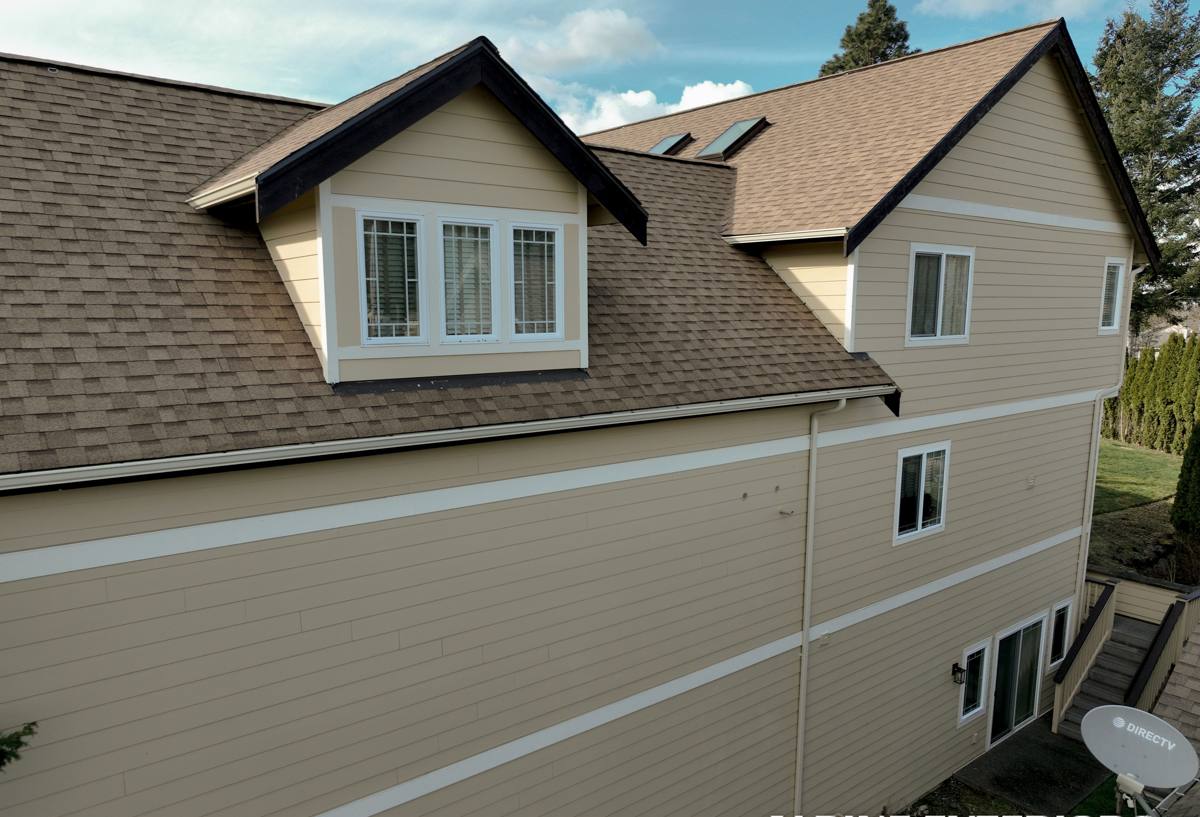
Common Signs Your Siding Needs Repair
Most homeowners don't need a moisture meter to know something's wrong — the visible signs are usually there before the underlying damage gets serious. Here's what we look for, and what you should be checking for between professional inspections:
- Cracked, split, or visibly warped siding panels or boards, especially near corners and edges
- Soft or spongy spots when you press on siding near the bottom of walls or below windows
- Peeling paint, bubbling finish, or chalky discoloration in a localized area rather than across the whole wall
- Visible gaps at seams, corners, or around window and door trim
- Staining or streaking that suggests water is running behind the siding rather than off of it
- Rust streaks below nail heads or metal flashing
- Small holes or damage from impact — lawn equipment, storm debris, or ladders
- Musty odors or visible mold/mildew inside walls near exterior siding
Any one of these on its own might be minor. Several together, especially clustered in one area, usually means there's a moisture problem developing behind the surface — which is exactly what a proper repair needs to address, not just cover.
What a Correct Repair Actually Involves
A siding repair that's done right is not just about making the wall look good again. Cutting out a damaged section and nailing in a patch is the easy part. The part that determines whether the repair lasts is what happens underneath.
Diagnosing the Real Problem
Before we touch a panel, we're figuring out why that section failed. Was it a one-time impact, or is there an ongoing moisture source — a failed sealant joint, a flashing detail that was never installed correctly, or a slow leak around a window? Repairing the visible siding without fixing the cause just buys a homeowner a few more years before the same spot fails again, often with more hidden damage behind it. That includes checking the condition of the water-resistive barrier and sheathing behind the removed section, not just the siding itself.
Matching Existing Siding
Siding fades and weathers over time, and profiles change between manufacturers and even between product runs. A patch that doesn't match in color, texture, or reveal is going to stand out — and on some materials, an exact match years after original installation simply isn't possible. Part of doing this well is being honest with a homeowner up front about what will and won't blend seamlessly, and when a full elevation or full-side replacement is the more sensible call instead of a visible patch.
Proper Fastening and Sealing for the Coastal Environment
Given the salt air and wind exposure specific to Indian Rocks Beach, we don't treat repair fastening the same way we might inland. That means corrosion-resistant fasteners, correctly lapped and sealed flashing at any penetration, and sealant products rated for sustained UV and salt exposure rather than a generic caulk that will crack out again in a year or two.
Repair vs. Replacement: How We Decide
Not every damaged area needs full replacement, and not every "small" repair is actually the right call. Here's how we generally think through it:
| Factor | Leans toward Repair | Leans toward Replacement |
|---|---|---|
| Extent of damage | Isolated to one or two boards/panels | Spread across a wall or multiple elevations |
| Underlying moisture damage | None found behind the siding | Sheathing or framing damage discovered |
| Age of existing siding | Siding is well within its expected service life | Siding is near or past its expected lifespan |
| Material match | Close visual/profile match available | Discontinued or badly weathered, no good match |
| Root cause | Isolated impact damage, one-time event | Systemic issue (bad original install, wrong material for climate) |
We'll walk you through where your situation falls on that list before we recommend anything, and we'll show you what we find behind the siding, not just tell you about it.
Why We Use James Hardie Fiber Cement for Repairs and Patch Work
We install James Hardie fiber cement siding exclusively — no vinyl, no LP SmartSide, no Cemplank, no Allura, no primed wood. That standard applies to repair work too, and it matters more here than in most places, because whatever material goes into a repair has to survive the same salt air, UV, and wind-driven rain that damaged the original section.
Fiber cement is non-combustible and dimensionally stable, which means it doesn't swell, warp, or rot the way engineered wood products can when moisture gets past a seam — a real risk on an island where wind-driven rain is a regular event, not an occasional one. James Hardie's ColorPlus factory finish is baked on and warrantied against fading and peeling, which holds up better under sustained Florida UV than field-applied paint. And Hardie's HZ5 product line is engineered specifically for high-humidity, high-moisture climates like coastal Florida — it's not a generic siding product pressed into service here, it's built for exactly this exposure.
When we repair a section of existing Hardie siding, we can typically match color and profile closely using Hardie's product lines and ColorPlus palette. When we're asked to patch a different material — vinyl that's cracked and brittle from UV, or wood-based siding with moisture damage — we'll be straightforward with you about the fact that the repair will only be as good as the material's ability to handle this climate, and in many cases that's the point where replacing the damaged section (or the wall) with Hardie makes more long-term sense than continuing to patch a product that isn't suited to the exposure.
Our Repair Process for Indian Rocks Beach Homes
- Inspection. We assess the visible damage and check for hidden moisture issues behind and around it, including flashing, trim, and penetrations nearby.
- Diagnosis and options. We explain what caused the damage, what's involved in repairing it correctly, and whether repair or partial replacement is the better long-term call.
- Written estimate. A clear scope and price before any work starts — no surprise add-ons once we've opened up a wall.
- Removal and prep. Damaged siding, trim, and any compromised sheathing or barrier material is removed and the area is prepped correctly.
- Repair and reseal. New Hardie material is installed with corrosion-resistant fasteners and properly lapped, sealed flashing suited to coastal exposure.
- Finish and cleanup. Color-matched where possible, caulking and paint lines finished cleanly, site cleaned of debris.
Why Local Experience in Indian Rocks Beach Matters
A crew that regularly works this stretch of Pinellas County barrier island knows things a contractor who mostly works inland doesn't have to think about as often: how much harder salt exposure is on fasteners and flashing here, what wind exposure ratings apply to homes this close to open water, and how permitting and inspection typically go for exterior work in this part of the county. That local familiarity shows up in the details — the fastener spec, the flashing detail, the sealant product — that determine whether a repair holds up through the next few storm seasons or needs to be redone.
It also matters logistically. Barrier island access, narrow lots, and tight setbacks are common in this area, and a crew that's worked here before plans around that instead of running into it mid-job.
What Affects the Cost of a Siding Repair
Every repair is different, but the main cost drivers are consistent: how much siding needs to come off, whether there's hidden moisture or structural damage behind it, how well the existing material can be matched, and how much trim, flashing, or corner work is involved beyond the flat siding itself. A small, isolated impact repair with no underlying damage is a modest job. A repair that turns up rotted sheathing or a failed water-resistive barrier behind it is a bigger scope — but it's better to find and fix that now than to patch over it and have it resurface, worse, in a year or two. We'll always show you what we find and price the actual scope, not a guess.
If you're seeing cracked, stained, or soft siding on your Indian Rocks Beach home, it's worth having it looked at before the next storm season adds to the damage. We offer free, no-pressure estimates — we'll inspect the area, tell you honestly what we find, and lay out your options with no obligation.