 Clearwater Siding
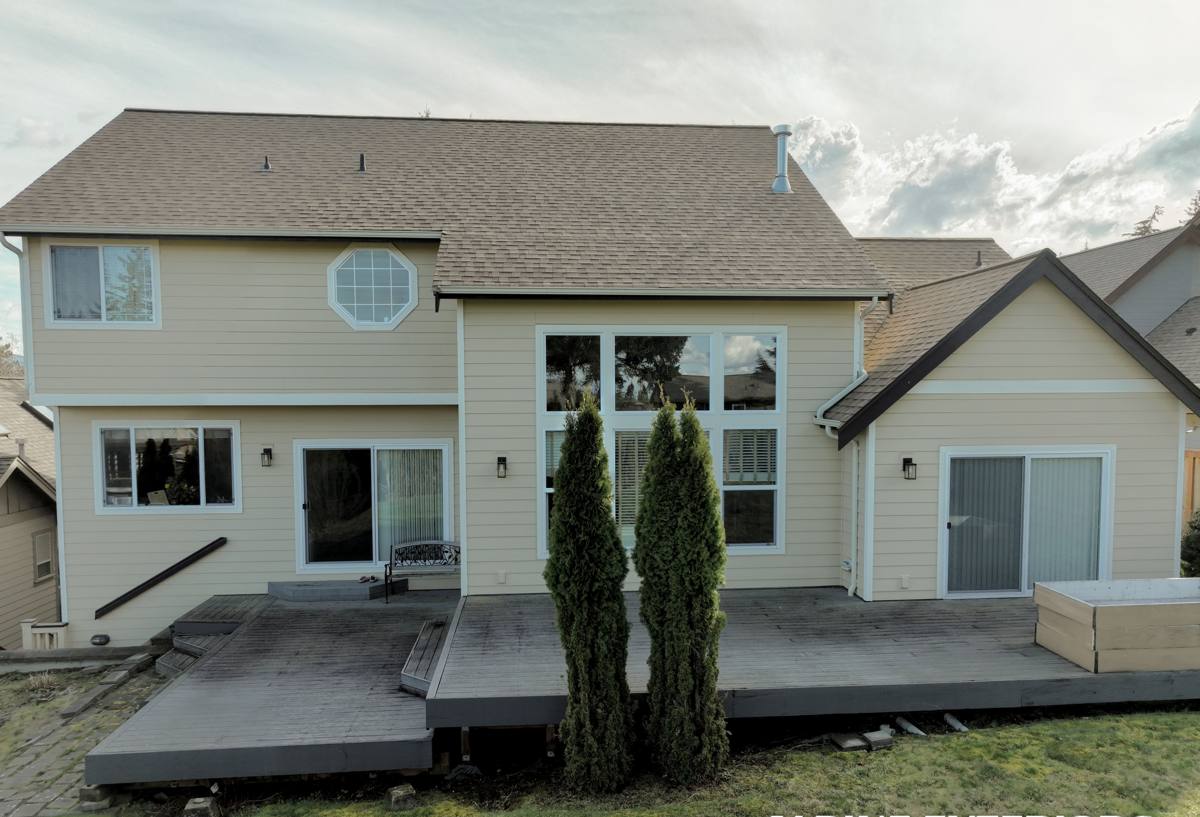
 Composite Decking Built for Palm Harbor's Climate
Palm Harbor sits close enough to the Gulf that salt air, humidity, and intense sun are part of daily life for any outdoor structure. A deck here isn't just a place to put a grill and a couple of chairs — it's an investment that has to survive months of triple-digit heat index days, sudden downpours, and the occasional direct hit from a tropical system. Composite decking has become the material of choice for homeowners in this part of Pinellas County precisely because it holds up to those conditions better than wood, without asking for the upkeep wood demands.
This page covers what composite decking installation looks like specifically for Palm Harbor homes: the climate factors that matter, how we structure the build, and what separates a deck that lasts twenty-plus years from one that starts showing problems in five.
Why Standard Deck Advice Doesn't Fully Apply Here
A lot of decking guidance online is written for drier, milder climates. Palm Harbor and the greater Clearwater area deal with a different set of stressors:
- Hurricane-force wind exposure — decking, railings, and especially fascia and stair connections need fastening details that hold under uplift and lateral load, not just gravity load.
- Wind-driven rain — water doesn't just fall straight down here; storms push it sideways and underneath structures, so drainage and ledger flashing matter more than in calmer climates.
- Year-round intense UV — Florida sun is stronger and more consistent than most of the country sees, which accelerates fading and material breakdown on anything not rated for it.
- Salt air — even a few miles inland from the Gulf, airborne salt corrodes unprotected fasteners and hardware over time, which is often what actually fails on an older deck before the decking boards do.
None of these factors are unique to composite decking — they'd affect wood or PVC too — but they change what "correct installation" means for the substructure, fasteners, and flashing underneath whatever surface material you choose.
What Composite Decking Offers for This Environment
Moisture and Rot Resistance
Wood decking in a humid, rain-heavy climate is in a constant cycle of absorbing and releasing moisture, which is what drives cupping, splitting, and eventual rot — especially at fastener points and board ends where sealant wears through first. Composite boards, made from a blend of wood fiber and plastic, don't absorb water the same way, which removes a major failure point for decks that see wind-driven rain on a regular basis.
UV and Fade Performance
Quality composite decking is manufactured with UV-stabilized capping designed to resist fading and surface degradation under sustained sun exposure. It won't stay showroom-perfect forever — no exterior material does — but it holds its color and surface integrity far longer than untreated or lightly-sealed wood exposed to Florida's sun load.
No Annual Sealing or Staining
Wood decking in this climate typically needs sealing or staining every one to two years to keep moisture out and prevent graying. Composite decking doesn't require that maintenance cycle, which matters for homeowners who want a deck they actually use rather than one they're constantly maintaining.
Consistent Structural Behavior
Because composite boards don't swell and shrink with humidity the way wood does, gaps, screw lines, and railing connections stay more consistent over time — which also means fewer loose boards or popped fasteners after a season of heat and rain.
What a Correct Installation Involves
The decking material is only part of the equation. Most deck failures we get called out to inspect in this area trace back to the substructure or the fastening details, not the decking boards themselves. A correct job includes:
Ledger and Flashing
Where the deck attaches to the house, proper flashing keeps wind-driven rain from working its way behind the ledger board and into the structure. This is one of the most commonly rushed steps on lower-quality installs, and it's usually invisible until there's already water damage behind it.
Framing and Fastener Selection
Given the salt air in this region, we use corrosion-resistant, coated fasteners and hardware rated for coastal exposure — standard hardware store fasteners can start corroding within a few years here, well before the composite decking itself shows any wear.
Joist Spacing and Support
Composite boards have their own manufacturer-specified joist spacing requirements, which are often tighter than what's standard for wood decking. Following those specs is what prevents bounce, sag, and premature board stress over time.
Drainage and Airflow Underneath
Trapped moisture under a deck — from poor grading or blocked airflow — creates problems even with a moisture-resistant surface material. We grade and ventilate the substructure so water moves away from the house and doesn't pool underneath.
Railing and Stair Connections
These are the components most exposed to wind load during a storm event. Correct blocking and fastening at railing posts and stair stringers is a code and safety issue, not just a finish detail.
Our Process for Palm Harbor Composite Decking Projects
- On-site assessment — we look at the existing structure (if replacing a deck), grading, sun/shade exposure, and how the space will actually be used.
- Material selection — we walk through composite board options, color, and railing systems based on your budget and the look you want.
- Permitting — decking work in Pinellas County typically requires permitting; we handle that process rather than leaving it to the homeowner.
- Substructure build or reinforcement — framing, ledger flashing, joist spacing, and fastener selection matched to composite manufacturer specs and coastal exposure.
- Decking, railing, and finish work — installed to manufacturer spacing and fastening guidelines, with attention to board layout and seam placement.
- Final walkthrough — we go over the finished deck with you, including basic care and what to expect over the first few seasons.
Composite vs. Wood vs. PVC: A Quick Comparison
| Factor | Wood | Composite | PVC/Vinyl |
|---|---|---|---|
| Moisture resistance | Low — absorbs water, prone to rot | High — minimal water absorption | Very high — non-porous |
| UV/fade resistance | Fades and grays without regular sealing | Good with UV-stabilized capping | Good, though can show heat sensitivity |
| Maintenance | Annual sealing/staining | Occasional washing, no sealing | Low, occasional washing |
| Upfront cost | Lowest | Mid-range | Higher |
| Feel underfoot | Natural wood texture | Wood-like, warmer than PVC in sun | Smoother, can get hot in direct sun |
| Salt air durability | Fasteners and wood both vulnerable | Board material holds up well; fastener quality still matters | Holds up well; fastener quality still matters |
We install composite decking as our standard recommendation for most Palm Harbor homes because it balances upfront cost, low maintenance, and durability better than wood or PVC for this specific climate. That said, the right material always depends on your budget, how the space is used, and personal preference — we'll walk through the honest trade-offs rather than push one product.
Cost Factors to Understand Before You Budget
Composite decking costs more upfront than wood, and pricing varies based on several factors specific to your project rather than a flat per-square-foot number. Rather than quote a number that won't reflect your actual project, here's what actually drives the cost:
- Deck size and shape — multi-level decks, curves, and cutouts around trees or pools add labor and material.
- Substructure condition — if you're replacing an old wood deck, the framing underneath may need partial or full reinforcement before new decking goes down.
- Board tier — composite decking comes in a range of grades, from entry-level capped composite to premium lines with enhanced fade and stain resistance.
- Railing system — composite, aluminum, and cable railing all carry different price points and installation labor.
- Height and access — elevated decks with stairs, or decks with difficult site access, take more time to build correctly.
- Permitting requirements — scope and structural requirements set by Pinellas County can affect both cost and timeline.
Why Local Experience in Palm Harbor Matters
Composite decking installation isn't complicated in theory, but doing it right in this specific environment takes local judgment. A crew that mostly works inland or in a different climate may not default to coastal-rated fasteners, may under-spec drainage, or may not be familiar with what Pinellas County permitting actually requires for a deck project. We work in the Clearwater and Palm Harbor area regularly, which means we're not guessing at what holds up here — we're building to what we've seen perform, and adjusting when something hasn't.
That local familiarity also shows up in smaller ways: knowing which orientations get the harshest afternoon sun, understanding typical lot grading in the area for drainage planning, and being available for follow-up if something needs attention after the first hurricane season.
A Practical Checklist Before You Hire Anyone for Deck Work
- Ask whether they pull permits themselves or leave it to you
- Ask what fastener and hardware grade they use, and whether it's rated for coastal/salt exposure
- Ask how they handle ledger flashing at the house connection
- Ask about joist spacing and whether it matches the composite manufacturer's specifications
- Ask for the manufacturer warranty terms in writing, not just verbally
- Confirm they carry current liability insurance and, ideally, workers' comp coverage
- Ask how they handle drainage and airflow underneath the finished deck
If you're considering a new composite deck or replacing an aging wood deck in Palm Harbor, we're happy to walk the site, answer questions honestly, and put together a free, no-pressure estimate — no obligation, just a straight look at what your project would actually involve. The form below is the fastest way to get started.