 Clearwater Siding
 Windows That Actually Hold Up in Del Oro
Del Oro sits close enough to the water that its homes take a different kind of beating than houses further inland. Between hurricane-force wind events, sun that doesn't let up for most of the year, wind-driven rain that finds every weak seam, and salt-laden air that corrodes hardware and pits glass coatings, windows here age faster than the manufacturer's brochure ever suggests. A window that's rated fine for a house in the Midwest can fail here in a decade, sometimes sooner, if it wasn't specified and installed for this exact environment.
We replace windows for homeowners throughout Clearwater and Pinellas County, and Del Oro jobs follow a pattern we've seen enough times to plan for: original single-pane or early double-pane units that have gone cloudy, aluminum frames pitted from salt exposure, and caulk lines that have shrunk and cracked from years of UV cycling. None of that is a surprise to us. It's the baseline condition we expect to find, and it's exactly why replacement here needs to be treated as a coastal-climate job, not a generic one.
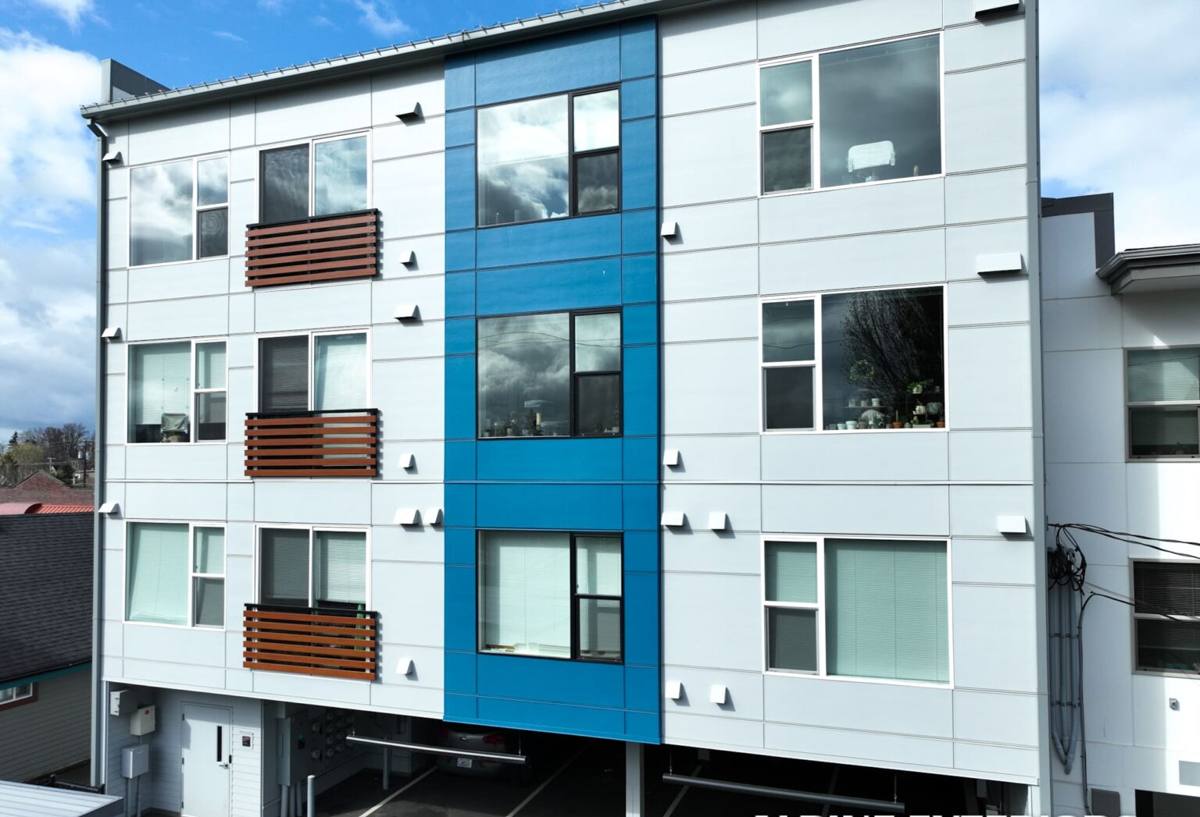
What Del Oro's Climate Actually Does to a Window
It helps to separate out the specific stresses, because each one attacks a different part of the window assembly.
Wind Load
Clearwater sits in a wind zone that demands windows rated to resist significant pressure, both pushing in and pulling out. During a storm, wind doesn't just press against the glass — it creates suction on the leeward side of the house that pulls at the frame and anchoring. Undersized fasteners or a frame that isn't properly anchored to structural framing is a common failure point, and it's invisible from the outside until it isn't.
UV Exposure
Central Florida sun runs hard almost year-round. UV breaks down vinyl frames, dries out glazing compounds, and fades interior finishes near the glass. Lower-grade vinyl can become brittle and discolored well before the glass itself shows any wear, which is why frame material and UV-stabilized formulations matter more here than in most parts of the country.
Wind-Driven Rain
Rain that comes in sideways during a squall or tropical system tests the window's weep system and the quality of the installation flashing, not just the glass. A window can be perfectly good and still leak if the flashing and sealant details around it were done wrong. Most of the "window leaks" we get called out for in this area turn out to be installation or flashing failures, not product failures.
Salt Air
Even a few miles from open water, salt aerosol travels on the wind and settles on every exterior surface. It accelerates corrosion on hinges, cranks, locks, and screws, and over years it can etch unprotected glass coatings. Hardware finish and metal composition are not places to cut corners on a Del Oro job.
Impact-Rated Glass and What It's Actually Doing
Impact windows are built around a laminated glass sandwich — two panes bonded to an interlayer — so that even if the outer pane cracks under wind-borne debris, the assembly stays intact and keeps the building envelope closed. That matters because a breached window during a storm doesn't just let water in; it pressurizes the interior of the house, which is a major cause of roof and structural damage in wind events.
| Option | What It Does | Trade-Offs |
|---|---|---|
| Impact-rated windows | Laminated glass stays intact if struck; no separate hardware to deploy | Higher upfront cost than non-impact glass |
| Non-impact glass + accordion or roll shutters | Shutters protect the opening when deployed | Shutters must be closed before every storm; won't help against everyday debris or UV; ongoing maintenance on tracks and hardware |
| Non-impact glass, no shutters | Lowest upfront cost | Does not meet code in wind-borne debris regions without separate opening protection; leaves the home exposed between storms too |
For most Del Oro homes, we recommend impact glass over a shutter-dependent approach. Shutters only protect you if someone remembers to close them and they're still functioning correctly after years of salt exposure on the tracks. Impact glass is protecting the opening every single day, storm or not, and it also cuts down on outside noise and UV transmission on a completely ordinary Tuesday.
Frame Material: Vinyl, Aluminum, and Fiberglass
The frame matters almost as much as the glass in a coastal environment, and it's where we see the most corner-cutting on lower-bid jobs.
- Vinyl: Good value and won't corrode, but quality varies enormously between manufacturers. UV-stabilized, properly reinforced vinyl holds up well in this climate; thin, unreinforced vinyl can warp and discolor within a few years of Florida sun.
- Aluminum: Strong and slim-profile, but standard aluminum conducts heat and is prone to pitting and corrosion from salt air unless it has a marine-grade finish. We're selective about which aluminum products we'll put in a coastal job for this reason.
- Fiberglass: Dimensionally stable across temperature swings, resists corrosion and UV degradation well, and typically carries a higher price point. For homeowners planning to stay long-term close to the water, it's often the lowest-maintenance option over the life of the window.
We don't push one material on every homeowner. The right call depends on budget, how close the home sits to open water, and how long you plan to own it. What we won't do is install a frame material or hardware finish that we know performs poorly in salt air just because it's cheaper up front — that's a decision that shows up as a warranty call in three years, and we'd rather have that conversation honestly before the job starts than after.
Signs It's Time to Replace, Not Repair
Not every window problem means full replacement. But in Del Oro's climate, certain symptoms usually mean the window has reached the end of its useful life.
- Fogging or a permanent haze between panes — the seal has failed and the insulating gas has escaped
- Frames that feel soft, chalky, or show visible pitting and corrosion
- Windows that are difficult to open, close, or lock, especially after humidity swings
- Visible daylight or a draft around the frame when the window is closed
- Water staining on interior drywall or sills below the window
- Rising cooling bills with no other explanation, which often points to failed seals or single-pane glass
- Frames that don't meet current wind-load and impact requirements for this zone
If you're only seeing one of these on a single window, a targeted repair may be reasonable. If you're seeing several across the house, or the windows are original to an older Del Oro home, replacement is usually the more cost-effective path — repeated repairs on end-of-life windows add up fast without solving the underlying problem.
Permitting and Code in Pinellas County
Window replacement in Clearwater isn't a job you can do off the books, and you shouldn't want to — permitted work protects you as the homeowner. Pinellas County and the City of Clearwater require permits for window replacement, and inspections confirm the installed products meet current wind-load and impact requirements for this coastal wind zone. This also matters directly for insurance: many carriers offer premium credits for verified impact-rated windows, and an unpermitted install can complicate a claim down the road if something goes wrong.
We pull permits, schedule inspections, and handle the documentation as part of the job. If a contractor offers to skip the permit to save time or money, that's a red flag, not a favor — it usually means the work isn't going to hold up to scrutiny, and it leaves you exposed if you ever need to file a claim or sell the house.
How Our Process Works
- On-site assessment. We look at every window opening, check for signs of water intrusion or structural issues around the frames, and measure for accurate sizing — older Del Oro homes often have openings that are slightly out of square after years of settling.
- Product selection. We walk through glass and frame options based on your budget, the home's exposure, and how long you plan to stay, and give you an honest recommendation rather than an upsell.
- Permitting. We handle the permit application and scheduling with the county before work begins.
- Removal and installation. Old units come out, openings are inspected and repaired if needed, and new windows go in with correct anchoring, flashing, and sealant details for this climate — not just caulk around the edges.
- Inspection and walkthrough. We schedule the required inspection and walk you through operation, locking hardware, and basic care before we consider the job done.
What Drives the Cost
Every home is different, but the same variables tend to move the price up or down on a Del Oro window job.
| Factor | Why It Matters |
|---|---|
| Glass package | Impact-rated laminated glass costs more upfront than standard glass, but removes the need for separate storm protection |
| Frame material | Vinyl generally costs less than fiberglass; quality tier within each material also affects price |
| Number and size of openings | Larger openings and specialty shapes (arched, oversized picture windows) cost more to fabricate and install |
| Condition of existing openings | Rot, corrosion, or out-of-square framing found during removal adds repair time before new units can go in |
| Access and site conditions | Second-story windows, tight side yards, or interior finish work around the frame affect labor time |
We give a firm, itemized quote after the on-site assessment — not a rough phone estimate — because guessing at these variables from a photo leads to change orders later, and we'd rather you know the real number up front.
Living With Impact Windows in a Salt-Air Climate
New windows still need some care to get their full lifespan out of them here. Rinsing exterior frames and glass periodically helps clear salt residue before it has time to etch or corrode. Locking hardware should move freely — if it starts to stick, that's worth a quick look before it becomes a bigger problem. And it's worth checking exterior sealant lines once a year, since even good sealant eventually needs attention after enough UV and temperature cycling. None of this is heavy maintenance, but skipping it is how a 20-year window turns into a 12-year window in this environment.
Why Local Experience in Del Oro Matters
A crew that installs windows in a dry inland climate and a crew that installs them a few miles from Clearwater Harbor are solving two different problems, even if the product box looks the same. Knowing which wind zone applies, how to detail flashing for wind-driven rain, which hardware finishes actually last against salt air, and what Pinellas County inspectors are going to check isn't something you pick up from a spec sheet — it comes from doing this work in this area, on homes with the same age and construction as the ones around them. That local repetition is what keeps a window replacement from becoming a callback in year three.
If your Del Oro home has windows that are fogging, sticking, drafty, or simply past their service life, we're happy to take a look and walk you through honest options — no pressure, no upsell. Reach out for a free estimate using the form below and we'll get you a straight answer on what your home actually needs.