 Clearwater Siding
 Oldsmar sits right on Old Tampa Bay, which puts it in an unusual spot for a Pinellas County community — close enough to open water to catch salt-laden air and wind off the bay, but still tucked into the quieter, more residential north county area away from the barrier islands. That combination means Oldsmar homes take on the same hurricane-season wind loads, UV exposure, and wind-driven rain as the rest of the Tampa Bay area, plus a steady dose of moisture and salt drifting in off the water. Siding here has to hold up to all of it at once, year after year, not just survive a single storm season.
We install James Hardie fiber cement siding exclusively, and this page covers what that means specifically for a home in Oldsmar: what the local climate actually does to an exterior wall, what a correct Hardie installation involves, how our process works, and why hiring a crew with real Oldsmar experience matters more than it might seem.
What Oldsmar's Climate Actually Does to Siding
Every material on an Oldsmar home's exterior is dealing with several stresses simultaneously, not one at a time:
- Hurricane-force wind: Pinellas County homes are built and permitted to Florida Building Code wind requirements, and siding has to carry a wind-load rating that matches, with fastening patterns that hold up under sustained gusts and wind-borne debris impact.
- Year-round UV: Florida sun is intense for most of the calendar year, not just in summer. Coatings and finishes that aren't formulated for that exposure chalk, fade, and break down faster here than almost anywhere else in the country.
- Wind-driven rain: Tropical systems and summer storms don't just drop rain straight down — they push it sideways into laps, seams, and trim joints, which is exactly where a poorly installed or poorly flashed siding system fails first.
- Salt air: Being on Old Tampa Bay means Oldsmar homes, especially those closer to the water, deal with airborne salt that accelerates fastener corrosion and works against finishes that aren't built to resist it.
None of these factors are unique to Oldsmar by themselves. What's notable is that a home here deals with all four at once, continuously, which is why the material and the installation details matter more than the paint color or the profile someone picks off a sample board.
Why We Install James Hardie and Nothing Else
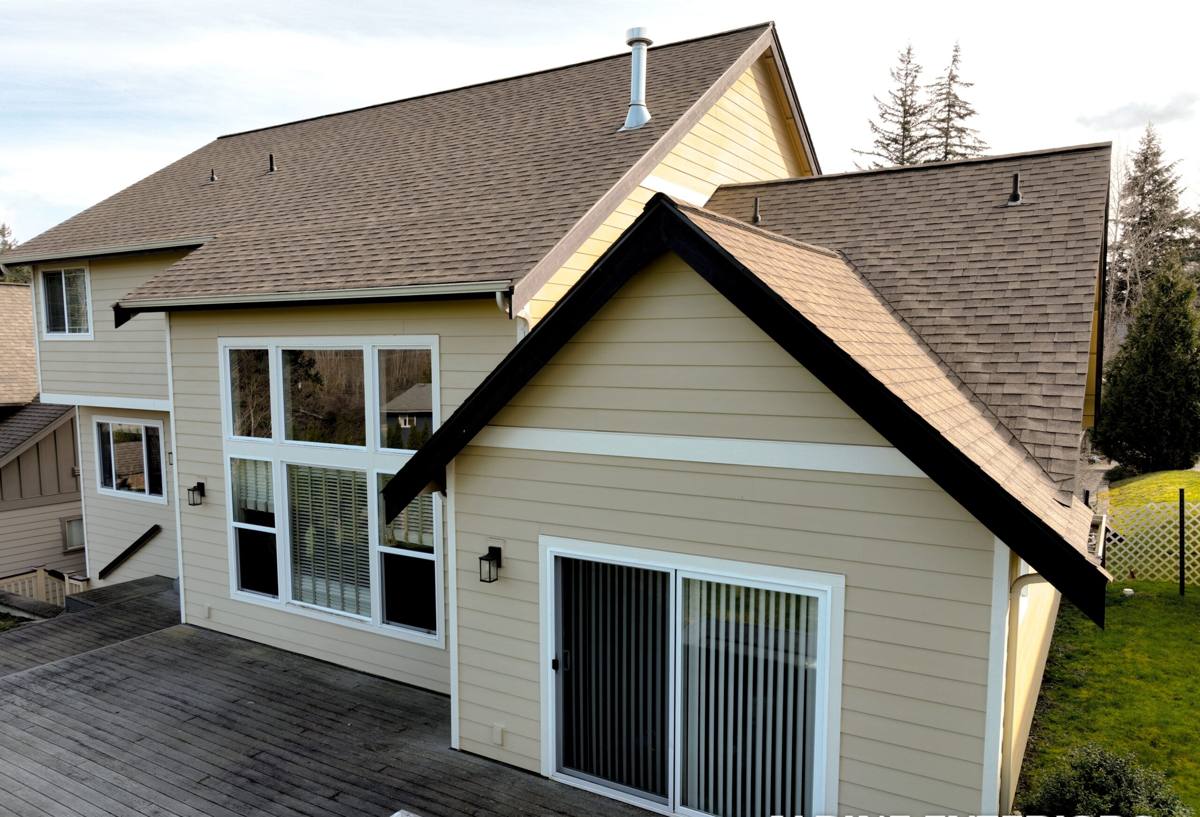
James Hardie fiber cement is a cement, sand, and cellulose fiber composite engineered to be dimensionally stable — it doesn't swell, warp, or rot the way wood and wood-composite sidings can when they take on repeated moisture exposure. It's also non-combustible, which matters to a lot of homeowners regardless of climate. For homes in our part of Florida specifically, James Hardie manufactures a HZ5 product line engineered for high-humidity, high-moisture climates like ours, which is a real formulation difference, not a marketing label.
We don't install vinyl, LP SmartSide, Cemplank, Allura, or unfinished wood siding. Each of those products has legitimate uses in the right climate, but in a coastal Florida environment they carry trade-offs — moisture sensitivity, field-applied finishes that have to be maintained on a schedule, or warranty structures that don't hold up as well under our conditions — that we're not willing to put on a customer's home. Standardizing on one product line lets our crews know it inside and out: the fastening specs, the clearances, the flashing details, all of it, instead of switching systems and methods project to project.
The Hardie Product Lines Oldsmar Homes Actually Use
James Hardie makes several siding profiles, and the right one depends on the home's architecture and how the homeowner wants it to look. Most Oldsmar projects fall into one of these:
| Product | Look | Where It Fits Best |
|---|---|---|
| HardiePlank lap siding | Traditional horizontal lap, smooth or woodgrain texture | Full exteriors on most single-family homes; the most common choice by far |
| HardiePanel vertical siding | Flat panel with battens for a board-and-batten look | Gables, dormers, porch surrounds, or full accent walls |
| HardieShingle siding | Staggered or straight-edge shingle profile | Coastal or cottage-style architecture, accent gables |
| HardieTrim boards | Smooth trim for corners, windows, and fascia | Paired with any of the above for a finished, factory-matched look |
Homeowners often combine two of these — HardiePlank across the main walls with HardieShingle or HardiePanel on a gable or entry feature — which James Hardie's product lines are designed to support, including matching trim and coordinated colors.
ColorPlus Finish: Why Factory Color Matters Here
James Hardie's ColorPlus technology bakes the color onto the board in a controlled factory environment, in multiple coats, before it ever reaches the job site. That matters more in a place like Oldsmar than it would in a milder climate, because field-applied paint has to cure properly on-site and then hold up against constant UV and humidity from day one. A factory-cured finish resists fading and chipping better than most site-applied paint jobs, and it comes with its own finish warranty separate from the product warranty on the board itself. For a homeowner, the practical upshot is a repaint cycle measured in many years rather than every few seasons.
What a Correct Installation Involves
Fiber cement siding performs the way it's supposed to only when it's installed to James Hardie's published specifications. The board itself is engineered well; most of the siding problems we get called out to inspect on older installs trace back to installation shortcuts, not the material. A correct install includes:
- Proper starter strip and flashing at the base of the wall, windows, doors, and any horizontal trim transitions
- Correct nail or screw fastener spacing and depth — over-driven or under-driven fasteners are one of the most common failure points we see
- Manufacturer-specified clearances from grade, roofing, decks, and horizontal surfaces so water has somewhere to go instead of wicking into the bottom edge of the board
- Proper gapping at butt joints and around penetrations to allow for the board's minor expansion and contraction
- A weather-resistant barrier installed correctly behind the siding, with laps and seams sealed the way the assembly calls for
- Caulking only where James Hardie's installation guide calls for it — not as a substitute for correct flashing
Skipping or rushing any one of these doesn't usually show up right away. It shows up two, five, or ten years later as a soft spot near a window, a stained corner board, or paint failing in one specific area — problems that are expensive to trace back and repair compared to what it would have cost to install correctly the first time.
How Our Process Works
For an Oldsmar project, our process generally runs through the same stages regardless of whether it's a full re-side or a targeted repair:
- On-site assessment: We walk the exterior, check the current siding and sheathing condition, and identify any moisture damage or structural issues that need to be addressed before new siding goes on.
- Product and profile selection: We go over HardiePlank, HardiePanel, and HardieShingle options, colors, and how they'd apply to the home's specific architecture.
- Written estimate: A clear scope and price before any work begins, with the product lines and any repair work spelled out.
- Permitting: Siding work in Pinellas County typically requires a permit, and we handle that process so the job is inspected and documented correctly.
- Removal and prep: Old siding comes off, the sheathing is inspected and repaired as needed, and the weather-resistant barrier goes on correctly before a single board is hung.
- Installation: Fastening, flashing, and gapping to James Hardie's specifications, with trim and any accent profiles installed to match.
- Final walkthrough: We go over the finished work with the homeowner before calling the job complete.
Maintenance in Oldsmar's Bay-Adjacent Climate
One of the practical benefits of a correctly installed Hardie system is how little upkeep it asks for compared to wood or vinyl. Realistic maintenance for an Oldsmar home looks like:
- An occasional rinse to clear pollen, general grime, and salt residue, especially on wall faces that face the bay or catch prevailing wind
- A visual check after major storms for loosened trim, shifted flashing, or debris impact damage
- Keeping sprinklers and landscaping from spraying directly onto the base of the wall, which shortens the life of any siding material
- Repainting on a much longer cycle than field-applied finishes typically need, thanks to the ColorPlus factory coating
That's a meaningfully lighter maintenance load than a homeowner would sign up for with a product that needs regular caulking, spot-painting, or moisture monitoring — which matters in a climate that gives an exterior wall very little downtime between rain events.
Why Local Experience in Oldsmar Matters
Every part of Pinellas County deals with hurricane risk and Gulf-influenced weather, but the details shift block by block — how close a property is to the water, how exposed it is to prevailing wind, what the local permitting office expects on an inspection. A crew that already works in and around Oldsmar knows the difference between a straightforward re-side and a job that needs extra attention to flashing and fastener choice because of proximity to the bay. That local familiarity shows up in fewer surprises during the permitting process, fewer callbacks after the first big storm, and a finished job that's actually built for where it sits rather than a generic install dropped onto a coastal property.
If you're weighing a siding replacement or repair for an Oldsmar home, we're glad to walk the property, talk through which James Hardie profile fits the house, and put together a free, no-pressure estimate.