 Clearwater Siding
 Board & Batten Siding in Oldsmar: What It Is and Why Homeowners Choose It
Board and batten is one of the oldest siding styles in North America, and it has had a real resurgence in Florida over the last decade. The look is simple: wide vertical panels or boards installed edge to edge, with narrow strips (the "battens") covering each seam. On a lot of Oldsmar streets you'll see it used as a full siding system or as an accent on a gable, a porch, or a garage wall paired with lap siding elsewhere on the house. It reads as clean, tailored, and a little more custom than standard horizontal lap siding, which is part of why it keeps showing up on remodels and new builds around Clearwater and northern Pinellas County.
What most homeowners don't realize is that board and batten is less forgiving than lap siding if it's installed wrong. The vertical seams, the battens, and the way water is supposed to move behind the panels all matter more here than on a standard horizontal install. That's the part we want to walk through, because it's also the part that decides whether the siding holds up through Gulf Coast summers and storm seasons or starts giving you trouble in five years.
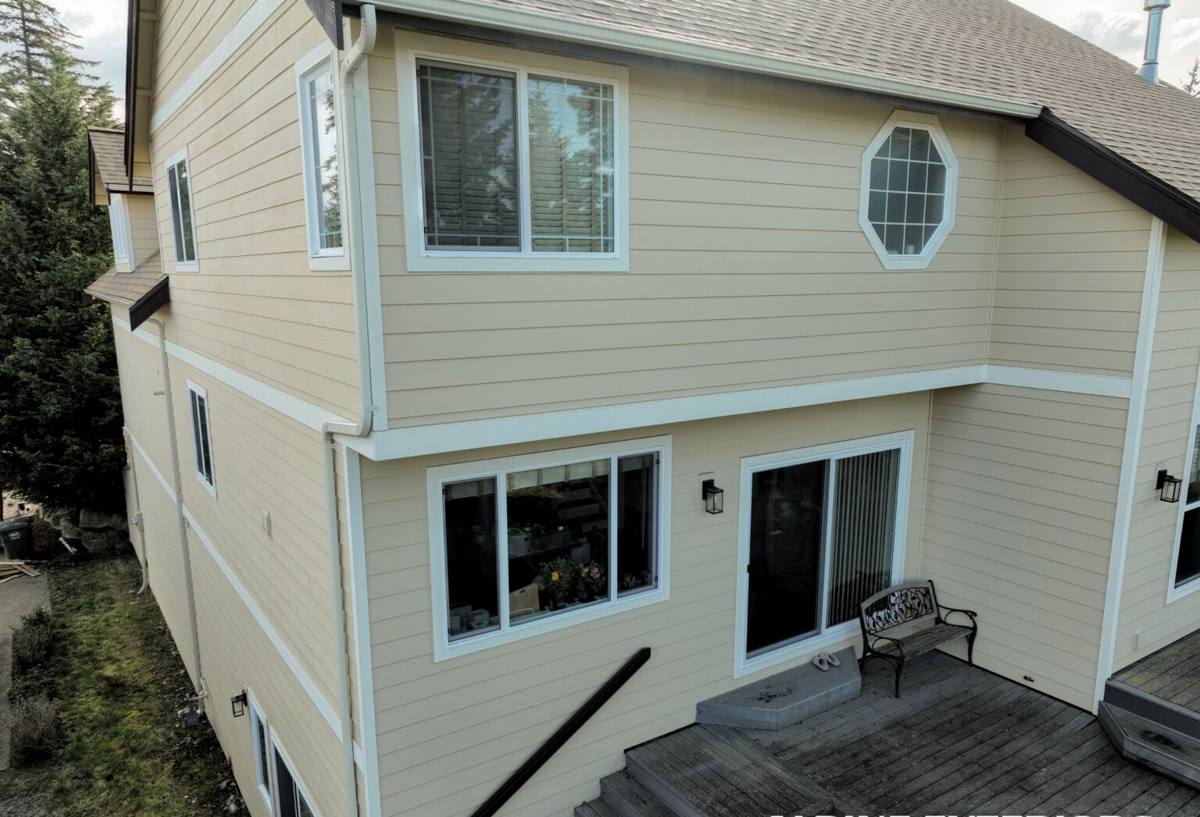
What Oldsmar's Climate Actually Demands From a Board & Batten System
Oldsmar sits close enough to Tampa Bay and the Gulf that homes here deal with the same weather stresses as the rest of coastal Pinellas County, just with slightly different exposure depending on how close a given property is to open water. Four things matter most for a vertical board and batten install specifically:
- Hurricane-force wind: vertical panels have long, continuous seams running top to bottom. If those seams and fastener patterns aren't engineered for wind uplift, they're the first thing that fails in a storm.
- Wind-driven rain: because the battens sit proud of the panel face, wind can drive rain sideways up under a batten in a way it generally can't with overlapping lap siding. The drainage plane behind the panel has to do real work.
- Year-round UV: Florida sun is relentless on siding twelve months a year, not just in summer. Battens and panel edges catch light differently than a flat lap face, and cheap or unfinished trim shows sun damage fastest.
- Salt air: even a few miles inland from the bay, airborne salt accelerates corrosion on fasteners and metal flashing. Board and batten uses more linear feet of fastening and trim than lap siding, so this adds up.
None of this means board and batten is a bad choice for Oldsmar. It means the product and the installation both have to be matched to the climate, not just picked for looks.
Why We Only Install James Hardie for Board & Batten
We don't install vinyl board and batten, LP SmartSide, or primed wood battens on Hardie panels — and that's a deliberate standard, not a sales pitch. Vinyl board and batten profiles are lightweight and can flex, warp, or pull loose at fastener points in sustained coastal wind. Wood battens, even primed ones, are organic material sitting in a climate that stays warm and humid most of the year; they're the first thing to rot, cup, or need repainting. Fiber cement doesn't have those weaknesses. James Hardie's HardiePanel vertical siding, installed with HardieTrim battens and a factory ColorPlus finish, gives you a non-combustible, dimensionally stable board and batten system engineered specifically for high-humidity, high-UV climates like ours. The colors are baked on at the factory rather than field-painted, which matters a lot on a system with this many exposed trim edges. It costs more upfront than vinyl. We install it anyway because it's the version of this siding style that actually holds up here.
What a Correct Board & Batten Installation Involves
The Drainage Plane Behind the Panels
This is the step that gets skipped most often and causes the most trouble later. Board and batten needs a water-resistive barrier and, ideally, a furring strip or rainscreen gap behind the panels so any moisture that does get past the battens has somewhere to drain and dry out instead of sitting against the wall sheathing. Flat-nailed panels with no drainage gap are more prone to trapped moisture in a climate that stays humid nearly year-round.
Fasteners and Batten Spacing
Batten spacing and fastener schedule aren't just aesthetic choices — they're tied to wind load requirements for the area. Corrosion-resistant, manufacturer-specified fasteners matter here more than on most siding jobs, given the salt air. Battens need to be fastened into structural framing, not just into the panel, or they become the weak point in a windstorm.
Flashing, Joints, and Penetrations
Every horizontal joint where one panel run meets another, every window and door opening, and every point where the siding meets trim, soffit, or roofline needs proper flashing and sealant detailing. Water finds the smallest gap, and a board and batten wall has more vertical seams than a lap wall for water to find.
Trim and Corner Details
Outside corners, inside corners, and the transitions where board and batten meets a different siding style or material all need to be built out correctly so the system stays flat and doesn't trap water behind the trim.
Our Process for Oldsmar Homes
- On-site assessment: we look at the existing siding or sheathing condition, wall orientation relative to prevailing wind and sun, and any moisture issues already present before we quote anything.
- Tear-off and sheathing check: old siding comes off and we inspect the sheathing underneath for rot or water damage before covering it back up — this is where problems from a previous bad install usually show up.
- Weather barrier and drainage plane: house wrap or building paper goes on first, followed by furring or rainscreen material where the wall assembly calls for it.
- Panel and batten installation: HardiePanel and HardieTrim battens go up to manufacturer spec for fastener type, spacing, and batten layout, matched to the wind exposure of that specific wall.
- Flashing and sealant detailing: every joint, opening, and transition gets flashed and sealed before we consider the section finished.
- Final inspection and cleanup: we walk the whole installation, check caulking lines and trim, and clear the site.
Cost Factors for Board & Batten in the Oldsmar Area
| Factor | Why It Moves the Price |
|---|---|
| Full-house vs. accent application | Board and batten on gables or porches only costs far less than siding an entire home in it |
| Tear-off vs. new construction | Removing and disposing of old siding, plus repairing any sheathing damage found underneath, adds labor |
| Wall height and complexity | Two-story walls, dormers, and cut-up rooflines mean more trim work and more cutting |
| Batten spacing and pattern | Tighter batten spacing uses more linear trim material than wider spacing |
| Existing moisture or rot damage | Sheathing repair found during tear-off is a common source of change orders on older Oldsmar homes |
| Color and finish | Factory ColorPlus finishes cost more than standard primed panel but eliminate a field-paint cycle |
Signs Your Current Siding Needs a Closer Look
- Battens or trim boards that look warped, cupped, or separated from the wall
- Soft or spongy spots when you press on the siding near the base of the wall
- Visible gaps at seams or around window and door trim
- Paint that's peeling or bubbling rather than just fading evenly
- Staining or streaking that suggests water is running behind the siding rather than off it
- Siding that's more than 15-20 years old and has never been inspected behind the surface
Why a Crew That Already Works Oldsmar Matters
Board and batten installation isn't a job you want a crew learning on your house. A crew that regularly works Oldsmar and the surrounding Clearwater area already knows the local permitting process through Pinellas County, understands the wind zone requirements that apply to homes in this part of the coast, and has seen how differently a west-facing wall ages compared to one that's shaded most of the day. That local repetition is what catches problems before they're built into the wall — a furring detail that needs adjusting for a particular wall orientation, a flashing point that needs extra attention because of how a roofline sheds water onto a lower wall. It's less about knowing landmarks and more about having actually installed this specific siding style, on this specific coastline, enough times to know where it needs extra care.
Maintenance and Long-Term Care
A correctly installed James Hardie board and batten system is genuinely low-maintenance, but "low" isn't "none." Plan on rinsing the siding periodically to keep salt residue and pollen from building up, checking caulk lines at trim and window transitions every year or two, and having any impact damage or nail pops addressed promptly rather than left to sit through a rainy season. Because the ColorPlus finish is factory-applied, you're not on a repainting cycle the way you would be with wood battens — but the trim and flashing details still deserve a periodic look, especially after a bad storm season.
If you're weighing board and batten for a home in Oldsmar, or you've got an existing installation that's showing some of the warning signs above, we're happy to come take a look and give you a straightforward, no-pressure estimate.